The Insurance Trap Most Owner Builders Fall Into
Most people think the biggest headache of a kit home project is the council paperwork or trying to understand a site plan at 9 PM on a Sunday. They're wrong. The real nightmare starts when a delivery truck takes out your neighbor's fence or a freak storm turns your half-finished TRUECORE steel frames into a twisted mess of blue-tinted metal. Without the right insurance, you aren't just losing time. You're losing the house.
I've seen it happen. A bloke near Dubbo thought his standard home and contents would cover his site while he built. It didn't. His site was burgled twice, and because he hadn't updated his policy to a specific construction cover, he was out of pocket for ten grand in tools and materials. Insurance companies are experts at finding reasons not to pay. If you haven't told them you're the one in charge of the site, they'll wash their hands of you faster than a tiler on a Friday afternoon.
Consumer Protection and the Owner Builder Permit
Before you even look at a screwdriver, you need your owner builder permit from your state authority, like Fair Trading in NSW or the VBA in Victoria. But a permit isn't protection. It's just a license to take on the risk. In most states, if you sell your home within six or seven years of finishing it, you're legally required to provide Owner Builder Warranty Insurance to the new buyer. Check the specific threshold in your state because it changes. In Victoria, for example, it's projects over $16,000. In NSW, it's a different beast entirely. This insurance protects the person who buys the house from you if they find structural defects later. It doesn't protect you while you're building. That's a different bucket of money.
Public Liability: Your First Line of Defense
Public liability is the big one. If a tradie trips over a stray bit of cladding or a curious neighbor wanders onto your site and falls into a footy-sized hole, you are liable. You're the head contractor. That means the buck stops with you. Most kit home sites are active zones for months. You need at least $10 million in public liability cover, though many brokers suggest $20 million these days. It sounds like a lot until you realize how fast legal fees and medical bills stack up if someone gets seriously hurt on your turf.
And don't assume your sparky or plumber has their own cover. They should. But if their policy has lapsed and something goes wrong, the lawyers are coming for the person whose name is on the land title. That's you. Always ask to see a Certificate of Currency from every subbie you hire. Stick them in a folder. Keep it organized. If they can't show you the paper, they don't step foot on the slab.
Construction and Material Insurance
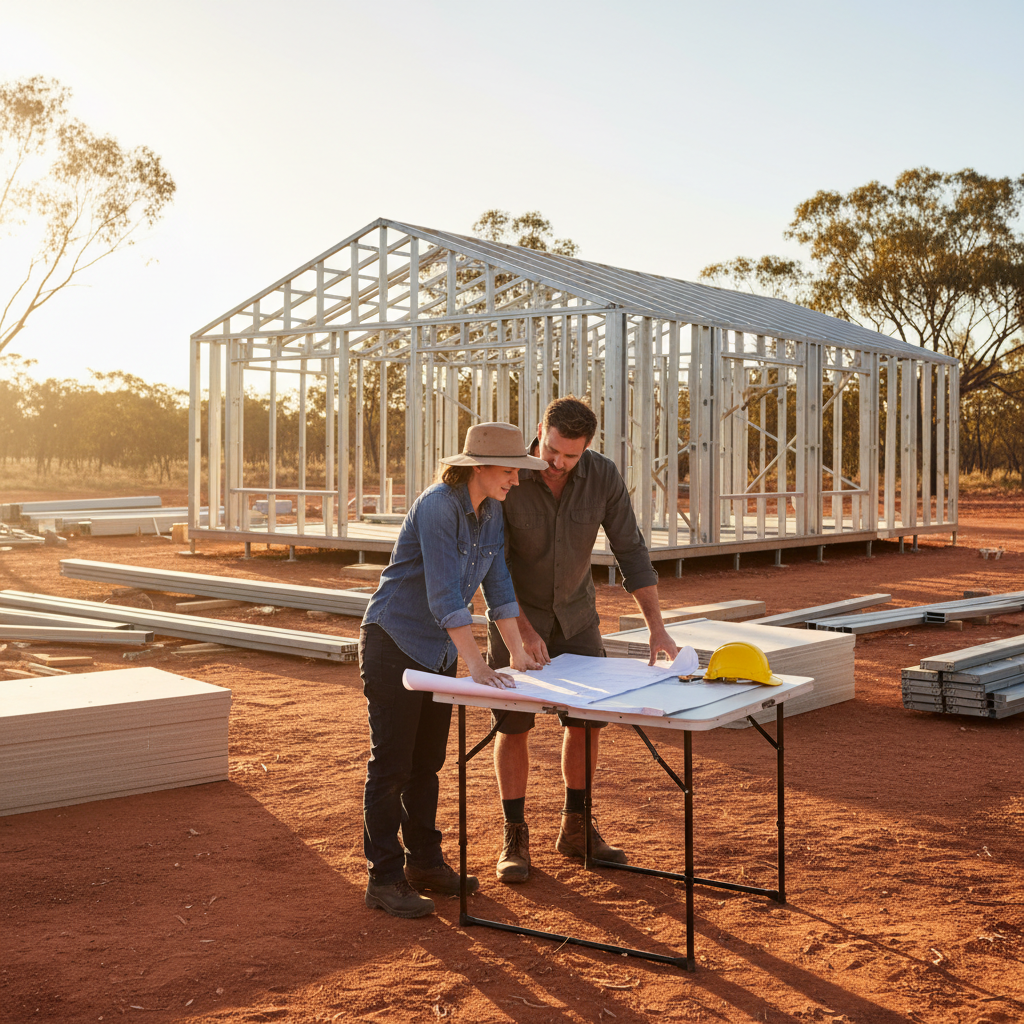
When we send out our steel kit homes, we're talking about a significant delivery of frames, roofing, and windows. It's a lot of value sitting on a trailer. Once those materials hit the ground at your site, they're usually your responsibility. Construction insurance (often called Contract Works Insurance) covers the actual structure while it's being built. It protects against fire, wind, theft, and malicious damage.
Think about the weather in Australia. One minute it's 40 degrees in the shade, the next you've got a hailstorm the size of golf balls. If your windows are sitting in crates waiting to be installed and a storm smashes the lot, construction insurance is what saves your bacon. It's also worth noting that steel frames are incredibly resilient to termites and fire, but the insurance company still wants to see that you've managed the site risks properly. Keep your site tidy. Stack your materials off the ground. Lock the gates. It sounds basic, but insurers look for any sign of negligence to skip a payout.
What About Your Help?
Are your mates coming over on Saturday to help you stand the frames? It's a classic Aussie tradition. Beers and a BBQ after a day of heavy lifting. But be careful. In many states, if someone is working under your direction and they get hurt, they might be classified as a worker, even if you aren't paying them. Voluntary Workers cover is a specific add-on you can get. It's cheap, and it prevents a friendship-ending legal battle if Uncle Steve falls off a ladder while helping with the insulation.
Personal Accident Cover
If you're an owner builder, you're likely doing this on top of a day job. Or maybe you've taken time off to get the house to lock-up. If you bust your leg and can't go back to your real job for three months, who's paying the mortgage? Construction insurance covers the house, not your humerus. Personal accident and illness insurance is something people skip because it feels like an extra expense we can't afford. But for an owner builder, you are the project manager. You're the labor. If you're out of action, the whole build grinds to a halt. It's a massive risk to take just to save a few hundred bucks on a premium.
Getting the Right Quote
Don't just call a generic call-center insurer. They usually don't understand the nuances of a kit home build where the owner is managing the trades. You want a specialist broker who deals with owner builders. They'll ask the right questions about your BAL rating or the specific engineering of your BlueScope steel frames. Because steel is non-combustible, you might even find it helps your case in high-risk bushfire areas.
When you call for a quote, have these things ready:
- Your owner builder permit number.
- The total value of the project (excluding land).
- A rough timeline for the build.
- The BAL (Bushfire Attack Level) rating for your block.
- Details on site security (fencing, locks).
Be honest about how much of the work you're doing yourself. If you tell them you're hiring a licensed builder to do everything and then they find out you were on a ladder doing the cladding yourself when an accident happened, the policy is about as useful as a screen door on a submarine.
The Gap Between Delivery and Lock-up
There is a specific window of time that's the most dangerous: the period between the frames arriving and the house being at "lock-up" stage. Lock-up is when the doors and windows are in and the place is secure. This is when theft is at its highest. People see a new build and think there's a goldmine of copper piping or expensive tools inside. Make sure your policy covers materials in storage or in transit if you're picking up bits and pieces from Bunnings yourself. Many standard policies only cover items once they are permanently fixed to the structure. If it's sitting in a pile on the grass, you might not be covered. Read the fine print. Then read it again.
Building your own home is one of the most rewarding things you'll ever do. Standing in a kitchen that you helped put together, under a roof you saw being craned in, is a feeling you can't buy. But don't let that dream get smashed because you tried to save a few dollars on the paperwork side of things. Get the insurance sorted before the first truck arrives. It's the only way to sleep soundly while the wind is howling outside your half-finished masterpiece.