I saw a bloke in the Hunter Valley last year who had a perfectly good steel floor system sitting on the grass for four months because he forgot to check his slab levels before the truck arrived. That's the stuff that kills a project. Being an owner-builder in Australia isn't just about swinging a hammer or showing off your new impact driver to the neighbours. It's about logistics, timing, and knowing exactly when to step out of the way so the professionals can do their job. If you think you'll just 'figure it out as you go' while the kit is sitting in the driveway, you're already behind the eight-ball.
The Council Trap and Your DA Process
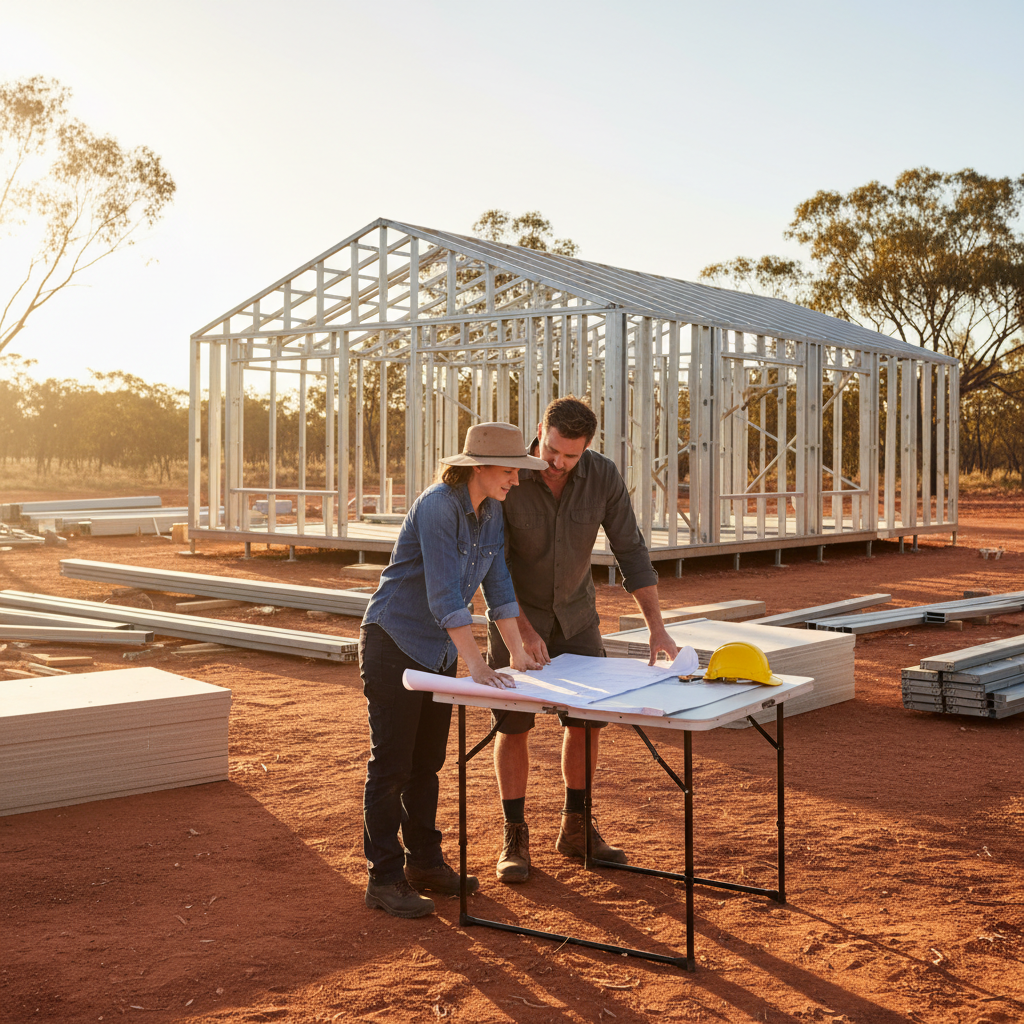
Most people get their kit home plans and think they're ready to pour concrete by the weekend. It doesn't work like that. You've got to deal with your local council first, and they don't move for anyone. Whether you're in a BAL-40 bushfire zone in the Blue Mountains or dealing with flood overlays in Gympie, your Development Application (DA) or Complying Development Certificate (CDC) is the first hurdle. Don't even think about ordering your kit until that stamped approval is in your hand. I've seen people order a full TRUECORE steel frame kit only to have council demand a change to the roof pitch three weeks later. That's a headache you don't need. Get your site classifications sorted early. Get a proper soil test (AS 2870). If you're building on reactive clay, your slab design is going to be a lot different than if you're on coffee rock or sand.
Site Prep Is Where the Time Goes
Your site needs to be ready for a semi-trailer. Those trucks are heavy, and they'll bog in a heartbeat if you haven't sorted a proper all-weather access track. I'm talking actual crushed rock, not just a bit of blue metal thrown over some mud. You also need a flat, dry spot to store your windows, cladding, and insulation. If you leave your plasterboard out under a cheap tarp and it rains for three days, you've just thrown a couple of grand in the bin. Plus, have you thought about where the crane is going to stand? If you're using a crane to stand your steel frames, they need a solid footing. No crane operator worth their salt will set up on a soft fill slope. It's dangerous and they'll just drive away, charging you the call-out fee anyway.
Managing Trades Without Losing Your Mind
As an owner-builder, you're the project manager. That means you're chasing 'sparkies', plumbers, and concreters. Here's a tip: don't book them for 'next Monday' and hope for the best. Good trades are booked out weeks, sometimes months, in advance. You need to be on the phone to your plumber while the slab is still curing. Tell them exactly what's in the kit. If you're using steel frames, they need to know they'll be drilling through steel, not timber, so they can bring the right bits and plastic grommets to protect the pipes. It sounds minor. It isn't. If a plumber shows up with the wrong gear, they'll leave and go to another job where they can actually make money. Then you're stuck waiting another three weeks for them to come back. And don't forget the 'white card' requirements and insurance. Make sure every subcontractor that steps onto your block has their own public liability and workers comp sorted. If they don't, and they trip over a piece of roof flashing, that's on you.
Why Steel Frames Require a Different Mindset
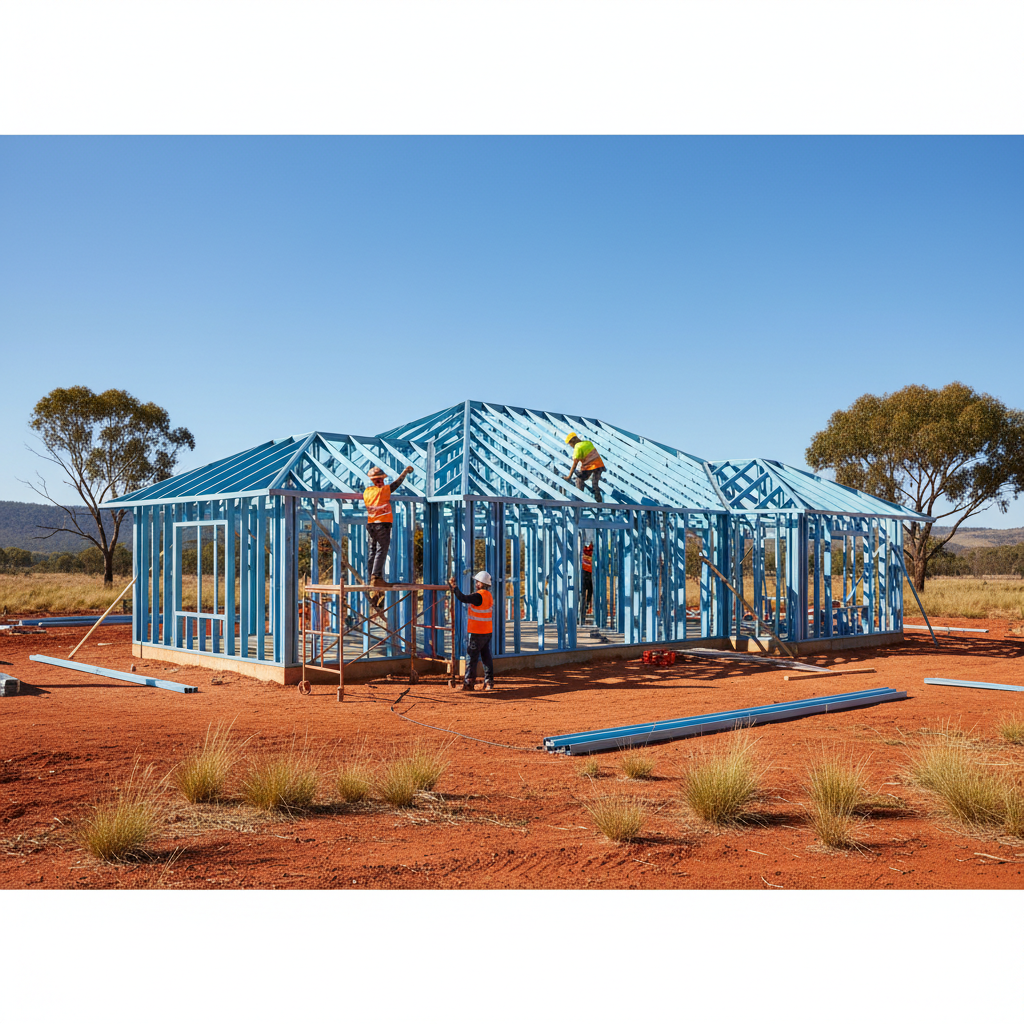
We use BlueScope TRUECORE steel because it's straight and it stays straight. Termites won't touch it. But for an owner-builder used to old-school timber framing, there's a learning curve. You aren't reaching for a hand saw and a bag of nails. You're using tek screws and an impact driver. Everything is pre-punched for your electrical and plumbing, which is great, but it means you can't just decide to move a bathroom three feet to the left on a whim. The precision is the benefit, but it demands you follow the layout exactly. If your slab is 20mm out of square, those steel frames won't lie. You'll be spending the next three days grinding concrete or packing out walls just to get your cladding to sit flush. Check your diagonals three times before the concrete truck arrives. Then check them again.
The Insulation and Cladding Sequence
Once your frames are up and the roof is on, you're 'dried in'. But don't rush the cladding. In many parts of Australia, especially coastal areas or the high country, your sarking and weather barrier are your best friends. Stuff this up and you'll have condensation issues for the next thirty years. Make sure you've got the right overlap on your wraps. When you start hanging your cladding, whether it's Colorbond or a fibre cement product like Scyon, start from the back of the house. Get your rhythm down where no one's watching. By the time you get to the front porch, your cuts will be cleaner and your spacing will be spot on. Also, remember that steel frames move differently than timber with temperature changes. Use the recommended fixings and don't skip the EPDM tape where it's called for. It stops that annoying creaking when the sun hits the walls in the morning.
Common Pitfalls to Avoid
- Ordering the kitchen and appliances before the doors are even on. Storage is a nightmare on a building site.
- Not having a dedicated bin for scrap steel and timber. A messy site is a slow site and an unsafe one too.
- Ignoring the window schedule. Windows often have long lead times. If your frames are up and the windows are six weeks away, everything stops. You can't do internal linings until the house is locked up.
- Forgetting to book the certifier for critical inspections. If you cover up your plumbing or electrical before the inspector sees it, you'll be ripping those walls open again. No exceptions.
The Final Fit-Out
The last 10 percent of the build takes 50 percent of the patience. This is the stage where you're installing skirting, hanging doors, and painting. If you're doing the painting yourself, buy a decent airless sprayer. Don't try to roll out a whole house with a $15 roller from the bargain bin unless you want your arms to fall off. Because you're the owner-builder, the finish quality is entirely on you. Take your time with the caulking and the gaps. A bit of No More Gaps in the right place makes a world of difference to how the final product looks. It's the difference between a house that looks 'DIY' and one that looks like a pro did it. So, keep your site clean, keep your trades informed, and for the love of everything, keep your paperwork organized in a proper folder. You'll thank me when it comes time for the final inspection and your Occupation Certificate.