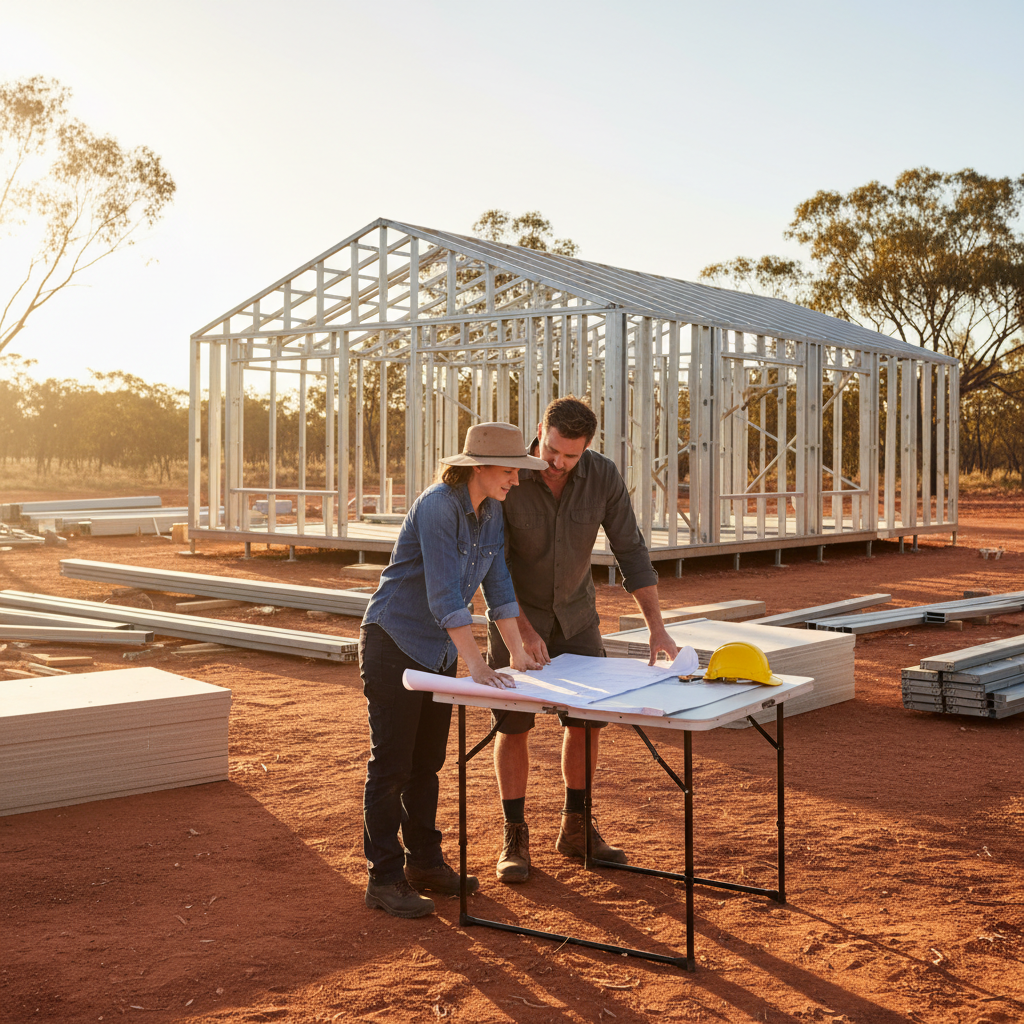
The smell of fresh dirt and the screech of a power saw is about as Aussie as it gets on a Saturday morning. You've got your council approval back, the site is scraped, and your TRUECORE steel frames are sitting in a tidy pile ready to go. Now comes the part where most owner builders start sweating. Do you pick up the tools yourself, or do you get on the phone to every subbie in the local paper? It's a fine line. One side of that line saves you a packet. The other side leads to a half-finished shell and a very grumpy building inspector.
I've seen blokes try to plumb their own kitchens after watching two YouTube videos. It usually ends in a costly rip-out and a very expensive emergency call-out fee. But then I've seen retirees piece together an entire steel frame kit, windows and all, with nothing but a cordless drill and a bit of patience. The trick is knowing your limits before you're standing in a mud hole at 6am on a Tuesday. Australia’s building codes, specifically the NCC Volume 2, aren't there to be suggestions. They're the law. If you mess up the structural integrity or the waterproofing because you wanted to play tradie for a weekend, you're in for a world of hurt.
The Steel Frame Advantage for DIYers
Steel frames are a godsend for the owner builder. If you've ever tried to straighten a warped piece of timber in the Queensland humidity, you'll know why I reckon steel is the way to go. These kits come pre-punched and ready to bolt together. It’s basically a giant Meccano set for grown-ups. Because the BlueScope steel is dimensionally accurate, you aren't fighting the material. You aren't planing down studs because they've bowed since they arrived on site. You just line up the holes and drive the screws home. This is the prime spot for an owner builder to get stuck in. You can take your time. You can check every level twice. But, and this is a big but, you still need to follow the engineering drawings to the millimetre. Those bracing plans aren't decorative. They're what keeps your roof on when a southerly buster hits.
Where You Can Get Your Hands Dirty
Once the slab is cured and the frames are up, the internal fit-out is where you can really make up some ground. Think about the insulation. It’s a tedious, itchy job that most pros will rush through. Doing it yourself means you can ensure there’s not a single gap around your power points or windows. It makes a massive difference to how that house feels when it’s 40 degrees in January. Hanging the internal doors is another one. It’s fiddly. It takes ages to get the reveal just right. A carpenter might charge you a fortune because of the time involved, but if you’ve got a steady hand and a sharp chisel, you can do a better job yourself because you actually care about the finish.
Painting is the obvious one, too. Everyone thinks they can paint until they're three hours into cutting-in a ceiling. It's grueling work. Your neck will ache. But if you take the time to prep properly - and I mean proper sanding and gap-filling - you'll save thousands. Just don't skimp on the brushes. Cheap brushes leave streaks and shed hairs like an old dog. Go to the local paint shop and get the good stuff.
The 'No-Go' Zone: When to Call the Pros
Wet areas. Stop right there. Don't even think about doing your own waterproofing. In most Aussie states, you need a licensed professional to sign off on the waterproofing certificate before you can even think about laying a tile. If that membrane fails three years down the track, your insurance company will laugh you out of the room. It’s one of the most common failures in Australian residential building. Get a specialist in. Let them stick their name on it. Same goes for the tiling if you're using large format stone. Doing a 300x300 ceramic tile is one thing, but 600x600 porcelain on a screeded floor is an art form. If you get it wrong, you’ll have 'lippage' that’ll trip you up every time you walk to the fridge.
Electricity and plumbing are non-negotiable. You literally cannot do these yourself. It’s illegal and it’s dangerous. You need that compliance certificate for your final occupation permit. What you can do is the 'grunt work' for these guys. Ask your plumber if he'll give you a discount if you dig the trenches for the sewer and storm water lines. Most will say yes because they hate digging as much as anyone else does. Just make sure you know where the existing services are before you go swinging a pickaxe or hire a 1.5-tonne excavator. Breaking a mains pipe is an expensive way to start the week.
The Roofing Reality
Your kit home usually comes with Colorbond roofing. It’s iconic. It looks great. It’s tough as nails. But hanging off a pitch in the blistering sun is not for everyone. If you’ve got a single-storey Varley or something similar, the heights aren't too bad, but you still need all your safety gear. Edge protection isn't just a suggestion from WorkSafe; it’s a requirement once you’re above a certain height. If you're not comfortable with heights or don't have the gear, pay a roof plumber. They'll have that roof on and watertight in two days while you’d still be scratching your head over the flashing details.
Practical Tips for Managing Your Site
Being an owner builder is 10% swinging a hammer and 90% being a glorified secretary. You’ll be on the phone constantly. You’ll be chasing deliveries. You’ll be checking the weather radar every twenty minutes. Here’s a bit of advice I give to anyone starting out:
- Keep the site clean. A messy site is a dangerous site. If a tradie rocks up and sees a mountain of offcuts and rubbish, they'll likely charge you more or just not show up. It shows you don't respect the project.
- Schedule your trades with breathing room. If the plumber says he'll be done Wednesday, don't book the plasterer for Thursday morning. He’ll be late. Something will go wrong. Give it a two-day buffer.
- Check your deliveries as they come off the truck. Don't wait until you're halfway through a job to realize a window is cracked or a pack of cladding is the wrong profile. Send it back immediately.
- Document everything. Take photos of every wall once the services are in but before the plasterboard goes up. You'll thank me in ten years when you need to find a stud or a pipe to hang a heavy TV.
The kit home process in Australia is a brilliant way to get into the market, but you’ve got to be honest with yourself. If you’ve never held a spirit level, maybe don't try to set the door frames. Focus on the management. Focus on the site prep. Focus on the landscaping and the painting. Because at the end of the day, you want a house that’s actually straight, dry, and legal. There’s no shame in hiring a pro to get the bones right. In fact, it’s the smartest move an owner builder can make. You’ll still have plenty of chances to sweat and graft before you get to turn the key and move in.