The Kit Home Dream Meets the Council Reality
Most blokes and back-yard builders start with a pile of floor plans and a massive amount of coffee. You've found the perfect spot in the Hunter Valley or maybe a hilly block behind the Gold Coast, and you reckon you're ready to go. But before a single piece of BlueScope Steel arrives on a truck, you're looking at the paperwork gauntlet. I've seen more projects die at the Development Application (DA) stage than on the actual tools. Local councils don't care about your timeline. They care about bushfire ratings (BAL), setback distances, and whether your driveway grade meets their specific, often annoying, standards.
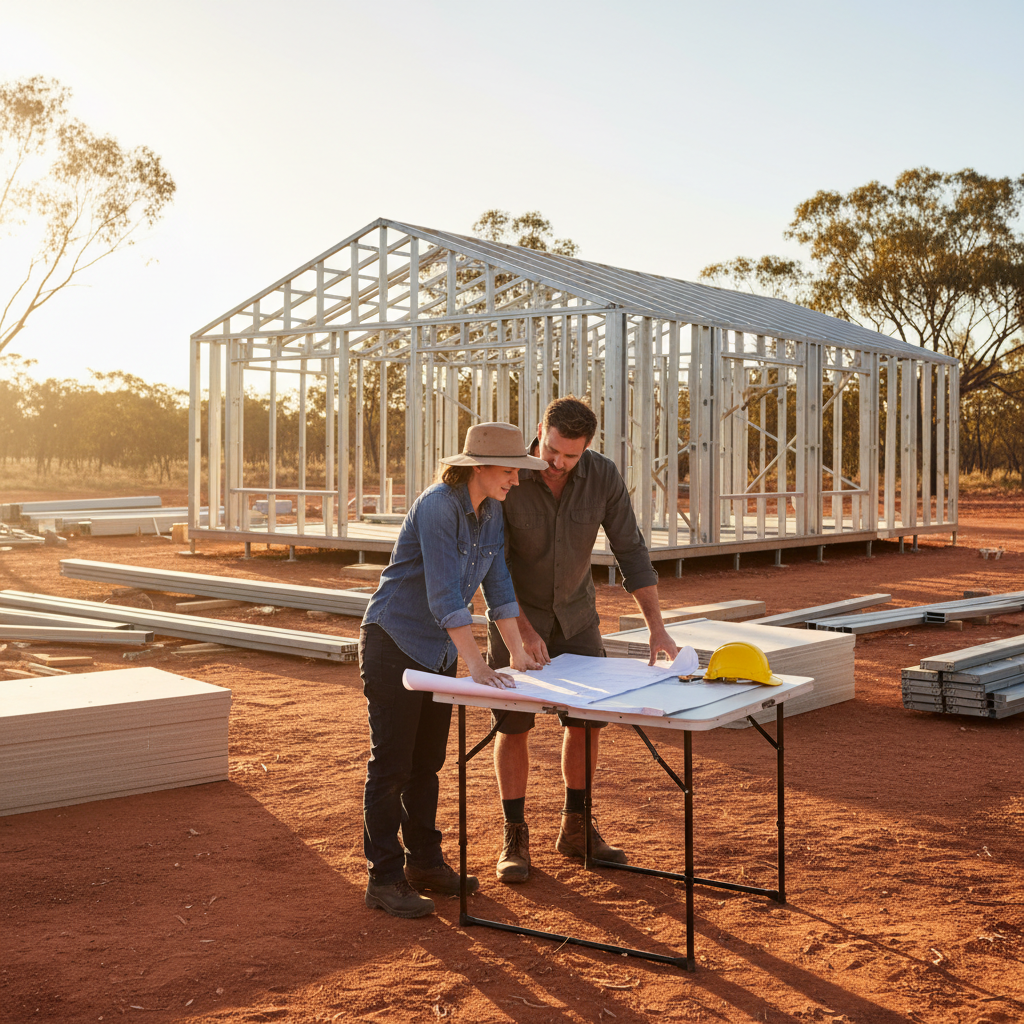
Doing it yourself means you're the project manager. If you spend your Tuesday nights zooming in on floor plans instead of calling a private certifier, you're already behind. You need to get your soil test done first. Everything relies on that. If you've got reactive clay or a rock shelf six inches down, your slab design changes. Don't guess. Because once the slab is poured, that's it. You're committed to those dimensions and those plumbing points. If you mess up the set out by 50mm, those steel frames won't sit right and you'll be scratching your head while the crane driver charges you by the hour.
The Steel Advantage on a Muddy Site
One thing I like about steel frames, specifically the TRUECORE stuff, is that it doesn't warp if it gets a bit of rain on it. We've all seen timber frames sit on a site in Gippsland or the Otways for three weeks while the owner handles a family emergency, and by the time they get back, the studs are as twisted as a dog's hind leg. Steel stays straight. It’s light, too. You can humpf those wall frames around with a couple of mates without needing a massive crew. But you still need to be precise. You're working to a millimetre, not a centimetre. Use a laser level. Check your diagonals. Then check them again. If the base isn't square, the roof sheets won't line up at the end, and you'll be left with a dog's breakfast of a ridge cap.
Tradie Relationships: Don't Be That Guy
The biggest pitfall for owner builders is the 'I'll do it all myself' mentality. Unless you're a licensed sparky or a plumber, you aren't doing those bits. Period. The trick is getting these trades to actually show up. In the current market, if you call a plumber and tell them you're owner-building a kit home, they might go quiet on you. Why? Because they've been burnt by amateurs who don't have the site ready or haven't ordered the right fixtures.
So, here is the tip. Have your site ready. Have the slab clean. Have the drawings printed out and taped to a piece of ply where they can see them. If they see you've got your act together, they'll come back. Plus, you need to coordinate the sequence. Don't call the plasterer before the rough-ins are signed off. It sounds basic, but you'd be surprised how many people get the windows in and then realize they forgot to run the AC piping. It's a mess that costs you weeks, not days.
Managing the Logistics and the Weather
Your kit arrives in a big delivery. You'll get the frames, the trusses, the Colorbond roofing, and the cladding. It's a lot of gear. If you don't have a plan for where that stuff sits on your block, you'll end up moving it three times. That is wasted energy. Put the roofing stuff at the back, because you need the frames first. Cover the insulation. If that stuff gets sodden, it’s bin fodder. I remember a bloke near Gympie who left his glass sliding doors leaning against a tree. A gust of wind pushed them over and there went four grand in about three seconds. Use a bit of common sense and prep a flat, dry area before the truck turns up.
The Gap Between the Kit and the Finish
A common trap is thinking the kit is the whole house. It isn't. We provide the structural bones, the shell, the insulation, and the external openings. But you need to source your kitchen, your tiles, your light fittings, and your skirtings. This is where the budget usually starts to bleed. You might find a great deal on a kitchen at a warehouse, but does it fit the plumbing points you put in the slab six months ago? Check every measurement. Then check it again.
And let's talk about the NCC Volume 2. That's your bible. If you're building in a high wind zone or a BAL-29 area, your window specs and your flashing details have to be spot on. Your building inspector won't give you a pass because you 'didn't know'. They're there to make sure the thing doesn't blow away or burn down. If you're unsure about a flashing detail around a window, ask. Don't just chuck some silicone at it and hope for the best. Water is a patient enemy, and it will find a way in eventually.
Tips for Staying Sane
- Get a site toilet. Your partner and your trades will thank you.
- Buy a decent quality impact driver. Don't go for the cheapest one on the shelf. You'll be driving thousands of screws into that steel.
- Keep a diary. Note down when people show up and what the weather was like. It helps if there's a dispute later.
- Don't rush the slab prep. If the plumbing isn't exactly where it needs to be, your bathroom layout is ruined before you even start.
Building a home yourself is a massive slog. It's weekends spent covered in dust and Mondays spent tired at your real job. But when you stand back and the roof is on and the windows are in, there is a feeling you don't get from buying a project home. Just keep your head, stick to the plans, and don't try to reinvent the wheel. The system works if you follow it. Get your permits sorted early, treat your trades with respect, and watch your site like a hawk. You'll get there. Eventually.