Stop Guessing and Start Scheduling
Most blokes and ladies walk into the owner builder game thinking they just need to be handy with a hammer or good at following a set of IKEA instructions on a massive scale. It is a trap. Building a kit home in Australia isn't about being a master carpenter. It is about being a master of the phone, the spreadsheet, and the local council's cranky planning department. If you cannot manage a schedule, your site will turn into a mud pit while you wait six weeks for a plumber who forgot you existed. That is the cold, hard truth of it.
I have seen it happen in every corner of the country, from the humid blocks in Townsville to the windy hills of Gippsland. The owner builder who succeeds is the one who treats the project like a military operation. You are not just 'putting up a house'. You are coordinating logistics for materials, managing subbies who have three other jobs on the go, and ensuring your TRUECORE steel frames don't sit in the rain for three months because you forgot to book the slab pour. It is a juggle. But it is doable if you drop the romantic ideas and get practical.
The Council Paperwork Slog
Before any steel arrives on a truck, you have to win the battle with your local shire. This part of the project sucks, frankly. There is no other way to put it. You will be dealing with Development Applications (DA) or Complying Development Certificates (CDC), and every council has their own little quirks. Some want specific details on your BASIX certificate or your Bushfire Attack Level (BAL) rating. If you are in a high BAL zone, the kit home approach is actually a lifesaver because steel frames don't burn, but you still need the paperwork to prove your windows and cladding meet AS 3959.
Don't just lodge and hope. Walk into the council office. Talk to the duty planner. Ask them what usually trips up owner builders in their area. Is it the effluent disposal report? The site drainage plan? Get these answers before you pay your deposit. Because once that kit is manufactured to your specs, changing the footprint to appease a council setback rule is a nightmare you don't want. It is expensive and slow.
Site Prep Is Where Projects Die
You might think the 'building' starts when the frames go up. Wrong. It starts with the dirt. I once saw a project in Kangaroo Valley grind to a halt for two months because the owner didn't realize their 'flat' block had a subtle fall that required an extra half-meter of site cut and a massive retaining wall. They hadn't budgeted time or money for the retaining wall, and the excavator operator couldn't get back for weeks.
Your site needs to be 'build-ready'. This means clear access for a heavy truck. Those kits come on big rigs. If your driveway is a narrow, winding goat track with overhanging gum trees, the driver will park at the gate and leave five tons of steel on the verge. Now you're double-handling every single truss and wall frame. Think about drainage too. If you're building on a slab, your plumber needs to get the 'rough-in' done perfectly. Unlike a timber house where you can hack into a floor joist later, a concrete slab is permanent. If those pipes are five centimeters off, your bathroom layout is ruined before you've even started.
Managing the Subbies
Since you are the project manager, you are the boss of the trades. This is where people get intimidated. But look, most trades are good people, they're just busy. The trick is communication. Don't call them on a Monday morning when they're flat out starting new jobs. Call them Wednesday afternoon. Check in. 'Hey mate, we're still on for the 15th? Slab is cured and the frames are arriving Tuesday.' They'll appreciate the heads-up.
You need to have your ducks in a row for these specific stages:
- The Earthworker: For the site cut and pad.
- The Plumber: For the under-slab drainage.
- The Concreter: To pour the slab (ensure it's square, or the steel frames won't fit).
- The Erectors: If you aren't doing the frames yourself.
- The Roofer and Cladder: To get the thing 'lock-up' ready.
- The Electrician and Internal Plumber: For the fit-out.
And remember, as an owner builder, you are responsible for site safety. That means a site toilet. It means temporary fencing. It means a silt fence if the rain washes soil into the neighbor's yard. If a WorkSafe inspector rolls up and you don't have your White Card or a proper site induction process, they'll shut you down faster than you can blink. It's not just red tape. It's about making sure everyone goes home with all their fingers and toes.
The Steel Advantage in Your Schedule
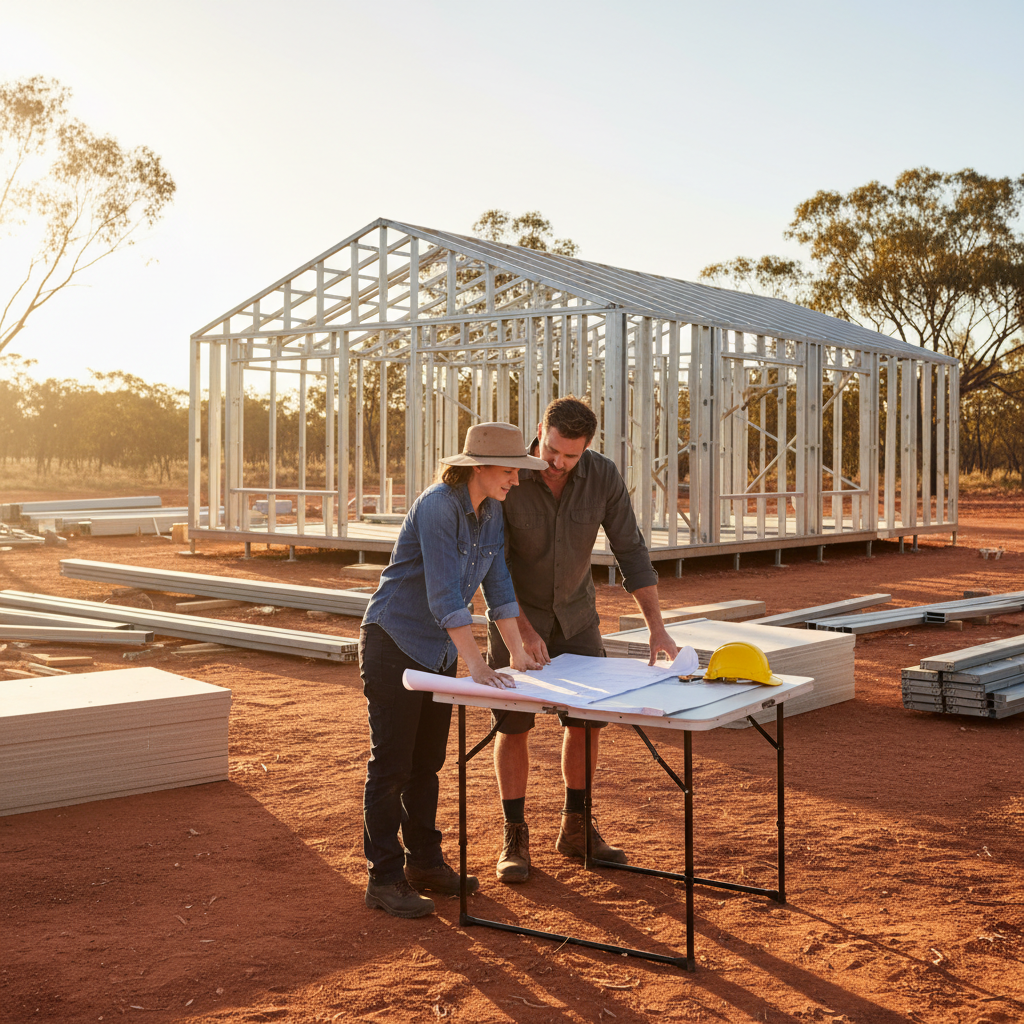
Working with steel frames, especially the BlueScope stuff, changes the project management game. One of the best things is the precision. When those frames arrive, they are straight. They don't warp, they don't twist, and termites wouldn't touch them with a ten-foot pole. For an owner builder, this is a massive win because it means your walls are plumb from day one. When the gyprocker comes in later, they won't be swearing at you because the studs are bowed.
But here's a tip: steel frames mean you need to think about your electrical and plumbing paths early. The frames come with pre-punched holes for your wiring and pipes. Spend an afternoon looking at your plans and physically marking where the power points are going. If you need an extra hole, you'll need the right tools to do it without compromising the structural integrity of the C-section. It's easy, but it requires a bit of forward thinking. You can't just notch a steel stud with a chisel like you could back in the 70s with pine.
Weather and Logistics
In Australia, the weather is your biggest enemy or your best mate. If you are building in Victoria in July, expect delays. If you're in North Queensland during the wet season, your site will be a swamp. Your project management schedule must have 'fat' in it. Do not schedule the tiler to start two days after the cladder. Give it a week. Because it will rain. Or the cladding delivery will be delayed because a truck broke down in Dubbo. Or your kid will get sick. Life happens. Build a buffer into your timeline or you will end up stressed, shouting at a delivery driver over something that isn't their fault.
Inventory Management
When the kit arrives, you'll get a delivery docket that looks like a phone book. Do not just wave the driver off and go for a beer. You need to inventory that gear. Check the windows. Are they the right size? Any cracks? Count the boxes of screws. Check the insulation batts. If something is missing or damaged, you need to know immediately, not three weeks later when you're standing on a ladder ready to install a flashing and realize it's not there. Most kit suppliers are great at fixing errors, but they can't teleport a piece of Colorbond roofing to you in five minutes when you're mid-job.
The Final Push
The middle part of the build is easy to get excited about. The frames go up fast. The roof goes on, and suddenly it looks like a house. But the 'finish' takes forever. This is where many owner builders lose steam. You'll spend weeks on the details: the architraves, the waterproofing in the wet areas, the painting. This is the 'death by a thousand cuts' phase.
Stay on top of your trades here. The 'fix' stage is where quality really matters for your final occupation certificate. Ensure your waterproofer gives you a compliance certificate. Make sure your sparky gives you a safety certificate. Without these bits of paper, the council won't let you move in. Keep a folder. A real, physical folder or a very organized cloud drive. Every receipt, every cert, every plan revision. You'll need it when you finally go to get that final sign-off.
Building your own home is an enormous task. It is tiring and it will test your patience. But when you stand back and look at that finished house, knowing you managed the site, the people, and the materials? There isn't a better feeling in the world. Plus, you'll know every single screw and bolt in those steel frames, which makes maintenance a breeze for the next thirty years. Just keep the coffee hot, the boots on, and the schedule updated. You've got this.