The Foundation of Success: Preparing Your Site for a Kit Home
There is a special kind of excitement that comes with the arrival of a kit home. Watching the delivery truck pull up with your precision-engineered BlueScope steel frames is a major milestone for any Australian owner builder. However, the success of that delivery, and the ease of the following build, depends entirely on what you do before the truck even leaves the warehouse. In the world of building techniques, site preparation is often where the battle is won or lost.
Preparing a site is about more than just clearing some scrub and hoping for the best. It requires a technical eye, a bit of foresight, and a solid understanding of how steel frame construction interacts with the ground beneath it. Whether you are building a coastal retreat or a rural homestead, getting your site ready is a multi-layered process. Let us dive into the technical essentials of site preparation specifically tailored for kit home construction.
Understanding Your Land: Soil Tests and Surveys
Before any machinery touches the dirt, you need to know exactly what you are working with. The first technical step is a geotechnical report, commonly known as a soil test. In Australia, soil is classified by its reactivity, ranging from Class A (stable, sandy soil) to Class P (problem sites). This classification dictates how your concrete slab or flooring system must be designed to support the weight of the steel frames without cracking or shifting over time.
Parallel to the soil test is the feature survey. A licensed surveyor will mark your boundaries and identify the levels of the land. This is crucial for kit homes because steel frames are manufactured to exact millimetre tolerances. If your site levels are off, your slab will be off, and those precisely engineered steel studs will not sit correctly. Precision starts in the dirt, not in the workshop.
Mastering Earthworks and Site Cut
Once the surveys are in, it is time for the heavy lifting. Earthworks involve creating a flat, stable pad for your home. While it might be tempting to just 'level it out,' professional building techniques require careful consideration of cut and fill. If you are building on a slope, you will likely cut into the hill and use that soil to fill the lower section. The critical part here is compaction. Fill dirt must be compacted to specific engineering standards, or your slab may subside later.
Always ensure your site cut extends at least one to two metres beyond the footprint of the home. This provides a clear workspace for you and your trades, allows for proper drainage installation, and gives the delivery driver enough room to manoeuvre without getting bogged in soft soil.
The Precision Slab: Why Millimetres Matter
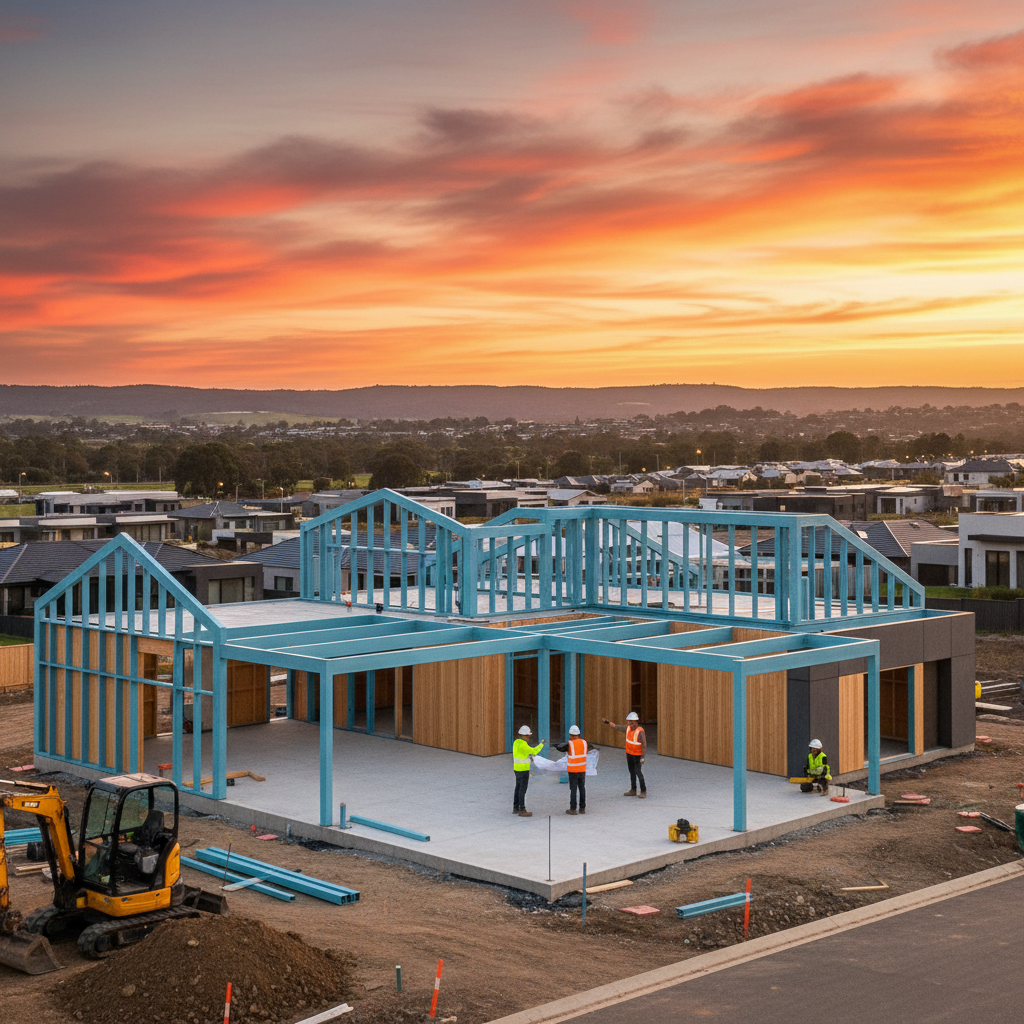
With a steel frame kit home, the concrete slab is your most important piece of infrastructure. Unlike traditional timber framing, where a carpenter can plane down a stud or shim a plate to fix a wonky floor, steel frames are rigid and exact. If your slab is 20mm out of square or has a significant dip, you will face major headaches when you start bolting down your frames.
When working with your concreter, stress the importance of the 'set out.' The slab must be perfectly square and the surface must be level. For those using TRUECORE steel, the frames are designed to sit flush on the concrete. Any variation in the slab can lead to issues with window alignments and roof lines. Many owner builders choose to be on-site the day the slab is poured to ensure the finished levels are double-checked before the concrete sets.
Planning for Deliveries and Access
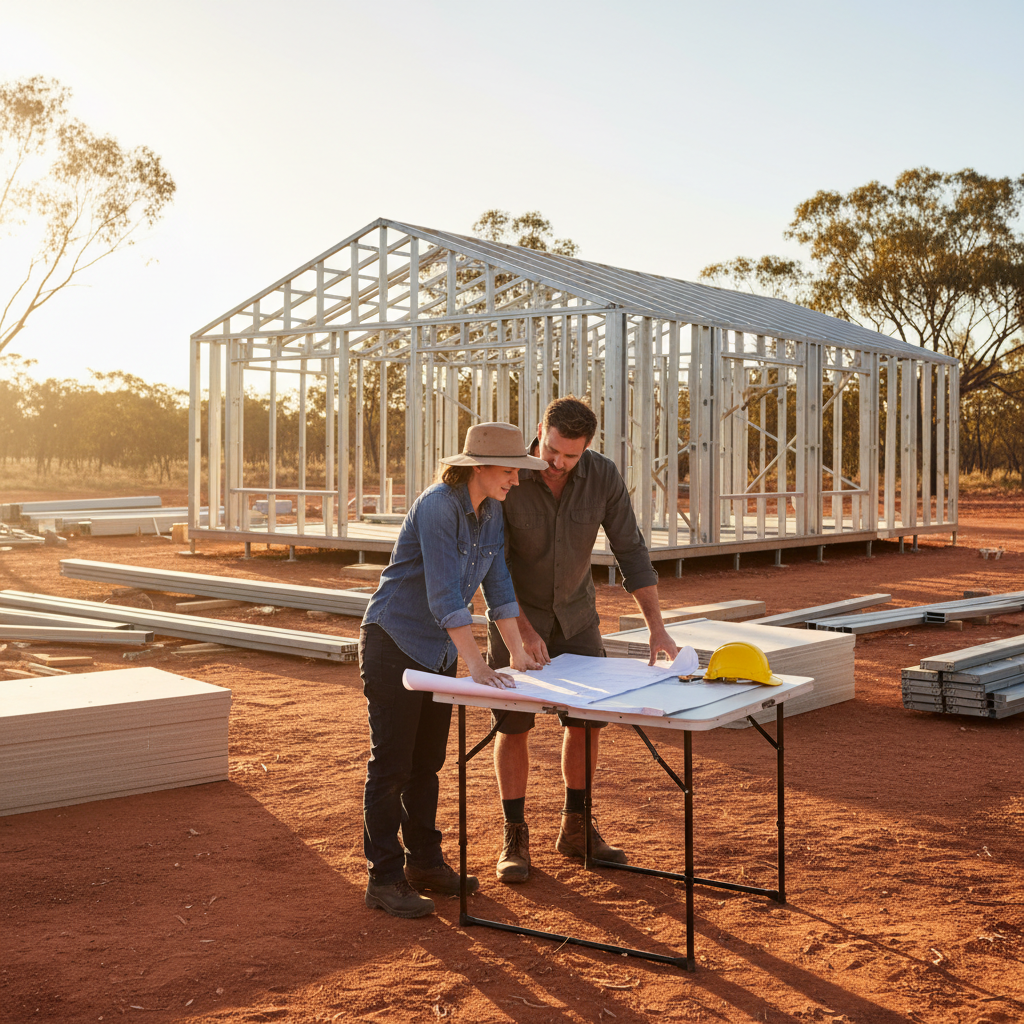
A kit home delivery is a significant logistical event. You aren't just receiving a few boxes; you are receiving the entire structural skeleton of your house, along with cladding, roofing, and windows. You need to verify that a heavy rigid truck or a semi-trailer can actually reach your building pad.
Check for overhead obstacles like power lines or low-hanging tree branches. Consider the turning circle required for large vehicles. If your driveway is steep or unsealed, a heavy truck might struggle in wet weather. It is often wise to lay down your base-course gravel for the driveway before the kit arrives. Not only does this provide a clean path for the delivery, but it also creates a staging area where materials can be unloaded and sorted safely.
Storing Your Kit Components
When the kit arrives, you need a storage strategy. Steel frames are incredibly durable and resistant to termites, but they still need to be handled with care. Here are some technical tips for on-site storage:
- Dunnage: Never store your frames or leaf-steel directly on the ground. Use 'dunnage' (timber sleepers or pallets) to keep the materials off the dirt and allow for airflow.
- Stacking: Stack frames vertically where possible or flat on a very level surface to prevent warping.
- Protection: While steel frames can handle some rain, your internal high-performance insulation, doors, and plasterboard (if sourced early) must be kept bone-dry. Have heavy-duty tarps ready, but ensure there is ventilation to prevent condensation buildup.
- Organization: Group your components by their installation order. Having the roof trusses buried under the wall frames will result in hours of wasted labour moving heavy steel around.
Drainage and Erosion Control
One of the most overlooked building techniques in site prep is 'pre-emptive drainage.' As soon as you clear your land, you change the way water flows. A sudden downpour on a fresh site cut can turn your building pad into a swamp or wash away your expensive road base.
Install silt fences to manage runoff and satisfy local council requirements. More importantly, plan your temporary drainage. Diverting water away from the slab area will keep the ground stable and ensure that when your kit arrives, you aren't working in a mud pit. If you have an underground water tank planned, consider excavating and installing the tank early so it can begin collecting site runoff once the roof is up.
Services and Rough-In Prep
Before the slab is poured, your 'in-slab' services must be perfectly positioned. This includes plumbing waste pipes and electrical conduits. In a steel frame home, these positions are often quite specific because the frames have pre-punched holes for wiring and plumbing. If a pipe comes up right where a steel stud needs to be bolted to the floor, you have a problem.
Work closely with your plumber and electrician. Provide them with the detailed floor plans provided with your kit to ensure every pipe and wire is exactly where it needs to be. Double-check these measurements yourself before the concrete truck arrives. It is much easier to move a PVC pipe in the dirt than it is to jackhammer a finished slab.
The Owner Builder Advantage: Taking Control
As an owner builder, you are the project manager. The technical success of your build relies on your ability to coordinate these early stages. By focusing on site preparation, you are ensuring that the assembly of your steel frame kit is a smooth, logical process rather than a series of corrections.
The beauty of the Australian kit home is the ability to use high-quality materials like BlueScope steel to create a professional-grade dwelling with your own hands. But remember, the 'building' part starts long before the frames are bolted together. It starts with a level site, a square slab, and a clear plan for moving materials.
Final Checklist Before Delivery Day
Before you give the green light for your kit to be dispatched, run through this final list:
- Is the slab fully cured and swept clean of debris?
- Is there a flat, clear area for the truck to unload?
- Have you arranged a way to move the frames? (A cheeky hire of a small forklift or a few strong mates can save your back).
- Are your boundary pegs still visible to ensure setbacks are correct?
- Have you notified your neighbours? A little courtesy goes a long way when a large truck is blocking a narrow street.
By following these site preparation techniques, you are setting yourself up for a rewarding and efficient build. Steel frame kit homes offer a level of precision and durability that is perfect for the Australian climate, and with the right groundwork, you will be under your own roof before you know it.