Stop Looking at Floor Plans and Start Looking at Your Dirt
Most owner-builders spend months obsessing over kitchen island benches and where the master bed goes. It's a classic trap. You're staring at a shiny 3D render while your actual block of land is sitting there with a massive drainage issue or a slope you haven't accounted for. I've seen it 100 times. The truck shows up with a load of TrueCore steel frames and the driver can't even get past the front gate because the temporary crossing is a boggy mess. Site prep isn't the sexy part of building, but if you muck it up, your slab will be wonky and your budget will bleed out before you've even picked up a hammer.
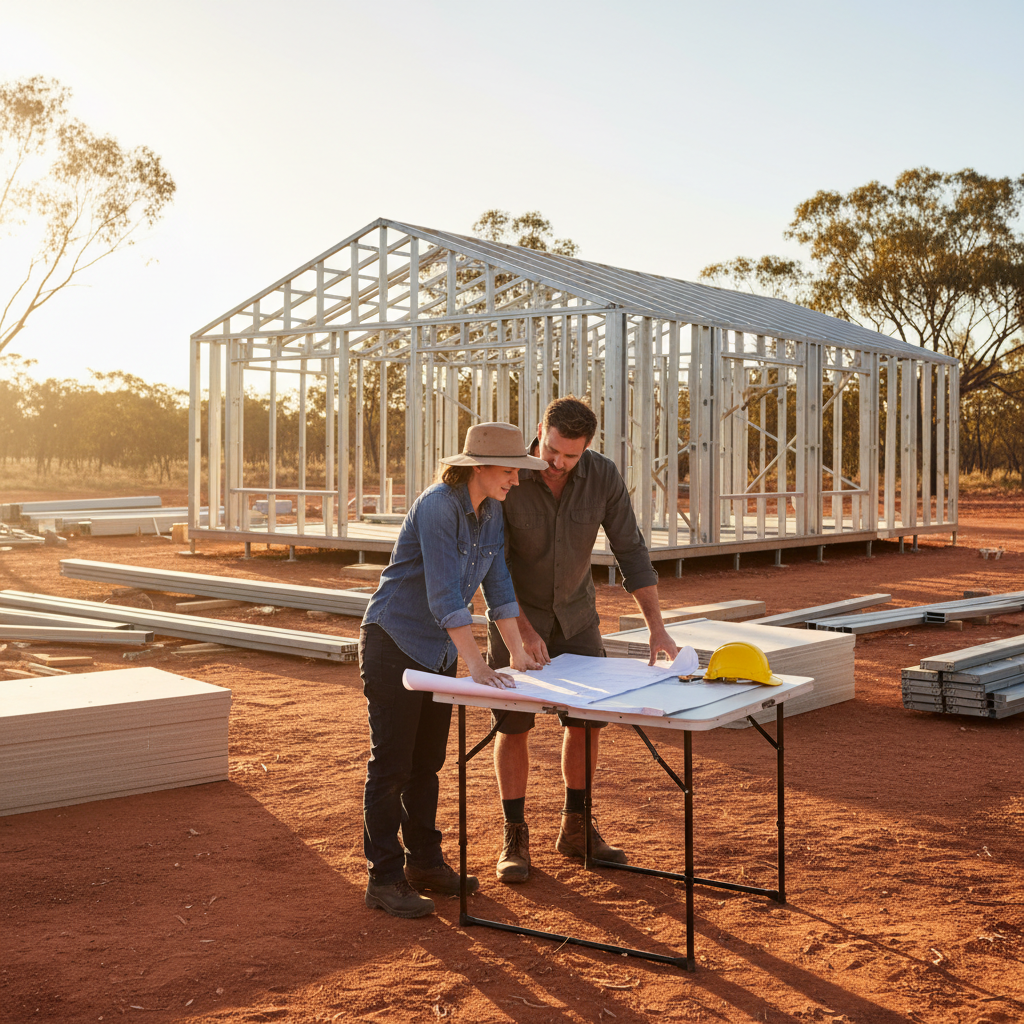
Preparing a site for a kit home is a specific beast. You're the project manager here. That means you need to coordinate the earthworks, the plumber, and the sparky before that first semi-trailer rolls in. If you're building in a spot like the Sunshine Coast or the hills behind Adelaide, the weather is your biggest enemy. One week of rain on a poorly prepared site turns your building pad into a soup of red clay and regret.
The Truth About the Building Pad
Your slab is the foundation of everything. Literally. In Australia, we work to AS 2870, which covers residential slabs and footings. If your site isn't level, you're looking at either a cut and fill or a suspended floor system. Most people go for the concrete slab on ground because it feels solid, but that requires a perfectly compacted house pad.
Don't just get a bloke with a bobcat to scrape the grass off. You need to strip the topsoil back until you hit the real stuff. Usually, this means going down 100mm to 150mm. If you leave organic matter under your slab, it rots. Then the ground sinks. Then your beautiful steel frames start to groan because the foundation is moving. Get a professional glass-plate compaction test if you've brought in a lot of fill. It's a few hundred bucks that saves you ten grand in structural cracks later. Plus, it gives you peace of mind when the council building surveyor comes poking around.
Access Is More Than a Driveway
Trucks are big. I know that sounds obvious, but you'd be surprised how many people forget that a heavy rigid truck needs a massive turning circle. If you've got tight bends or low-hanging branches on your rural block, that delivery driver is going to park your kit on the side of the main road and leave you to figure it out. Not ideal.
You need a solid all-weather access track. I'm talking about 100mm of crushed rock or recycled concrete. It needs to be wide enough for a truck to swing, usually at least 3.5 to 4 metres. Also, think about where the kit is going to sit once it's offloaded. You want it close to the slab, but not in the way of the trades. And for heaven's sake, keep it off the ground. Get some scrap timber or pallets ready before the truck arrives. Steel frames are tough, but sitting them in a puddle for three weeks is just asking for trouble.
Drains and Trenches: Do It Once
Before the concrete goes down, your plumber needs to get in there. This is the 'rough-in' stage. Because you're playing the role of the builder, you need to make sure the plumber knows exactly where the wet areas are. Double-check your floor plan against the peg-out. If that toilet pipe is 200mm off, you're going to be jackhammering your new slab. That's a bad day for everyone.
While the excavator is on-site for the pad, get your trenches done for power and water. It's cheaper to have the machine there for one long day than to bring it back three times. Make sure your electrical conduit is buried at the correct depth according to AS/NZS 3000. Usually, that's 600mm, but check your local regs. If you're in a bushfire-prone area (BAL rated zone), your utility connections might have specific requirements too. Don't guess. Ask your trades.
The Kit Delivery Reality Check
When the delivery happens, it’s chaotic. You'll have bundles of BlueScope steel, rolls of insulation, boxes of fixings, and stacks of cladding. It’s a lot of gear. Make sure you've got a clear, flat area that isn't going to turn into a swamp. I always tell people to buy a few big tarps from the local hardware store. Even though the steel and roofing can handle the rain, keeping your windows and doors under cover is common sense.
Think about the sequence of the build. You don't want the roof iron buried under the wall frames. Talk to the delivery driver. Most of them are legends and will help you drop the bundles in an order that makes sense if you've got the space cleared and ready. If you're rude or haven't cleared the site, they'll just drop it where it's easiest for them and move on to the next job. A cold slab of beer or a hot coffee goes a long way here.
Managing the Mess
Building sites get messy fast. Get a skip bin delivered before the kit arrives. You'll have plastic wrapping, steel strapping, and timber pallets piling up within 48 hours. If the site is a pigsty, trades will charge you more because they’re tripping over trash. It’s also a safety hazard. As an owner-builder, you’re responsible for site safety. Keep it clean, keep the silt fences up so you don't wash mud into the neighbor's yard, and make sure your temporary power pole is actually ticketed and safe.
One last thing. Check your boundaries. Then check them again. I knew a guy in Gippsland who built his whole garage two metres over the line because he trusted an old fence post. Had to tear the whole thing down. Get a licensed surveyor to mark your corners. It’s the only way to be 100% sure you're building on your own dirt. Site prep is about boring stuff like levels, drainage, and access, but get it right and the rest of the build feels like a breeze. Get it wrong and you'll be fighting the site until the day you move in.