The Reality of the Delivery Day
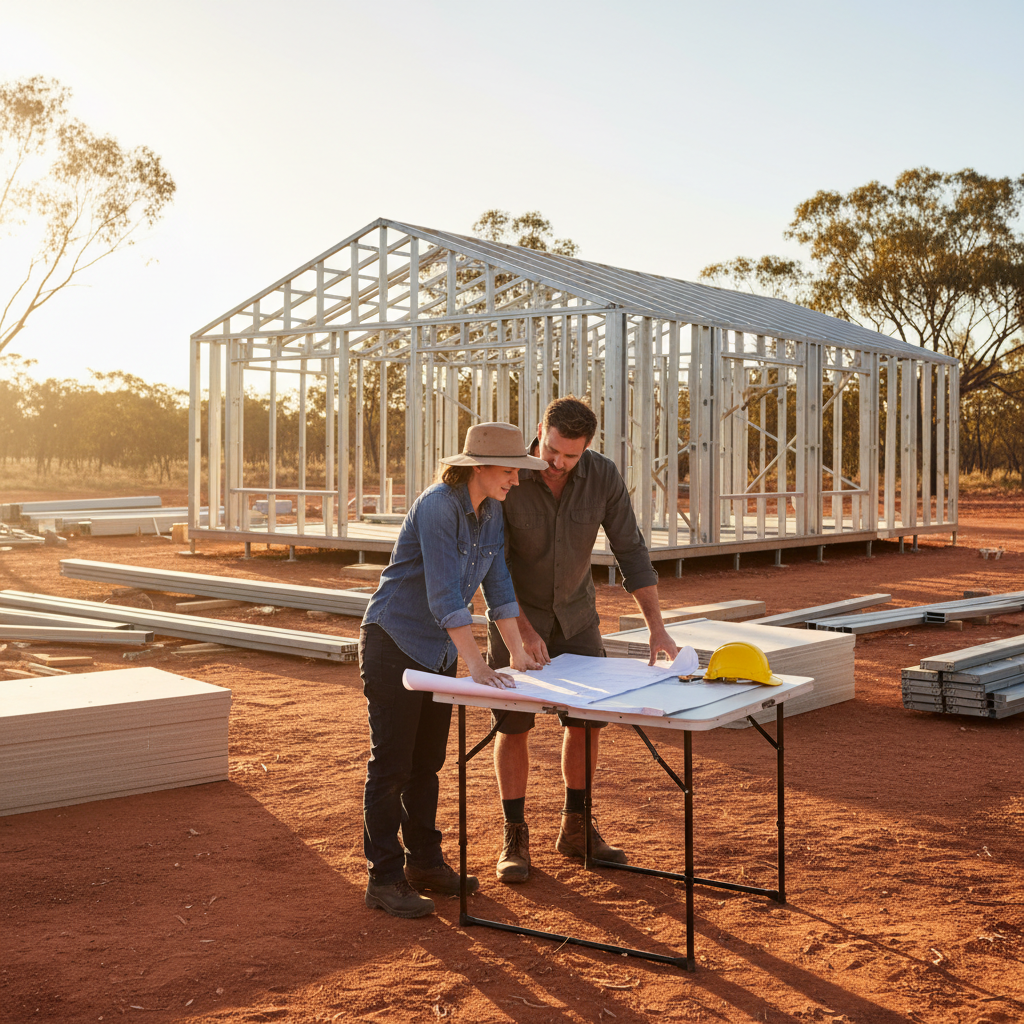
Most blokes think about the day their kit arrives like it's Christmas morning. They imagine a shiny truck pulling up, a crane lifting neat bundles of BlueScope steel, and a house appearing by sundown. But if you haven't prepped that dirt properly, it’s closer to a disaster movie. I’ve seen owner-builders standing in shin-deep mud in the Hunter Valley, screaming at a truck driver who refuses to back down a soggy driveway. It isn't pretty, and it's expensive. Preparing your site is about more than just clearing a few bushes. It is the literal foundation of whether your project succeeds or ends up as a cautionary tale at the local Bunnings trade desk.
Access is Everything
You need to look at your block through the eyes of a semi-trailer driver. These rigs are heavy, they're long, and they have the turning circle of a small planet. If your site is down a narrow track with overhanging gum trees, you’re in trouble. Most kit deliveries come on a 12-tonne or 20-tonne truck. You need a clear 3-metre width and at least 4 metres of vertical clearance. Don't just guess this. Grab a tape measure. If you've got a tight corner, walk it out. If that truck gets bogged because you didn't dump enough road base, you'll be paying the hourly rate for a heavy-duty tow truck to haul him out. Plus, the driver will be cranky for the rest of the day. Not a great start.
Think about where the steel is going to sit once it's off the truck. It needs to be flat, dry, and close to the slab. You don't want to be lugging BlueScope TRUECORE frames 50 metres uphill by hand because the truck couldn't get close enough. It's back-breaking work and it's avoidable if you plan the drop zone before the first bolt arrives.
The Art of the Benched Site
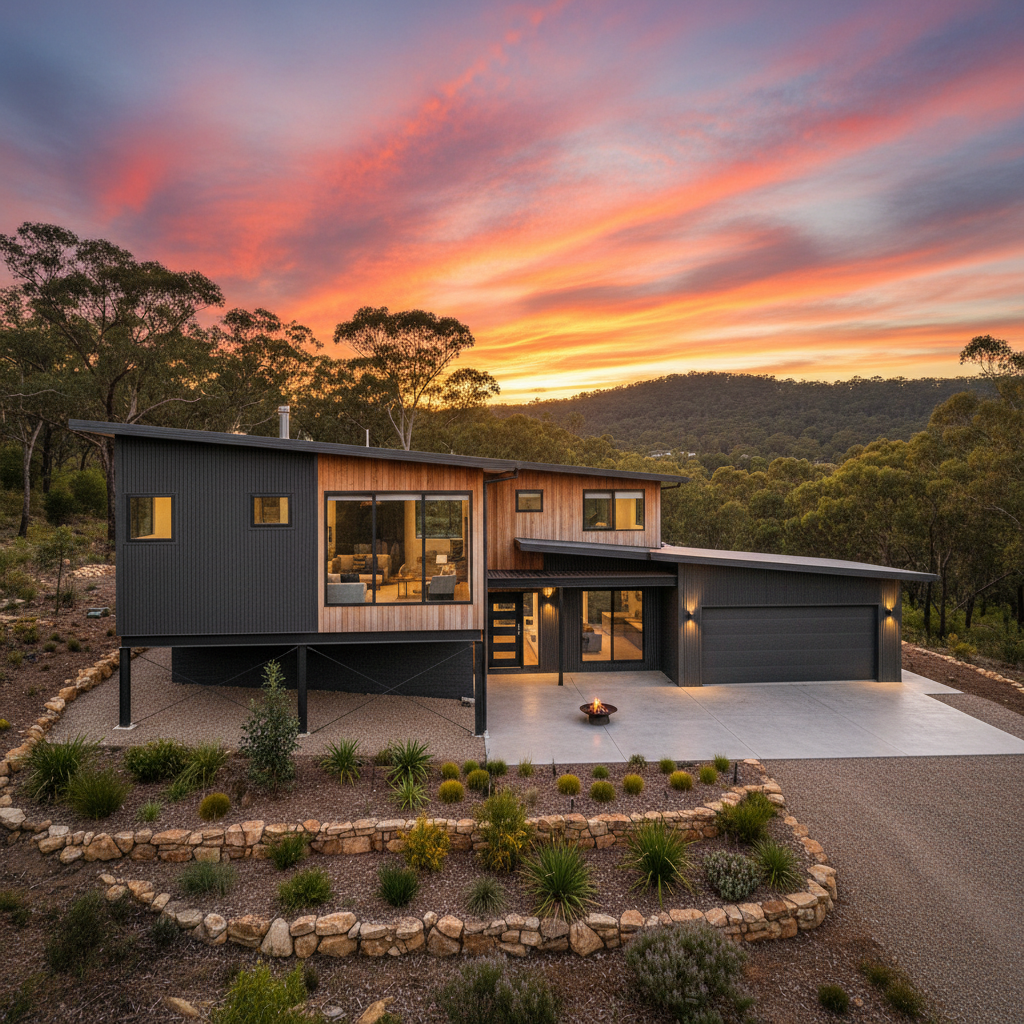
Unless you're building on the Nullarbor, your block probably isn't flat. Benching is where the heavy lifting happens. This is the process of cutting into the slope and filling the lower side to create a level pad. Most councils in Australia have strict rules about how much you can cut and fill. Generally, once you go over a metre, you're looking at engineered retaining walls. And trust me, you want those walls done before the kit arrives. There’s nothing worse than trying to build a retaining wall around a house that's already half-framed. It's cramped, it's messy, and you’ll likely hit your new cladding with a Bobcat bucket.
Soil classification is another big one. You’ll need a Geotech report. This tells you if your soil is 'A' class (stable sand or rock) or 'H' class (highly reactive clay). If you're on 'H' soil, that slab needs to be beefier to handle the ground moving when it rains. Steel frames are great here because they don't warp or twist as the ground shifts, but you still need that slab to be bang-on level. AS 2870 is the standard you need to keep in the back of your mind here. It covers residential slabs and footings, and if your ground prep doesn't meet it, your warranty might be worth less than a wet beer coaster.
Drainage: Don't Sink Your Investment
Water is the enemy. Always. Before the kit arrives, you need a plan for where the rain goes. I’ve seen guys finish a beautiful kit home in the Queensland hinterland only to have the first summer storm wash half the driveway into the living room. Because they forgot the swale drains. You need to fall the ground away from your slab at a grade of about 50mm over the first metre. This keeps the underside of your frames dry and prevents the soil from undermining your footings.
If you're building on a slab, get your plumbing 'rough-in' sorted early. This means all your pipes are in the ground before the concrete is even poured. Double-check your measurements against the floor plans. If your toilet pipe is 200mm off where it should be, you're looking at a jackhammer and a very expensive afternoon. It happens more than you'd think. Especially when people are rushing to beat a weather event.
Termite Protection and the Sub-Floor
Most of the kits we deal with use steel frames. Termites won't eat those, which is a massive win, but they'll still chew through your skirting boards, cabinets, and doors if they get a chance. Your site prep must include a termite management system that complies with AS 3660.1. Typically, this is a physical barrier like a stainless steel mesh or a chemical treated zone around the perimeter. If you’re doing a sub-floor with steel joists instead of a slab, you need at least 400mm of clearance under the lowest part of the floor for inspections. Plus, it gives you room to crawl under there and fix things later without losing your skin to the gravel.
Managing the Trades and the Mess
Since you're the owner-builder, the site is your responsibility. It’s a workplace. You need a silt fence to keep the council inspectors happy. You need a designated spot for rubble. And for the love of everything, get a skip bin delivered a day before the kit. Kit homes come with packing material, plastic wrap, and offcuts. If you let that blow around the neighborhood, you'll be the most hated person in the street before you've even put the roof on.
Power is another hurdle. Don't rely on a crappy extension cord from the neighbor's shed. Get a temporary builders' pole installed. Using a generator for three months is noisy, expensive, and a pain to refuel every four hours. Having proper power on site makes the whole process feel professional rather than like a weekend DIY project that's gone on too long.
The Checklist Mentality
Before you confirm that delivery date, walk the site one last time. Is the slab cured? Most engineers want 28 days for full strength, but you can usually start loading frames after 7 to 10 days if the weather has been decent. Is the area around the slab clear of debris? Are the anchor bolts in the right spot?
Building a home is a series of small wins. Getting your site prep right is the first big one. It's the difference between a build that flows and one that feels like you're constantly fighting the land. Take the extra week to level that extra bit of dirt. Hire the bigger excavator. Put down more road base. You’ll thank yourself when that truck rolls in and everything just works.
Site prep isn't glamorous. It’s dirty, it’s noisy, and it costs money that you’d rather spend on a fancy kitchen. But skip it and you're building on a foundation of sand. Literally or figuratively. Get the dirt right, and the steel kit will do exactly what it's designed to do: go up fast and stay straight for the next fifty years.