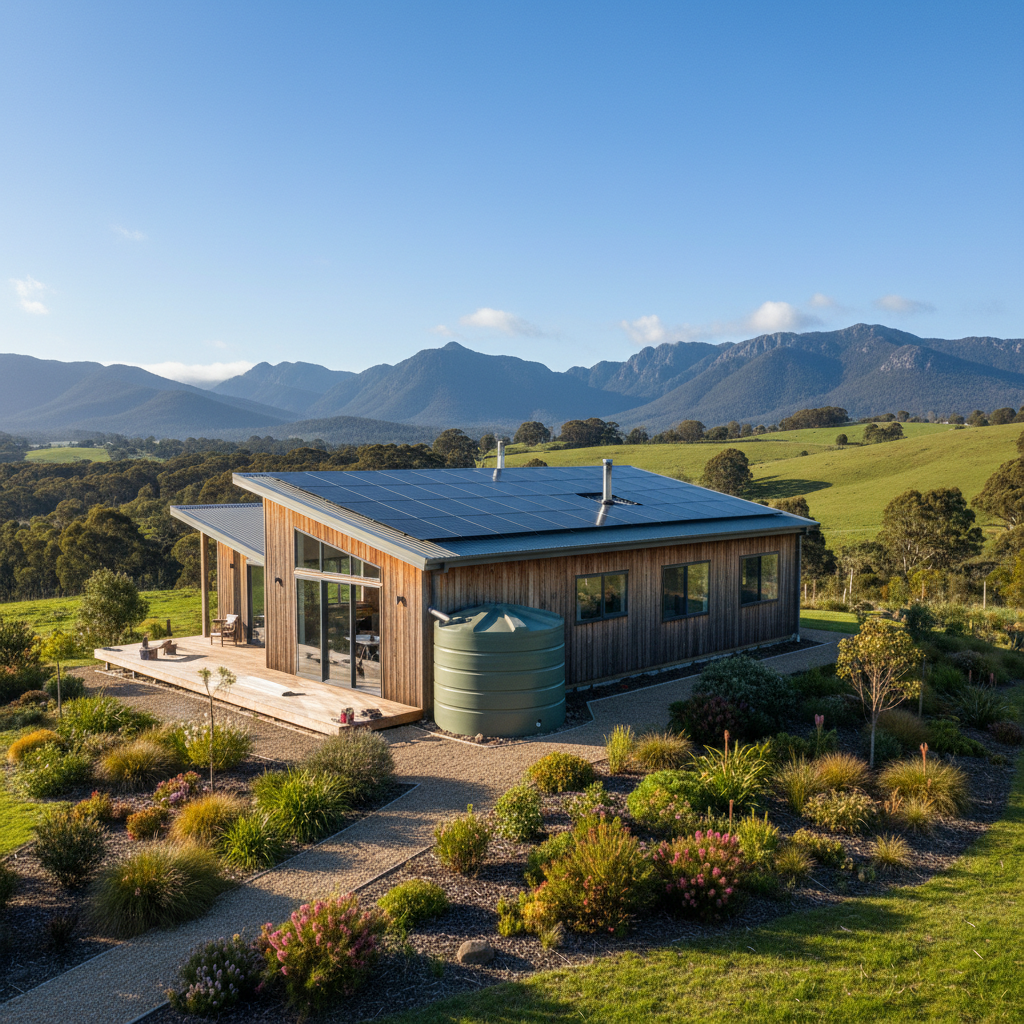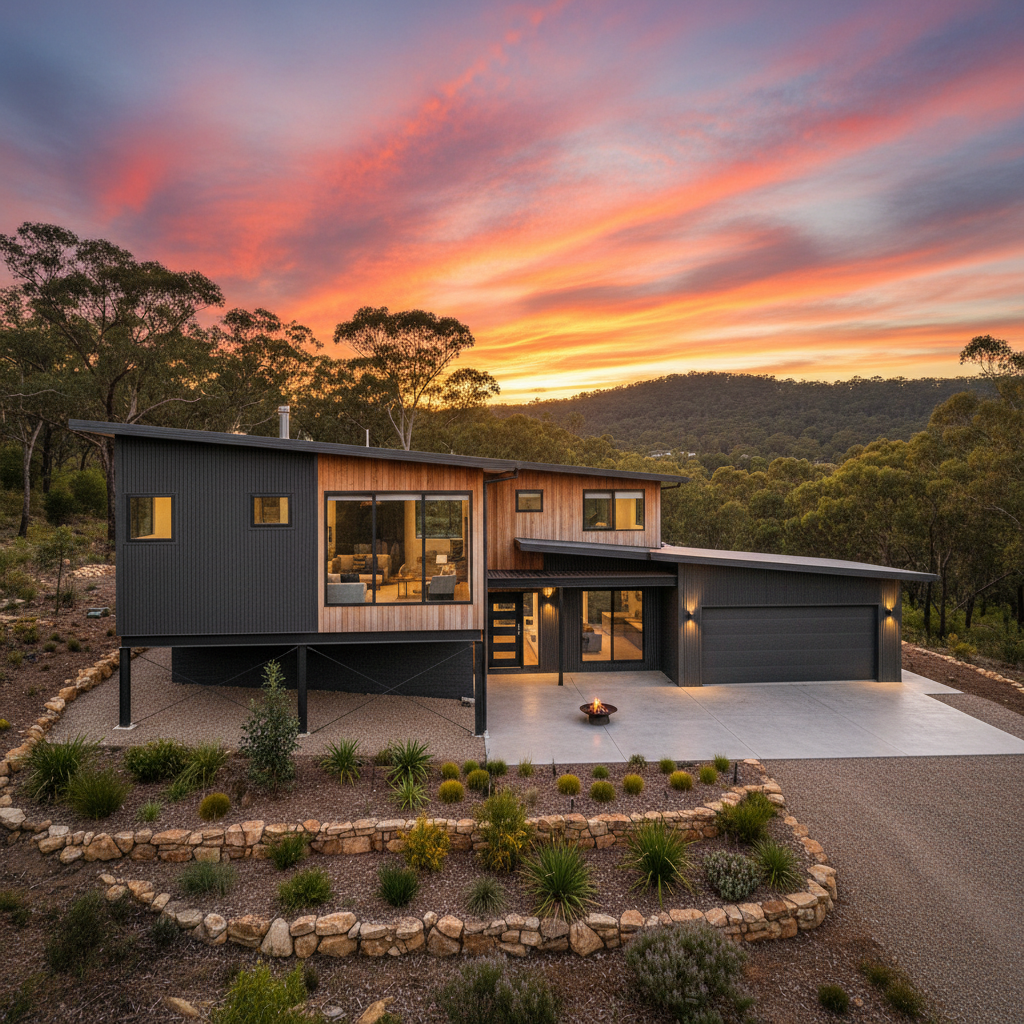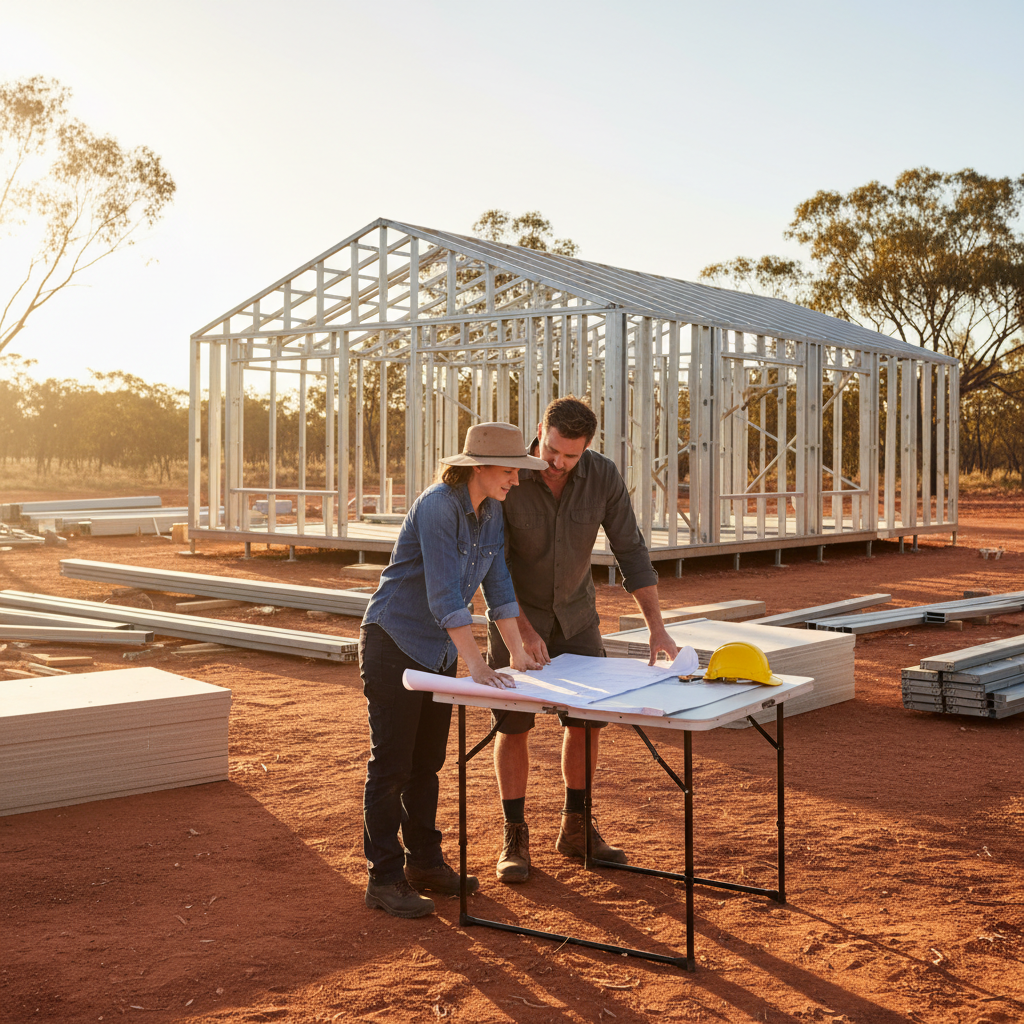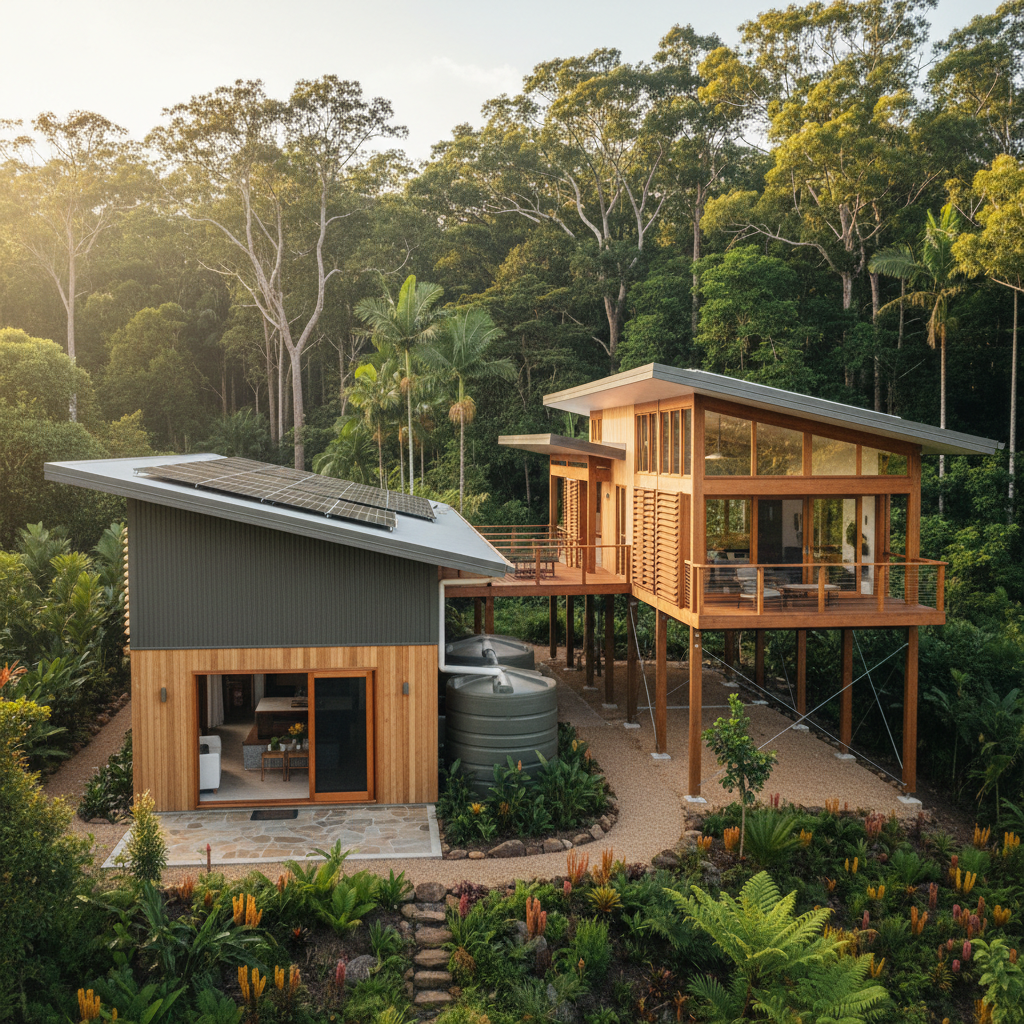
I spent twenty years on tools before I started writing about this stuff, and if there is one thing that gets under my skin, it is seeing a bloke buy a flat-land kit for a block that looks like a goat track. People look at those glossy brochures, see a beautiful single-level rancher, and think they can just plonk it anywhere from the Sunshine Coast hinterland to the Victorian high country. It does not work like that. The dirt you are building on dictates the frame you buy, not the other way around. Choosing between a single storey on a concrete slab or an elevated kit home on posts is the biggest decision you will make before you even touch a hammer.
The Slab Reality: Single Storey Pros and Cons
Most kit homes Australia wide are built on concrete slabs. It is the default. Why? Because it is thermal mass. If you are building down in cold spots like Cooma or Ballarat, having that big hunk of concrete soaking up the winter sun through north-facing windows is a life saver. It keeps the house at a steady temp so you are not chewing through wood for the heater every five minutes. Plus, there are no stairs. That might not matter to you now, but your knees will thank you in twenty years when you are carrying groceries in from the ute.
But slabs are fussy. They hate rain. If your block has even a bit of a slope, you are looking at serious earthworks. You have to cut into the hill, build retaining walls, and ensure your drainage is spot on so the first big storm doesn't send a river through your lounge room. Site costs for a slab on a sloping block can double your foundation budget before you've even laid a single TRUECORE steel wall frame. If the soil is 'reactive' clay (Class H or E), that slab needs to be thicker than a bank vault, which means more concrete and more cash out of your pocket. And let's not talk about the mess. A concrete pump day is chaos, and if the weather turns, you are in a world of hurt.
Going Up: When Elevated Kit Homes Win
Stump sub-floors are the unsung heroes of Australian building. If you have a block that drops more than a metre over the house site, stop looking at slabs. Just stop. An elevated kit home sits on steel or timber posts, meaning you leave the ground mostly as it is. Less digging, less environmental impact, and less money spent on excavators. Plus, you get that glorious airflow. Up in Queensland or the NT, an elevated home lets the breeze get under the floorboards, cooling the whole place down naturally. It is passive cooling 101.
There is also the storage factor. We had a guy out near the Blue Mountains who built his kit home on two-metre stumps. He ended up with a massive undercover area for his workshop, mowers, and the tinny without adding a single square metre to his council footprint. It is clever building. But, you have to insulate that floor. If you don't put high-quality batts under the floorboards of an elevated kit, your feet will be freezing every morning. It is a different kind of build. You'll be working at height, which means scaffolding and more safety Gear. Not a deal breaker, but something an owner-builder needs to plan for on a Sunday morning.
Steel Frames and the Termite Factor
One thing I always tell people, regardless of whether you go slab or elevated, is to stick with steel. We use BlueScope TRUECORE because it's predictable. Termites in Australia are no joke. They will eat a timber house from the inside out before you even see a mud tube. With a steel frame kit, you get peace of mind. They are straight, true, and they don't warp when the humidity hits 90 percent. If you are building an elevated home, steel floor joists are a dream because they don't creak like old timber ones do every time the dog walks across the room.
Privacy and the View
Sometimes the choice isn't about the soil at all. It is about what you can see. If you are on a suburban lot or a small acreage with a neighbor right on the fence line, a single storey slab home can feel a bit boxed in. Going up even just a metre or two changes your entire perspective. Suddenly you are looking over the fence instead of at it. You get the sunset. You get the breeze. You get a bit of privacy.
But keep an eye on your local council regulations. Most regions have 'overlooking' laws. If your elevated deck looks straight into the neighbor's pool, they will hit you with a requirement for privacy screens that can ruin your view anyway. Check your ResCode or local DCP before you get your heart set on a high-set verandah.
The Owner Builder Practicality Test
Are you doing the work yourself? If you are a solo owner-builder, a single storey home on a slab is easier to physically manage. Raising wall frames on a slab is a straightforward job. Doing it on an elevated deck three metres off the ground is a different beast. You need more hands. You need better gear. However, for a DIYer, an elevated kit means you don't have to worry about the 'pour'. Screeding a large slab is a pro's job. If you muck it up, it's permanent. Installing a sub-floor is just nuts and bolts. You can take your time, get it level, and if you make a mistake, you can usually unbolt it and go again.
Think about site access too. If you are building on a bushy block with a narrow track, getting a concrete truck in might be impossible. A kit home delivered on a flatbed can be unloaded, and the steel components for an elevated floor are light enough to move by hand if you have to. Try doing that with 30 cubes of wet concrete.
Which one actually suits your block?
Here is my quick rule of thumb for anyone looking at kits in Australia:
- Flat, sandy, or rock-hard ground? Go the slab. It's solid, provides great thermal mass, and keeps the build low-profile.
- Sloping, reactive clay, or flood-prone land? Go elevated. It saves on site works and keeps your feet dry.
- Hot and humid climate? Elevated for the win. Get that air moving.
- Cold, windy plains? Stick to the ground. Use a slab and north-facing glass.
Don't just pick a floor plan because it looks nice. Walk your block. Figure out where the water goes when it rains. Look at the trees. Talk to a designer who knows their way around AS 2870 (the Aussie standard for residential slabs and footings). Most kit home providers will have versions of their designs for both floor types, so you aren't limited by style. You are only limited by how much dirt you want to shift. Building your own home is about being smart, not just following the trend. Do the prep work on your soil first, and the rest of the build will fall into place much easier. Trust me, your back and your bank account will thank you once the roof is on and you're sitting on the porch with a cold one.