I spent six hours last Friday out near Goulburn looking at a block that was basically a vertical cliff face with aspirations of being a hobby farm. The owner was dead set on a massive single-storey ranch style kit home. He'd seen the floor plan, fell in love with the wide hallway, and figured he'd just 'level it out a bit' with a bobcat. That's the kind of thinking that adds thirty grand to your site costs before you've even screwed a single wall frame together. Choosing between a slab-on-ground or an elevated kit home isn't just about the view from the veranda. It's about physics, drainage, and not fighting the patch of dirt you've spent the last six months saving for.
The Truth About Slab-on-Ground Kits
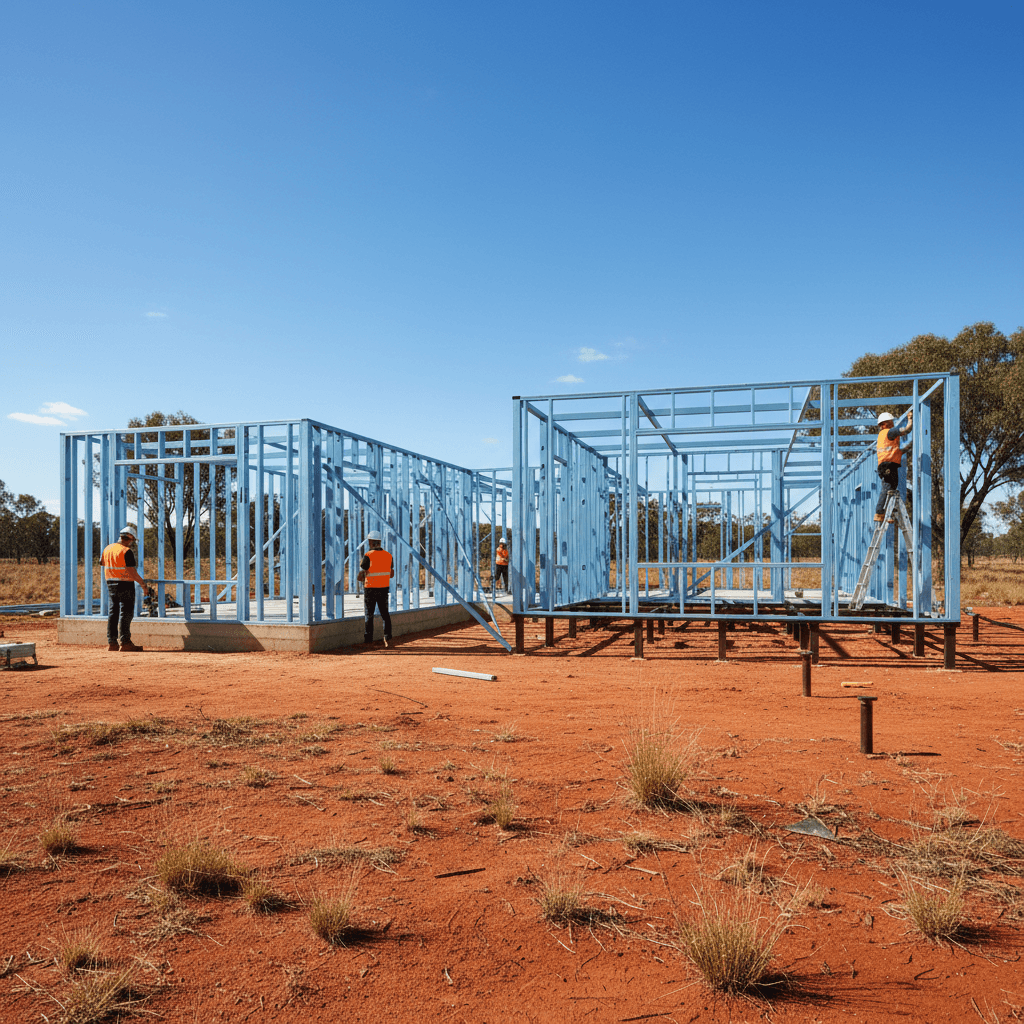
Most people default to a single storey home on a concrete slab because it's what they see in every new estate from Pakenham to Penrith. There's a reason for it. Slabs are solid. Walking on a well-finished concrete floor feels permanent. If your block is flat, or has a fall of less than maybe half a metre over the building envelope, a slab is usually your winner. It makes for an easy build. You get your site cut, the plumber does the 'wet' stage, and the concreters pour the pad. Then you've got a nice, flat surface to work on while you're standing up your BlueScope steel frames.
But slabs hate water. If you've got a block with poor drainage or heavy clay, you're going to spend a fortune on ag drains and spoon drains to keep that slab from turning into an island every time a summer storm rolls through. And if you're building in a high termite risk area? A slab technically makes it easier to spot the buggers with a physical barrier, but you've still got to be vigilant around the perimeter. Steel frames are a godsend here because while the termites can chew the skirting boards, they're not going to eat the structural bones of your house. It gives you some breathing room while you're checking your weep holes.
Going Up: When Elevated Kit Homes Win
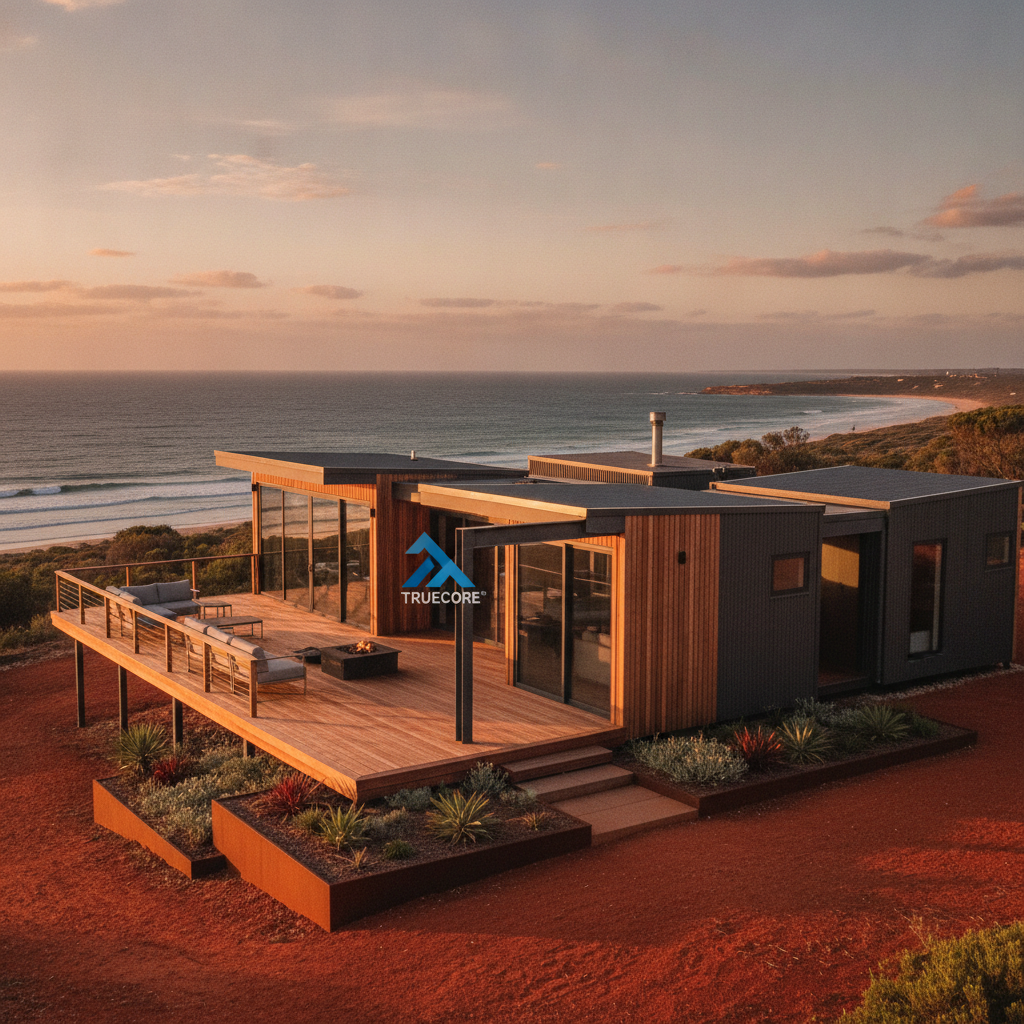
If your block looks like a staircase, stop looking at slab designs. Seriously. I've seen owner-builders spend double on retaining walls what they spent on the actual kit home just because they wouldn't consider an elevated floor system. Elevated homes, built on steel or timber stumps, are the traditional Australian answer to our weird and wonderful terrain. They're king on sloped land. Instead of moving tonnes of earth, you just use longer stumps at one end.
Airflow is the secret weapon of the elevated home. In places like North Queensland or the Northern Rivers, getting that breeze under the floorboards keeps the house significantly cooler. You aren't trapping the heat of the earth underneath you. Plus, if you're in a flood-prone zone, getting that floor level up above the predicted 1-in-100-year event is the difference between a minor cleanup and losing everything.
The Under-Floor Reality Check
One thing people forget when they go for an elevated kit? Insulation. If you don't insulate under those floorboards, you'll be wearing three pairs of socks all through winter. You're effectively building a bridge. It gets cold. When we send out a kit with a steel floor system, we always tell people to plan for high-quality under-floor batts or rigid foam boards. Don't skip this part. You'll regret it the first time the temperature drops below ten degrees at 2am.
Maintenance and Accessibility Trade-offs
Let's talk about knees. If you're planning this as your 'forever home' and you're already starting to feel the damp in your joints, stairs are a genuine consideration. A slab-on-ground kit home is level entry. No trips, no falls. Easy to get the groceries in from the ute. An elevated home means stairs. Sometimes a lot of them. If you've got a steep block, you might be climbing fifteen steps just to get to the front door. You can put in a lift or a ramp later, but that's an expense most owner-builders don't want to swallow.
Maintenance is another point for the slab. You don't have to paint the underside of a slab. You don't have to worry about what's living under there either. I've crawled under enough elevated homes in my time to know that if there's a gap, a wombat or a family of snakes will find it. You need to budget for some kind of sub-floor screening. On the flip side, if your plumbing leaks on an elevated home, you just crawl under with a wrench and fix it. If a pipe bursts under a concrete slab? Get the jackhammer. It's a nightmare scenario that happens more often than you'd think in older builds, though modern PEX piping has made it less of a worry for new kit builds.
Council and BAL Ratings
Your local council will have a say in this, whether you like it or not. Site coverage and height restrictions are the big ones. In many Aussie suburbs, you can't build over a certain height from the natural ground level. If you've got a high-set elevated home, you might hit that ceiling pretty quickly, forcing you back to a slab.
Then there's the Bushfire Attack Level (BAL). If you're building in the bush, your BAL rating might dictate your materials. A slab is inherently more fire-resistant. An elevated home needs its sub-floor enclosed if you're in a high BAL zone (like BAL-40 or BAL-FZ) to prevent embers from sucking underneath and igniting the structure. It’s doable, but it adds another layer of complexity to your DIY project. We use TRUECORE steel because it doesn't add fuel to the fire, but you've still got to worry about the 'heat' factor on your floor joists if you're elevated.
The Practical Tips List
So, you're looking at your block and your floor plans. How do you actually decide? Here’s a bit of a checklist I use when I’m helping mates suss out a site:
- Check the fall of the land. Over 1 metre of fall across the house footprint? Go elevated. Under 0.5 metres? Go slab. Between 0.5 and 1 metre? It’s a toss-up based on your budget for retaining walls versus a floor system.
- Look at your soil report. If you're on 'P' class soil (problematic), or highly reactive clay, a slab might need deep, expensive piers. Stumps might actually be cheaper here because you're only digging holes for the posts, not a whole trench system.
- Think about 'The Gap'. The space under an elevated home is great for storage, but it can become a junk pile. If you aren't a tidy person, a slab saves you from creating a visual eyesore.
- Consider the 'Feel'. Some people hate the 'bounce' of an elevated floor. If you want that rock-solid feel, stick to a slab. If you like the character of a Queenslander, go the stumps.
Which one costs more?
There's no straight answer. Because building isn't a straight line. People reckon slabs are cheap, but by the time you've done the site cut, the fill, the compaction testing (don't skip the compaction test or your house will crack), and the concrete pump hire, you're often at the same price as a high-quality steel floor system. The cost is just hidden in the ground instead of being visible in the stumps. My advice? Get a quote for both if you're on the fence. Any decent kit provider should be able to offer a floor system as an optional extra.
At the end of the day, the 'best' kit home is the one that sits on the land without forcing the land to change too much. Don't fight your block. If it wants to be an elevated home, let it be an elevated home. You'll save yourself a lot of gray hairs during the build process and a lot of money in the long run. Just make sure whatever you choose, you've got a good spirit level and a lot of patience. You're going to need both.