Size is just a number on a DA form
I spent twenty years on sites across Queensland and New South Wales before I started writing about this stuff, and if there is one thing I have learned, it is that Australians have a weird obsession with empty space. We build these massive four-bedroom suburban boxes and then we spend our weekends vacuuming rooms we never even walk into. It is a waste of money and it is a waste of time. Living small in a kit home is not about making sacrifices or feeling like you are stuck in a shoebox. It is about being smarter than the average bear with your floor plan. When you are the owner-builder, you get to skip the cookie-cutter rubbish and actually think about how you move from the bed to the kettle in the morning.
We are seeing a massive shift toward smaller footprints. Whether it is a secondary dwelling for the outlaws or a standalone cottage on a bush block in the Hunter Valley, smaller builds are winning. But here is the kicker. A small house that is poorly designed is a nightmare. A small house that is designed well? That is freedom. You want high ceilings, you want glass in the right spots, and you want a structural frame that lets you open up the guts of the house without needing a forest of internal load-bearing walls. That is where the BlueScope TRUECORE steel comes in handy. It is light, it is dead straight, and it carries loads that make timber look a bit sad.
The magic of the 2.7m ceiling
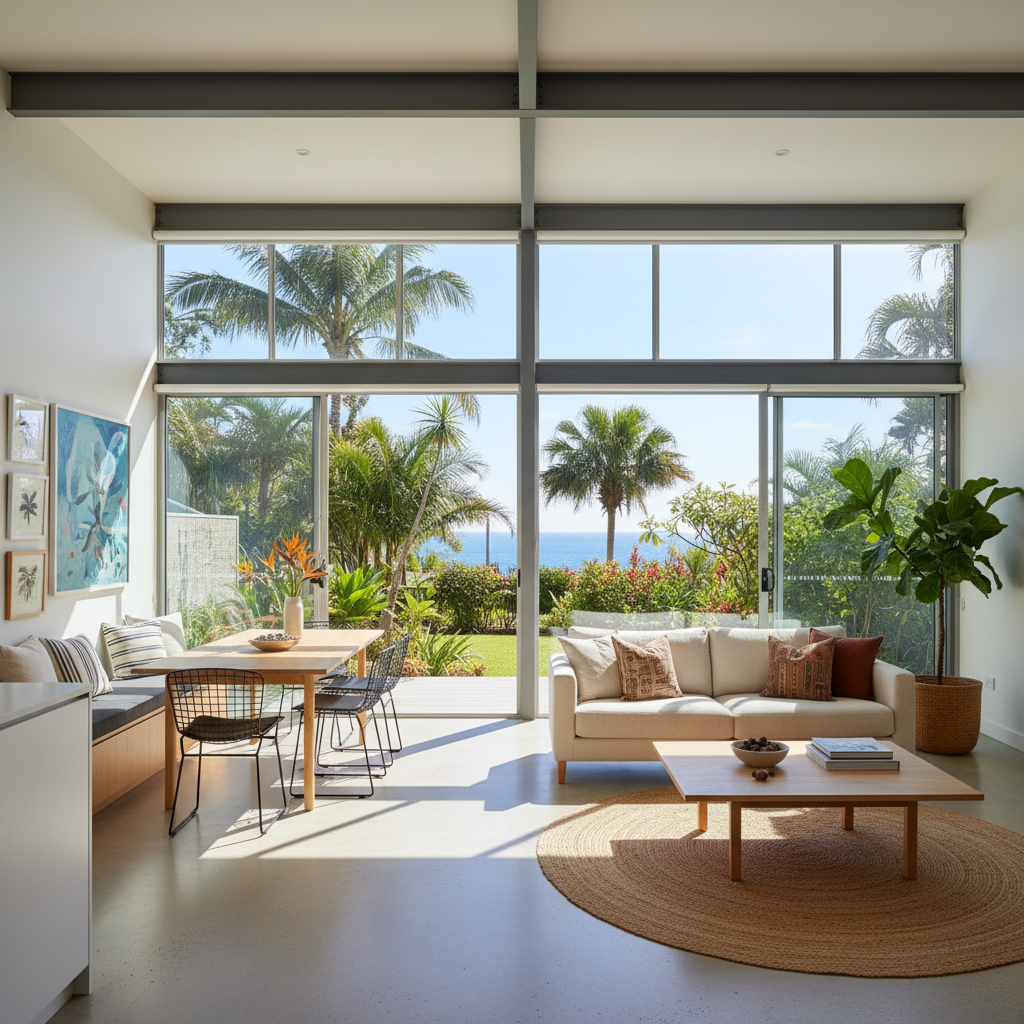
If you are looking at a floor plan that is under 80 square metres, the first thing you need to do is look up. Standard 2.4m ceilings in a small room make you feel like the walls are closing in. It is claustrophobic. When we talk to owner-builders, I always tell them to bump it up to 2.7m or even go for a raked ceiling if the kit design allows for it. Because volume matters more than floor area. You can have a tiny 3m by 3m bedroom, but if the ceiling is high and there is a big window letting in the afternoon sun, it feels airy. It breathes. Plus, higher walls mean more room for high-level storage. Put your suitcases and the Christmas tree up near the ceiling. Keep the floor clear. If you can see the floorboards from one wall to the other, the room feels double the size. Simple as that.
Zoning without the walls
One of the biggest mistakes people make when they are planning their kit home layout is trying to cram too many doors into a small space. Doors are the enemy of small-home living. They need swing room. They chop up the visual flow. Instead, you should think about 'zoning'. Use your furniture or different floor finishes to mark out where the lounge ends and the kitchen starts. We had a guy down in Gippsland who built one of our smaller two-bedroom kits. Instead of a hallway, he used a double-sided bookshelf to create a gallery feel. It stopped the front door from opening right onto his sofa, but it didn't block the light. He saved about four square metres of floor space just by deleting a single internal wall. In a small house, four metres is the difference between a cramped kitchen and a chef-standard workspace.
Indoor-outdoor flow is not a cliché
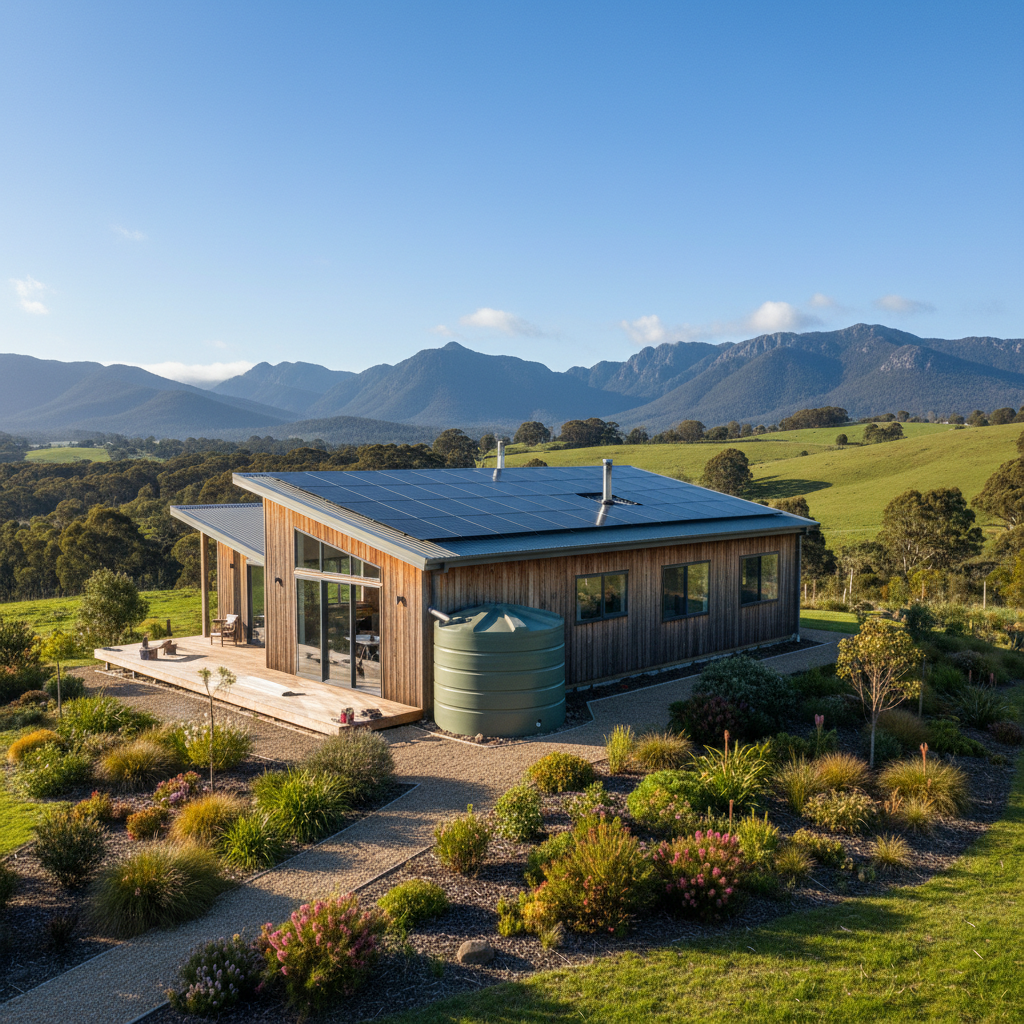
In Australia, we have the weather on our side, so use it. Your kit home should not stop at the external cladding. If you have a 60sqm interior, but you bolt on a 30sqm deck with big stacker doors, you suddenly have a 90sqm living area for nine months of the year. The trick is to keep the floor levels identical. If you have to step down 200mm to get onto your deck, your brain treats it as a separate space. If it is flush? Your eyes follow the line of the floor right out into the yard. It tricks you into thinking the house is huge. When you are picking your kit, look at the door openings. Go as wide as the steel lintel allows. It is worth the extra bits of gear in the kit to get that massive opening.
Kitchens that don't gobble the room
The kitchen is usually the hungriest part of a floor plan. It eats space. Most people think they need a massive island bench because that is what they see on those renovation shows on the telly. But in a compact kit home, a huge island just creates a traffic jam. I reckon the single-wall kitchen or a compact L-shape is the way to go. Use drawers instead of cupboards everywhere. Why? Because you can fit 40% more stuff in a drawer and you don't have to get on your hands and knees with a torch to find the Tupperware at the back. Also, integrated appliances are your best friend. If your dishwasher has a cabinet front on it, it doesn't break up the line of the room. It makes the kitchen look like a piece of high-end furniture rather than a utility zone.
Steel frames and the owner-builder advantage
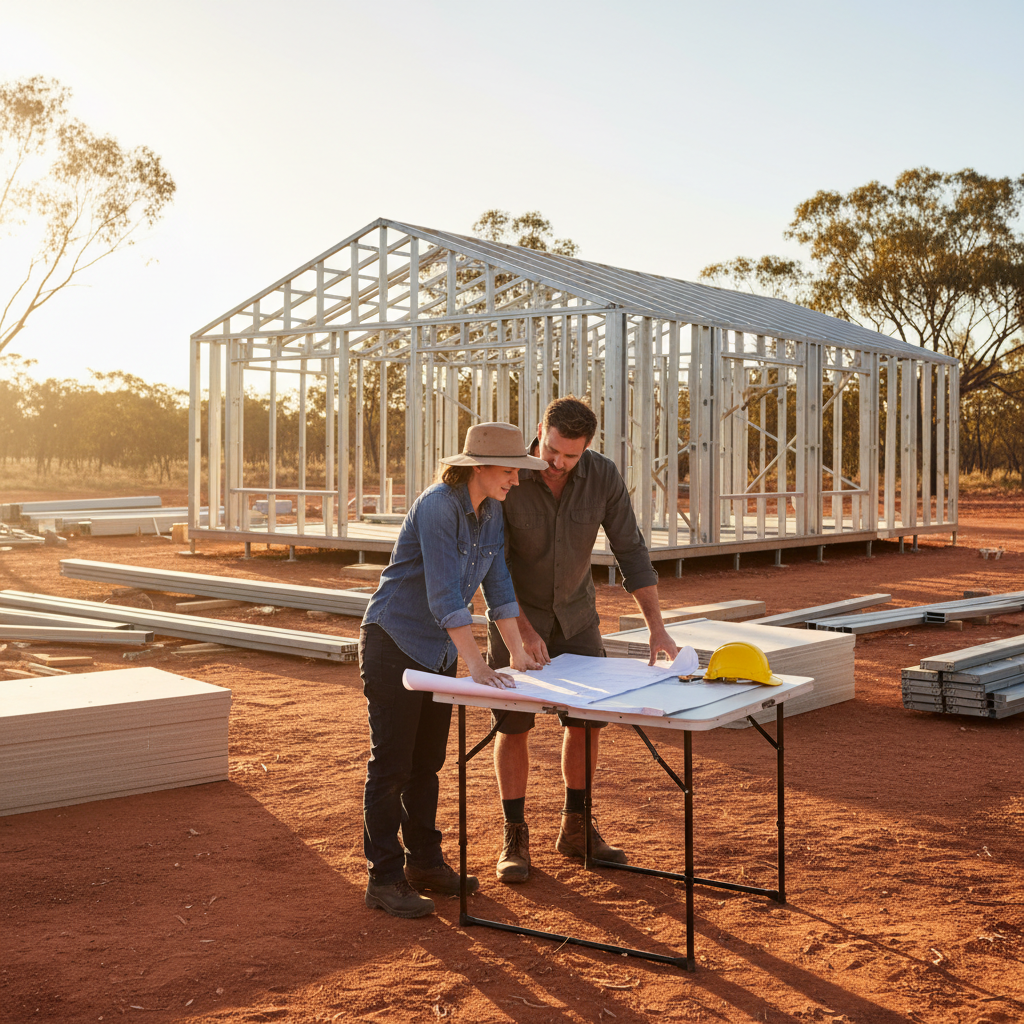
Let's talk turkey about the actual build for a second. If you are doing this as an owner-builder, you want skins that are straight. Timber moves. It bows, it twists, and if you are working in a tight space where every millimetre counts for your cabinetry fit-out, a wonky wall is a disaster. Precision is key. Steel frames are manufactured to the millimetre. When you go to bolt your kitchen cabinets to the wall, you know that wall is plumb. You aren't shimming things out for three days straight. Plus, in a small house, you have less wall cavity to play with. Steel frames use C-section studs that have pre-punched holes for your sparky and your plumber. It makes the rough-in much faster, which is a win when you are paying trades by the hour. And let's be honest, nobody wants termites eating their house from the inside out while they are trying to enjoy their downsized lifestyle.
Storage is a hidden science
You have to be ruthless. If you haven't used it in a year, get rid of it before you move into a small kit home. But for the stuff you keep, you need 'active' and 'passive' storage. Active storage is for the things you use every day: the toaster, your boots, the dog lead. This needs to be at eye level or waist height. Passive storage is for the stuff you need once a year. Put that in the ceiling void or under a built-in bench seat. A classic trade trick is to build storage into the 'dead' spots. The space under the bed, the area above the fridge, even the cavity behind a bathroom mirror. Every centimetre is a victory. If you're building on a sub-floor instead of a slab, you can even build trapdoor storage into the floor for things like wine or tools. Just don't forget where you put them.
Lighting makes or breaks the mood
A dark corner is a dead corner. If a corner is dark, it feels like the room ends earlier than it actually does. You want a mix of light sources. Don't just slap four LED downlights in the middle of the ceiling and call it a day. That is hospital lighting. It is depressing. Use wall sconces to throw light up the walls. Use pendant lights over the kitchen bench to create a 'zone'. And whatever you do, maximize your natural light. North-facing windows are the golden rule in Australia. They give you that beautiful winter sun that heats up your thermal mass (like a polished concrete slab) and keeps the place bright without you having to flick a switch at 2pm. Just match your eaves to your latitude so you aren't roasting in the middle of February.
A few quick tips for the small-home owner-builder:
- Skip the bathtub unless you really, truly love a soak. A big walk-in shower with a glass screen makes a bathroom feel triple the size.
- Choose a consistent colour palette. Too many different colours make a small house feel busy and cluttered.
- Invest in good quality windows. In a small space, you are always close to the glass, so you will notice the drafts and the noise if you go cheap.
- Think about your acoustics. Small houses can be noisy. Use acoustic batts in the internal walls, especially around the bathroom and laundry.
- Don't skimp on the insulation. Because a small volume of air heats up and cools down quickly, you want a top-notch thermal envelope to keep it stable.
At the end of the day, a kit home gives you the bones to create something pretty special without the massive mortgage that usually comes with a new build. It is about quality over quantity. I would rather live in a 50sqm house that is finished to perfection with beautiful Tasmanian Oak floors and huge windows than a 300sqm beige mansion built out of cheap plasterboard. Focus on the details, get your zoning right, and embrace the fact that you will have way less housework to do on the weekends. That sounds like a win to me.