The first time a concrete truck rolls up to your block at 6:30 AM and the driver looks at you like you've got two heads because you haven't mentioned the pump height, you'll realize being an owner builder isn't just about swinging a hammer. It's about communication. You are the project manager now. Whether you're building a sleek three-bedroom Varley design in the humid Hills of Perth or a small granny flat in back-block Dubbo, your ability to talk to trades will decide if your build is a dream or a total disaster.
The Myth of the 'Loud' Tradie
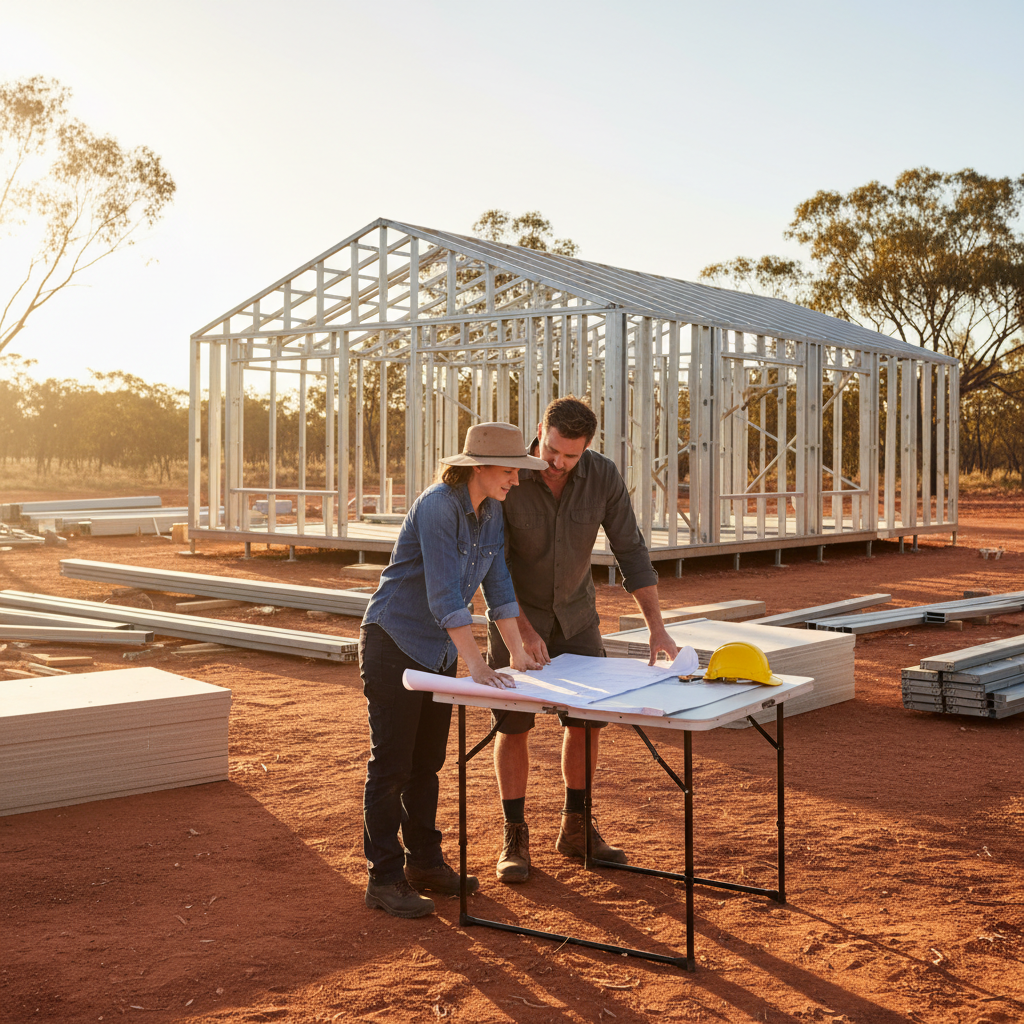
There is this weird idea that you need to be aggressive to get things done on a site. It's rubbish. Most chippies and sparkies just want clear instructions and a site that's ready for them to work. If you've ordered a kit and the TRUECORE steel frames are sitting on the slab ready to go, the last thing your carpenter wants is to spend three hours moving your leftover timber out of the way before they can start. Respect their time. Have the site clean. Because if you waste their morning, you'll be at the bottom of their call list when you need them for the fit-out six months later.
Be Specific or Be Prepared to Pay Twice
Vague instructions are the fastest way to blow your budget. Don't tell an electrician 'put some lights in the kitchen'. They'll do the easiest, fastest thing possible, which usually means four downlights in the wrong spots. Instead, print out your floor plan, mark every single GPO (power point) and light switch, and walk the site with them before they start the rough-in. Point at the actual steel studs. 'I want a double GPO exactly 300mm off the finished floor level here.' That's how a pro does it. Steel frames make this part interesting because you've got pre-punched holes for your services. Show the trades these holes early. Some old-school blokes might complain about working with steel if they're used to pine, but once they see those service holes, they usually shut up and get on with it.
Understanding the Steel Frame Transition
Since we're talking about kit homes, you're likely working with BlueScope steel. It's dead straight. It doesn't warp. But it does require a slightly different mindset for your trades. When you're chatting with your carpenter, ask them if they've got a decent supply of tech screws and the right bits for their impact driver. It sounds minor. But I've seen jobs stall for half a day because a subbie turned up with a box of timber nails and nothing else.
One trick I always tell owner builders is to mention the NCC Volume 2 requirements early. Trades respect a builder who knows their stuff. Tell them you expect the installation to meet AS 4100 or the relevant cold-formed steel standards. It lets them know you're watching the details and you aren't just a weekend warrior who doesn't know a spirit level from a shovel.
The Paperwork Trail
Don't rely on a handshake. Ever. I don't care if it's your cousin's best mate. When you agree on a price for the slab or the plumbing, get it in a text or an email. 'Following up on our talk this arvo, we agreed on $4,500 for the internal drainage, including the stack work for the ensuite.' It saves those awkward 'I never said that' moments when the invoice arrives. Plus, your certifier is going to want to see everything. Insurance, licenses, and compliance certificates for the waterproofing and electrical work are non-negotiable. If you don't collect these as you go, you'll be chasing blokes across the state two weeks before you're supposed to move in. It’s a nightmare.
Managing the Sequence
Building a kit home is like a big, expensive puzzle. You can't put the cladding on before the windows are flashed correctly. You can't do the insulation before the sparky has finished the rough-in. As the owner builder, you need to know the order of operations. Check your kit manual. Then check it again. I once knew a guy who booked the plasterers while the roof was still half-finished. One storm later and he was buying a whole new load of Gyprock.
- The Concreter: Needs to know exactly where your plumbing goes. Steel frames don't give you much wiggle room on the slab edge.
- The Chippy: Needs the kit delivery schedule. Don't have them standing around waiting for a truck that's four hours away.
- The Roofer: Needs to know the BAL rating (Bushfire Attack Level) if you're in a fire-prone area. This affects your sarking and ridge capping details.
Handling Disputes Without the Drama
Things will go wrong. A window might arrive with a scratch, or the plumber might accidentally nick a steel noggin while running a pipe. Stay calm. Screaming at people on a building site gets you nowhere. If a trade makes a mistake, ask them how they plan to fix it to meet the Australian Standards. Most blokes take pride in their work and will make it right if you approach them with a bit of sense. But you've got to be on site. You can't manage a kit build from an office in the city while your block is two hours away. You need to be there to see that the vapor barrier is taped properly and the window flashing isn't tucked in the wrong way.
The Power of a Cold Drink
Sounds clichéd, but it works. Keep a fridge on site. Stock it with water and maybe some Gatorade if it's a 35-degree day in January. You don't have to be their best friend, but being a decent human goes a long way. When a trade feels looked after, they're more likely to give you that extra bit of effort when things get tricky. And on a kit home build, things always get a bit tricky at some point.
Ready for the Next Phase
By the time your roof is on and your cladding is looking sharp, you'll have a PhD in people management. Communicating with trades isn't about knowing every technical term in the book. It's about clarity, preparation, and keeping a paper trail. You're building a home that's going to stand for decades. Take the time to get the talk right, and the rest of the build will follow. Tomorrow morning, when you're standing on that fresh slab, take a breath. You've got this. Just make sure the plumber knows where the vanity is going before he starts digging.