I see it every single time a new owner-builder walks into a shed or picks up a floor plan. They look at the bedroom sizes. They measure the kitchen bench. They check if the master ensuite has room for a double vanity. Hardly anyone looks at the orientation of the sun or where the afternoon breeze actually comes from. If you get this wrong, you're building a beautiful, expensive box that feels like an oven in February and a fridge in July.
The North-Facing Rule is Not Just a Suggestion
In Australia, the north side of your block is gold. Pure gold. During winter, the sun sits low in the sky to the north. If you have big windows or glass sliding doors on that north wall, the sun pours in and hits your floor. It warms up the whole house for free. But I see people put their laundry or a windowless bathroom on the north side because 'that's just where the plan put it'. Change the plan. Swap the rooms around. You want your living areas, the spots where you actually spend your time, facing north.
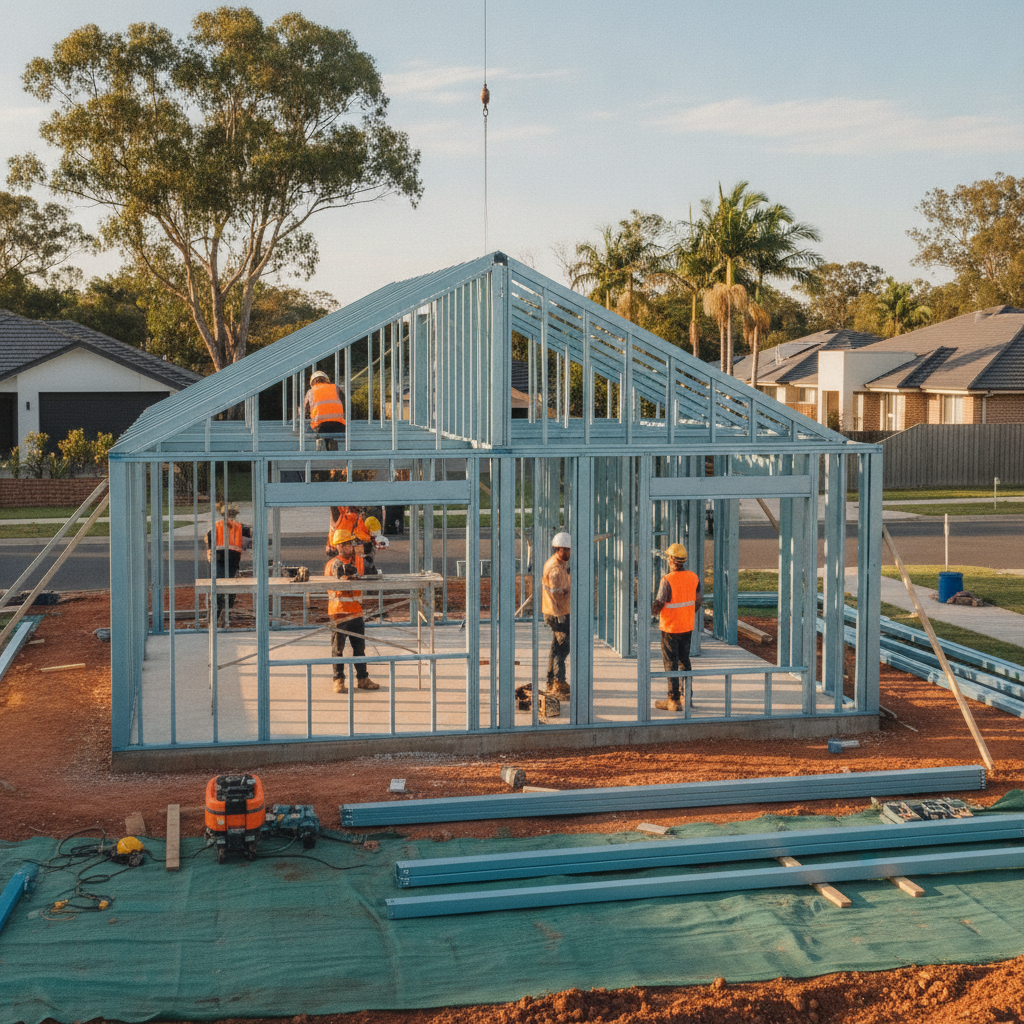
When you use a steel frame kit house, you actually have heaps of flexibility here. Because the TRUECORE steel frames are incredibly strong and light, you can often have wider spans for windows without needing massive, heavy timber lintels that are a pain to install. I've seen builds in regional NSW where the owner-builder literally flipped the entire floor plan 180 degrees just to catch the winter sun. Best decision they ever made. If you're building on the south side of a hill, you've got to work even harder. You might need to look at clerestory windows, those high-up ones near the roofline, to grab light from over the top of the house.
Cross Ventilation and the Afternoon Gully Breeze
Lighting is one thing, but if the air doesn't move, you're stuck. We've all been in those houses where you open the front door and the air feels 'heavy'. That's a lack of cross-ventilation. To get air moving, you need an entry point and an exit point. If you only open one window in a room, the air just hits a wall and stays there. But if you have two windows on opposite walls, or even adjacent walls, the pressure difference pulls the air through. It's basic physics, but it's ignored way too often.
Think about the local winds. In Perth, you've got the Freemantle Doctor. In Brisbane, it's those coastal northeasterlies. If you're building in the hills, you'll get gully breezes as the air cools down at night. Position your louvres or awning windows to catch these. Louvres are fantastic because you can keep them open even when it's raining slightly, and you can angle them to scoop the air into the room. Just check your BAL (Bushfire Attack Level) rating first, because some councils get picky about louvres in high-risk zones. You might need specific glass or metal screens to meet AS 3959 standards.
Why Steel Frames Help with High Ceilings
People reckon they're stuck with 2.4m ceilings in a kit home. Not true. Often, going up to 2.7m or even doing a raked ceiling makes a world of difference for light and air. Heat rises. If you have a bit more head height, that hot air sits above you rather than right on your face. Because steel frames don't warp or twist like some timber can, your long vertical lines stay dead straight. This is a massive win when you're installing tall windows or glass stacker doors. There's nothing worse than a header beam sagging 5mm and suddenly your 3-meter wide sliding door won't slide anymore. Steel doesn't do that. It stays where you put it.
Glazing is Your Biggest Expense and Best Investment
Windows are expensive. In a standard kit, they're often the second biggest cost after the frames and cladding. But don't skimp. Low-E glass (Low Emissivity) has a microscopic coating that reflects heat while letting light through. It's like a thermos for your house. If you're in a cold spot like Ballarat or the Blue Mountains, you'll want double glazing. If you're in the tropics, you want the biggest openings possible with high-quality insect screens that don't block the air.
Eaves are the other half of the window equation. A lot of modern builds have no eaves. They look like boxes. It’s a terrible idea for the Australian climate. You want eaves that are wide enough to shade the glass in summer when the sun is high and hot, but let the sun under the eave in winter when it’s lower. For most of Australia, an eave of about 450mm to 600mm is the sweet spot, depending on your latitude. It saves your carpet from fading and keeps your skin from burning while you're sitting on the sofa.
Small Design Tweaks for Big Gains
Don't be afraid to add a skylight in a dark hallway. Yes, it's an extra hole in your roof, but it's better than living in a cave. And watch out for 'dead zones' in your floor plan. These are usually the corners of the house where air gets trapped. A simple breeze path from the front of the house to the back can be created just by aligning internal doors.
One more thing about steel. It doesn't rot if there's a bit of condensation, and it isn't a snack for termites. This matters because when you're designing for high ventilation, you're sometimes opening the house up to the elements more than a traditional 'sealed' box. Knowing the bones of your house are BlueScope steel gives you a bit of peace of mind when the humidity is 90% and you're leaving every window wide open to try and catch a breath of air.
A Checklist for Your Site Visit
Before you sign off on your kit design, take a folding chair to your block of land at 3:00 PM on a Saturday. Sit where the lounge room is going to be. Where is the sun? Is it hitting you right in the eyes? If yes, you'll need blinds or a different window spot. Is there a breeze? Which way is it blowing? If you're just looking at a computer screen in an office, you're guessing. Real owner-builders get their boots dirty. They walk the site. They see how the shadows fall from the neighbor's gum tree.
Building your own place is a massive crack at the Australian dream. It's hard work, and the paperwork from the council will probably make you want to throw your laptop across the room. But when you're sitting in your kitchen six months after move-in, and the morning sun is hitting the bench just right while a cool breeze keeps the flies moving, you'll be glad you spent the time fussing over the layout. Don't just build a house. Build a place that breathes.