The Owner Builder Reality Check
Most blokes and plenty of handy women walk into the owner builder game thinking the hard part is the physical labor. It isn't. Not by a long shot. You can hire a chippy or a sparky to do the heavy lifting, but you can't hire someone to care as much as you do about the council paperwork sitting on a desk in some windowless back office. I've spent 15 years watching people tackle kit homes across Australia, from the humid blocks in Far North Queensland to the freezing hills of Tassie. The ones who succeed aren't always the ones with the best tools. They're the ones who know how to stay three steps ahead of the chaos.
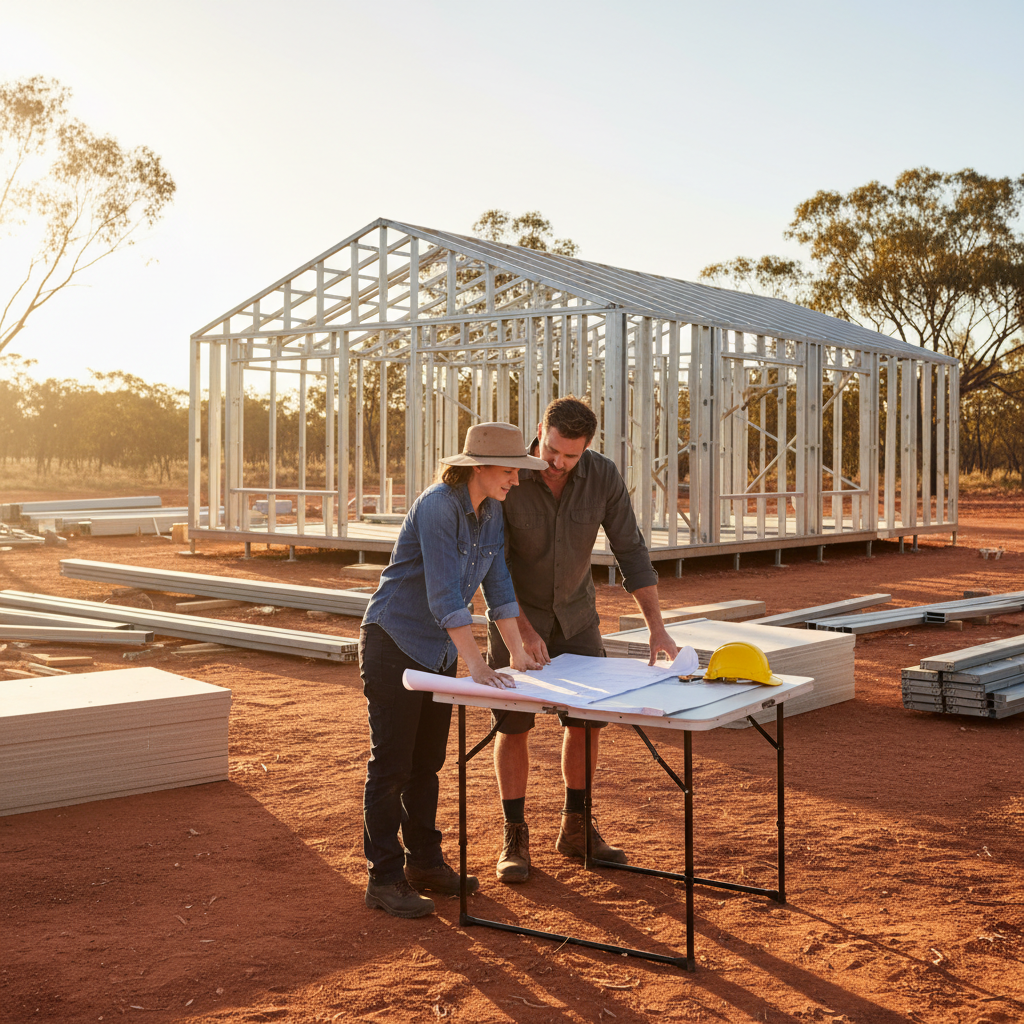
Building a home is a giant logic puzzle. When you buy a kit, you've got the bones of the house ready to go. We're talking BlueScope TRUECORE steel frames that arrive on site, straight and true, ready for you to bolt together. But if your slab isn't poured because you didn't book the concretor six weeks ago, that steel is just going to sit there getting rained on while you bleed time. Time is the one thing you can't buy back at Bunnings.
The DA Trap and the Council Wait
Don't even think about ordering your kit until you've got that stamped Development Application (DA) or Complying Development Certificate (CDC) in your hand. I've seen it happen. Someone gets excited, orders a beautiful three-bedroom ranch style kit, and then finds out the local council has a beef with their setbacks or their BAL (Bushfire Attack Level) rating. Suddenly, they're paying to store a house they aren't allowed to build yet. It's a mess. Because every council is different, you need to be on a first-name basis with the duty planner. Ask them about specific local overlays. Is there a koala habitat plan? Is the soil reactive? These details dictate your footings, and your footings dictate everything else.
Slabs and Site Works: The Foundation of Sanity
Your kit home is only as good as the ground it sits on. If your slab is out by 20mm, those steel frames won't line up. Steel isn't like timber; you can't just plane a bit off the side if it's wonky. It's precision engineered. This means your site prep has to be spot on. We had a guy out near Dubbo who tried to save a few bucks by doing his own site leveling with a hired bobcat. He ended up with a pad that looked like the surface of the moon. He spent twice as much fixing it with extra concrete as he would have spent hiring a pro to do it right the first time. Get a surveyor. Get a proper civil contractor. It's not worth the headache.
The Trade Management Nightmare
You aren't just a builder now. You're a project manager, a diplomat, and occasionally a detective. Trades are flat out. If you call a plumber on a Monday and expect him there Tuesday, he'll laugh you off the phone. You need to book your critical path trades months in advance. And I mean months. Plumbers and sparkies need to do their 'rough-in' before the internal linings go on. If you miss that window, you're stuck.
But here's the kicker. Don't just book them. Call them a week before to confirm. Call them the day before. Trades appreciate a client who has the site ready. Have the site clean. Make sure there's clear access for their trucks. If a sparky turns up and has to spend two hours moving piles of cladding just to get to the meter box, he won't be coming back in a hurry. Plus, you'll be paying for his time to move stuff instead of wiring your kit.
The Steel Frame Advantage (And the Reality)
We supply steel frames because they don't warp, twist, or get eaten by termites. In Australia, that's a massive win. You can leave a steel frame exposed to the elements for a bit longer than timber without worrying about it's structural integrity. But here's the trade-off. You need to think about your services early. Steel frames come with pre-punched holes for your wiring and pipes. If you decide halfway through that you want to move the kitchen sink to the other side of the room, you might find yourself drilling through steel, which is a lot harder than going through pine. Get your floor plan locked down. No changes once the steel is in production. None. Zip. Nada.
Managing the Delivery Deluge
One Tuesday morning, a crane truck is going to pull up at your gate. It'll be carrying your frames, your roofing, your cladding, and your windows. It's a lot of gear. Where is it going? If you just say "chuck it over there," you're shooting yourself in the foot. You need a staging plan. Put the roofing somewhere it won't be in the way for three weeks. Put the frames closest to the slab. Make sure the windows are stored upright and somewhere they won't get smashed by a stray piece of timber. And for heaven's sake, check the inventory immediately. If a box of fasteners is missing, you want to know now, not when you're standing on a ladder on a Sunday afternoon ready to screw the roof down.
Weather, Welfare, and WHS
The weather in this country is bi-polar. You'll have a week of 40-degree heat followed by a horizontal rainstorm that turns your site into a mud pit. As an owner builder, you're responsible for site safety. That's not just a legal box to tick for your White Card; it's about making sure your mates or your trades don't end up in the ER. Keep the site tidy. Manage your waste. If you've got piles of offcuts and plastic wrap blowing around, someone's going to trip. A clean site is a fast site. It sounds like something a boring safety officer would say, but it's the truth.
The 'Owner' in Owner Builder
It's easy to get burnt out. You're working your 9-to-5, then spending every weekend and every afternoon at the block. The physical fatigue is one thing, but the decision fatigue is what really gets people. What color handles? Which way should the door swing? What R-value insulation is best for the ceiling? These choices pile up. My advice? Decide early. Buy your fixtures and fittings before you need them. If your tapware is sitting in your garage three months before the plumber needs it, that's one less thing to stress about when the build gets intense.
Final Thoughts for the Brave
Building a kit home is a cracking way to get the house you want without the massive price tag of a full-service builder, but it's not a shortcut. You trade your own time and sweat for that equity. Take it one stage at a time. Slab. Frames. Roof. Lock-up. Internal fit-out. Don't look at the whole mountain at once or you'll freeze up. Just focus on the next five meters of the climb. Expect things to go wrong. A delivery will be late. A trade won't show up. It'll rain for ten days straight. When that happens, have a brew, let it go, and pivot. That's what a real builder does. You'll get there, and when you're sitting on that veranda with a cold one looking at a house you built with your own two hands, all the stress will feel like a lifetime ago.