The Floor Plan Trap and How to Avoid It
Most people spent their Tuesday night the same way. You're sitting on the couch with a lukewarm cup of tea, pinching and zooming on a PDF floor plan until your eyes go blurry. You think you've found 'the one' because it has four bedrooms and a double garage. But here is the thing. A floor plan isn't a static drawing. It is a series of movements. It's the sound of the kids thumping down the hallway at 6am. It's the smell of bacon hitting the extractor fan while you're trying to watch the news. If you don't get the flow right now, you'll be swearing at your hallway every single day for the next twenty years.
I've seen too many families rush into a layout because it looked good on a screen, only to realize too late that they didn't leave enough space for a decent linen cupboard or their fridge won't fit through the kitchen cavity. Kit homes Australia wide are booming because people want control. But with that control comes the responsibility of not building a lemon. Choosing a floor plan for a kit home involves a weird mix of dreaming big and being brutally honest about how messy your family actually is.
The North-Facing Myth and Solar Reality
You'll hear every designer talk about north-facing living areas. They aren't just blowing smoke. In Australia, if you put your main living area on the south side of the house, you're going to spend a fortune on heating. It'll be dark. It'll be miserable. But it's not always possible to have a perfect orientation. Maybe your block has a killer view of the valley to the west. Now you've got a problem. Do you take the view and bake in the afternoon sun, or do you stick to the 'rules' and look at a fence? Generally, I reckon you should prioritize the light. Use eaves. Use high-spec insulation. When we talk about kit homes, we're usually talking about BlueScope TRUECORE steel frames. These things are straight as a die, which makes fitting out your windows and doors a breeze, so make sure those openings are placed where the sun actually does some work for you.
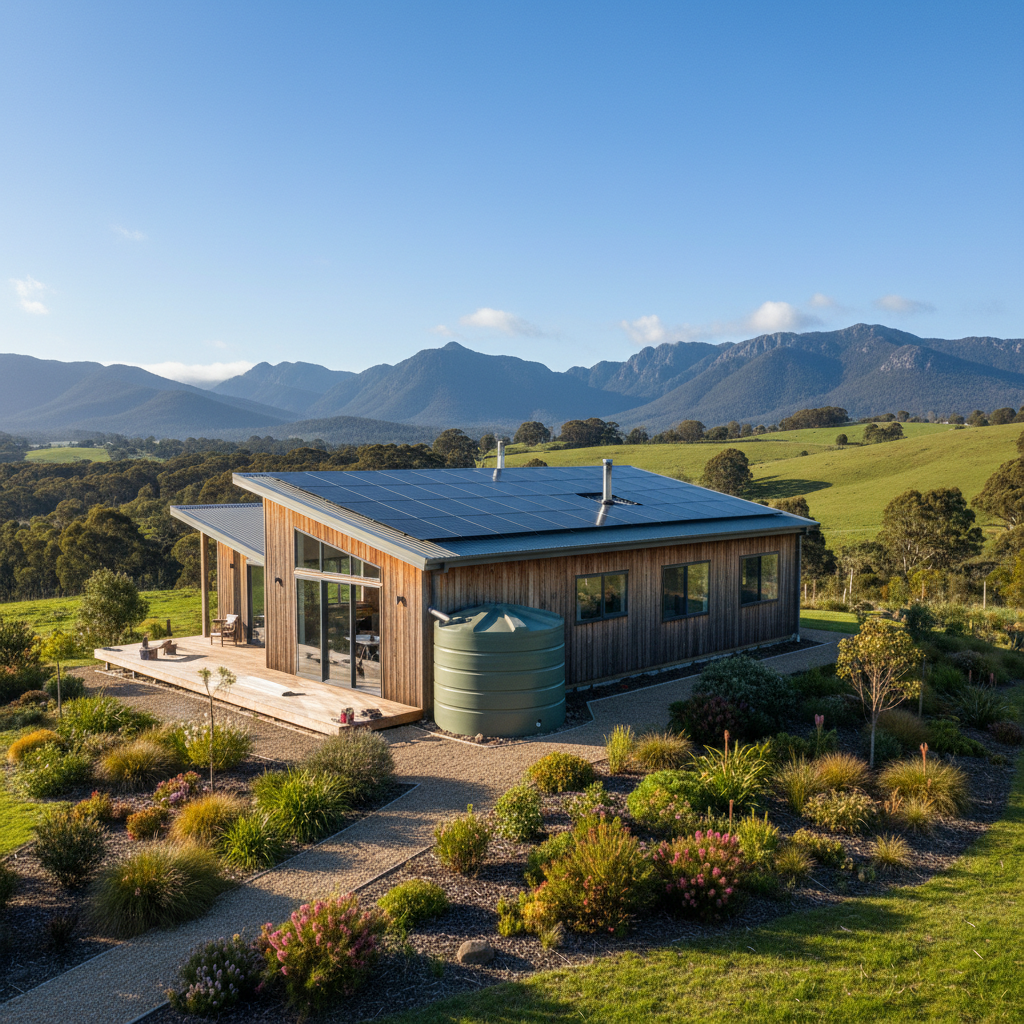
Think about the summer. A massive west-facing window is basically a giant heater you can't turn off. If your heart is set on a design like the 'Valley View' but your block faces the wrong way, flip the plan. Most kit providers can mirror the layout with a single click. Do it before the steel gets cut at the factory. It costs nothing at the design stage but thousands to fix later with tinted glass and heavy curtains.
Zoning for Sanity
Open-plan living was the best thing to happen to Australian housing, and also the worst. It's great for keeping an eye on the toddlers. It's horrific when the teenager is playing PlayStation and you're trying to have a quiet conversation three meters away. You need zones. Real ones. A good floor plan splits the house into three distinct areas: the social hub, the kids' wing, and the parents' retreat.
And don't just put a wall in and call it a day. Think about the buffer zones. A bathroom or a walk-in robe acting as a 'sound barrier' between the master bedroom and the lounge room is a pro move. Because let's be honest, nobody wants to hear the dishwasher cycling while they're trying to sleep. If you're looking at a 3-bedroom kit, see if you can tuck those secondary bedrooms away from the kitchen. It makes a massive difference to the livability of a small footprint.
The Mudroom: An Australian Necessity
We're an outdoorsy bunch. Whether you're on a suburban block in Dubbo or a few acres in the Adelaide Hills, you're going to come home with dirty boots, wet raincoats, or school bags that weigh thirty kilos. Most standard floor plans ignore this. They expect you to walk straight into the living room. Don't do it.
Even if it's just a widened hallway or a nook off the laundry, you need a 'dump zone'. A place for the chaos. If your chosen kit home plan doesn't have one, talk to the designer about extending the laundry. Since these are steel-framed kits, modifying the internal non-load-bearing walls is often pretty straightforward. Just remember that once you start moving external walls, you're changing the roof line and the engineering. Keep your tweaks smart. A slightly larger laundry that doubles as a mudroom is worth its weight in gold on a rainy Tuesday.
Kitchen Ergonomics: More than Just a Triangle
Everyone talks about the 'kitchen triangle'—the distance between the stove, fridge, and sink. It's old school, but it still works. But people forget about the pantry. In a kit home, you're often managing the fit-out yourself or hiring a local cabinet maker. This is where you can really shine. If your floor plan shows a tiny corner pantry, see if you can steal some space from the garage or a hallway to make it a walk-in.
Plus, think about where the groceries go. If you have to carry six bags of shopping through the entire house to get from the car to the kitchen, you'll hate it within a week. Look for a plan where the garage or carport has a direct or very short path to the pantry. It sounds like a small detail. It isn't. It's the difference between a house that works and a house that's a chore.
Future-Proofing and the 'What If' Factor
Families change. That nursery will be a teenager's cave in what feels like five minutes. When you're looking at your kit home layout, ask yourself if the rooms are flexible. Can that second living area be walled off later to become a fourth bedroom? Is the bathroom big enough for a walker or a wheelchair if an elderly parent moves in?
Because kit homes use steel frames, you've got amazing strength without needing a forest of internal load-bearing columns. This gives you more freedom for large, open spans. But don't go too big with the open spaces without thinking about how you'll heat and cool them. A massive cathedral ceiling looks stunning in a brochure, but in a Victorian winter, all your expensive heat is going to be sitting three meters above your head.
Practical Checklist for Kit Buyers
- Check your ceiling heights. Standard 2.4m is okay, but 2.7m feels a lot better for only a small jump in frame cost.
- Look at the hallway width. Narrow 900mm hallways feel like a submarine. Try for 1050mm or 1200mm if you have the floor space.
- Count your power points. Then double them. Especially in the kitchen and the home office.
- Suss out the storage. You need a dedicated spot for the vacuum, the ironing board, and those Christmas decorations you use once a year.
The Reality of the Owner-Builder Path
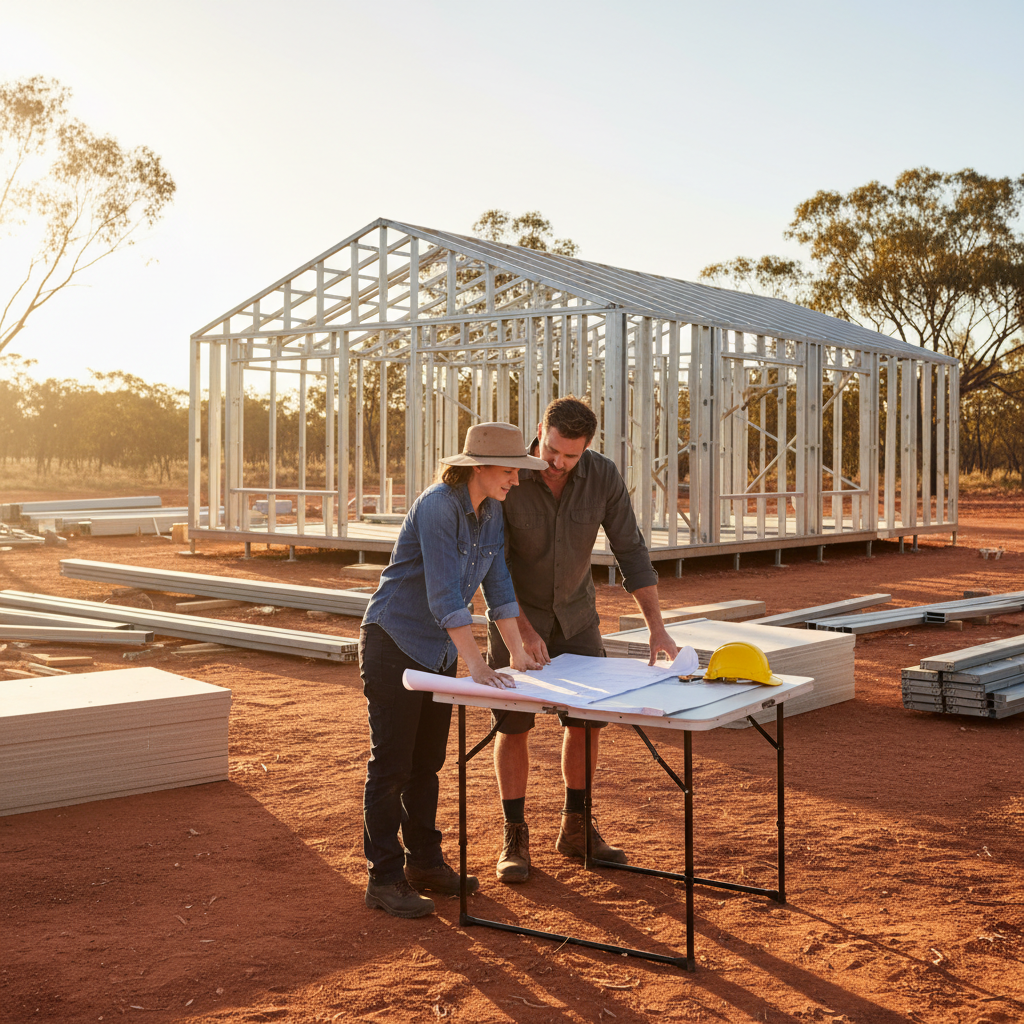
Building a kit home means you're wearing the pants. You aren't just a spectator. You're the one coordinating the slab, the sparky, and the plumber. This means your floor plan needs to be practical for trades too. If your plumbing is scattered all over the house—one bathroom at one end, the kitchen in the middle, and the laundry at the far side—your plumber is going to charge you a fortune in pipework and labor. To keep things efficient, try to group your 'wet areas' together. It simplifies the drainage and saves a heap of cash on the slab prep.
At the end of the day, a floor plan is a tool for living. It shouldn't be a hurdle. Take your time. Walk through your current house with a tape measure. If a bedroom in the kit plan says 3.0m x 3.0m, mark that out on your current floor and see if your bed actually fits with a bedside table. Most people skip this step. They just assume it'll be fine. Don't be that person. Be the one who knows exactly where the couch is going before the first steel stud even arrives on site on the back of the truck.