The Floor Plan Trap
Most people sit down with a pile of kit home brochures and a highlighter, thinking they're looking for a house. They aren't. They're looking for a lifestyle that probably doesn't exist yet. I've seen blokes in Dubbo swear they need a four-bedroom palace when it's just them and the dog, and I've seen families in the Huon Valley try to squeeze three teenagers into a footprint the size of a double garage. It never works. You spend half your life tripping over boots in the hallway because you forgot to plan for a mudroom.
Selection is about logic, not just aesthetics. A floor plan is a set of instructions for how you'll move through your day. Does the sun hit the kitchen at 7am? Can you get the groceries from the car to the bench without walking through the kid's Zoom call? These are the real questions. If you get the layout wrong, even the most expensive BlueScope steel frame won't save your sanity three years down the track.
The North Facing Rule is Not a Suggestion
In Australia, if you ignore solar orientation, you're building a kiln in summer and an icebox in winter. Simple as that. When you're looking at a kit home design, look at where the glass is. You want your main living areas facing north. If the plan you love has a massive wall of floor-to-ceiling windows on the west side, you're going to bake. Your aircon will be screaming for mercy by January.
But here is the catch. Most kit providers allow for minor modifications. If you find a layout that fits your family but the windows are on the wrong side for your block, ask for a flip. Mirroring a plan is a standard request. It costs practically nothing at the design stage but saves you thousands in power bills over the next decade. Because we use BlueScope TRUECORE steel, the structural integrity remains rock solid whether that load-bearing wall is on the left or the right side of the hallway.
Zoning for Peace and Quiet
Kids are loud. This is a scientific fact. If your master bedroom shares a thin wall with the TV room, you'll know exactly what's happening in every episode of Bluey whether you're awake or not. When you're scanning plans, look for 'zoning'. The best layouts put the master suite at one end and the secondary bedrooms at the other. Use 'buffer zones' like bathrooms, laundries, or walk-in robes to separate noisy areas from quiet ones.
Think about the laundry too. In many kit designs, the laundry is tucked behind the kitchen or near the back door. That's fine. But check the access. If you've got to drag a basket of wet towels through the entire lounge room to reach the clothesline, you've failed the design test. A direct door from the laundry to the outside is a non-negotiable for anyone who actually does their own housework. Small things. Big impacts.
Steel Frames and Open Plan Freedom
One reason I always point people toward steel frame kits is the span. Steel has a much higher strength-to-weight ratio than timber. This means we can achieve wider open-plan areas without needing those annoying support columns right in the middle of your dining room. If you want a vast, uninterrupted kitchen and living area, steel is your best mate.
However, don't get carried away with 'open plan' everything. You still need walls for furniture. People forget this. They design a room that's 80% glass and then realize there is nowhere to put the TV or the bookshelf. Or worse, nowhere to hide the mess. A 'scullery' or a walk-in pantry is a godsend here. It lets you have that sleek, open kitchen while all the toaster crumbs and half-empty cereal boxes are hidden behind a wall. When you look at a plan, literally draw your furniture onto it with a pencil. Scale matters. A king-size bed needs at least 3.5 metres of wall width to feel comfortable, not cramped.
The Owner Builder Reality Check
Since you're likely managing this project yourself, you need to think about the build process while you're looking at the drawings. A complicated roofline with five different valleys and peaks looks fancy, but it's a nightmare to flash and gutter correctly. Simple is better. A straightforward gable or skillion roof is easier to build, less likely to leak in a Brindabella storm, and stays within your council's height restrictions more easily.
Check the wet areas. If the kitchen, main bathroom, and ensuite are all located in separate corners of the house, your plumber is going to charge you a fortune. Why? Because they have to run pipes all over the site. Grouping the wet areas together or 'back-to-back' keeps the plumbing costs down and makes the whole system more efficient. It's smart engineering. Plus, it makes the underground drainage work much faster when you're hitting the slab stage.
Storage is the Silent Killer
I've never met a person who said, "I have too much storage space in my house." It doesn't happen. Most standard floor plans are light on storage to keep the square metreage down. Look for hallways that can accommodate a linen press. Check the bedroom wardrobes. Are they deep enough? A standard robe needs to be 600mm deep. If the plan says 500mm, your coat hangers will be sticking out sideways forever.
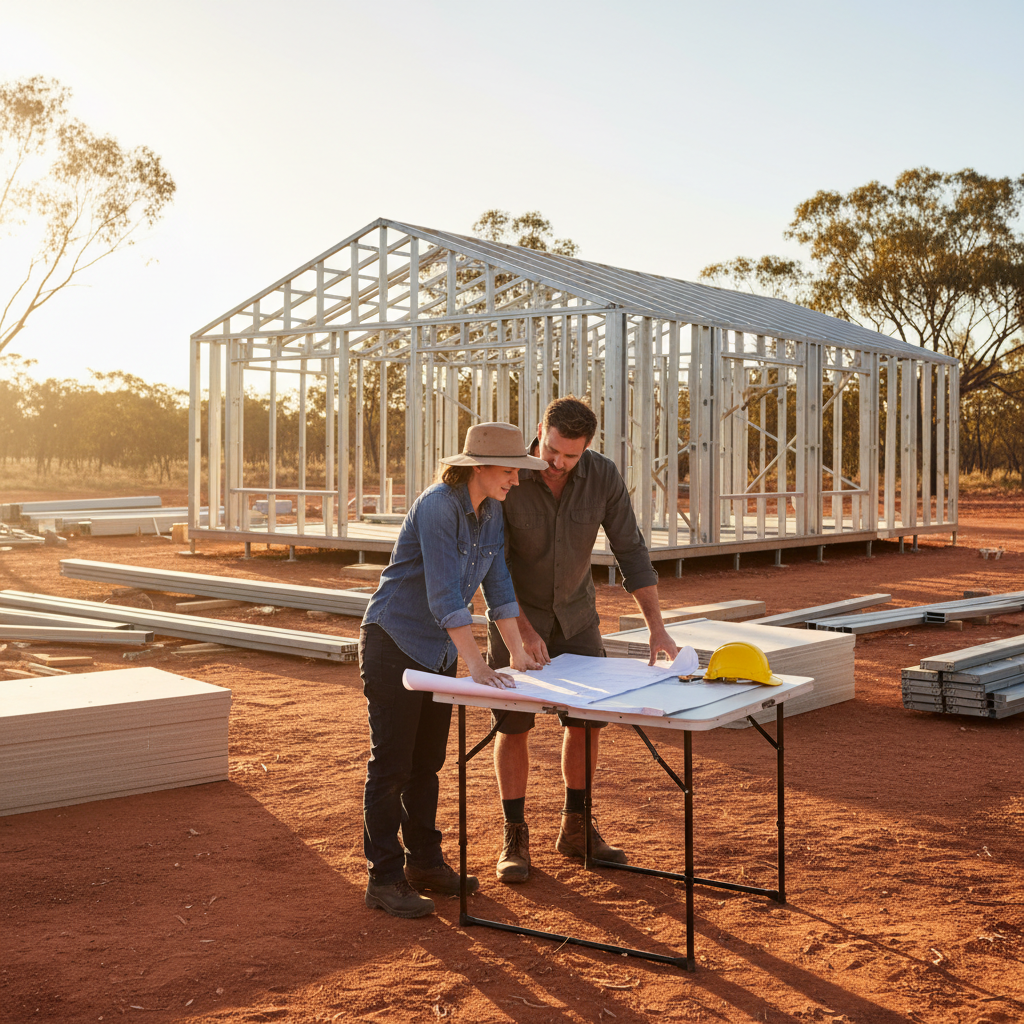
Because kit homes arrive as a package including your frames, cladding, and windows, you need to have these storage decisions locked in before the steel is cut. You can't just decide to move a wall ten inches once the TRUECORE frames are standing on the slab. That's the beauty of the system, it's precise. But that precision requires you to be honest about how much 'stuff' your family actually owns. If you've got camping gear, surfboards, or three sets of golf clubs, they need a home on that piece of paper before the first truck arrives.
Final Thoughts for the Savvy Buyer
Don't rush this. Print the plan out. Tape it to your fridge. Walk through it in your mind every morning while you're making coffee. If something feels tight on paper, it will feel like a prison in real life. Talk to your kit provider about your specific block, because a plan that works in a suburban street in Ballarat might be a total disaster on a sloping block in the Sunshine Coast hinterland. Get the basics right, trust the steel, and the rest will fall into place.