The Trap of the Glossy Brochure
Most people start their building path on a Sunday afternoon, flicking through beautiful PDF floor plans while the snag sizzle on the BBQ is still in the air. It’s easy to get sucked into a layout because the master bedroom looks huge or the kitchen island has enough stone to land a helicopter on. But a kit home isn't a Lego set you just chuck on any flat surface. If you don't ask the hard questions now, you'll be standing in a paddock in six months, staring at a pile of BlueScope steel frames and wondering why the heck the laundry door opens right into the path of the evening breeze or why your windows don't meet the local BAL rating requirements.
I've seen it heaps. A bloke buys a three-bed kit because it’s a bargain, only to realize his site in the Adelaide Hills is so sloped he needs sixty grand in earthworks before the first pier even goes in. You’ve got to be smarter than the marketing. You need to grill your provider before you sign that contract. Because once those frames are packed on the truck and heading your way, making changes becomes an expensive headache that'll ruin your weekends for a year.
Is the Design Fit for Your Specific Patch of Dirt?
Just because a design is popular in Queensland doesn't mean it works in the Victorian High Country. Period. One of the first things you need to ask is about wind ratings. Australia is split into different regions under AS 1170.2, and if you’re in a cyclonic area like near Townsville, your kit needs to be beefed up significantly compared to a backyard in suburban Melbourne. Don't let a sales rep gloss over this. Ask them straight: "Is this frame engineered for N3 wind ratings, or are we looking at C2?" If they stutters, walk away.
And let's talk about the slab. Most kit providers give you the frames, the roof, and the cladding, but they don't know your soil. You’ll need a soil test first. If you’ve got reactive clay (looking at you, Western Sydney), your engineer might specify a heavier slab or deeper footings. You need to know if the kit design can be easily mirrored or flipped. Sometimes, simply swapping the lounge and the kitchen layout makes the difference between a house that’s an oven in summer and one that actually catches the cross-breeze. Plus, it might save you a fortune on excavation if you can align the building with the natural contours of your land.
What Exactly Is in the Box?
This is where the DIY dream can turn into a Bunnings nightmare. You need a line-by-line list of inclusions. We’re talking about every nut, bolt, and flashing. Does the kit include the external cladding and the internal wall frames? Are the windows double-glazed or just standard glass? In many parts of Australia now, double glazing is basically mandatory to meet the 7-star energy ratings under the NCC 2022 updates. If your kit supplier is still pushing single-pane aluminium sliders from the 90s, you're going to fail your occupancy permit.
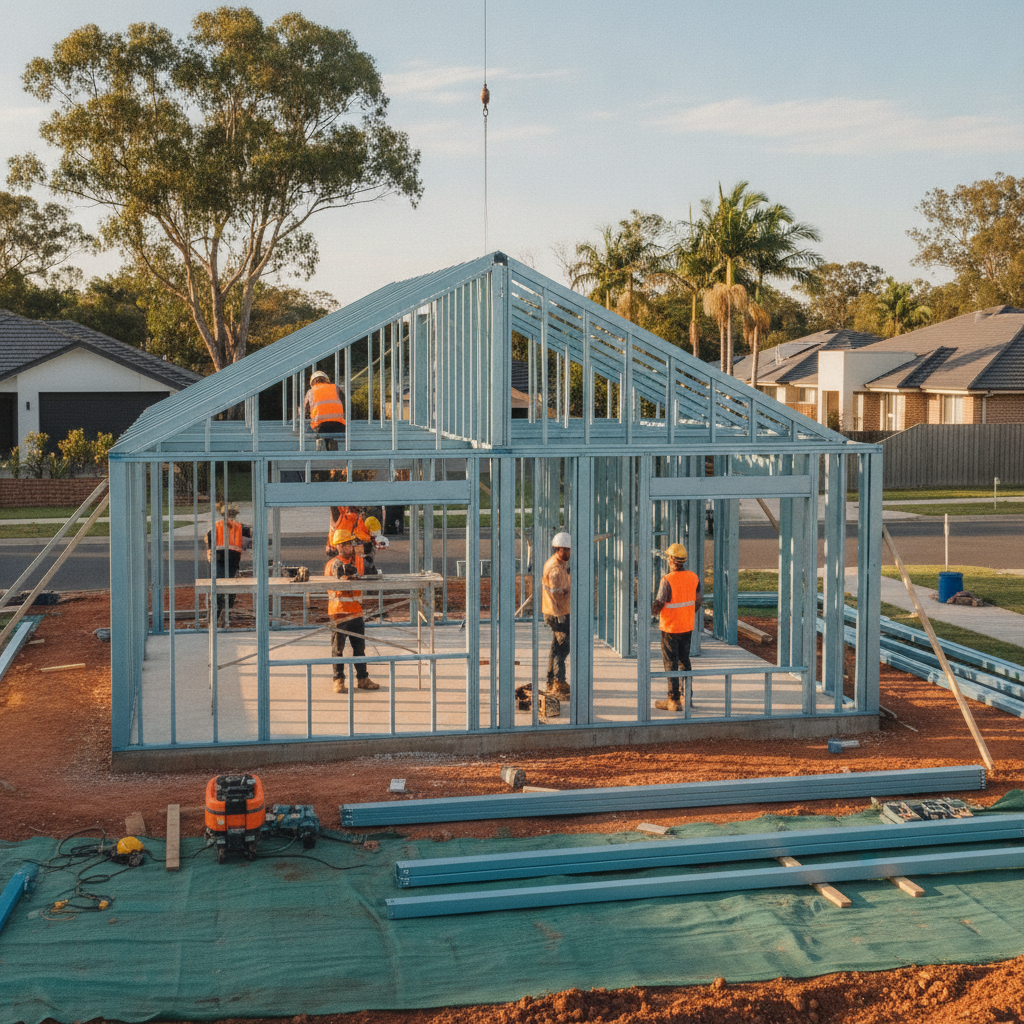
I always tell people to check the insulation specs. It’s one thing to get a roof and walls, but if the R-value of the insulation they’ve chucked in is bottom-of-the-barrel, you’ll spend your life savings on the air con bill. Ask if the kit uses TRUECORE steel. Why? Because it stays straight. Timber moves, twists, and gets chewed by white ants. Steel doesn't. But you also need to know if the frames come pre-punched for your sparky and plumber. If your trades have to spend three days drilling holes through steel studs just to run a bit of PVC pipe, they’ll charge you an absolute mint in labor.
Bushfire Ratings and the Red Tape
If you're building on the edge of the scrub, you’re likely in a Bushfire Attack Level (BAL) zone. This isn't just a suggestion; it's the law. Ask your kit provider if their windows and doors meet BAL-29 or BAL-40 standards if that's what your council overlay says. You don't want to find out during the final inspection that your glass isn't thick enough or your flyscreens aren't metal mesh. It’s a gut-punch of a mistake.
Also, suss out the delivery. Kit homes usually arrive on a massive semi-trailer. If you live down a skinny dirt track with a low-hanging bridge, that truck isn't getting through. You need to ask: "How does the kit get off the truck?" Do you need to hire a crane or a hiab? Don't assume the driver is going to help you unload 5 tonnes of steel by hand. They won't. They'll drop it at the gate and leave you to it.
The Trade-Off: Owner Builder vs. Hiring Help
You’re probably thinking you’ll do it all yourself. And look, it’s a great way to save a buck and get that sense of pride once the roof is on. But be honest about your skills. If you struggle to put together a flat-pack bookshelf, a whole house might be a stretch. The beauty of a steel frame kit is that the engineering is done for you. The pieces are numbered. It’s basically a giant 3D puzzle. But you still need to manage the trades.
As an owner-builder, you’re the site manager. You’ve got to coordinate the concreter, the plumber, the sparky, and the plasterer. Ask your kit provider if they provide a detailed assembly manual. Not just a 4-page flyer, but a proper, step-by-step guide. If they don't have good tech support you can call on a Tuesday morning when the roof trusses look wonky, you’re in trouble.
Practical Questions for Your Shortlist:
- Can the floor plan be customized, or is it a hard "no"?
- Are the windows and sliding doors included, and what's their U-value?
- Is the roofing genuine Colorbond, or a generic knock-off?
- What's the lead time from deposit to the kit arriving on the back of a truck?
- Are all the brackets, screws, and fixings included, or am I making daily trips to the local hardware store?
The Verdict on Steel
I’ve worked with everything. Timber is tradie-friendly because you can fix mistakes with a saw, but it’s a menu for termites in the Aussie bush. Steel frames are the way to go if you want a house that stays square and doesn't rot. Just remember that steel conducts heat. You need a thermal break. Ask if the kit includes those little foam strips or specialized wrap to stop the heat transferring from the outside cladding through the frame and into your living room. It's a small detail that makes a massive difference to how the house feels when it's 42 degrees outside in mid-January.
Don't get too caught up in the fancy renders with the perfect furniture and the sunset lighting. Look at the bones. Look at the engineering certs. The most important part of your kit home project happens before the first truck arrives. It's the boring stuff. The council paperwork. The wind ratings. The inclusion lists. Get those right, and the rest of the build is actually quite a bit of fun. Get them wrong, and you’ll be the person at the pub complaining about their building disaster for the next ten years. Choice is yours.