Stop Chasing the Bow in Your Walls
I spent my early twenties on sites in Western Sydney, dragging a heavy spirit level across timber studs and swearing under my breath. You'd set a wall on a Friday afternoon, perfectly plumb and square, only to come back Monday morning after a heatwave and find the grain had decided to do its own thing. That timber had twisted 10mm out of alignment because the moisture content dropped by a fraction. It's frustrating. It makes hanging doors a nightmare and it's exactly why most smart owner-builders are moving toward steel frames for their kit homes nowadays.
When you're building your own place, you don't have a team of chippies on hand to plane down bowed studs or swap out warped timber plates. You need the materials to stay exactly where you put them. Steel doesn't care about the humidity in Queensland or the dry heat in the Alice. It's dimensionally stable. That's a fancy trade term that basically means it doesn't move. Ever.
The Science of Why Timber Fails Your Spirit Level
Timber is an organic material. It's basically a series of straws designed to move water from the roots to the leaves. Even after it's been kiln-dried to Australian Standards, it still breathes. If the humidity jumps up, the timber swells. If it gets bone dry during a typical Aussie drought, it shrinks. Because every tree grows differently, no two pieces of timber react the same way. One stud bows left, the topper plate twists right, and suddenly your plasterboard is cracking at the joins. Because you're the one living in the house, you're the one who has to look at those cracks every morning while you're eating your Vegemite toast.
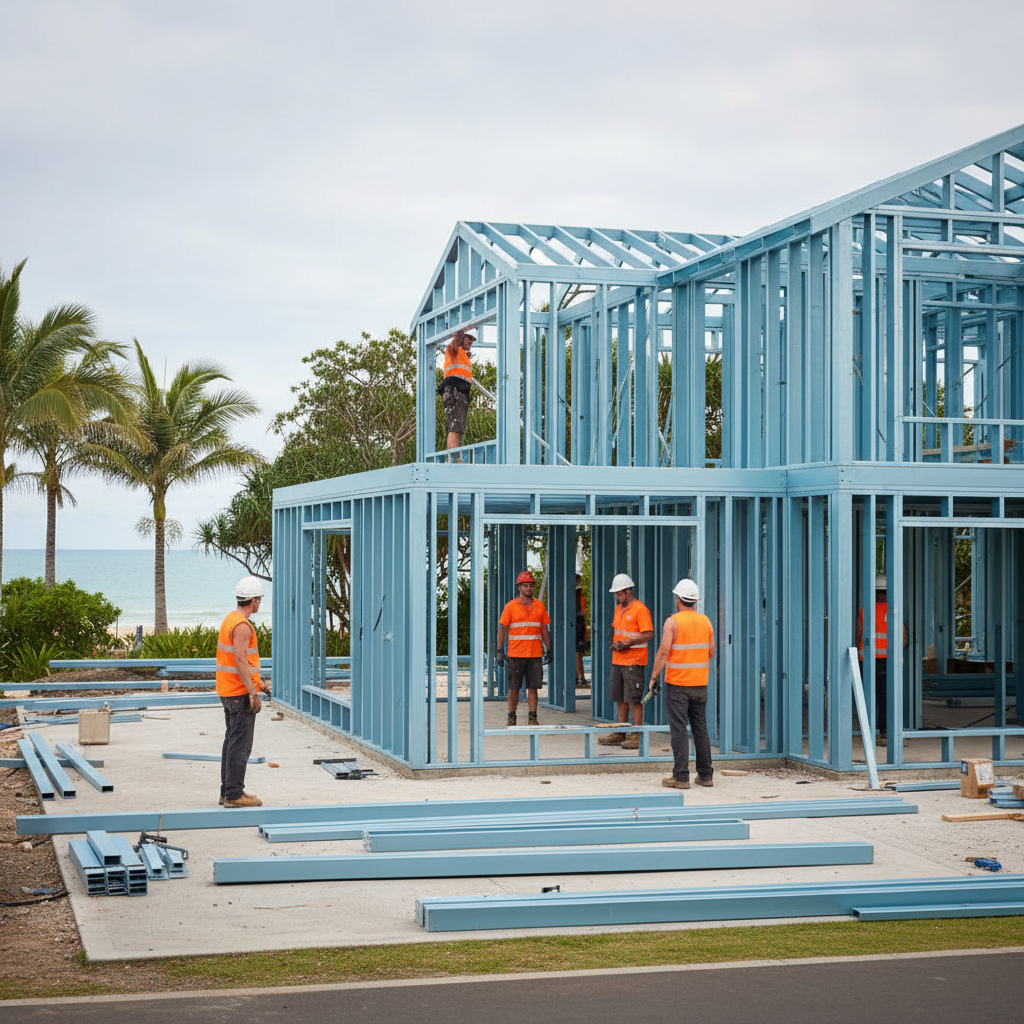
Steel is different. We use BlueScope TRUECORE steel in our kits because it's engineered. It's cold-rolled. It doesn't have a grain. It doesn't have knots. It doesn't have moisture trapped inside it waiting to escape and ruin your afternoon. When we punch out a frame for one of our kit homes, it's accurate to the millimeter. If the plan says the wall is 2400mm high, it stays 2400mm high. For the next fifty years.
The Owner-Builder Advantage
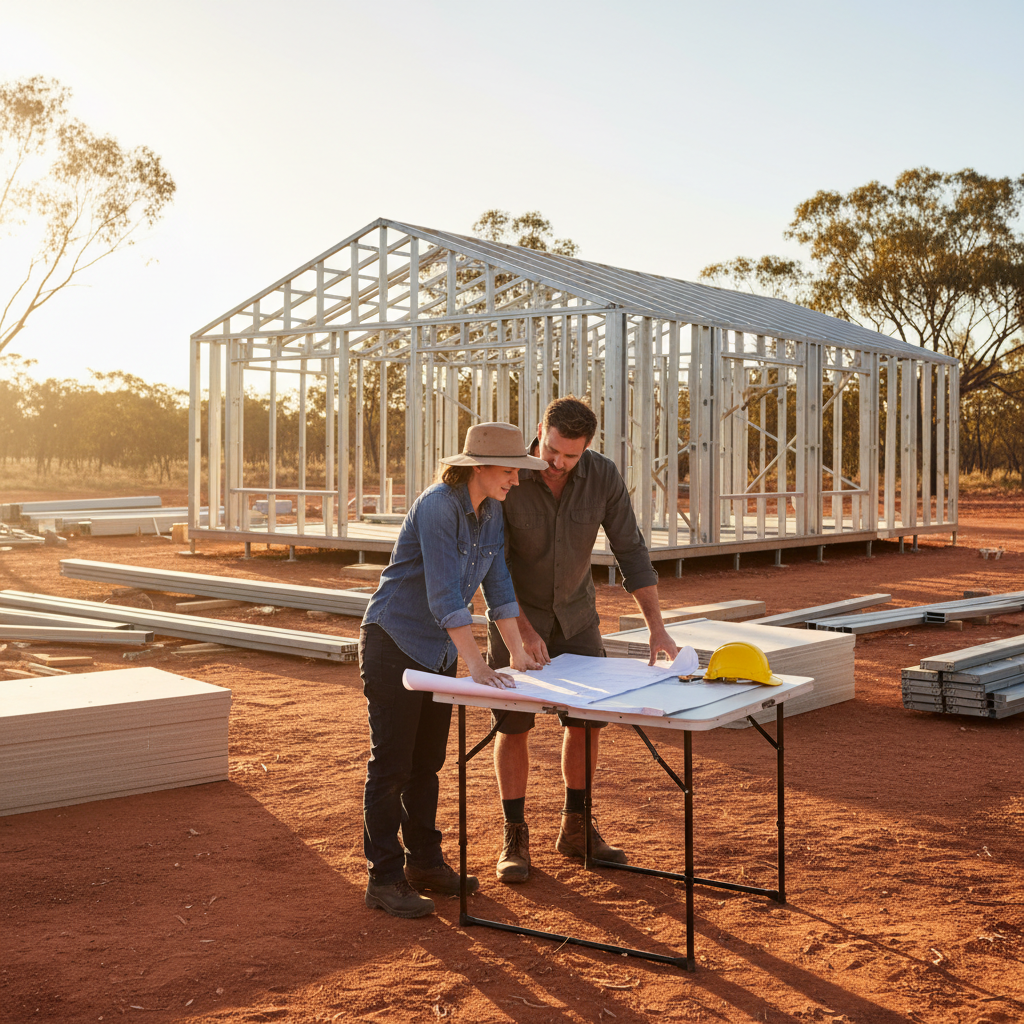
Let's talk about the actual build process. If you're tackling a kit home as an owner-builder, you're likely balancing a 9-to-5 job and family commitments. You might only get to work on the slab on weekends. If you buy a timber-framed kit and it sits on your block for three weeks through a couple of rainstorms while you wait for your brother-in-law to come help you stand the walls, you're in trouble. That timber will soak up the rain, then bake in the sun, and by the time you go to nail it together, it'll look like a bag of pretzels.
Steel doesn't give a toss about the weather. It can sit on site, get rained on, get baked, and it'll still be perfectly straight when you're ready to bolt it down. Plus, our frames come pre-punched with service holes. This is a massive win for the sparkies and plumbers you'll eventually hire. They don't have to spend hours drilling through studs, which keeps your labor costs down and prevents them from weakening the structure of your home. They just pull their cables and pipes right through the factory-cut holes. Easy.
Termites: The Silent Disaster
I can't talk about steel frames without mentioning the little white ants. If you live anywhere north of Hobart, termites are a genuine threat. I’ve seen houses in regional NSW where the owner didn't realize they had an infestation until they tried to hang a picture and the hammer went straight through the plasterboard and into a hollowed-out stud. It's gut-wrenching. Because steel is 100% termite proof, you've got one less massive headache to worry about. You still need your physical barriers and slab penetrations protected to meet the NCC Volume 2 requirements, but the actual bones of your house? They're inedible. That's peace of mind you can't really put a price on.
Roof Lines and Large Spans
Modern Australian kit home designs often involve open-plan living. We love our big kitchen-dining-lounge areas that flow out onto a deck. To get those big open spaces without a forest of internal columns, you need strength. Steel has a much higher strength-to-weight ratio than timber. We can achieve wider spans with steel trusses, meaning you get that big, airy feel in your living room without the roof sagging over time. Timber trusses can develop a 'memory' under load, especially as they age, leading to slight dips in the roof line. You'll notice it when you're looking at the guttering from the driveway. Steel stays taut and true.
The Finish Matters
Think about your kitchen cabinets. You spend ten grand on a beautiful flat-pack kitchen or custom joinery. You want those cabinets to sit flush against the wall. If your wall studs have warped even 5mm, your cabinet installer (or you, if you're doing the fit-out) is going to spend all day using shims and builders bog to try and hide the gaps. It's a waste of time. When the walls are steel, they're dead straight. Your skirting boards sit flat. Your cornices don't pop. The whole finish of the house looks more professional because the foundation they're attached to hasn't moved.
There is a bit of a learning curve, sure. You'll need a good impact driver and a box of specific tek screws rather than a nail gun. And yeah, you'll want to make sure you use the thermal break strips we provide so you meet your energy ratings and stop heat transfer. But these are small adjustments for a massive payoff. If you’re the type who values things being done right the first time, steel is the only way to go.
Final Thoughts for the Weekend Warrior
Building a kit home is a big crack at the Australian dream. It's hard work, but it's rewarding. But don't make it harder by fighting your materials. I've spent enough years on sites to know that fighting mother nature is a losing battle. Use the tech we have. Use the BlueScope steel that's been tested for our harsh conditions. Your back, your spirit level, and your bank account will thank you when those walls go up straight and stay that way for the life of the home. So, next time you're looking at floor plans, think about what's inside the walls. If you want square corners and doors that actually close in ten years time, you're looking for steel.