Standing on a raw patch of dirt in rural New South Wales or a sunny corner of Queensland with a set of floor plans in your hand is a specific kind of stress. You've got the vision, you've picked the design, and now you have to decide if that house is going to sit flat on the ground or be hoisted up on steel posts. It's a choice that defines your life as an owner-builder for the next twelve months. Some blokes swear by the solid feel of a concrete slab, while others wouldn't dream of building anything but an elevated home that catches the breeze and stays away from the damp.
The Reality of Single Storey Homes on Concrete Slabs
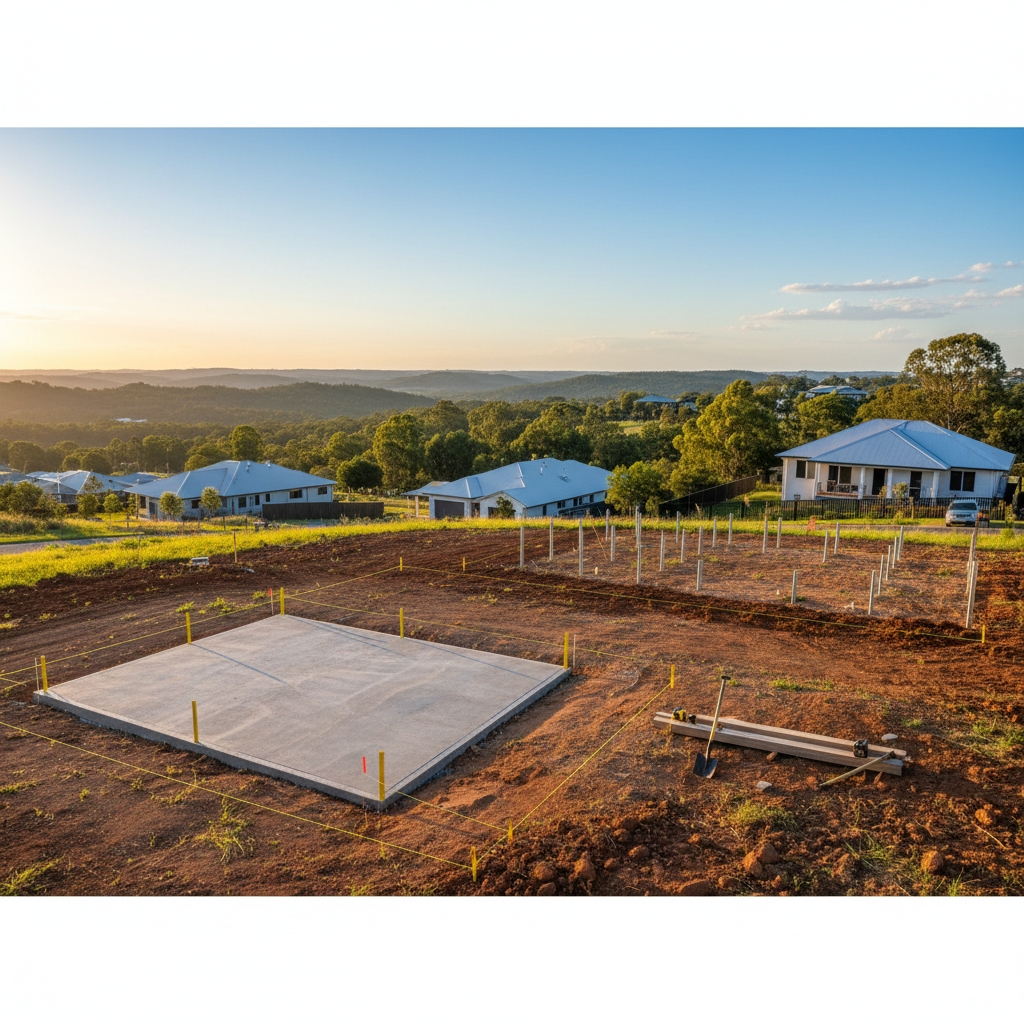
Most project homes in suburban Australia are built on slabs. It's the default. If your block of land is flatter than a pancake and the soil is top notch, a slab is often the path of least resistance. You get that seamless flow from your living room out to the alfresco area without a single step to trip over. It feels permanent. Solid. When you walk across a tiled kitchen on a slab, nothing vibrates, and the acoustic performance is naturally better because you aren't living on top of a hollow drum.
But here is the catch. Slabs hate slopes. If your block has more than a metre of fall across the building envelope, you're looking at significant earthworks. You'll be spending thousands on a digger to cut into the hill and fill the lower side. Then you've got retaining walls. Expensive, drainage-heavy retaining walls that you weren't planning on when you first saw the kit price. Plus, if you're building in an area with high termite activity, a slab needs a physical or chemical barrier that you have to maintain and inspect religiously. Because once those white ants get under a slab, finding where they're getting in is a nightmare you don't want.
Elevated Kit Homes and Why the Slope is Your Friend
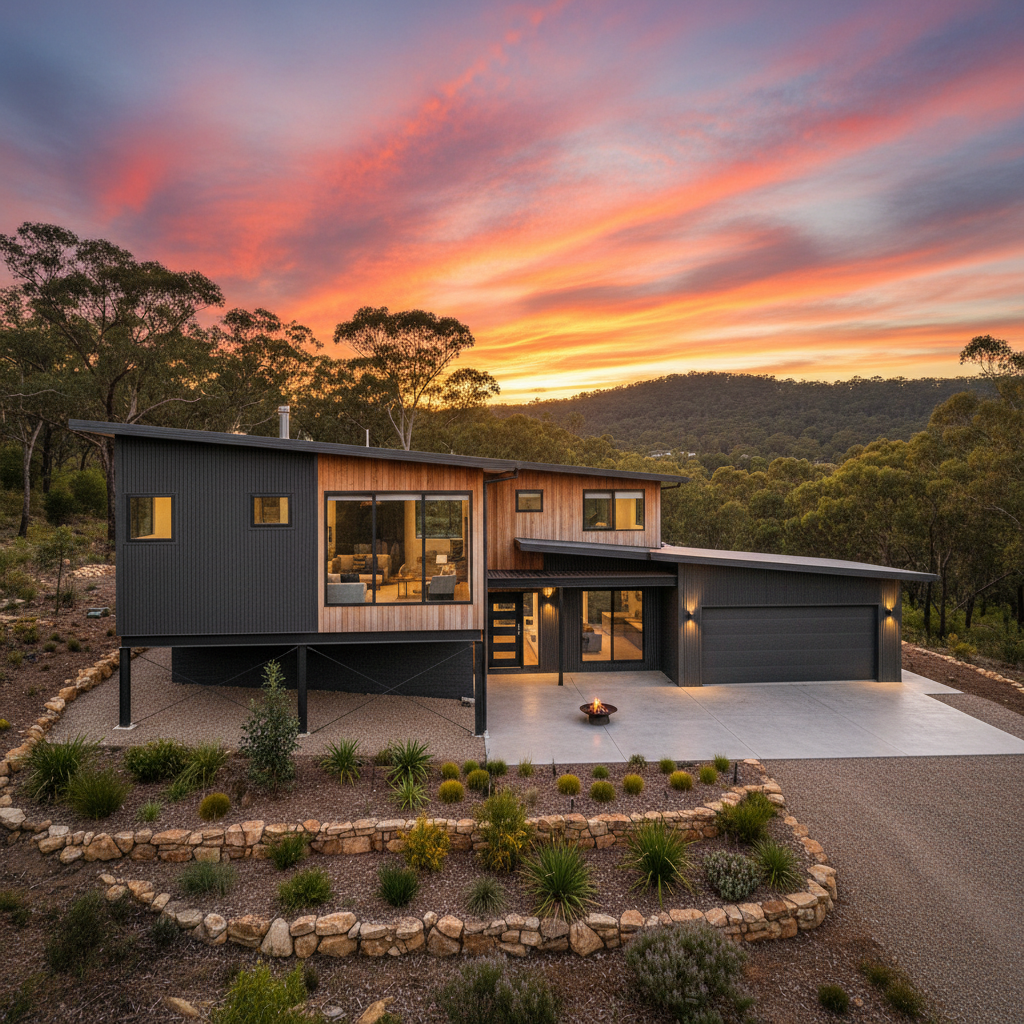
If your block looks more like a mountain goat's playground, forget the slab. An elevated floor system using steel piers is where kit homes really shine for the DIY crowd. We use TRUECORE steel frames for a reason. They're light, they're dead straight, and they don't warp when the weather gets funky. By putting your home on stumps, you leave the natural contours of the land alone. This isn't just about saving the trees or being eco-friendly. It's about money. You aren't paying for twenty truckloads of fill or a massive excavator to spend three days carving out a pad.
Elevated homes are a godsend for sloping sites. You can have 300mm stumps at one end and two-metre tall piers at the other. Suddenly, you've got a massive storage area under the house for the mower, the canoes, or a workshop space for your tools. And ventilaton? It's unmatched. In the tropics or humid parts of the coast, having air moving under the floorboards keeps the whole house cooler. It stops the damp from rising. Plus, if you ever need to move a pipe or fix a leak in the bathroom down the track, you just crawl under there with a torch. No jackhammers required.
The Owner Builder Trade-Off
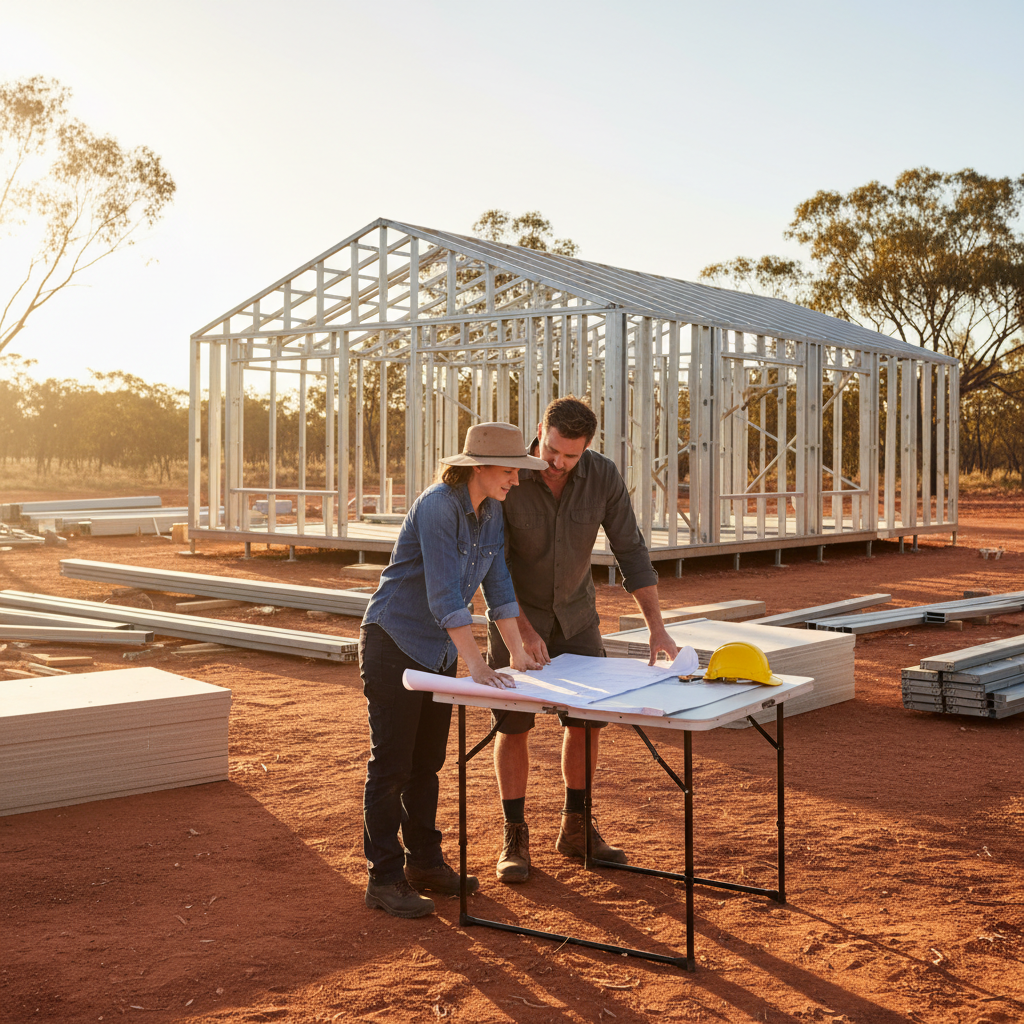
Let's talk about the actual work. If you choose a single storey slab design, you're largely handing that part of the job to a concreter. You'll spend your time coordinating the pour, making sure the plumbing is exactly where it needs to be before the truck arrives. If that pipe is 100mm out of place once the concrete sets? Well, start praying. With an elevated steel floor system, you and a mate can often bolt the sub-floor together yourselves. It’s part of the kit. It's like a giant Meccano set. You get the satisfaction of seeing the structure rise off the ground with your own hands, but your knees and back will definitely remind you about every single bolt you tightened by the end of the week.
Under-floor insulation is the other big one. People think elevated homes are cold. They can be, if you're lazy. But if you tuck some decent R-value batts or reflective foil under those floor joists, it’s as snug as any brick bungalow. Just don't skip it. It's the difference between a house that feels like a sanctuary and one that feels like a drafty tent in July.
Specific Situations Where Elevation Wins
- Flood Zones: If the local council says your 1-in-100 year flood level is 500mm above ground, an elevated kit is your only real choice unless you want to spend a fortune on a raised fill pad.
- Reactive Soils: In places with heavy clay that expands and contracts like a lung, slabs can crack. Steel piers can be designed to handle that movement better.
- Termite Country: Being able to see the top of your stumps means you can spot termite mud tunnels instantly. It's the ultimate visual peace of mind.
Where the Slab Takes the Trophy
It isn't all sunshine and rainbows with stumps. If you've got mobility issues or you're planning for your old age, stairs are a pain. A flat slab means no ramps, no steps, just easy walking. And keep in mind that an elevated home requires a different approach to your external finish. You'll need skirting around the base to hide the plumbing and the weeds, or you'll have to be okay with the 'hovering house' look. Some people find the hollow sound of footsteps on a timber or laminate floor over a sub-floor annoying. You can dampen it with high-quality underlay, but a slab will always be quieter.
The Tech Stuff: AS 2870 and Beyond
Whether you go up or stay down, the Australian Standards dictate the play. AS 2870 (Residential Slabs and Footings) is the bible here. If you're building on stumps, your footings still need to go deep enough to hit stable ground. I remember a site in the Dandenongs where we had to dig pier holes three metres deep just to find something solid. Don't assume that because you aren't pouring a whole slab that the footings will be easy. Get a soil test done early. Not next month. Not when the kit arrives. Now. A 'Class P' site will ruin your day if you haven't planned for it.
Using BlueScope steel for the joists and bearers gives you one massive advantage over timber: it's perfectly straight. Timber shrinks, twists, and bows. Steel stays where you put it. When you're trying to lay a long run of floorboards or tiles, that millimetre-perfect finish makes the difference between a floor that looks pro and one that looks like a DIY disaster. So, while you're choosing your cladding and your roof colour, spend some real time thinking about the bones.
Deciding between these two isn't something to flip a coin over. Look at your dirt. Check your bank balance for site works. Think about how many stairs you want to climb with a bag of groceries when it's raining. Most of our kits can be adapted for either, but the block usually tells you what it wants. Listen to it. If you try to force a slab onto a 15-degree slope, you'll be paying for it in stress and cash for years. Build with the land, pick the right frame for the job, and the rest of the project will fall into place much easier than you reckon.