I spent twenty minutes yesterday morning watching a bloke in a Hiab crane struggle to drop a pack of steel floor joists onto a site in the Gold Coast hinterland. The slope on his block was so steep I reckon I could've reached out and touched the dirt from the second-storey window height without a ladder. It's a classic Aussie building dilemma. You find a cheap bit of dirt with a killer view, but then you realize you've got to actually get a house to sit on it without it sliding down into the creek during the next big wet.
The Slab Trap on Sloping Blocks
Most folks start their kit home search looking at a standard single storey design on a concrete slab. It's what the big project builders do. It's familiar. But if your block has more than a half-metre of fall across the building footprint, a slab can become a nightmare. You end up spending a fortune on site works before you've even laid a single brick or bolted a frame together. You're paying for excavators, retaining walls, and tonnes of fill. Plus, once you cut into that hill, you've permanently changed how water moves across your land. Because when the rain hits, it's going to find the path of least resistance, and that’s usually your back door.
Single storey homes on slabs are brilliant for flat, sandy coastal blocks or level suburban lots. They're easy for older folks or families with prams because there's no stairs. But don't force a slab onto a block that doesn't want it. If you're looking at a site in places like the Blue Mountains or the ranges behind the Sunshine Coast, you want to be thinking about an elevated kit. It's about working with the land, not fighting it with a 20-tonne digger.
Going Up: The Case for Elevated Flooring
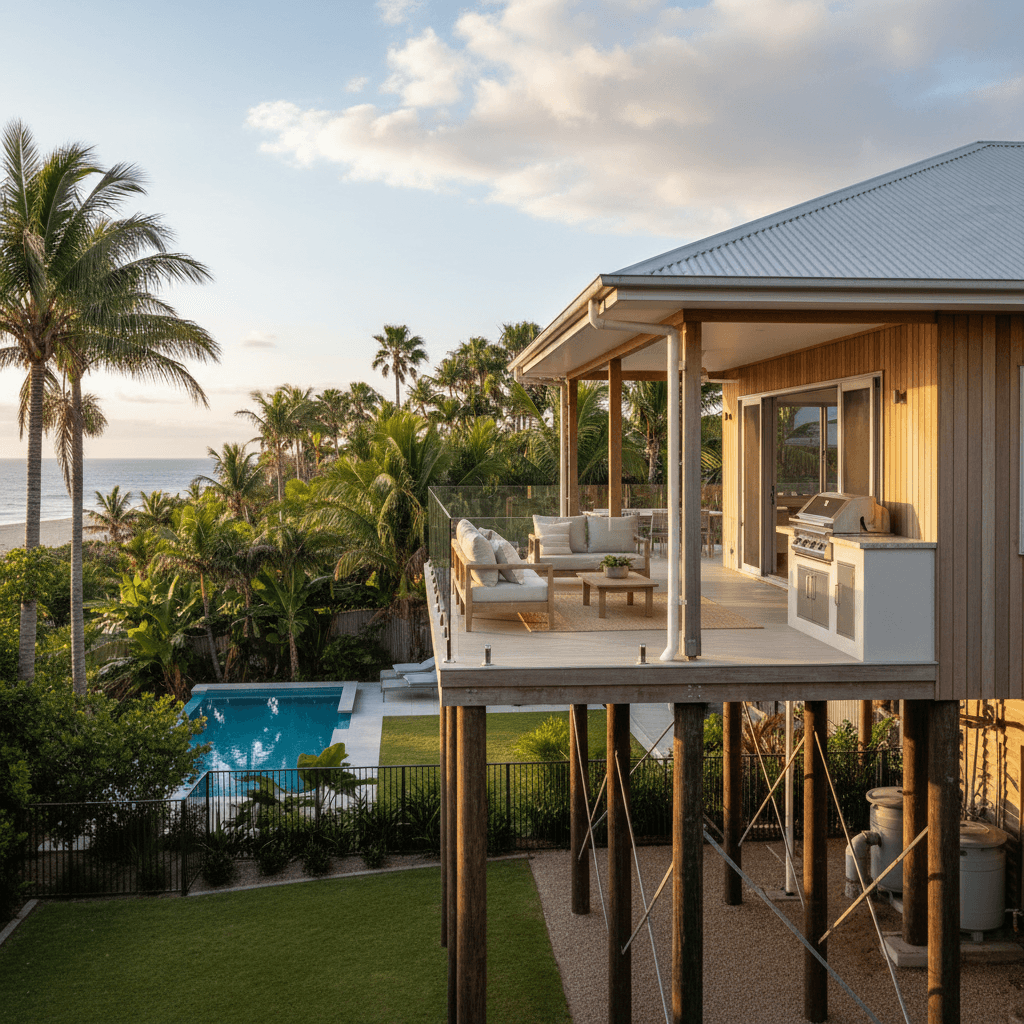
An elevated kit home, or a high-set as some call it, sits on stumps or piers. We use steel flooring systems because they're dead easy for an owner-builder to level up. You don't need a degree in engineering to see the benefit of having a clear space under your house. Why? Because maintenance is a breeze. If a pipe leaks three years down the track, you crawl under with a wrench and fix it. If you're on a slab, you're getting out the jackhammer and making a mess of your tiles.
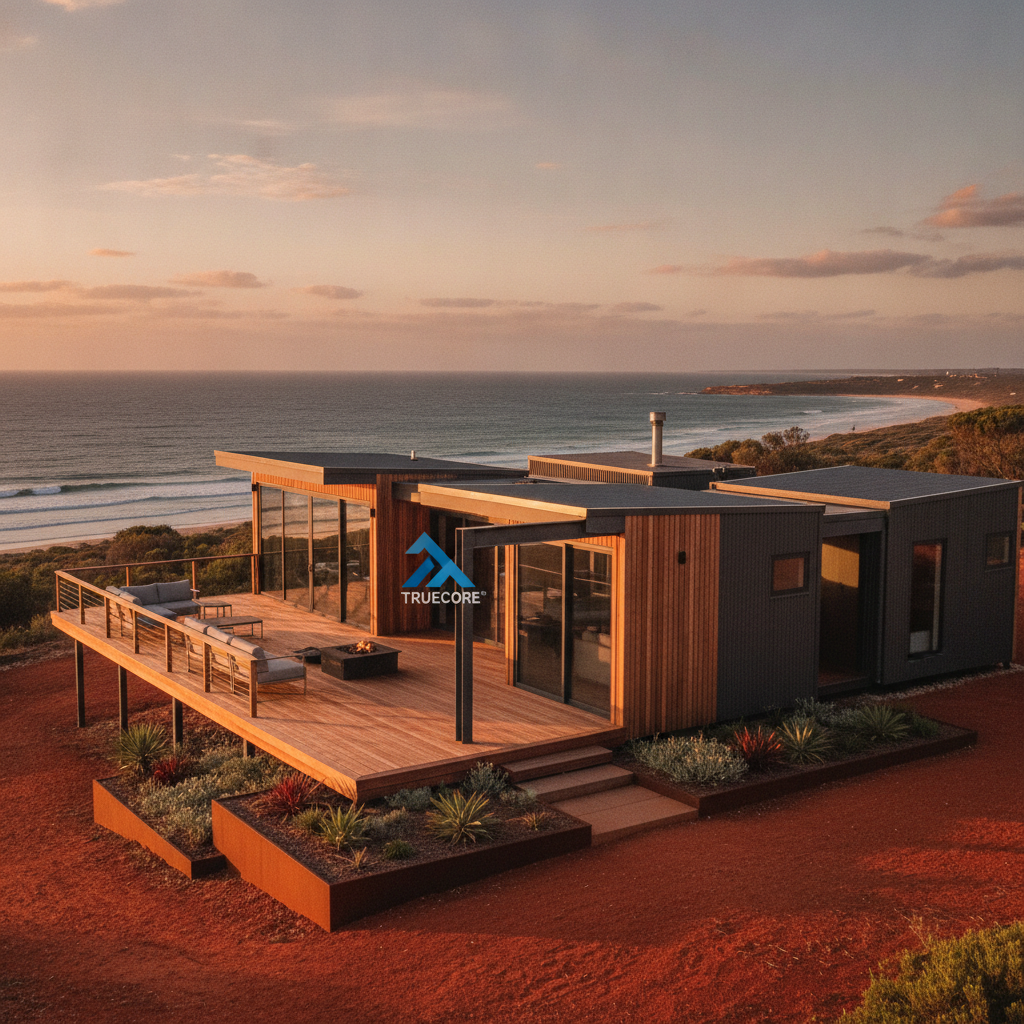
Steel frames made from BlueScope TRUECORE steel handle these elevated designs particularly well. They're light enough that you aren't putting massive loads on your footings, but they're stiff enough that the floor doesn't bounce when the kids run down the hallway. And in Australia, the termite factor is huge. An elevated home gives you a physical inspection gap. You can see the little mud tunnels before the pests get anywhere near your structural members. It’s peace of mind you just don't get when your bottom plate is sitting right on the ground.
Airflow and the Aussie Summer
There's a reason those old Queenslanders were built way up off the ground. It wasn't just for the floods. It's about airflow. An elevated kit home catches the breeze. The air moves under the floor and keeps the whole thermal mass of the house cooler. If you're building in a humid spot like Darwin or Cairns, a slab acts like a heat sink. It holds onto the heat long after the sun goes down. But on stumps, you get that cross-ventilation. Plus, if you go high enough, you've got a ready-made carport or a shady spot for a workshop without adding to the roof's footprint.
The Construction Reality for Owner Builders
Let's talk about the actual work. You’ve got your kit delivered. The truck has dropped off the TRUECORE steel frames, the Colorbond roofing, and your windows. If you’re doing a slab, you've already had the concrete truck in. It's a big, stressful day. Once that concrete sets, your plumbing points are locked in stone. You better hope your plumber hit his marks within 5mm, or you're in for a world of hurt.
With an elevated floor, you've got wiggle room. You can adjust things. For a DIYer, this is a massive stress-saver. You're bolting steel joists together, which is more like a giant Meccano set than a chemistry experiment. And it's cleaner. You aren't dragging mud through the house for six months because you're working up off the dirt.
What About the Cost Trade-off?
It's not all beer and skittles. Elevated homes need decking and stairs. You can't just walk out the sliding door onto the grass. You'll need balustrading for safety, and that adds to your materials list. You also have to insulate the floor. A lot of people forget this and then wonder why their feet are freezing in July. We use specific floor insulation batts or foil-faced blankets that tuck between the joists. It's a simple job, but it's another step in the process.
Also, think about BAL ratings. If you're in a bushfire-prone area, an elevated home has some specific requirements under AS 3959. You might need to enclose the underside with fire-rated materials or use specific steel screening. It’s not a deal-breaker, just something you need to check with your council DA before you fall in love with a particular design.
Making the Choice: A Quick Checklist
If you're staring at your block of land right now trying to decide, ask yourself these three things:
- Is the site flat? If you have more than 600mm of fall across the house area, go elevated. Save the money you'd spend on retaining walls and put it into a bigger deck.
- How's the soil? If you're on reactive clay (the stuff that expands and shrinks), a slab can crack. Piers for an elevated home can often be sunk deeper into more stable ground.
- What's the view like? Sometimes another meter of height is the difference between looking at your neighbor's fence and seeing the ocean or the valley.
Final Thoughts from the Site
I’ve seen blokes try to save a few grand by choosing a single storey slab design on a hilly block, only to spend three times that amount on drainage to stop the lounge room from flooding in a storm. It's a rookie mistake. A kit home is a versatile beast, but you've got to be smart about the foundation. If you’re building in the Aussie bush or on the side of a ridge, get it up on stumps. Give the house some air. Give yourself a view. And for god's sake, make sure you've got enough room under there to store your mower and a couple of kayaks. You'll thank me later when you aren't tripping over them in the hallway.