Stop building dark ovens
I've seen it a hundred times. A bloke buys a great kit home, chucks it on the flattest part of his block without a second thought, and then spends the next twenty years living in a cave that stays thirty degrees until midnight. It's a waste. If you're building a kit home in Australia, you've got to think about the sun and the wind before you even pour the slab. You aren't just buying a pile of TRUECORE steel and some cladding. You're building a machine for living, and if that machine doesn't breathe, you'll regret it every summer arvo when the power bill hits.
Most people get obsessed with floor plans. They're looking at where the fridge goes or if the ensuite is big enough. Sure, that matters. But the orientation of the house on your specific block of dirt is what actually dictates if you'll enjoy sitting in your lounge room at 2pm on a Tuesday. We're talking about passive solar design. It sounds fancy, but it just means making the sun work for you instead of against you. In the southern hemisphere, you want your living areas facing north. Period. If you put your big glass sliding doors facing west in Western Sydney or inland Queensland, you've basically built a giant magnifying glass. You'll be fried by dinner time.
The North-Facing Rule
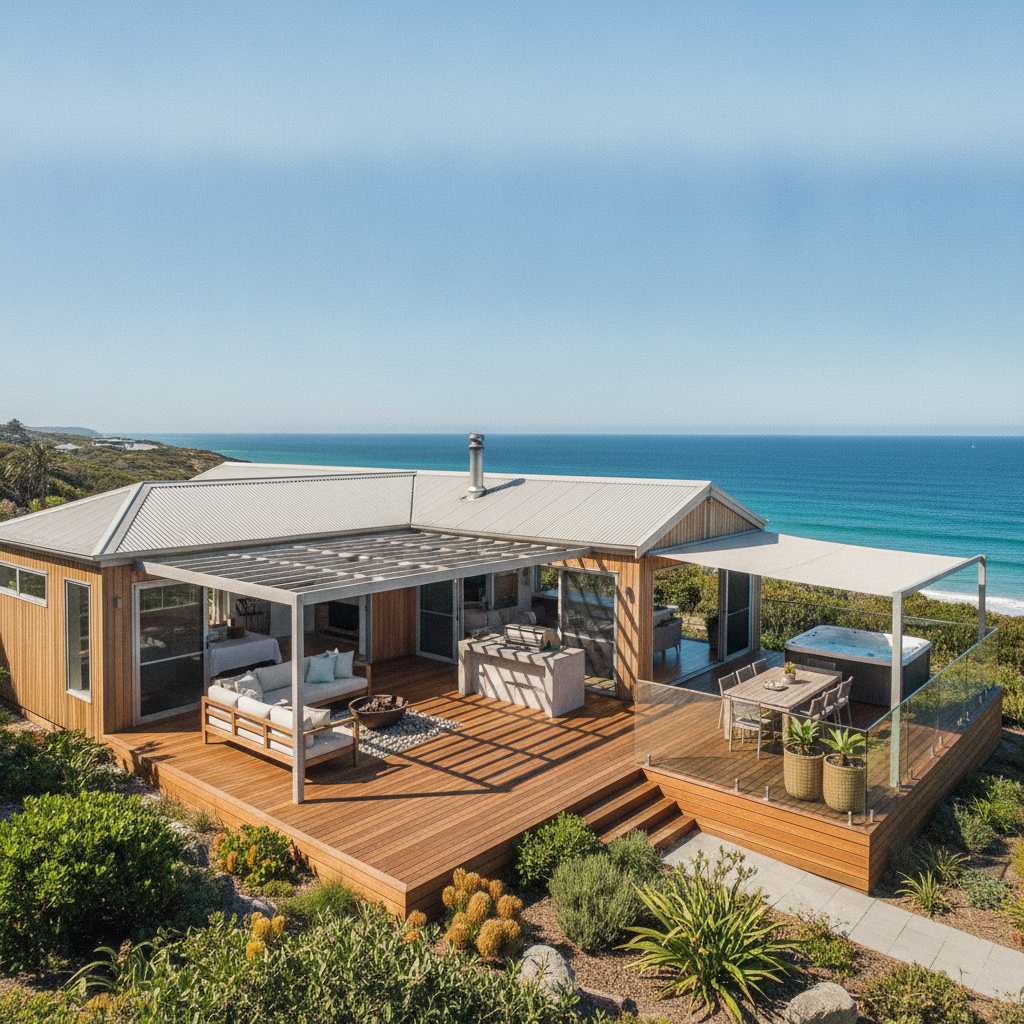
North is king. You want your eaves calculated so that in winter, when the sun is low, that light hits the glass and warms up your floor. If you've got a slab, it acts like a heat sink. Then in summer, when the sun is high and angry, those same eaves should shade the glass completely. It's not rocket science, it's just geometry. I usually tell owner-builders to check their local council requirements for eave depths, but a good rule of thumb for most of Australia is about 450mm to 600mm. Sometimes more if you're up in the Tropics.
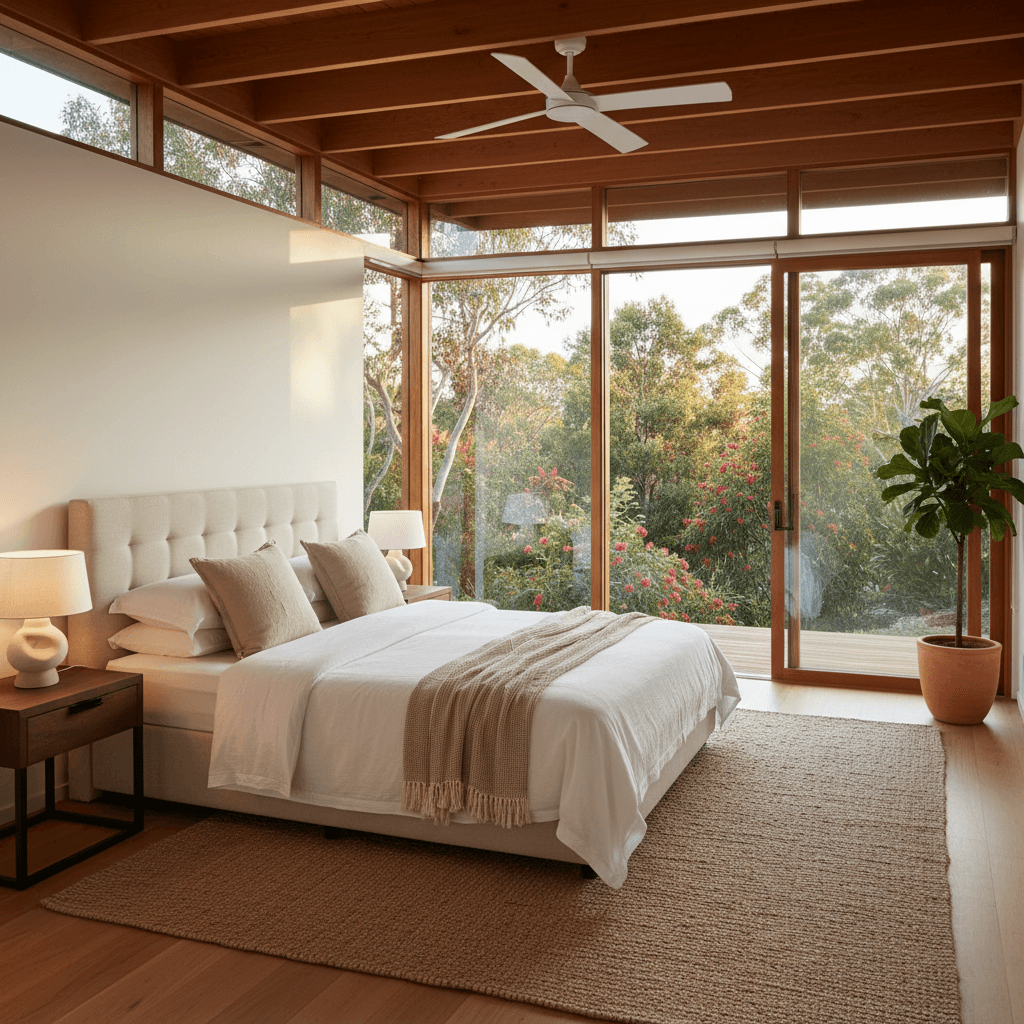
But what if your block faces the wrong way? It happens. You might have a killer view of the valley to the south. Fine. Build the deck there. But don't sacrifice your thermal comfort for a view you'll only look at for ten minutes a day. You can still use clerestory windows. These are those high-up windows that sit near the roofline. They're brilliant for letting light into the back of a deep room without losing privacy or letting in the noise from the street. Plus, they let hot air escape. Basic physics tells us heat rises. Give it a way out.
Catching the breeze without the dust
Ventilation isn't just about opening a door. It's about 'cross-flow'. If you've only got windows on one side of a room, the air just hits the wall and swirls around like a stagnant puddle. You need an inlet and an outlet. When you're looking at your kit home layout, try to align windows across from each other. Think about the prevailing winds in your specific spot. If you're near the coast, you want to catch that 3pm sea breeze. If you're out past the Great Dividing Range, you might want to block the hot north-westerlies but catch the cool southerly busters.
Louvre windows are underrated. People think they're old-fashioned or leaky, but modern ones are tight. They give you nearly 100% airflow compared to a sliding window that only gives you half. Stick them in hallways or bathrooms. Because they can stay open even when it's raining (to a point), they keep the house from getting that musty smell when a summer storm rolls through. Just don't put them where you need massive acoustic insulation, like right next to a busy highway.
The Steel Advantage and Insulation
We use steel frames because they're straight and termites won't touch 'em. But steel is a conductor. If you don't respect that, your house will be a fridge in winter and a toaster in summer. This is where your insulation becomes your best friend. In a kit home, you've got the frame, then likely some reflective foil or a thermal break, then your cladding. Don't cheap out on the R-value of your batts. If the NCC (National Construction Code) says you need R2.0 in the walls, go for R2.5. It's an extra couple of hundred bucks now that saves thousands later. Plus, it makes the house quieter. Nobody wants to hear their teenagers thumping around in the next room because the walls are paper-thin.
And let's talk about the roof. A dark Colorbond roof looks sharp, I get it. But it absorbs heat like nothing else. If you're in the Top End or even Perth, a lighter colour like Surfmist or Shale Grey will keep your roof space significantly cooler. If you absolutely must have a dark roof for the 'look', you better make sure you've got some whirlybirds or solar vents up there to suck that hot air out of the ceiling cavity. Otherwise, that heat radiates down through your ceiling long after the sun has gone down.
Practical Tips for the Owner Builder
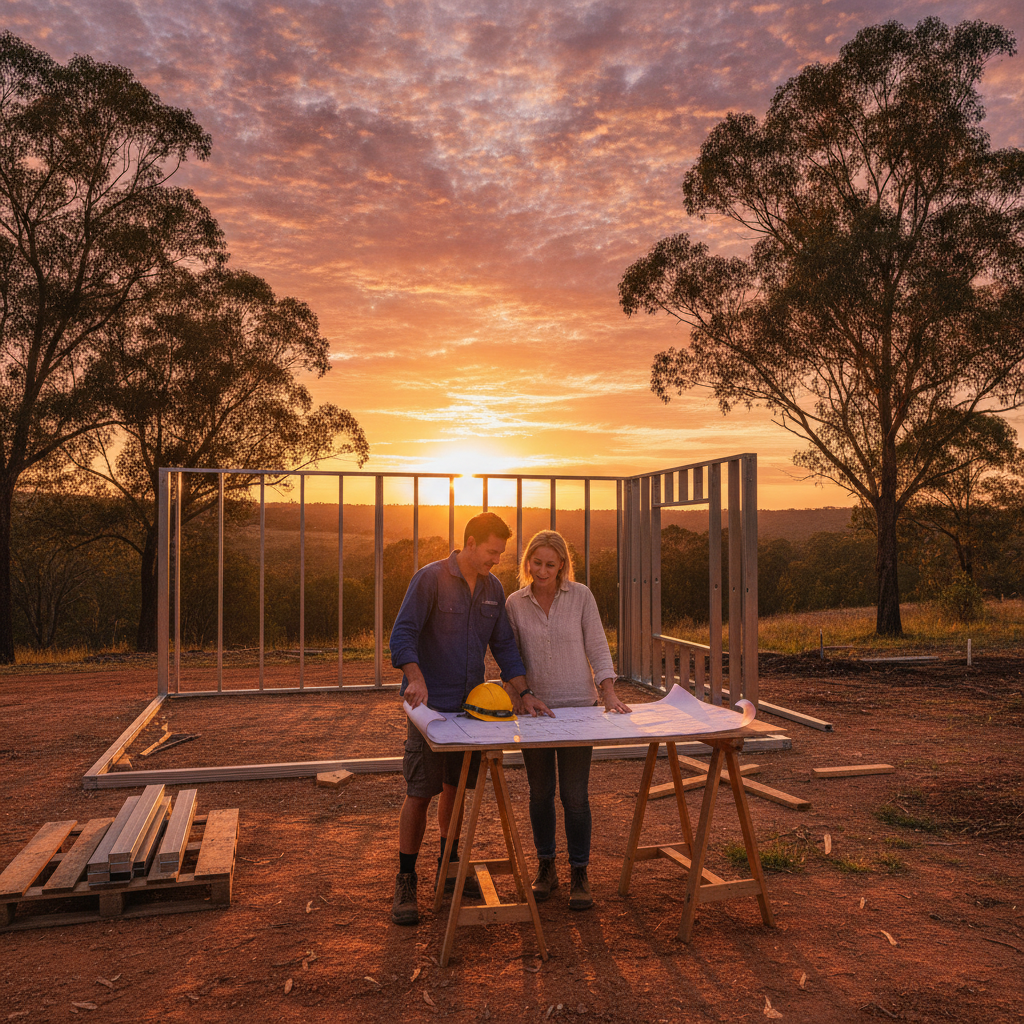
- Check your site orientation at different times of day. Go sit on your block at noon and again at 4pm. See where the shadows fall.
- Think about 'zoning'. Can you close off the hallway so you aren't heating or cooling the whole house when you're only using one room?
- Look at your window types. Awning windows (the ones that hinge at the top) are great for rainy climates, but sliders or louvres move more air.
- Don't forget the flyscreens. It sounds obvious, but if you want ventilation, you need to be able to leave things open without the local mozzie population moving in.
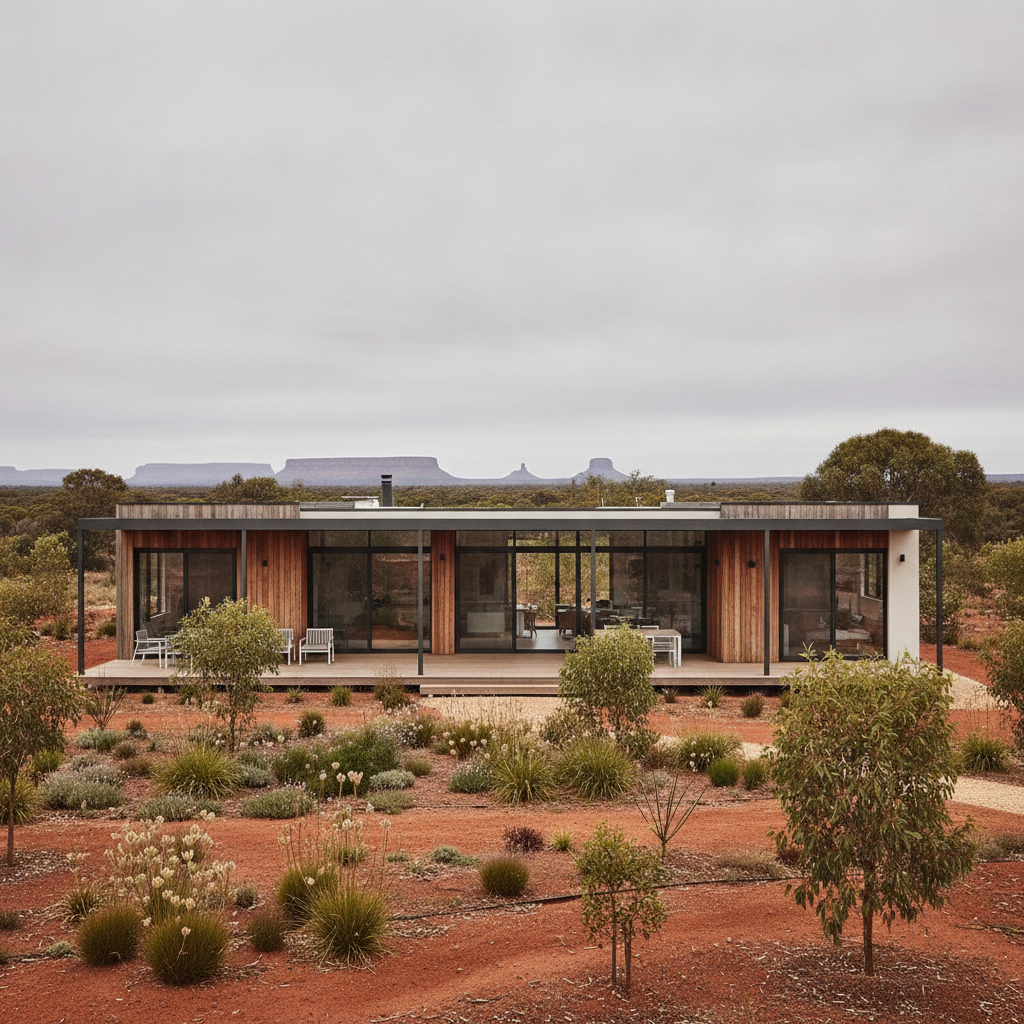
- Consider oversized glass sliding doors for the transition to your verandah. It blurs the line between inside and out, making a small kit home feel twice the size.
The importance of internal layout
I worked with a lady in the Hunter Valley once who wanted a massive open-plan living area with four-meter ceilings. Looked amazing on the plans. But she forgot about the winter. All that lovely natural light she got from the north-facing glass didn't help when all her expensive heat disappeared into the rafters. High ceilings are great for cooling in summer because the hot air stays above your head, but in a cold climate, they're a nightmare to keep cozy. It's about balance.
If you're building a kit home, you've got the chance to get this right from day one. You aren't buying a finished house off a lot where some developer has crammed fifty homes into a tiny street with no regard for the sun. You're the boss. You're the owner-builder. You get to decide if your bedroom gets hit by the 5am sunrise or stays cool and dark until you're ready to wake up. Take your time with the design phase. Move the windows around on the screen until they line up with the breeze. It doesn't cost a cent to change a drawing, but it's a massive pain to move a window once the cladding is on.
When your kit arrives, and you start screwing those steel frames together, you want to know that the resulting structure is going to be comfortable. A bright, airy home feels better. It's better for your mood and your health. Nobody wants to live in a dark, damp box. Use the light. Catch the wind. That's the real secret to a successful kit home build in Australia.