You've probably spent hours scrolling through floor plans. You've looked at the standard three-bed, two-bath layouts and thought, "Yeah, that's alright, but where does the surfboard go?" or "Could we fit a bigger deck for the weekend barbie?"
That's the beauty of going the kit home route in Australia. You aren't stuck with a cookie-cutter house that looks exactly like every other place on the street. While the bones of the house come as a pre-engineered package, how you breathe life into those spaces is entirely up to you. It's about making the home work for you, not the other way around.
Think About How You Actually Live
Before you start moving walls on a floor plan, take a second to think about your daily routine. Do you wake up early and head straight for the kitchen for a brew? Do you work from home and need a quiet corner away from the TV? Or perhaps you've got a troupe of muddy kids and dogs running in from the yard every arvo?
Most standard designs are built for a generic family. But you aren't generic. If you love hosting, your kitchen shouldn't be tucked away in a corner. It needs to be the heart of the home. On the flip side, if you're a bit of a bookworm who needs peace, you might want to tuck the bedrooms at the far end of the house, away from the living areas.
One thing that catches people off guard is the sheer amount of sunlight we get here. In Australia, your orientation is everything. If you place your main living windows facing west without some serious shading, you'll be roasting by 3 PM in mid-January. Reckon it's worth checking your block's orientation before you settle on a layout.
The Great Australian Indoor-Outdoor Flow
We're lucky in this country. Most of the year, we can live half our lives outside. When you're looking at kit home designs, don't just look at the internal square meterage. Look at how the house connects to the land.
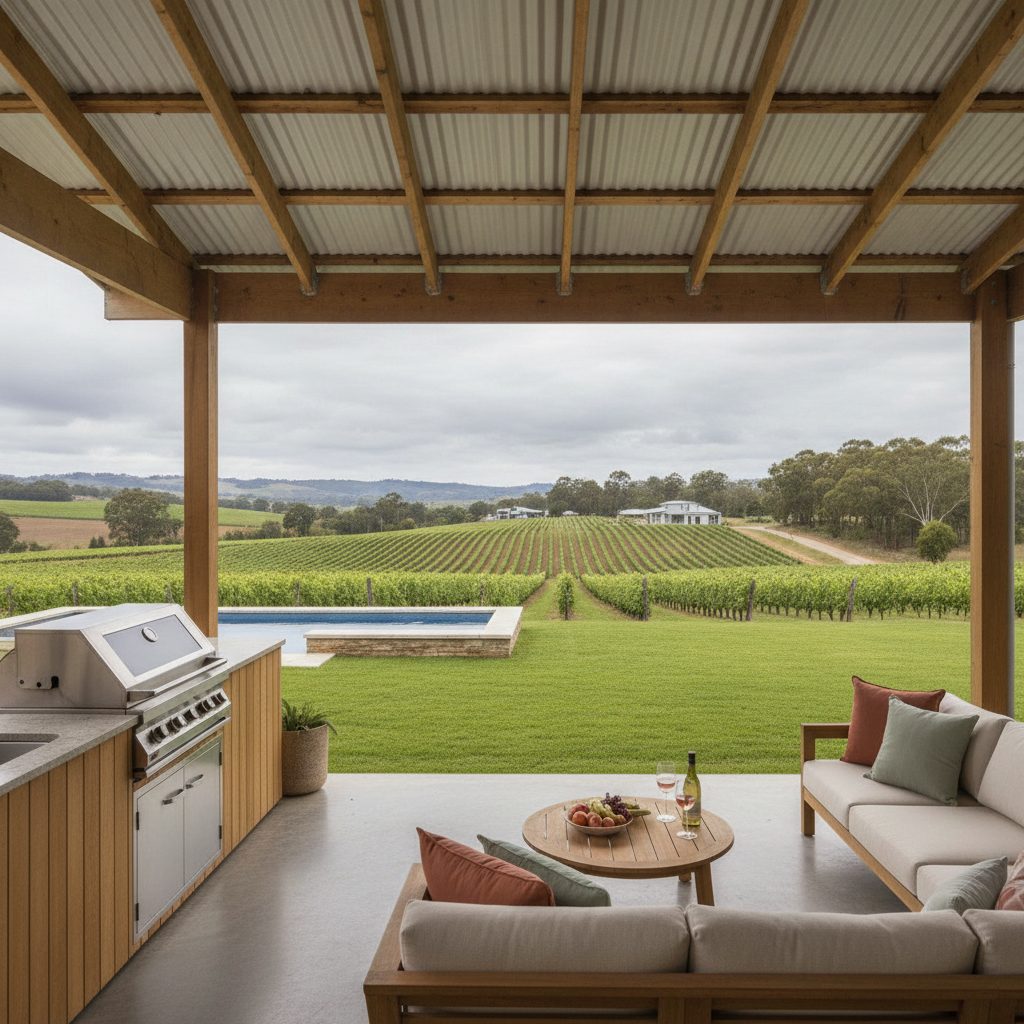
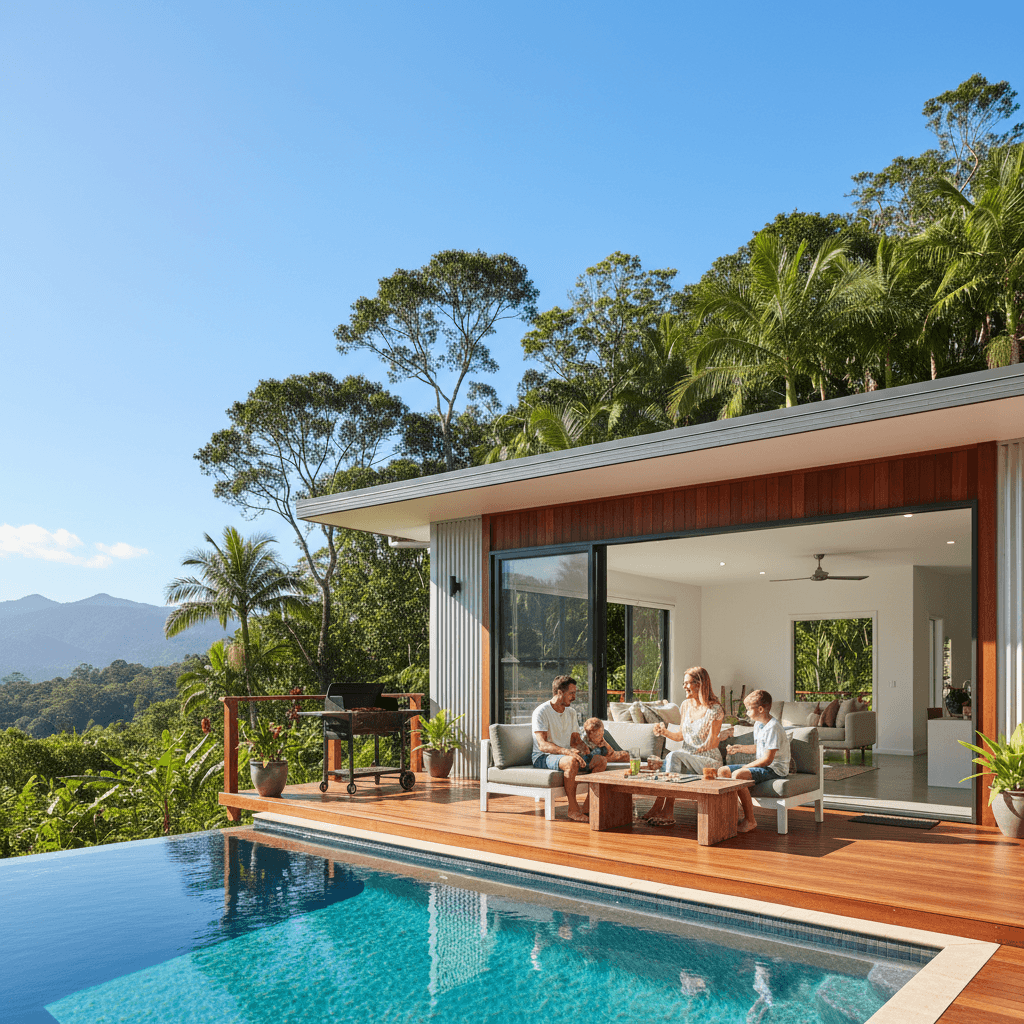
One of the best modifications we've seen is widening the door openings. Instead of a standard sliding door, maybe you want a massive set of stacker doors that open up the whole lounge room to a verandah. It doubles your living space instantly. If you're building with a steel frame, you've got the structural strength to support those wider spans, which is a cracker of a benefit for creating that seamless flow.
Think about these lifestyle additions:
- The Mudroom Entry: Essential if you live on an acreage or have active kids. A small zone with a bench and hooks stops the dirt from tracking through your nice new house.
- The Extended Verandah: Don't settle for a tiny porch. Overhangs keep the sun off the walls, keeping the house cooler, and provide a spot for that outdoor dining table you've had your eye on.
- The Servery Window: A simple change to the kitchen window that lets you pass snacks and drinks directly out to the deck. No worries about tripping over the rug while carrying a tray of snags.
Zoning for Peace and Quiet
Ever lived in a house where you can hear every single word of a TV show from three rooms away? It's a nightmare. When you're customizing your kit, think about "zoning." This is the art of separating the noisy parts of the house from the quiet parts.
The easiest way to do this is by using hallway turns or placing non-habitable rooms, like bathrooms or laundries, as a buffer between the master bedroom and the lounge. If you've got teenagers, you might want a "kids' wing" at one end and the parents' retreat at the other. It keeps the peace and gives everyone their own space to relax. We've seen plenty of owner-builders regret not adding a simple internal door to a hallway to shut off the sound when the footy is on.
Storage: You Can Never Have Enough
Let's be real. We all have too much stuff. Camping gear, Christmas decorations, the old ute parts you're definitely going to use one day. Most standard home designs are a bit stingy on storage.
But when you're the one in charge of the fit-out, you can get creative. Could you turn a small segment of a massive hallway into a floor-to-ceiling linen cupboard? Could the laundry be widened by half a meter to fit a dedicated pet wash station or extra pantry space? These small tweaks don't usually require massive structural changes, but they make a world of difference once you've moved in and realized you have nowhere to put the vacuum cleaner.
And don't forget the insulation. While kit homes usually come with a standard insulation pack, you might want to beef it up depending on where you live. If you're in the chilly highlands or the humid tropics, choosing the right cladding and insulation combo is what makes the house feel like a home rather than a tin shed.
Windows and the View
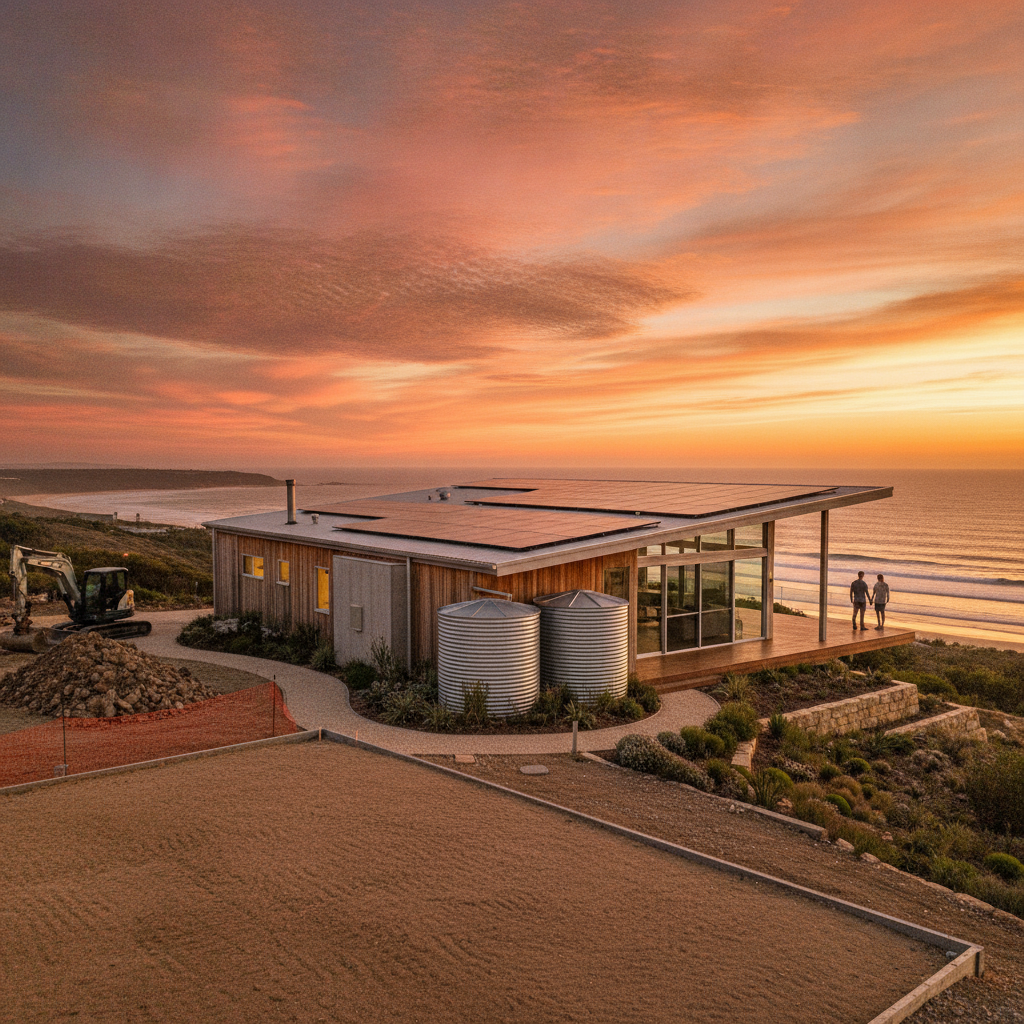
Why build a home on a beautiful piece of Aussie land if you can't see it? One of the most common customizations we see is changing window sizes. Maybe that standard bedroom window should be a tall, narrow feature window to catch a specific view of the gums out back. Or perhaps you want to add highlight windows high up on the wall to let in natural light without sacrificing privacy from the neighbors.
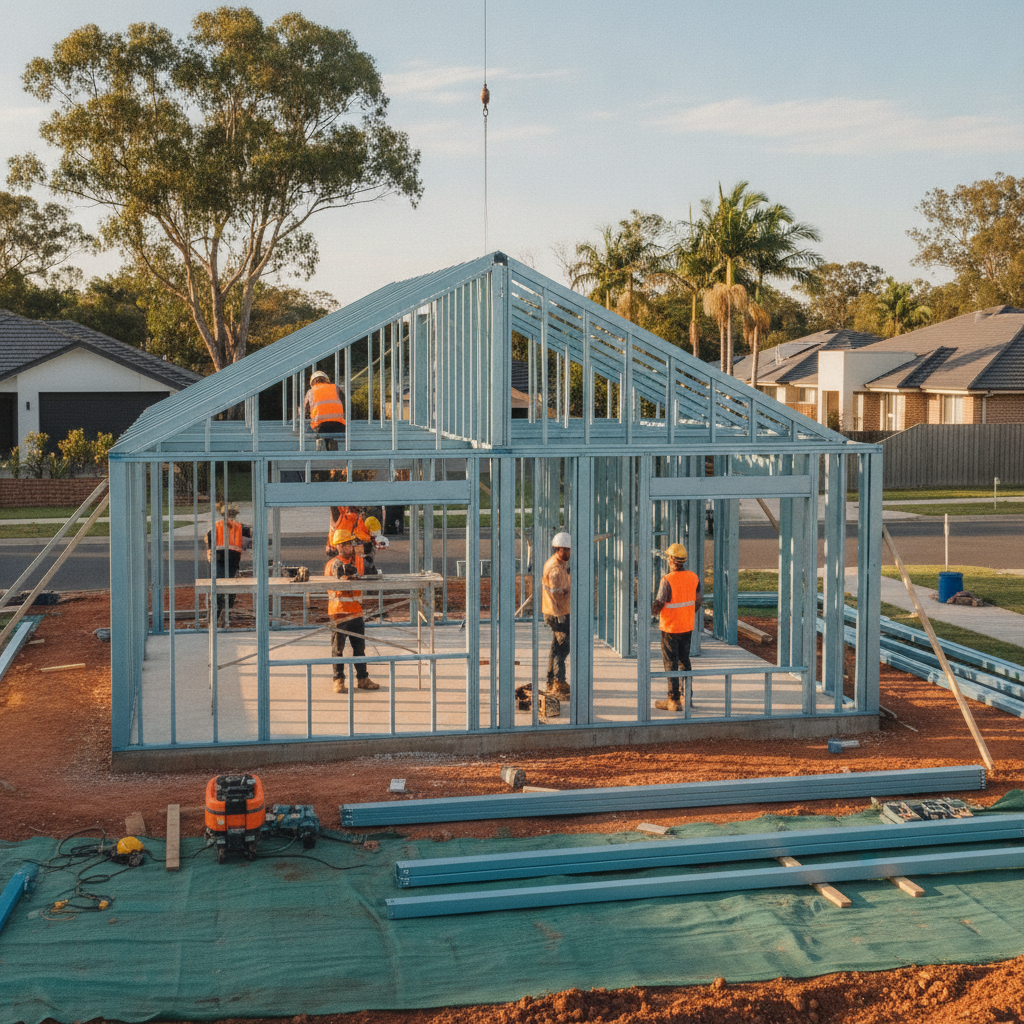
Using BlueScope steel frames means your structure is dead straight and stays that way. This is a huge plus when you're installing large windows or specialized doors. You don't have to worry about timber warping or twisting over time, which can make windows stick. It gives you a bit more confidence to go big with your glass choices.
The Tech and the Taps
Since you're managing the trades as an owner-builder, you have total control over the finish. This is where you can really suss out your lifestyle needs. Are you keen on a smart home? Get your sparky to run the data cables before the internal linings go on. Do you want a rain-head shower that feels like a spa? Pick it out yourself.
The kit provides the shell, the roof, and the windows, basically the weatherproof envelope. Everything inside that shell is your canvas. You can choose a minimalist modern look with polished concrete floors or a cozy country vibe with high skirting boards and ornate cornices.
A Few Practical Tips for the Road
Before you get carried away with the red pen on your floor plans, keep a few things in mind.
First, check your local council requirements. Some areas have restrictions on roof colors or building heights. It's better to know this before you've fallen in love with a design.
Second, think about the future. If this is your "forever home," will those stairs be an issue in twenty years? Can that home office be converted into a nursery later on? Flexibility is the key to longevity.
Lastly, don't be afraid to ask for advice. Talk to other owner-builders. See what they changed and, more importantly, what they wish they'd changed. Most people are happy to share their wins and their "doh!" moments.
Building your own home is a massive project. It's a lot of hard yakka, but the payoff is sitting on your custom-designed deck, looking out at your patch of Australia, and knowing that every square inch of the place was built exactly how you wanted it. Not a bad way to spend an arvo, eh?
So, take the time to get the design right. Move that wall. Add that extra window. Make that kitchen island a little bigger. After all, it's your dream. You might as well make it fit you like a glove.