The Ultimate Owner Builder Checklist: Navigating Your Kit Home Journey From Permits to Completion
Becoming an owner builder in Australia is one of the most rewarding ways to create a home that truly reflects your lifestyle. There is a unique sense of pride that comes from standing in a living room that you helped bring to life, knowing every bolt, beam, and sheet of cladding was overseen by you. However, stepping into the shoes of a project manager requires more than just a set of tools, it requires a rock-solid plan. When you choose a kit home, you are already one step ahead because the engineering and structural components are ready for you. But how do you get from a vacant block of land to a finished home? This guide walks you through the essential checklist for every Australian owner builder.
Phase 1: Research, Compliance, and Local Regulations
Before any dirt is moved, you need to ensure you are legally allowed to build. Navigating Australian building regulations can feel daunting, but breaking it down into steps makes it manageable.
1. The Owner Builder Permit
In most Australian states, if the value of your work exceeds a certain threshold (usually between $11,000 and $20,000 depending on your state), you must obtain an owner builder permit. This involves completing a short course that teaches you about your legal obligations, workplace health and safety (WHS), and site management. It is a vital step that protects you and ensures your project meets Australian standards.
2. Council Approvals (DA and CC)
You will typically need two main approvals: Development Application (DA) and a Construction Certificate (CC). The DA focuses on the visual and environmental impact of your home, while the CC focuses on the technical build quality. Since kit homes are engineered to specific standards, your supplier will often provide the structural plans and engineering certificates you need to submit to council.
3. Soil Tests and Site Classifications
Your foundation is only as good as the ground it sits on. A geotechnical engineer must perform a soil test to determine your site classification (e.g., Class M or H). This classification tells your engineers how your slab or footings need to be designed to prevent movement or cracking in the future.
Phase 2: Site Preparation and Infrastructure
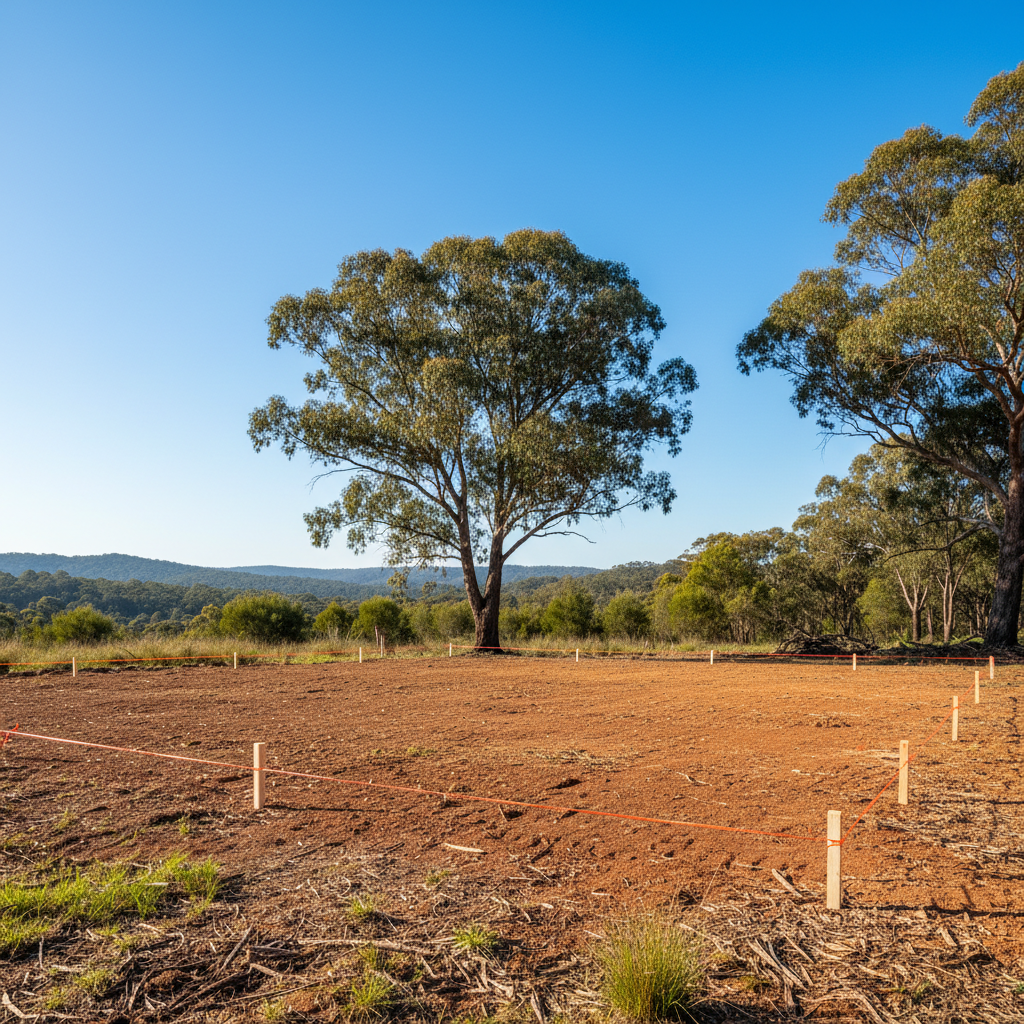
Once your paperwork is in order, it is time to get the site ready for the arrival of your kit. This phase is about setting the stage for a smooth construction process.
1. Site Access and Storage
Kit home components, especially the long lengths of BlueScope steel frames and stacks of cladding, require significant space. Ensure you have a clear, flat area for the delivery truck to unload. Consider the weather, too. While steel is incredibly durable, you want to keep your doors and windows off the ground and protected.
2. Services and Utilities
You will need water and electricity on site during the build. Arrange for temporary builder s power or ensure you have a reliable generator. This is also the time to coordinate with a plumber for the under slab drainage and with an electrician for any underground conduits.
3. The Foundation (Slab or Bearers)
Owner builders typically hire a specialized concreter to pour the slab or a carpenter to install the floor system. Accuracy is everything here. Because steel frames are manufactured with millimeter precision, your slab needs to be perfectly level and square. If the base is out by even a few centimeters, it can cause headaches when you start standing the walls.
Phase 3: The Shell and Structure
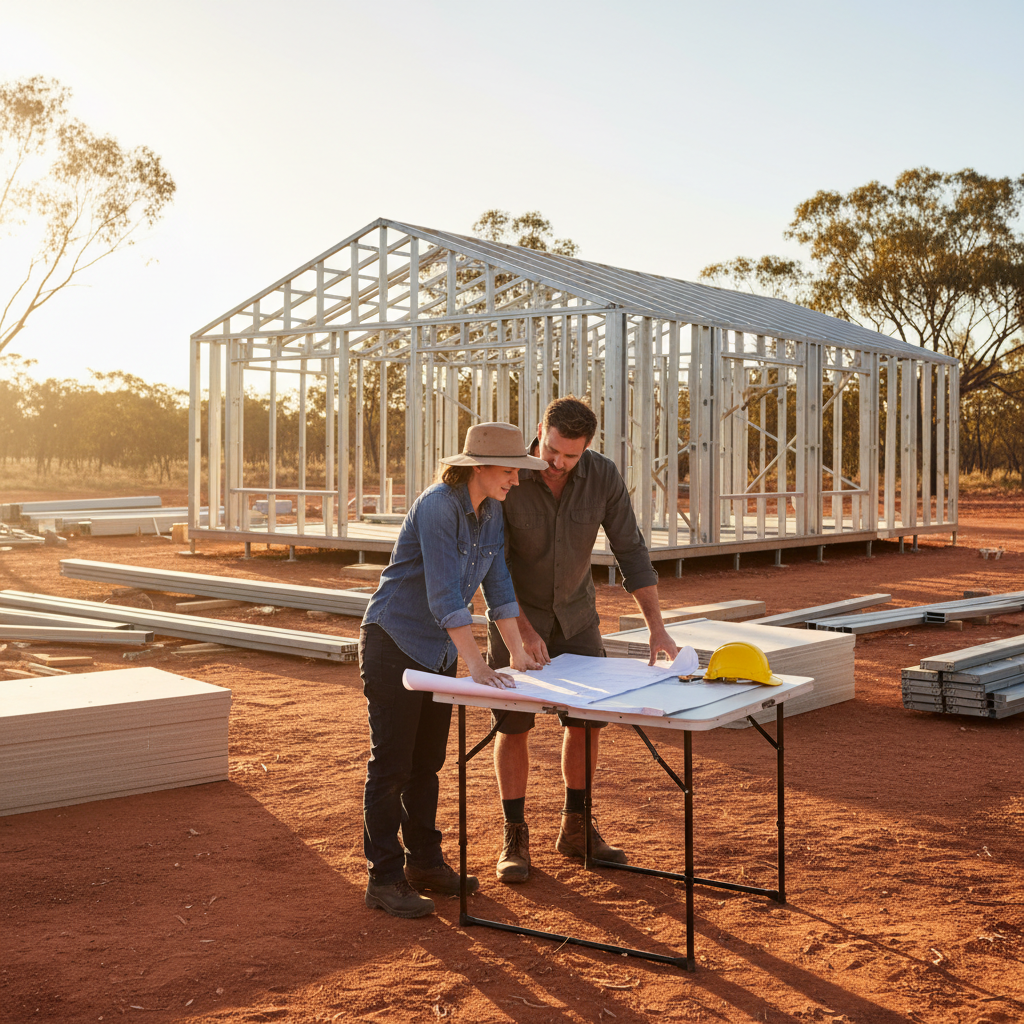
This is the most exciting part for many owner builders. This is when your house starts to look like a home. Working with a steel frame kit makes this process significantly faster and more accurate than traditional methods.
1. Standing the Frames
Steel frames made from TRUECORE steel are lightweight and often come pre-prepunched with holes for electrical and plumbing. This makes the assembly process very logical. You will start with the bottom plates, secure your walls, and then move on to the roof trusses. Using a kit means the structural engineering is already sorted, so you just need to follow the assembly layout.
2. Roofing and Wall Cladding
Once the skeleton is up, you need to make the structure weather-tight. This involves installing the roof sheets, gutters, and wall cladding. In the Australian climate, choosing high-quality materials is essential for longevity. This is also the point where you install your windows and external doors to fully seal the building.
3. Insulation and Vapour Barriers
Effective insulation is the key to a comfortable Australian home. Ensure you install the correct sarking and insulation batts as per your energy rating requirements. This not only keeps you cool in summer and warm in winter but also protects the steel structure from internal condensation.
Phase 4: Hiring Trades and Internal Fit-out
While an owner builder can do a lot of the work, Australian law requires licensed professionals for specific tasks. Your role here shifts from builder to a site manager.
1. The Licensed Trades
You MUST hire licensed professionals for all plumbing, electrical, and gas work. It is illegal and dangerous to DIY these elements. As the owner builder, you are responsible for scheduling these trades so they don t get in each other s way. Have your sparky come in once the frames are up but before the internal lining goes on so they can run their cables through the pre-punched holes in the steel.
2. Internal Lining and Finishes
Once the services are roughed in, you can install the plasterboard or internal lining. This is followed by the skirting boards, architraves, and internal doors. This phase requires patience and attention to detail, as these are the surfaces you will see every single day.
3. Wet Areas and Tiling
Waterproofing is one of the most critical steps in any build. Failure here can lead to major structural issues down the line. Many owner builders choose to hire a certified waterproofer to ensure the job is done to Australian Standards (AS 3740). Once waterproofed, tiling can begin in the bathrooms, laundry, and kitchen.
Phase 5: The Final Touches and Occupation
You are on the home stretch! This final phase is about turning the construction site back into a livable property.
1. Cabinetry and Flooring
Install your kitchen cabinets, wardrobes, and vanities. Following this, your final flooring (timber, carpet, or vinyl) can be laid. It is usually best to do flooring last to avoid damage from tools and heavy foot traffic during the earlier stages.
2. Final Inspections
Throughout the build, a building certifier will need to visit the site at key stages (e.g., footings, frame, and final completion). Once the certifier is satisfied that the building matches the approved plans and meets the Building Code of Australia, they will issue an Occupation Certificate (OC). This is the official green light that says your home is safe to live in.
3. Landscaping and External Works
Don t forget the outside! Proper drainage away from your steel frame structure is vital. Install your paths, driveways, and gardens to ensure water doesn t pool around the base of your home.
Practical Tips for the Australian Owner Builder
- Keep a Site Diary: Document everything. Take photos of where pipes and cables are located before the walls are plastered. This is invaluable for future maintenance.
- Safety First: Invest in quality safety gear. Hard hats, high vis vests, and proper scaffolding are non-negotiables on a building site.
- Communicate with Your Supplier: If you are unsure about a part of the kit assembly, ask. Kit home providers understand the owner builder journey and can often provide technical advice to get you back on track.
- Order Ahead: Lead times for things like appliances, custom tiles, or specific fixtures can be long. Order these well before you need them to avoid delays.
Conclusion
Building your own kit home is a journey of discovery, hard work, and immense satisfaction. By using a steel frame kit, you are building on a foundation of precision and durability that is perfectly suited to the harsh Australian environment. The key to success lies in the preparation. By following a structured checklist and staying organized, you can navigate the complexities of council permits, trade coordination, and construction with confidence. Take it one step at a time, keep your site clean, and soon enough, you will be turning the key in the door of a home you built yourself.