So, You Want to Build a Kit Home in Australia?
There is something uniquely Australian about the dream of building your own home. Whether it is a weekend escape in the High Country, a granny flat for the family, or a sprawling rural homestead, the kit home path offers a level of creative control that standard volume builders simply cannot match. However, for many first-time owner builders, the process can feel like a steep learning curve.
At Kit Home Tips, we have seen it all. We have seen stunning success stories where families move into their dream steel frame homes within months, and we have seen projects stall because of a few easily avoidable missteps. The secret to a smooth build is not necessarily having a background in construction, it is about preparation, patience, and knowing where the traps are hidden.
Let’s dive into the most common mistakes first-time kit home buyers make and, more importantly, how you can avoid them to ensure your building journey is as rewarding as the final result.
1. Underestimating the Role of the Owner Builder
Perhaps the biggest misconception is what a kit home actually includes. A kit home is a package of components, usually comprising high-quality steel frames made from TRUECORE steel, roofing, cladding, windows, and doors. What it is not, however, is a turn-key solution where the supplier manages the site.
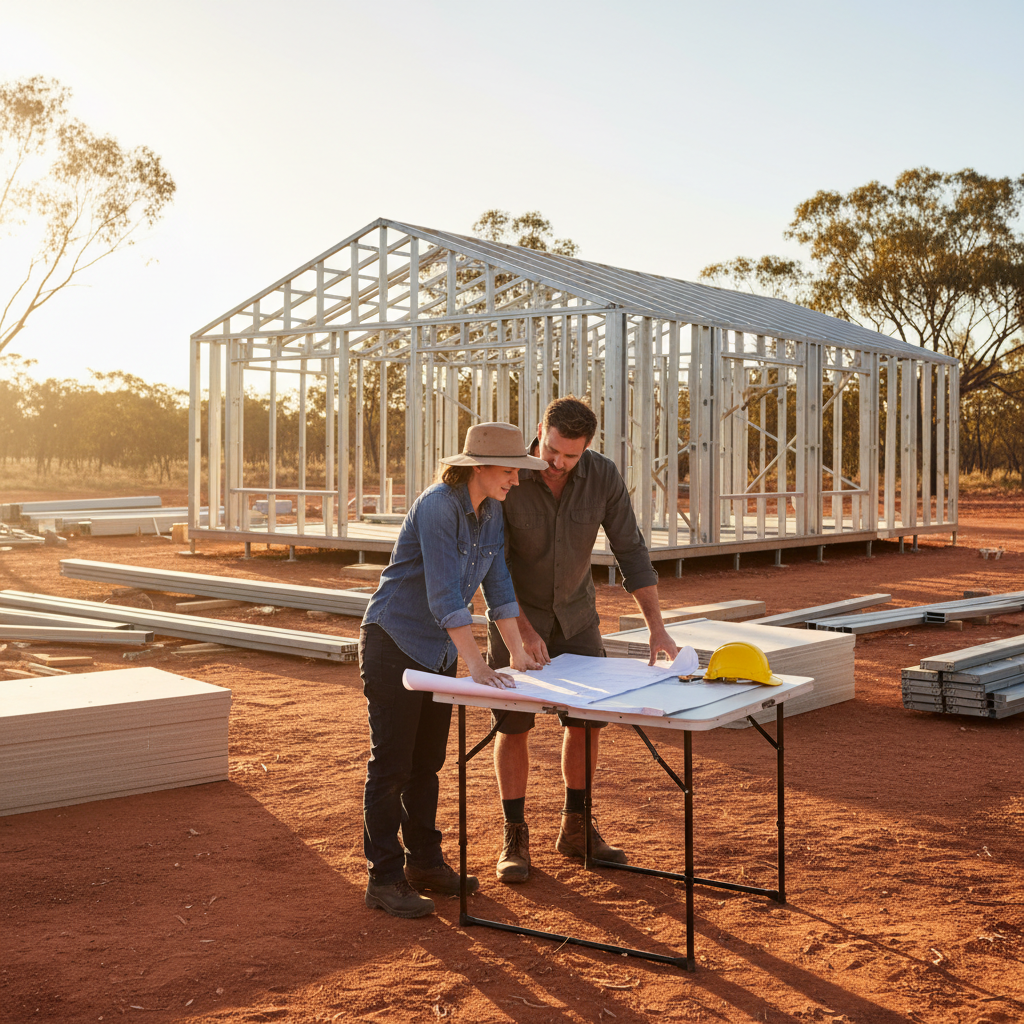
As an owner builder, you are essentially the Project Manager. One major mistake is failing to realize that you are responsible for coordinating the "unseen" parts of the build. This includes soil tests, site leveling, the concrete slab or flooring system, and the connection of services like electricity, water, and sewage.
How to avoid it: Before you even order your kit, download an owner builder checklist. Contact your local council to understand the specific requirements for your area. If you aren't planning on swinging a hammer yourself, start interviewing local trades (plumbers, electricians, and carpenters) early. Having a reliable team on standby is the backbone of a successful build.
2. Ignoring Local Council and Planning Regulations
In Australia, every council has its own set of rules, known as Local Environmental Plans (LEPs) and Development Control Plans (DCPs). A mistake we often see is buyers falling in love with a specific floor plan, only to find out later that their block has a building envelope that won't accommodate it, or bushfire attack level (BAL) ratings that require specific materials.
Building in a bushfire prone area is common in Australia, and it significantly impacts your choice of windows, seals, and cladding. Similarly, if you are building on the coast, you need to ensure your steel frames and roofing are rated for high corrosion environments.
How to avoid it: Always perform a due diligence check on your land before finalizing your kit design. Get a Section 10.7 Planning Certificate from your council. This document will tell you about zoning, bushfire risks, and flooding potential. Most kit home providers can help adjust a design to meet these requirements, but it is much easier to do this before the steel frames are manufactured than after they arrive on site.
3. Poor Site Access and Delivery Planning
Imagine a semi-trailer loaded with your future home arriving at your property, only to find the driveway is too narrow, the overhead branches are too low, or the ground is a boggy mess after a week of rain. Delivery day should be exciting, but without a plan, it can become a logistical nightmare.
Kit homes are delivered in stages or as a large bulk delivery of frames and materials. These components are heavy and require a flat, clear space for unloading. If the truck can't get close to your building slab, you will spend days manually moving heavy steel components across your property.
How to avoid it: Walk your site from the perspective of a truck driver. Are there power lines in the way? Is there a turning circle? If your site is steep or difficult, talk to your kit provider early. You might need to arrange a smaller hiab truck for the final leg of the delivery or prepare a temporary gravel hardstand area for storage.
4. Failing to Account for Climate and Orientation
Australia is a land of extremes. A home designed for the humid tropics of Queensland needs to behave very differently from a home in the frosty hills of Tasmania. A common mistake is choosing a beautiful design but failing to orient it correctly on the block.
If you place large glass sliding doors facing West without proper shading, your beautiful new living room will become an oven in January. Conversely, failing to capture the Northern sun in winter can leave your home feeling cold and dark.
How to avoid it: Study the path of the sun on your block. Aim to have your main living areas and largest windows facing North. Because kit homes often use steel frames, they offer great flexibility for adding wide verandas or eaves. These are essential for keeping the Australian sun off your walls and windows during the heat of the day.
5. Rushing the Foundation and Slab Stage
The steel frames of a kit home are engineered to incredibly tight tolerances. They are straight, true, and do not warp or shrink. This is a massive advantage during construction, but it means your foundation must be perfect. If your concrete slab is out of level by even a few centimeters, or if the dimensions are slightly off, the precision-engineered steel frames won't sit correctly.
How to avoid it: Do not cut corners on your concreter. Ensure they have the engineering drawings for the kit home and understand that the slab needs to be exact. Using a laser level is non-negotiable. If you are using a raised flooring system instead of a slab, ensure the piers are set accurately and the sub-floor is perfectly level before the wall frames are erected.
6. Trying to Do Everything Solo
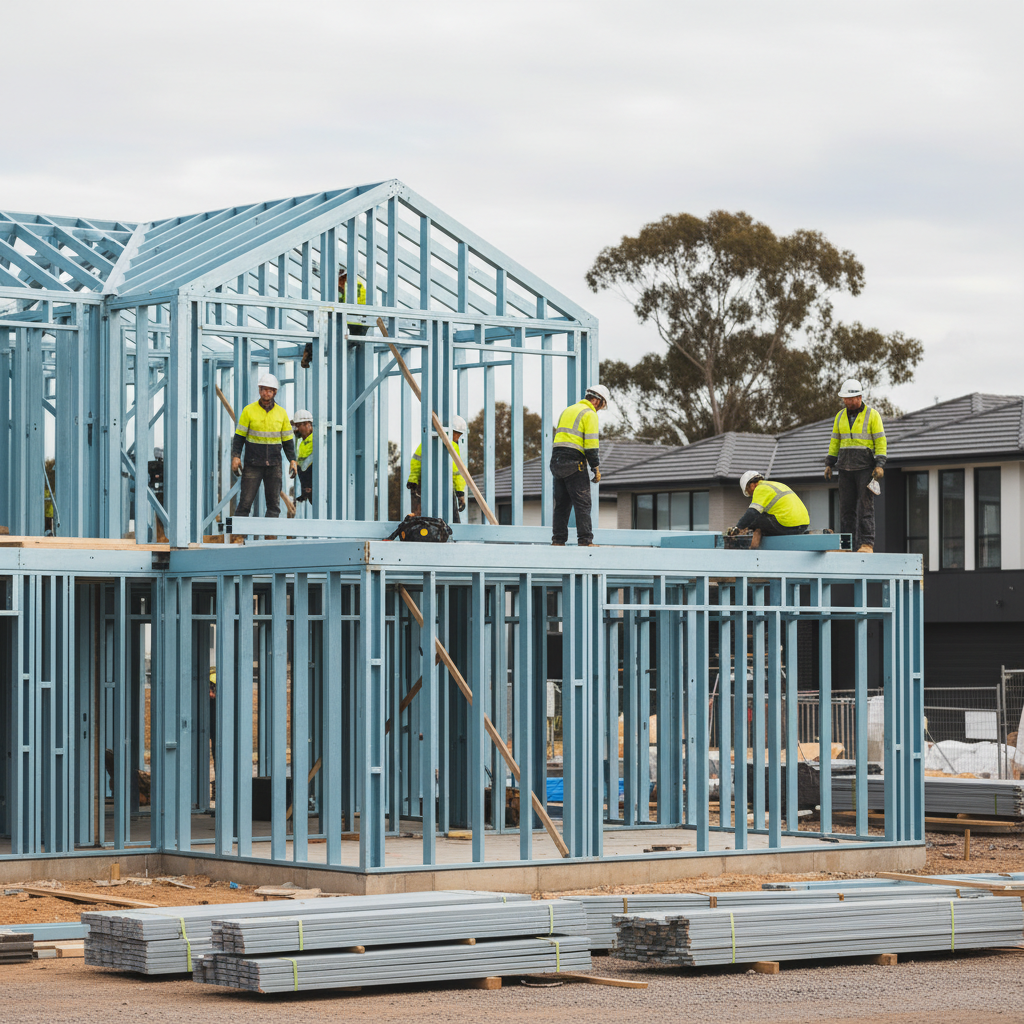
The "DIY" spirit is strong in the kit home community, but there is a difference between being an owner builder and being a solo builder. Some tasks, like standing up long wall sections or installing roofing sheets, are dangerous or simply impossible to do alone.
Furthermore, certain works in Australia, specifically plumbing and electrical, must be carried out by licensed professionals by law. You cannot do these yourself, even if you are capable.
How to avoid it: Plan your "working bees" in advance. Get friends and family involved for the heavy lifting stages. More importantly, build a good relationship with a local sparky and plumber. They will need to sign off on their work so you can get your final Occupation Certificate (OC) from the council or private certifier.
7. Neglecting Storage and Material Protection
Once your kit arrives, you have a lot of high-quality materials sitting on your site. While the steel frames made from BlueScope steel are incredibly durable and resistant to termites and rot, other components like internal plasterboard, insulation, and timber trim need to stay dry. A mistake often made is leaving these materials exposed to the elements while waiting for the next stage of the build.
How to avoid it: Have a storage plan before the truck arrives. Use heavy-duty tarpaulins, or better yet, have a shipping container or a secure shed on site. Organize your materials so that the items you need first (like the floor joists and wall frames) are easily accessible, while the finishing items (like windows and doors) are tucked away safely at the back.
Summary: The Key to Success
Building a kit home in Australia is one of the most rewarding projects you can undertake. It allows you to create a high-quality, termite-resistant home that fits your lifestyle perfectly. By avoiding these common mistakes, you shift your focus from solving problems to enjoying the build.
Remember, the most successful owner builders are the ones who ask the most questions. Talk to your kit provider, talk to your local council, and talk to your trades. Preparation is the secret ingredient that turns a pile of steel and cladding into a beautiful Australian home.
Stay tuned to Kit Home Tips for more advice on navigating your construction journey, from selecting the right cladding to mastering the art of the owner builder lifestyle.