Starting Your Kit Home Journey on the Right Foot
There is something uniquely Australian about the dream of building your own home. The idea of rolled-up sleeves, a spirit of independence, and creating a space that is truly yours is incredibly appealing. Kit homes have become a go-to solution for thousands of Australians looking to achieve this dream, offering a structured way to manage a build without the astronomical overheads of traditional volume builders.
However, the transition from browsing beautiful floor plans online to actually managing a construction site is a big leap. For first-time kit home buyers, the learning curve can be steep. While the process is rewarding, there are several common pitfalls that can lead to delays or unnecessary stress. This guide explores the most frequent mistakes made by newcomers in the Australian kit home market and, more importantly, how you can avoid them to ensure your build is a success.
1. Underestimating the Council Approval Process
One of the most common mistakes is assuming that because a kit home is pre-engineered, the council approval process will be a walk in the park. In Australia, every local government area has its own set of Local Environmental Plans (LEPs) and Development Control Plans (DCPs). Just because a design works in regional New South Wales does not mean it will meet the requirements for a suburban block in Queensland.
Many first-timers buy their kit before checking for bushfire attack levels (BAL), flood overlays, or biodiversity constraints. To avoid this, your first step should always be a conversation with a private certifier or your local council planning department. Ask about setbacks, height restrictions, and any specific aesthetic requirements for your zone. Ensuring your kit provider uses high quality materials, like BlueScope steel frames, can actually help here, as high quality engineering drawings make the certification process much more straightforward.
2. Treating "Owner-Builder" Too Lightly
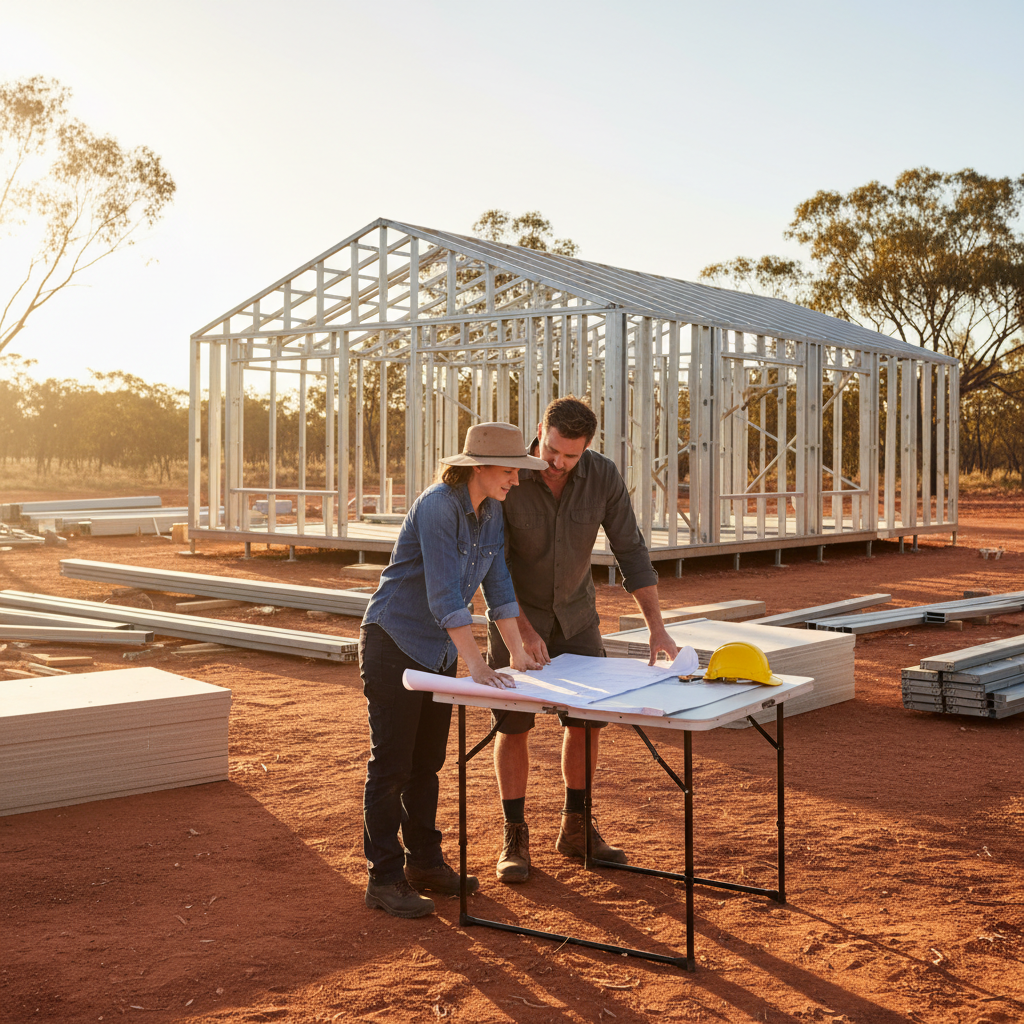
A kit home is a delivery of components, not a finished house that arrives on a truck. When you take the path of a kit home, you are stepping into the role of a project manager or an owner-builder. A significant mistake is failing to realize the level of responsibility this entails. In most Australian states, if the value of the work exceeds a certain amount (usually around $10,000 to $20,000 depending on the state), you must obtain an owner-builder permit.
This process usually involves a short course that teaches you about site safety, insurance, and legal obligations. To avoid project stalls, get your owner-builder permit sorted early. Understand that you will be responsible for hiring plumbers, electricians, and concreters. If you are not planned and organized, these trades will move on to other jobs, leaving your site dormant for weeks.
3. Overlooking Site Access and Preparation
Imagine a semi-trailer arriving at your property with several tonnes of steel frames, roofing, and cladding, only to find the driveway is too narrow, too steep, or blocked by low-hanging branches. This is a nightmare scenario that happens more often than you would think. First-time buyers often focus so much on the house design that they forget about the logistics of the delivery.
Before your kit arrives, walk your site from the perspective of a heavy vehicle driver. Is there a flat, dry area to store your materials? Are the steel frames protected from the elements if you are not starting immediately? Your site needs to be ready for the slab or footings before the kit arrives. Coordinating the timing between your concreter and the kit delivery is vital for a smooth flow.
4. Failing to Understand What Is Included
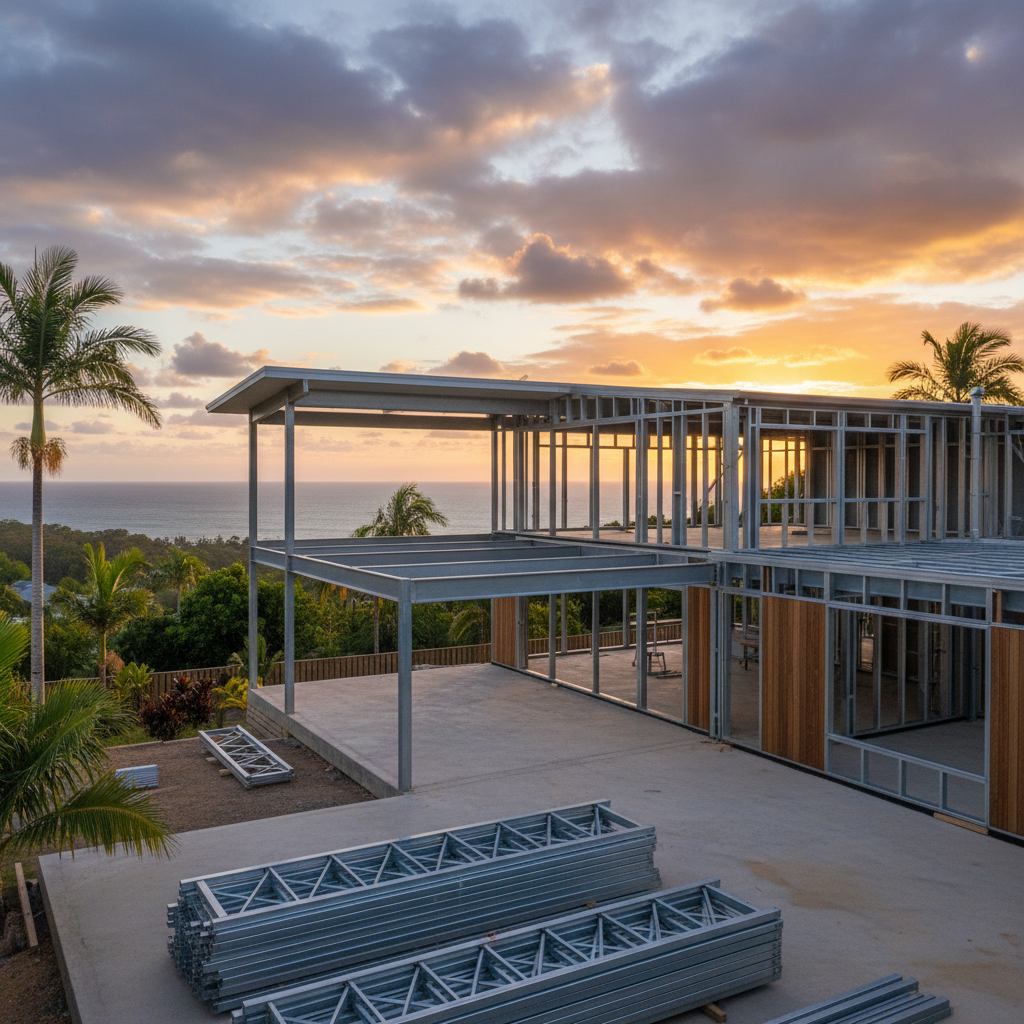
There is a recurring myth that a kit home includes every single nut, bolt, and lightbulb required to move in. In reality, an Australian kit home generally provides the "shell" or the "lock-up" stage components. This typically includes the steel frames and trusses, external cladding, roofing, windows, insulation, and external doors.
A major mistake is not reading the inclusions list carefully. Usually, things like the concrete slab, internal fit-out items (kitchens, bathrooms, floor coverings), and the actual labor for plumbing and electrical are sourced locally by the owner-builder. To avoid surprises, create a checklist of everything NOT in the kit. This allows you to source your local trades and materials well in advance, keeping the momentum toward the finish line.
5. Skimping on the Quality of the Skeleton
In the Australian climate, the "bones" of your home have to work incredibly hard. From the scorching sun of the Pilbara to the humidity of the Tropics, your home is under constant environmental pressure. A mistake some first-timers make is choosing kits based solely on the lowest price without looking at the material specs.
Opting for a kit that utilizes TRUECORE steel from BlueScope is a smart move for long term peace of mind. Steel frames are termite-proof, won't warp or twist over time, and provide a perfectly straight edge for your internal plasterboarding. When you buy a kit home in Australia, you want to know that the frame is engineered to Australian standards and can withstand our unique conditions. Don't settle for sub-par materials that might lead to structural headaches down the track.
6. Trying to Do Every Single Task Yourself
The DIY spirit is great, but knowing when to call in the professionals is even better. Some novice builders try to do everything from the plumbing to the roofing to save money. In Australia, certain tasks like electrical work and plumbing must be done by licensed professionals by law. Attempting these yourself is not just dangerous; it makes it impossible to get a final certificate of occupancy.
The most successful owner-builders are those who act as the conductor of the orchestra. They might do the painting, the landscaping, and some of the internal fit-out, but they hire specialists for the technical structural work. This ensures the home is built to code and protects your warranty on the materials. Use your time to manage the schedule and ensure the site is clean and ready for the next trade.
7. Ignoring Climate-Specific Design
Australia is a vast continent with wildly different weather patterns. A common mistake is choosing a floor plan because it looks good in a brochure without considering how it will perform on your specific block. Where does the sun rise and set? Where do the cooling breezes come from?
When planning your kit home, think about orientation. Placing large windows on the north side can help with natural heating in winter, while generous eaves can protect the house from the summer sun. Because many kit homes use steel frames, they offer great flexibility in design, allowing for large open-plan spaces that can be tailored for cross-ventilation. Think about your insulation levels and window glazing choices early in the piece. A house that is comfortable to live in is worth far more than one that just looks pretty.
Practical Tips for a Success
- Stay Organized: Keep a dedicated folder for all your council permits, trade quotes, and delivery dockets.
- Safety First: Invest in proper safety gear and ensure your site meets WorkSafe requirements. A tidy site is a safe site.
- Network Locally: Talk to other people in your area who have built their own homes. They can often recommend reliable local tradespeople.
- Be Patient: Construction involves many moving parts. Weather delays or trade shortages are part of the process, so keep a flexible mindset.
Conclusion
Building a kit home is an empowering way to enter the Australian property market or create a dream getaway. By avoiding these common mistakes, you move away from the stress of the unknown and toward the excitement of creation. Remember that the key to a successful build lies in the preparation. Whether it is researching your council requirements, choosing high quality steel frames, or managing your site logistics, every bit of effort you put in before the truck arrives will pay dividends in the long run.
Take your time, ask plenty of questions, and enjoy the process of bringing your vision to life. With the right approach, your kit home will be a place of pride and comfort for decades to come.