The Myth of the Straight Stud
Walk into any hardware store on a Saturday morning and you'll see blokes picking through the timber racks like they're looking for gold. They're checking for bows, cups, and twists. Because the truth is, timber is a live product. It moves. It shrinks. It has knots that pop out right where you need to drive a screw. If you're building a kit home yourself, you don't have time to fight the materials. You want to pull a frame off the truck, stand it up, and know it's square to the millimetre. That's why we don't mess around with anything but light gauge steel. It stays straight forever.
Precision engineering isn't just a fancy phrase we use to sound professional. It's the difference between a kitchen cabinet that sits flush against the wall and one that needs three layers of packers just to hide a 10mm gap. When we talk about steel frame kit homes, we're talking about a system where every single hole is pre-punched by a computer-controlled roll former. There's no tape measure error. No apprentice cutting a plate too short because he was thinking about lunch. It's basically a giant Meccano set for adults, and it's built to handle the Australian sun without warping.
True Blue Components Matter
We use BlueScope TRUECORE steel. Why? Because it's designed specifically for the Australian residential market. It's got a thin-gauge, high-strength chemistry that makes it light enough to man-handle on site but stiff enough to meet the wind load requirements for places like North Queensland or the gusty hills of the Adelaide ranges. Plus, it's got that blue resin coating that identifies it and protects it during the build process. If you're building in a termite-prone area like the Northern Rivers or inland WA, steel is your best mate. Termites can't eat it. They can't even chew through it to get to your high-gloss kitchen. You still need your termite barriers for the rest of the house, obviously, but the bones of your home are bulletproof.
One thing people forget is how steel behaves in different climates. You've got your NASH Standard for residential and low-rise steel framing which covers all the technical bits, but for the average person on the ground, it's about peace of mind. Steel doesn't ignite. In a country where BAL (Bushfire Attack Level) ratings are getting stricter every year, having a non-combustible frame is a massive head start. It won't stop a fire from entering through a broken window, but it won't add fuel to the situation either.
The Owner Builder Reality Check
Being an owner builder is hard work. It's not like the TV shows where a house appears in forty minutes. You're the one on the phone to the plumber at 7am on a Tuesday. You're the one picking up discarded screws so you don't get a puncture in your ute. Using a precision-engineered kit saves you from the most soul-crushing part of the job: fixing stuff that's out of whack. When the gyprockers show up to hang the sheets, they'll love you. Why? Because the walls are perfectly flat. No humps. No bumps. Just a clean surface that makes the finish look like a million bucks.
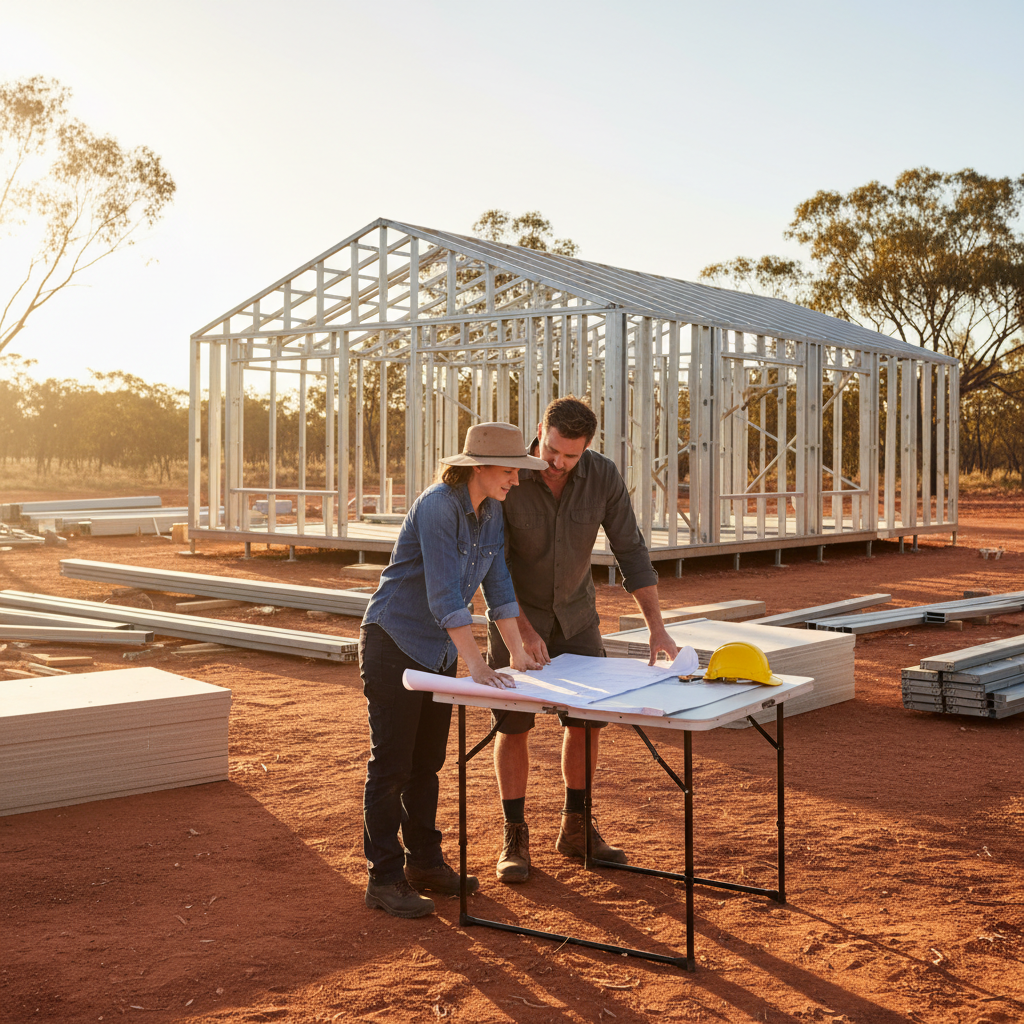
But here is a tip from someone who's seen a few of these go up. You need to be careful with your slab. The concrete needs to be spot-on. If your slab is out by 20mm over the length of the house, that's not the frame's fault. Steel won't bend to hide a bad slab like timber might. So, spend the extra time with the formwork. Triple-check your diagonals. If the slab is right, the steel frames will drop into place like a dream. It's a system, and every part relies on the one before it. We provide the frames, roofing, cladding, and windows, but the foundation is your territory. Don't rush it.
Service Holes and Simple Services
One of the best bits about high-tech steel framing is the pre-punched service holes. You don't see plumbers or sparkies dragging out heavy drills and boring holes through every second stud anymore. Our frames come with flared holes already poked through the guts of the steel. This means the trades can pull their cables and pipes through in half the time. It prevents them from cutting into the structural integrity of the stud, which is a common nightmare with timber frames. Just make sure they use the little plastic grommets so the wires don't rub on the edge of the steel. It's a small detail, but it's what separates a pro job from a hack job.
Design Flexibility Without the Weight
Steel has a much higher strength-to-weight ratio than wood. This is a big deal if you're building on a site with tricky access. You can often carry a whole wall frame with two people. Try doing that with a 3-metre tall hardwood frame and you'll be visiting the physio for a month. This strength also lets us design wider spans. You want a big open-plan living area without a dirty great post in the middle of the room? Steel makes that happen. It stays straight over long distances, which means your ceiling lines will stay crisp long after the house has settled.
The Realities of On-Site Work
Let's be honest. Some Tradies are scared of steel because they grew up using a drop saw and a hammer. But once they see how fast a steel kit goes together, they usually change their tune. You aren't measuring and cutting every stick. You're assembling. You're using a tek screw gun instead of a nail gun. It's cleaner, there's less waste, and you aren't leaving a mountain of sawdust and offcuts for the skip bin. In fact, steel is 100% recyclable, so even the tiny bits of scrap can go into the yellow bin instead of the tip.
One thing to watch out for is hanging heavy stuff. If you're planning on putting in a massive wall-mounted TV or some heavy-duty floating shelves in the laundry, tell us early. We can add extra noggins into the design before the frames are manufactured. You can still do it later with some timber backing behind the steel, but it's much easier to have it engineered into the kit from the start. That's the beauty of the system. We do the thinking on the computer so you don't have to do it on a ladder.
Final Thoughts for the Savvy Builder
Don't fall for the trap of thinking a house is just a house. The skeleton of your home dictates how the next fifty years are going to go. Do you want to be patching plaster cracks because the timber decided to dry out and shrink? Or do you want a house that stays exactly where you put it? Precision engineered steel isn't about being fancy. It's about being right. It lets an owner builder achieve a level of accuracy that used to be reserved for high-end commercial skyscrapers. So, get your site sorted, find a good concreter, and get ready to see how fast a house can truly go together when the parts actually fit the way they're supposed to. It's a good way to build. Simple as that.