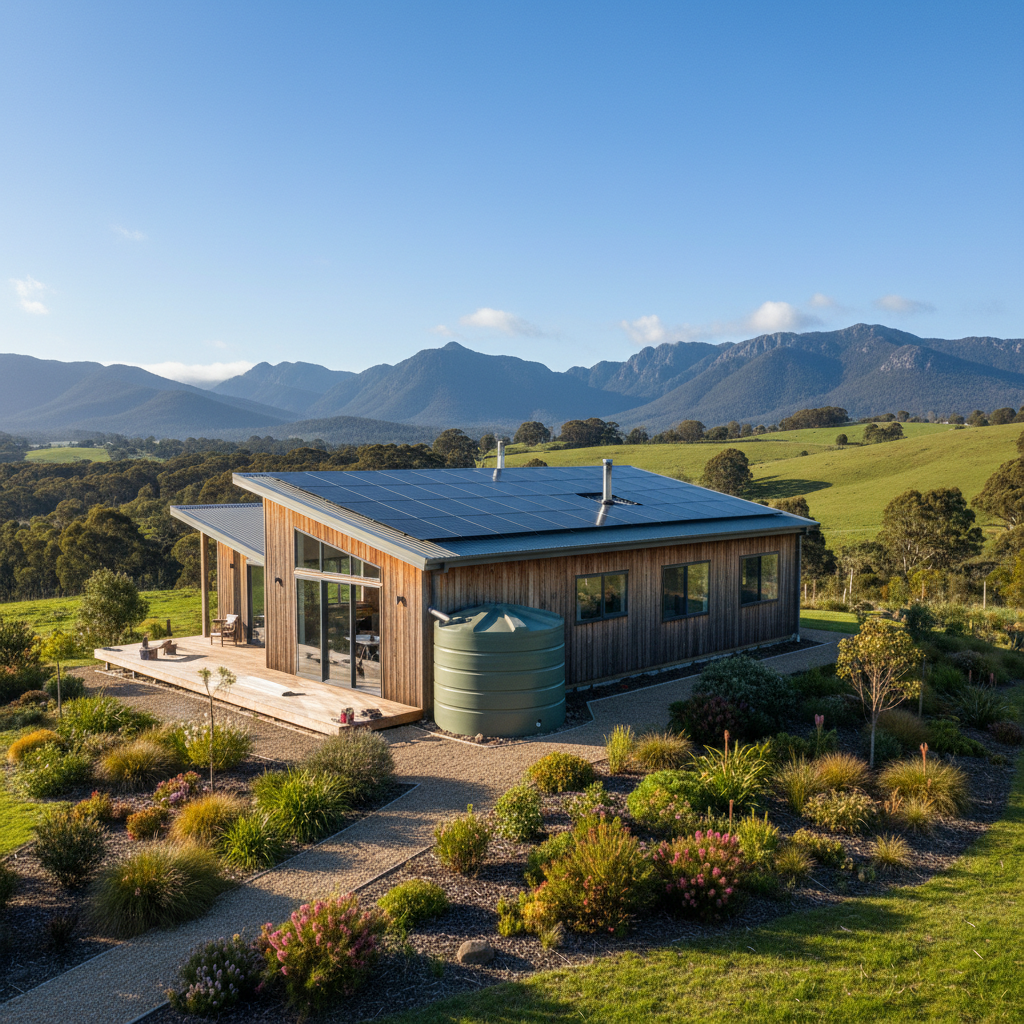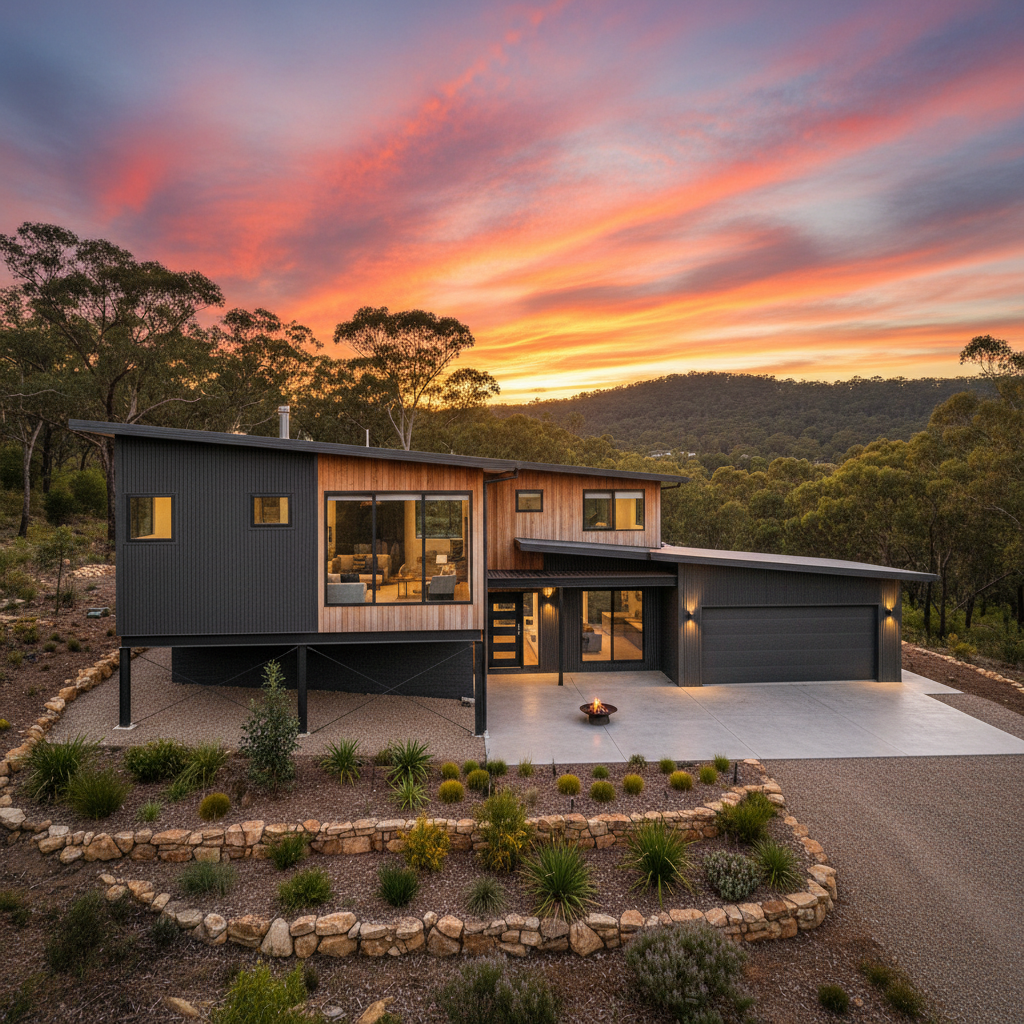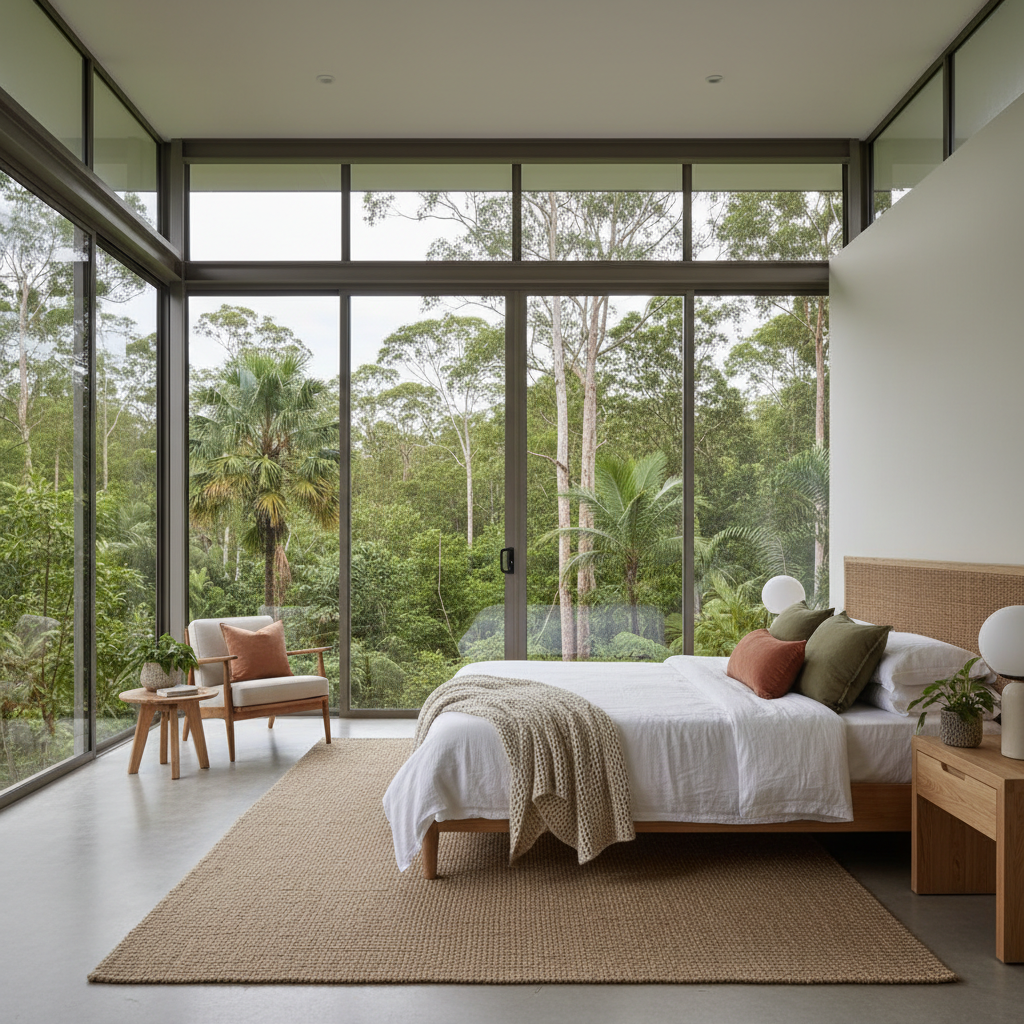
The Reality of Building in the Australian Scrub
Most people start their kit home project by looking at a floor plan on a screen. They see the wrap-around veranda and the open plan kitchen and they start thinking about where the coffee machine goes. But if you're building in the Blue Mountains, the Adelaide Hills, or anywhere with a bit of scrub nearby, your first thought shouldn't be the floor plan. It should be the frame. The skeleton of the house dictates whether you're building a home or a pile of kindling. I have seen plenty of people try to skirt around BAL (Bushfire Attack Level) requirements because they think it's just another layer of council red tape. It isn't. It's about making sure your house is still standing after a bad January afternoon.
Steel is the logical choice here. Specifically, TRUECORE steel from BlueScope. It is non-combustible. That sounds like marketing speak, but it's a cold, hard fact. If a bushfire rolls through, a steel frame won't contribute fuel to the fire. It won't ignite. It won't help the flames spread through your ceiling cavity. When the temperature hits 600 degrees, the structural integrity of a house is everything. Timber frames start to lose their strength and char long before that. Steel lets you sleep a bit easier when the northerlies start blowing.
Understanding BAL Ratings and Your Kit Home
Before you even order a kit, you need to get your BAL rating sussed out. This isn't optional. Your local council or a private fire consultant will stick you into a category: BAL-12.5, BAL-19, BAL-29, BAL-40, or the big one, BAL-FZ (Flame Zone). The higher the number, the more fire-resistant your materials need to be. Most kit homes we deal with are designed to handle these higher ratings because we use steel frames and metal cladding as the baseline. But don't just assume. You've got to check the NCC Volume 2 (the National Construction Code) to see exactly what's required for your specific patch of dirt.
If you're in a BAL-40 zone, you aren't just looking at the frame. You're looking at the whole envelope. This includes the gaps under your eaves, the type of mesh on your windows, and the seals on your doors. Because we use BlueScope steel for the roofing and cladding too, you're already halfway there. Steel doesnt warp or twist when it gets hot like some materials do, which means your seals stay tight. It's the gaps that kill houses in fires. Embers find a tiny hole, get into the roof space, and it's game over. Precision-engineered steel frames mean everything fits together like a glove. No wonky joints for embers to lodge in.
The Owner-Builder Advantage with Steel
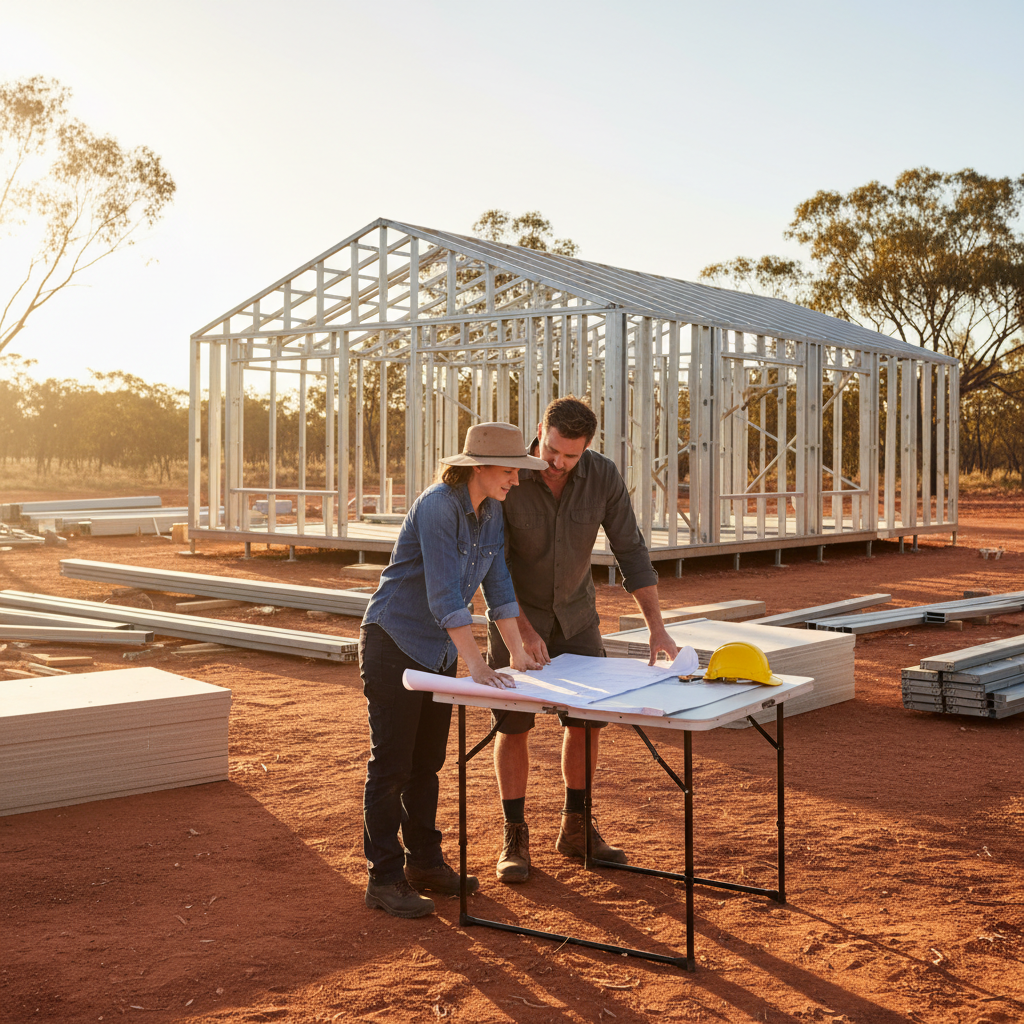
Let's talk about the actual build. If you're an owner-builder doing this yourself, timber can be a nightmare. It's heavy. It's rarely straight. You spend half your time tripping over warped studs or trying to plane back a bit of wood that's bowed in the sun. Steel frames are different. They show up on site pre-punched and labeled. It is like a giant Meccano set. You don't need a degree in carpentry to get the frame up straight and true. And because the steel is 100 percent termite proof, you aren't just protected from fire, you're protected from the silent killers that eat your house from the inside out. In a lot of high-bushfire areas, termites are just as big a threat as the flames. They love the same damp, woody environments. Steel kills two birds with one stone.
Thermal Performance and the Bushfire Build
One thing people worry about with steel frames is the "heat bridge" effect. They think the steel will suck all the heat into the house during a fire or a hot summer day. That's a myth that needs to die. When you're building a kit home in Australia, insulation is key. We use high-quality insulation batts and foil wraps that create a thermal break. In a fire situation, the steel stays protected by the external cladding and the insulation. In everyday life, it means your house stays cooler in summer and warmer in winter. Plus, steel doesn't hold moisture. It doesn't rot. It doesn't grow mould. It's a clean, dry, stable backbone for a house.
And let's be real for a second. Building a kit home is a massive undertaking. You're managing trades, digging trenches, and probably arguing with your partner over tile colors. The last thing you want is a frame that's moving on you. Timber moves. It breathes. It shifts with the seasons. That leads to cracked plasterboard and doors that don't shut properly. Steel is stable. Once it's up, it stays where you put it. This is especially important for the DIY crowd because it hides a multitude of sins. If your slab is out by a couple of millimeters, you can work with steel far easier than you can with timber.
Practical Tips for Fire-Prone Sites
If you're looking at a kit home for a bushfire-prone area, here's some advice from someone who's seen it go right and wrong. Don't cheap out on the windows. In high BAL zones, you'll likely need toughened glass or even fire shutters. The frame might be fireproof, but if the glass blows in, the fire gets inside anyway. So, look for kits that include high-spec windows. Also, think about your water supply. Do you have a dedicated fire tank with a Storz fitting for the RFS? You should. Even though your steel frame won't burn, your curtains and furniture will if the fire gets in through a broken vent.
Maintenance is another big one. Steel frames are basically set and forget. You don't need to treat them for pests every year. You don't need to check for dry rot. Especially in rugged areas where access might be tough, having a low-maintenance structure is a massive win. You want to spend your weekends enjoying the bush, not crawling under the house with a torch and a tin of chemicals. We've had customers in the Victorian High Country who chose steel specifically because they didn't want to deal with the upkeep that comes with traditional building materials in such a harsh climate.
The Long Term Value of Steel
People often ask if steel is worth the effort. I reckon it's a no-brainer. When you go to sell that house in ten years, having a certified steel frame and a high BAL rating is a huge selling point. Buyers are getting smarter. They know that Australian summers aren't getting any cooler. They want to know the house is built to last. A kit home built with TRUECORE steel is a badge of quality. It shows you haven't cut corners. It shows you've built something that can handle the Australian environment. And because it's non-combustible, you might even find your insurance company is happier to talk to you, though that's a whole different conversation for another day.
So, stop over-thinking the paint colors for a minute. Get your BAL assessment done. Look at the bones of the house. If you're building in the bush, steel isn't just a benefit, it's a necessity. It gives you the best chance of protecting your investment and, more importantly, your family. It's tough, it's straight, and it won't feed the fire. That's about as much as you can ask from a house frame in this country.