The Hard Truth About Sticks and Steel
I've stood on enough slab edges at 6am to know one thing for certain: Australia is trying to eat your house. If it isn't the humidity in Queensland warping your wall studs, it's the termites in the Riverina treating your bottom plates like a buffet. Timber has been the default for a long time, mostly because that's how grandad did it. But grandad didn't have access to BlueScope TRUECORE steel. These days, choosing timber for a kit home is like choosing a landline over a smartphone. It works, sure, but why would you bother with the headache?
Steel provides a level of precision that timber simply can't match. When you're an owner-builder and you're trying to line up your plasterboard or install a kitchen, you want a wall that's actually straight. Not 'mostly straight except for that one curved bit of pine near the window'. Because steel is engineered, it's straight and stays that way. It doesn't shrink, twist, or sag over time. This matters when you're the one holding the level and trying to make everything look professional on a Saturday afternoon.
Termites Don't Eat Steel
Let's talk about the white ants. They're a nightmare. You can spray chemicals into the soil or install physical barriers, but those things require maintenance and, eventually, they fail. I've seen homes where the structural integrity was gone before the owners even noticed a mud tunnel. With a steel frame, you've got peace of mind built into the bones of the building. Termites can't chew through TRUECORE. It's a non-issue. You'll still need your regular inspections for the rest of the house, but the actual skeleton of your home is safe from being turned into sawdust. It's one less thing to worry about when you're lying in bed listening to the house settle at night.
Fire Protection and the Australian Summer
If you're building in a Bushfire Attack Level (BAL) rated zone, steel isn't just a luxury. It's a practical necessity. Steel is non-combustible. It won't ignite or contribute fuel to a fire. While wood begins to char and lose strength at relatively low temperatures during a bushfire event, steel holds its ground longer. Plus, because our kit homes use BlueScope steel, you know it's been tested for our specific conditions. We aren't talkin about some cheap import that'll rust if a dog barks at it. This is Aussie-made stuff designed for Aussie heat.
The Accuracy Factor for Owner-Builders
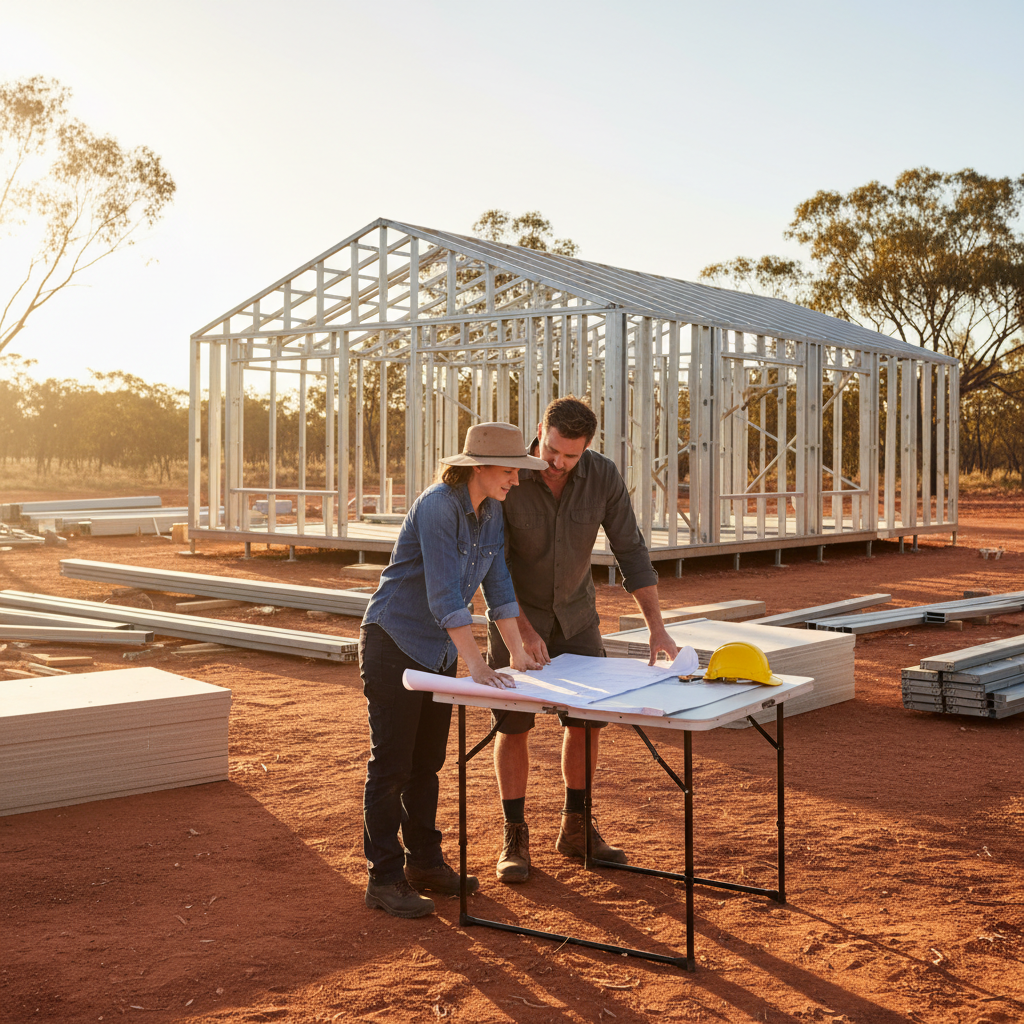
One of the biggest hurdles for someone tackleing their first build is the fear of messing up the technical bits. Timber framing involves a lot of onsite cutting, measuring, and 'she'll be right' attitude. Our steel frames arrive pre-punched and ready to bolt together. It's basically a giant Meccano set for adults. The service holes for your sparks and plumbers are already there, so they aren't hacking away at your structural members with a hole saw later on. This saves time and keeps the build site cleaner. No piles of sawdust or offcuts blowing into the neighbor's pool.
And let's look at the weight. Steel has a much higher strength-to-weight ratio than timber. This makes the individual frame sections easier to handle. You don't need a massive crew to stand up a wall. Often, two people can comfortably position a steel wall frame. If you're building a kit home on a remote block or a sloped site where access is a bit hairy, this lightness is a massive win. You aren't breaking your back just to get the house out of the ground.
Sustainability That Actually Lasts
People talk about timber being renewable, and it is, but steel is 100% recyclable. More importantly, it lasts. A house that stays straight and true for 50 years is more sustainable than one that needs constant repairs because the frame is moving. BlueScope TRUECORE comes with a significant warranty (subject to terms and conditions of course), which gives you some backup. You aren't just buying a pile of metal; you're buying a long-term structural solution that's been backed by decades of Aussie R&D.
Corrosion Resistance and the Coastal Catch
I get asked a lot about rust. Modern steel is a different beast compared to the stuff from the 70s. TRUECORE has a specialized alloy coating that protects the core steel. Unless you're building literally right on the breaking surf where the salt spray is constant, it's one of the most durable materials you can use. Even in coastal areas, with the right maintenance and design, it outperforms most other options. It's why you see so many new builds in coastal NSW and WA opting for steel over the traditional stick-build.
Technical Realities: The 'It Depends' Factor
It isn't all sunshine and rainbows, though. You need to be honest about the trade-offs. Steel can be a bit loud during the build - lots of drills and metal-on-metal clanging. And as I mentioned before, if you want to hang a heavy mirror or a huge TV after the walls are plastered, you've got to be smart about it. You can't just screw into the stud anywhere like you might with a chunky piece of hardwood. You need to use the right fasteners or plan ahead by putting in some noggins where you know things are going to hang. It's a different way of thinking, not a harder one.
Also, thermal bridging used to be a point people brought up against steel. But with modern insulation and thermal breaks required by the NCC Volume 2, it's a solved problem. When you put together one of our kits, the insulation we provide works with the frame to keep the house cool in summer and warm in winter. You won't be sitting in a tin can. You'll be sitting in a highly engineered, comfortable home.
The Logic of the Kit
Because we use steel, the plans are precise. We know exactly how much material is needed, which means less waste. In a timber build, you're always running back to the hardware store because a stud was bowed or someone miscut a plate. With our steel kits, what arrives is what you need. It forces a level of discipline on the project that actually helps first-time builders stay on track. You follow the diagrams, you bolt the sections, and the house goes up. No guesswork required.
Wrapping Up the Frame
Choosing your frame is the biggest decision you'll make for your kit home. It's the one thing you can't easily change later. Everything else - the kitchen, the carpet, the paint - that can all be swapped out in ten years. But the frame? That's there for the life of the building. Moving away from timber isn't about being fancy; it's about being practical. We live in a country with extreme weather and hungry insects. Steel handles that. It stays straight, it doesn't burn, and the termites will have to look elsewhere for their lunch. If you're doing the hard work of an owner-builder, give yourself the advantage of a frame that won't fight you back. Go with the steel. You'll thank yourself when you're hanging the doors and they actually fit the opening first try.