Wind is a different beast once you cross the Tropic of Capricorn.
I remember standing on a site up near Airlie Beach a few years back. The slab was down, and the frames were just starting to go up. The sky turned that nasty shade of bruised purple you only see in the tropics, and the humidity felt like trying to breathe through a wet towel. That's the reality for thousands of Australian owner-builders. You aren't just building a house. You're building a shelter that has to withstand nature trying to tear the roof off your head every summer. When the Bureau of Meteorology starts talking about Category 4 systems, you don't want to be worrying if your wall studs are going to snap like dry kindling. You want the peace of mind that comes with cold-rolled BlueScope steel.
Most people choosing a kit home focus on the kitchen layout or where the deck goes. Fair enough. But if you're in a C-category or D-category wind zone, the guts of the house matter way more than the stone benchtops. Steel frames made from TRUECORE steel aren't just about termite protection, though that's a massive win in the humid north. It's about engineering. It's about the fact that steel has a strength-to-weight ratio that makes timber look like wet spaghetti. Because steel is uniform, engineers can predict exactly how it will behave under stress. No knots. No warping. No dodgy grain. Just consistent performance according to AS 4100.
The engineering behind the kit
When we talk about cyclone ratings, we're looking at wind speeds that can lift a car. If you're building in Region C (places like Cairns, Townsville, or Mackay) or Region D (up around Karratha and Port Hedland), your kit home needs serious tiedowns. In a steel frame kit, the whole thing acts as one big, interconnected cage. The frames are screwed together, not nailed. Every joint is a mechanical connection. This is vital because during a storm, the wind doesn't just push against the walls. It creates uplift. It's trying to suck the roof off the building.
In a standard timber build, you're relying on lots of little metal straps and nails that can pull out under extreme vibration. Steel frames use substantial bracing and specific screw patterns that stay put. Plus, the steel doesn't shrink or move over time. If you build a timber house in a high-humidity zone, that wood is going to breathe. It expands, it contracts, and suddenly those tight connections aren't so tight anymore. Steel stays exactly the size it was when it left the factory. That's why your windows won't jam five years down the track after a big wet season.
The TRUECORE difference for owner-builders
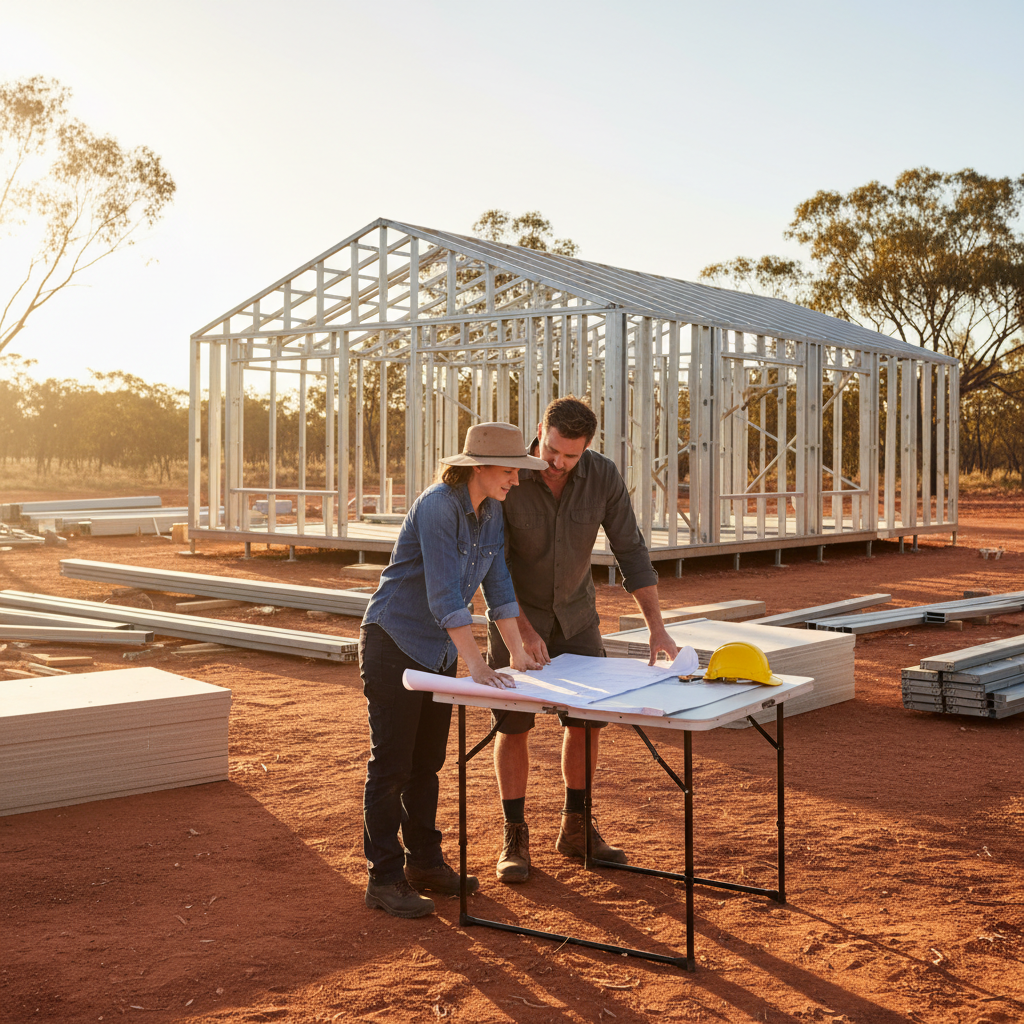
Handling the build yourself is a massive task. I've seen blokes spend weeks trying to sort out warped timber on site, using a planer to get a wall straight because the sun hit the stack of wood for two days too long. You don't get that with steel. It arrives on the truck straight. It stays straight. For an owner-builder, this is gold. You're already dealing with site works, the slab pour, and trying to find an electrician who actually shows up on a Monday. You don't need the extra headache of crooked walls.
And let's talk about the weight. A steel wall frame is light. You can usually stand them up with a couple of mates without needing a crane for every single piece. This saves a heap on site costs. Because the holes for your wiring and plumbing are already punched into the TRUECORE studs at the factory, your sparky and plumber won't be complaining about having to drill out the whole house. They just pull their lines through the plastic grommets. It's cleaner, faster, and way less mess on site.
Salt, spray, and corrosion
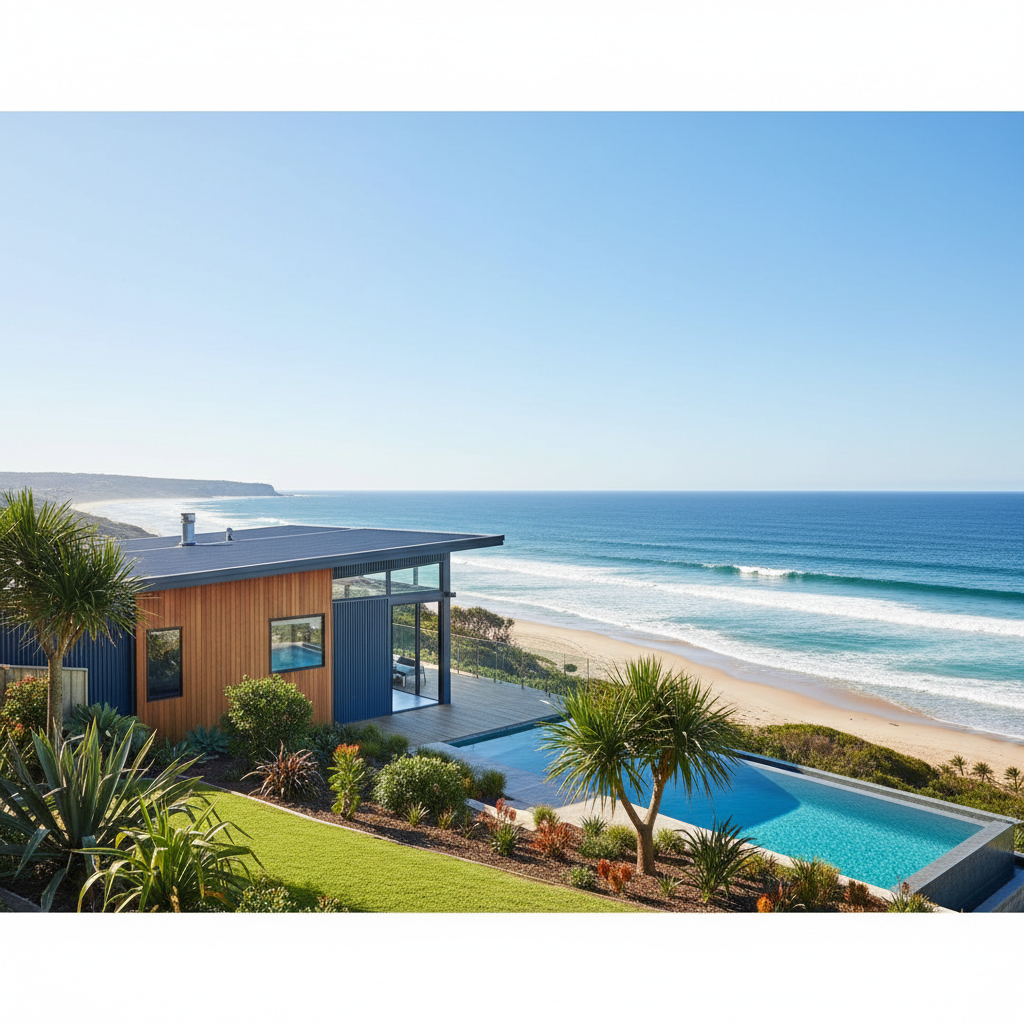
A lot of people worry that steel in a coastal town will just rust away. That's a myth from 40 years ago. Modern TRUECORE steel has a specialized coating that's designed for the Aussie climate. However, you've still got to be smart. If you're building within a few hundred meters of the crashing surf, you need to think about your fasteners and how you wash down the house. But for the vast majority of coastal builds, steel is actually more durable than timber which can rot from the inside out in the humid tropical air.
The kit includes everything. Frames, trusses, the roofing, and the cladding. It's all designed to work as a system. When you use BlueScope products, you know they've been tested at places like the James Cook University Cyclone Testing Station. They actually simulate a cyclone to see when the components fail. That's not just marketing talk. It's real-world data that keeps your family safe when the wind starts howling through the eaves at 2am.
Practical tips for the site
If you're jumping into an owner-builder project, here are a few things I've learned the hard way. First, get a decent impact driver. Don't try to use that cheap drill you bought for hanging pictures in your old apartment. You'll be driving thousands of screws, and a high-quality 18V or 54V driver will save your wrists. Second, keep your site tidy. Steel offcuts are sharp. They'll ruin a pair of work boots (or a tire) in recorded time.
Also, pay attention to your slab levels. Because steel is so precise, it doesn't hide a dodgy slab. If your concrete is out by 20mm, the steel won't just bend to fit it like wood might. You'll have to shim it. Spend the extra time with the concretor making sure that slab is bang on level. It makes the rest of the build a dream.
- Check your wind rating early. Your council or a local private certifier can tell you if you're N2, N3, C1, or higher.
- Don't forget the insulation. Steel conducts heat faster than wood, so the glasswool batts and the reflective foil included in the kit are non-negotiable.
- Use the right screws. The kit comes with specific fasteners for a reason. Don't go swapping them out for something you found on sale.
Why it matters in the long run
Building a home is probably the biggest thing you'll ever do. It's a massive slog. But when you're finished, and you're sitting on that deck with a cold drink, you want to know the structure is solid. Steel is fire resistant too. In a country that burns every summer, having one less thing to fuel a fire is a big deal. It won't ignite, it won't contribute to the fuel load, and it won't smoke.
People reckon steel is noisy, but that's rubbish if you've insulated properly. Once the cladding and the plasterboard are on, you won't hear a thing. What you will hear is the sound of a house that isn't creaking and groaning every time the temperature changes. You won't be chasing termite trails or worrying about dry rot in the bathroom floor. It's just a solid, engineered solution for a tough environment. If you're building in the north, steel isn't just an option. It's the standard.