Cracking the Code of Kit Home Documentation
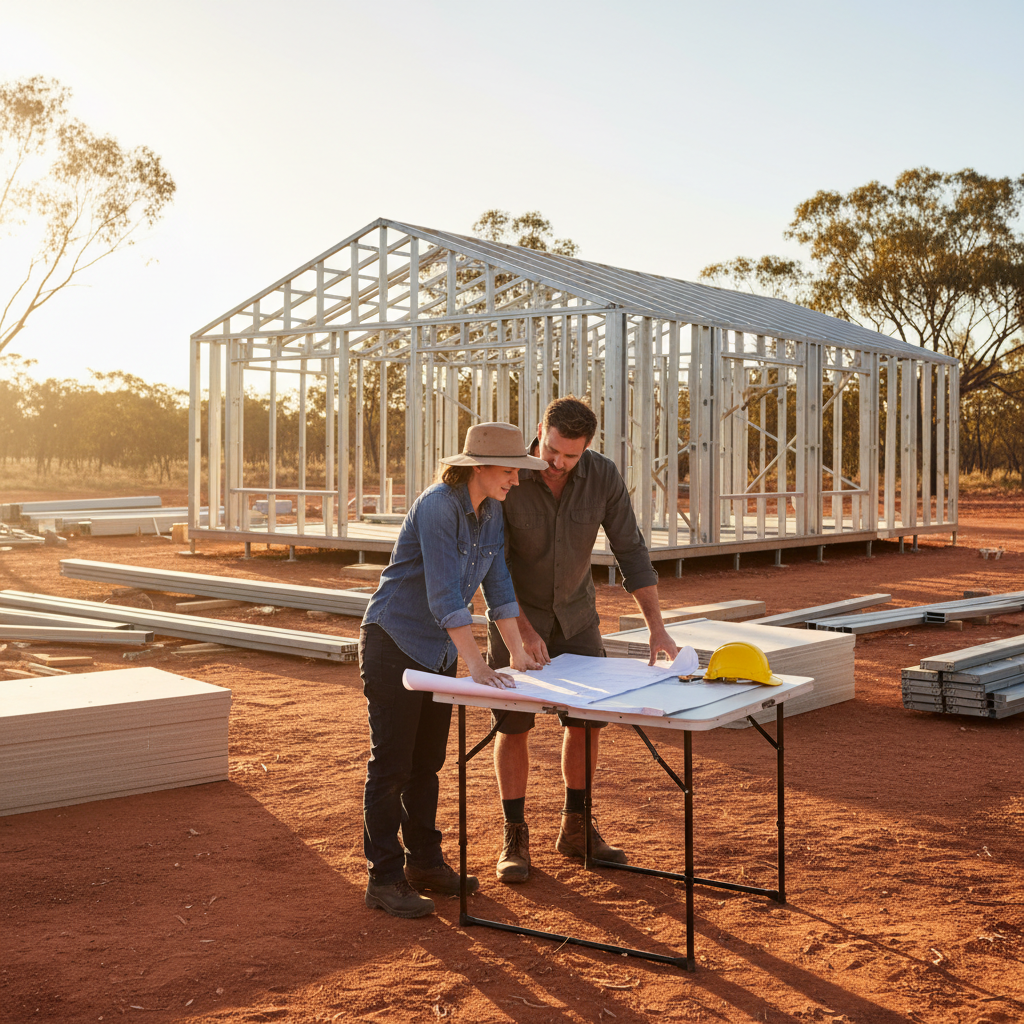
So, you have decided to take the plunge into the world of kit homes. It is an exciting journey that offers an incredible sense of achievement, especially for those looking to take the reins as an owner builder in Australia. However, before the first steel frame arrives on site or the first screw is driven, there is a mountain of paperwork to navigate. Specifically, you need to understand your plans and specifications.
For many Australians, looking at a set of architectural drawings feels like trying to read a map of a city they have never visited. There are squiggly lines, cryptic abbreviations, and symbols that look more like ancient hieroglyphs than building components. But here is the secret: once you learn the basic language of kit home plans, everything clicks into place. Understanding these documents is the single most important step in ensuring your project runs smoothly, stays on track, and results in the home you actually pictured in your head.
The Anatomy of a Kit Home Plan Set
In the Australian kit home industry, a standard set of plans is not just one page. It is a comprehensive package designed to communicate different layers of information to you, your local council, and your tradespeople. Here are the core components you will encounter.
The Site Plan
This is the bird's eye view of your property. It shows where your kit home will sit in relation to your boundaries. It includes setbacks (the distance from the house to the fence), existing trees, easements, and often the contours of the land. When reviewing this, check the orientation. In Australia, we want to maximize northern sun for energy efficiency. Ensure your living areas are positioned to take advantage of natural light.
The Floor Plan
This is arguably the most exciting page. It shows the internal layout from above. You will see wall placements, door swings, window locations, and the dimensions of every room. Pay close attention to the flow. Is the kitchen close to the outdoor entertaining area? Is there enough space in the hallway for furniture to pass through? Floor plans use thin lines for windows and thicker lines (often hatched or shaded) for walls.
Elevations
Elevations show you what the house looks like from the outside, standing on the ground. You will usually have four: North, South, East, and West. These drawings show the height of the roof, the placement of windows and doors on the facade, and the external finishes like cladding. This is where you get a real sense of the street appeal and the aesthetic of the Australian kit home lifestyle.
Sectional Drawings
Imagine taking a giant knife and slicing your house in half vertically. That is a section. It shows the internal structure, including the distance from the floor to the ceiling, the roof pitch, and how the wall frames connect to the slab or flooring system. For an owner builder, this is vital for understanding the volume of the space.
Understanding the 'Specs' (Specifications)
If the plans are the 'where' and 'what' of the build, the specifications (often called the inclusions list) are the 'how' and 'with what'. In the context of Australian kit homes, the specs define exactly what is in the truck when it arrives at your gate.
For example, a quality kit usually specifies the use of BlueScope Steel, specifically TRUECORE steel for the wall frames and roof trusses. This is a critical detail because it tells you about the durability and termite resistance of your structure. The specs will also detail the type of roofing (like COLORBOND steel), the style of cladding, the R-value of the insulation, and the types of windows provided. Reading the specs carefully prevents the 'I thought that was included' headache later on.
Reading Symbols and Abbreviations
Builders and architects love a good shortcut. Here are some of the most common abbreviations you will find on Australian plans:
- FFL: Finished Floor Level. This is the height of your floor once the tiles or floorboards are down.
- RL: Relative Level. Used to show height in relation to a fixed point on your land.
- DP: Downpipe. Essential for knowing where your rainwater will go.
- WC: Water Closet (the toilet).
- WIR: Walk-in Robe.
- SHR: Shower.
Symbols are equally important. A swing door is shown as a line and an arc (showing which way it opens), while a sliding door is usually two overlapping rectangles. Power points, light switches, and plumbing fixtures also have specific icons. If you see a symbol you do not recognize, do not guess, ask your kit provider for a legend or key.
Practical Tips for Reviewing Your Plans
When you receive your draft plans, do not just glance at them. Grab a coffee, sit down at a large table, and really interrogate the drawings. Here are some practical tips to help you through the process.
1. Use a Scale Ruler
Most plans are drawn at a scale of 1:100. This means every 1 centimetre on the paper equals 1 metre in real life. While computer screens allow you to zoom in and out, having a physical scale ruler allows you to measure things like the width of a hallway or the space between a kitchen island and the back bench. If it looks tight on paper, it will be tight in person.
2. The 'Walking' Test
In your mind, imagine walking through the front door with a bag of groceries. Follow the path to the kitchen. Is it direct? Then, imagine moving from the bedroom to the bathroom at night. Is the path clear? This mental walkthrough helps identify design flaws that are not obvious at first glance, like a door that hits a cabinet when opened.
3. Check the Window Schedule
The plans will include a window schedule that lists every window by height and width. Cross-reference this with your floor plan. Large windows are great for views, but they also impact furniture placement. Ensure your windows do not prevent you from putting a bed against a wall or a TV in the lounge room.
4. Verify the Orientation
In the Australian climate, the sun is your best friend and your worst enemy. Check that your large glass areas are not facing west, as this will turn your home into an oven during a summer afternoon. Ideally, your living areas should face north to capture the winter sun while being easily shaded in summer.
Communicating with Your Kit Provider
One of the best things about the kit home process is the ability to communicate directly with the team providing the components. If a specification seems vague, ask for clarification. For instance, if the specs say 'External Cladding included', ask exactly what brand and profile it is. Quality providers will be happy to confirm they use trusted Australian materials like BlueScope Steel, which provides peace of mind regarding the longevity of the build.
Remember, as an owner builder, you are the project manager. You do not need to be an architect, but you do need to be an expert on your own house. If you find an error in the plans, such as a window in the wrong place or a room dimension that does not match what you discussed, bring it up immediately. It is much cheaper to move a line on a screen than to move a steel frame on site.
Conclusion: Knowledge is Power
Understanding kit home plans and specifications is the foundation of a successful build. It allows you to visualize the finished product, coordinate your trades more effectively, and ensure you are getting exactly what you paid for. By taking the time to learn the symbols, check the scales, and scrutinize the materials list, you transition from a passive buyer to a confident owner builder.
Building a home in Australia is a significant undertaking, but it is also one of the most rewarding things you will ever do. When those steel frames are delivered and you see the skeleton of your home rising from the slab, you will be glad you spent those hours pouring over the plans. You won't just be building a house; you will be building a project you understand from the ground up.