Mastering the Blueprint: Why Understanding Your Plans Matters
Stepping into the world of kit home building is an exciting journey. For many Australians, the appeal of an owner-builder project is the sense of control, the creative freedom, and the satisfaction of watching a home rise from a concrete slab. However, before the first steel frame is bolted into place, there is a mountain of paperwork to navigate. The most critical pieces of that paperwork are your plans and specifications.
When you receive your kit home documentation, it can feel like you are looking at a foreign language. There are symbols, acronyms, and technical drawings that seem more fitting for an engineer than a DIY enthusiast. But here is the secret: you do not need an architecture degree to understand these documents. You just need a practical guide to help you translate the lines and numbers into your future living room. In this guide, we will break down exactly how to read and interpret your kit home plans so you can move forward with confidence.
The Floor Plan: Your Bird's Eye View
The floor plan is the most common drawing you will interact with. Think of it as a map of your home viewed from directly above, with the roof removed. This is where you will get a sense of the layout, flow, and dimensions of each room.
Understanding Scale and Dimension
Australian kit home plans are typically drawn in millimetres (mm). If you see a number like 4500, that translates to 4.5 metres. Always look for the scale bar on the page, which is usually 1:100 or 1:50. This tells you how much the drawing has been shrunk from real life. A common trap for new builders is misjudging the size of a room based on the empty space on paper. Grab a tape measure and mark out dimensions in your current backyard or living room to get a physical sense of the scale indicated on the plans.
Walls, Doors, and Swings
On your floor plan, internal and external walls are represented by thick lines. In a modern kit home, these will often represent the steel frame structure. Pay close attention to door symbols. They are usually shown as a straight line with an arc. The arc shows the direction the door swings. This is vital for planning your future furniture placement. You do not want to realize too late that your heavy timber wardrobe blocks the bedroom door from opening fully.
Elevation Drawings: Adding a Third Dimension
While the floor plan shows length and width, elevation drawings show height. These are flat views of each side of the house (North, South, East, and West). These drawings are where the character of your home truly comes to life.
Roof Pitch and External Finishes
Elevations will show you the "pitch" of your roof, which is the angle or steepness. In Australia, common roof styles for kit homes include the classic gable or the modern skillion. The elevations will also show the placement of windows and external doors relative to the ground. This is where you can visualize how the cladding and roofing materials will look when combined. Since your kit will likely include high quality components like BlueScope steel frames and roofing, the elevations help you see how these materials mesh to create a cohesive aesthetic.
Natural Light and Privacy
Use your elevation drawings to consider the movement of the sun. If you have large windows on the western elevation, you might need to think about extra shading for those hot Australian summer afternoons. Similarly, if a large window faces a neighbor's property, the elevation plan allows you to address privacy concerns before the kit is even manufactured.
The Specification List: The 'Secret Sauce' of Your Kit
If the plans are the map, the specifications are the recipe. The "Spec List" is a detailed document that outlines every single component included in your kit package. Understanding this list is arguably more important than the drawings themselves because it determines exactly what will be delivered on the truck.
What is Included (and What is Not)
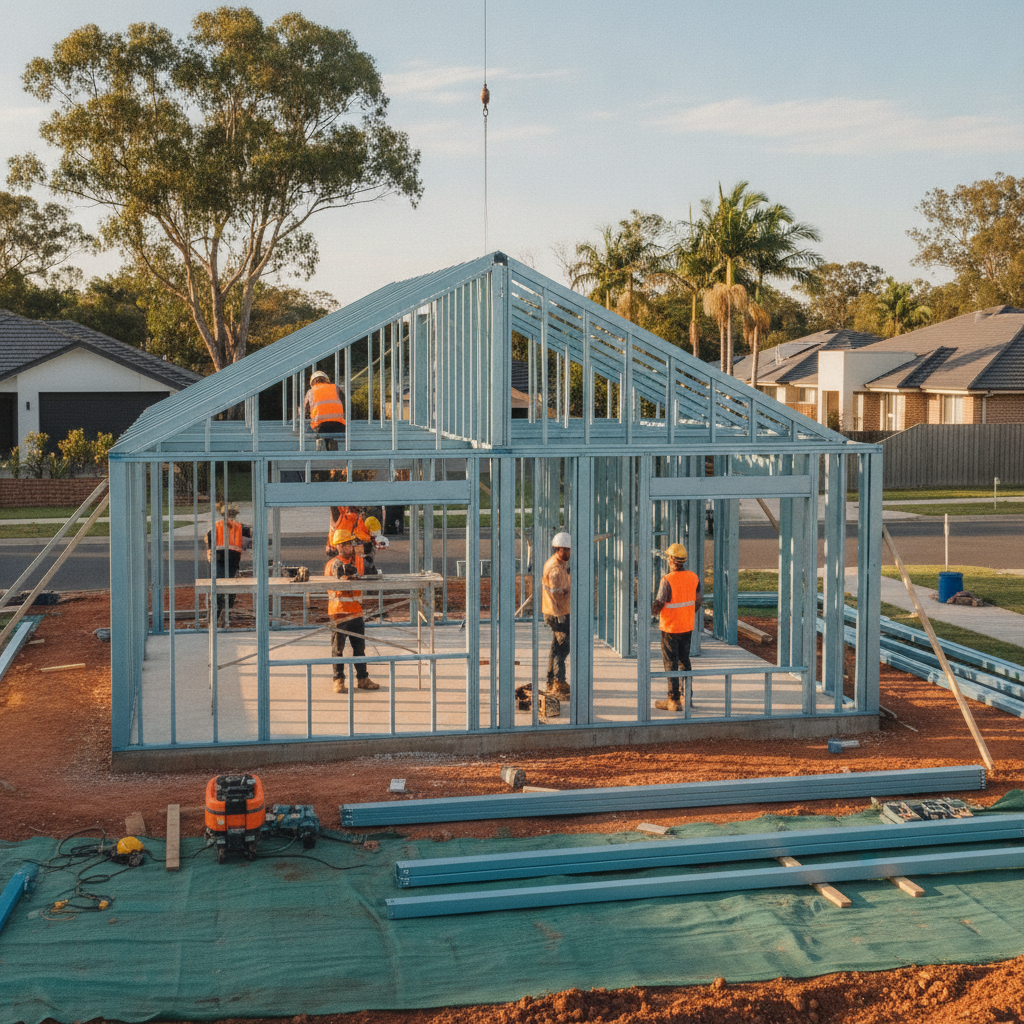
A standard kit home from a quality provider generally includes the structural elements. This typically covers the steel wall frames, roof trusses, external cladding, roofing iron, gutters, windows, and external doors. However, many owner-builders are surprised to learn that kit homes usually do not include the "internal fit-out" unless explicitly stated. This means things like floor coverings, kitchen cabinets, bathroom vanities, and electrical wiring are usually sourced separately by you, the owner-builder.
Reading Material Grades
Look for specific brands and material types in your specs. For example, if your kit uses TRUECORE steel, it should be clearly noted. This gives you peace of mind regarding the structural integrity and termite resistance of your build. Check the glass specifications for your windows as well. In many parts of Australia, bushfire ratings (BAL levels) will require specific types of toughened glass or window screens, so ensure these match your local council requirements.
Connecting the Dots: The Site Plan
The site plan is where your kit home meets the real world. It shows exactly where the house will sit on your block of land. This plan is crucial for your local council approval process. It will show the "setbacks," which are the distances from your house to the property boundaries.
When reviewing the site plan, check the orientation. In the southern hemisphere, savvy Australian builders want their living areas facing North to capture the winter sun. If your site plan shows your main living windows facing South, you might want to ask your designer to flip the plan before finalizing the kit order.
Practical Tips for Reviewing Your Documentation
Before you sign off on your plans and specifications, take a deep breath and follow these practical steps:
- The Red Pen Method: Print out a physical copy of your plans. Sit down with a red pen and walk through every room. Imagine walking through the front door, putting down your keys, and moving to the kitchen. Where are the light switches? Are the windows high enough for privacy? Mark every question or change directly on the paper.
- Check the Schedule: Your plans will often include a "Window and Door Schedule." This is a table that lists the exact size and type of every opening. Cross-reference this with the floor plan to ensure the quantities match.
- Verify the Engineering: Ensure your plans come with a structural engineering certification. This is the document that proves your steel frame is designed to handle wind loads and the weight of the roof. It is a non-negotiable for council approval.
- Ask About Modular Adjustments: While kit homes are not the same as transportable units, many designs are based on standard increments. If you want to expand a bedroom by 600mm, it is often much easier to do it during the design phase than trying to make it work on-site during construction.
The Role of the Owner-Builder
In the Australian kit home model, your role as the owner-builder is that of a project manager. You are the bridge between the kit supplier and the tradespeople who will finish the home. By truly understanding your plans, you can speak the same language as your plumber, electrician, and slab layer.
Imagine your plumber arrives to rough-in the pipes. If you understand the floor plan, you can point exactly to where the kitchen island bench will be located based on the dimensions provided. This prevents costly mistakes and ensures your vision for the home is what actually gets built. Remember, while the kit provider supplies the high quality steel skeleton and skin of the house, you are the one who breathes life into the interior.
Conclusion: Knowledge is Your Most Valuable Tool
Building a kit home is one of the most rewarding ways to enter the Australian property market or create a lifestyle retreat. It offers a unique balance of professional engineering and personal sweat equity. However, the success of the project often comes down to the work you do before a single tool is lifted.
By taking the time to decode your plans, scrutinize your specification lists, and visualize the final product through elevation drawings, you eliminate the guesswork. You move from a place of uncertainty to a place of authority. So, spread those plans out on the kitchen table, grab your highlighter, and start dreaming. With a clear understanding of the blueprint, your Australian owner-builder journey is off to the best possible start.