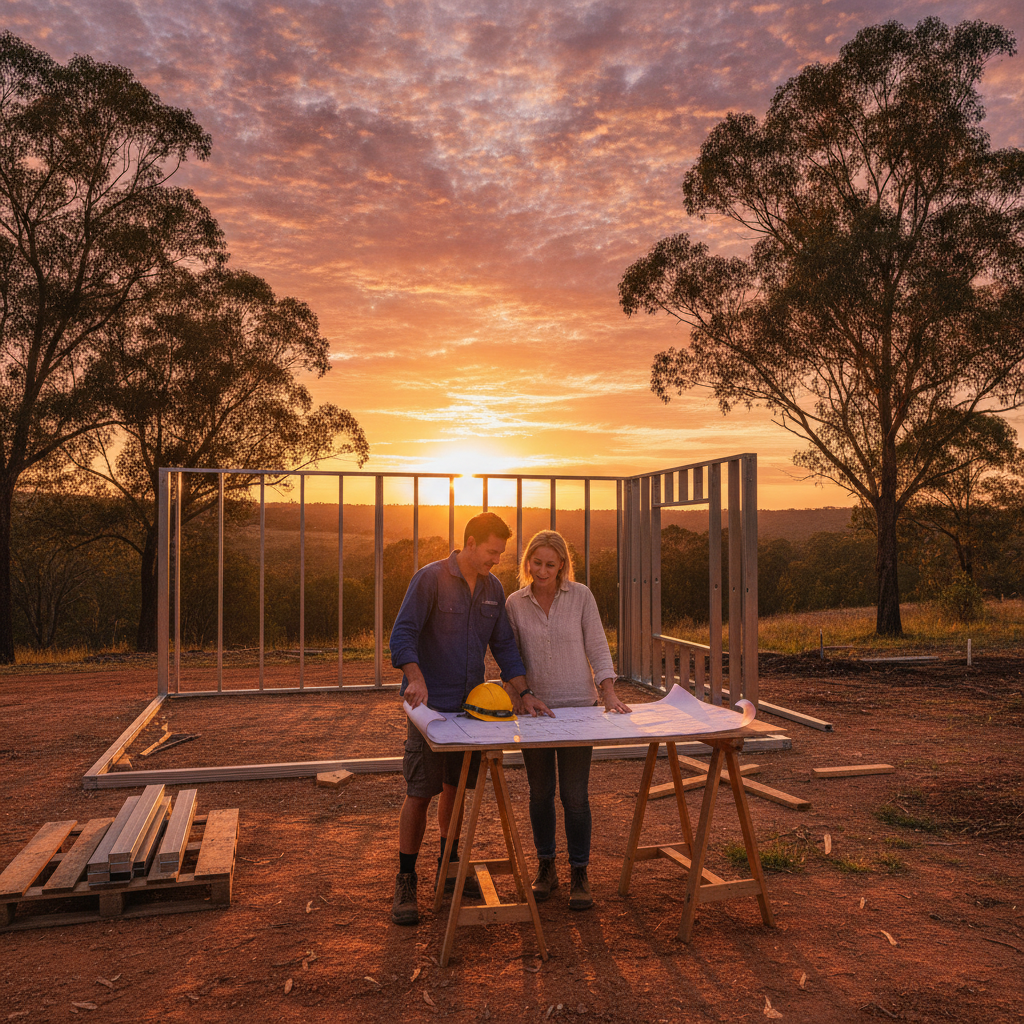
I've seen it a dozen times. An owner builder gets their council approval, the site is cleared, and they're so focused on the excitement of the steel frames arriving from the factory that they forget the one thing that actually keeps a house standing. Water. Or rather, getting rid of it. If you don't have a plan for where the rain goes the second it hits your roof or your driveway, you're asking for a world of pain. I'm talking about foundation movement, cracked slabs, and the kind of rising damp that makes a brand new home smell like a wet basement within six months.
The Slab's Worst Enemy
Most kit homes in Australia go down on a concrete slab. It's fast, it's solid, and it works. But concrete is porous. If water pools against the edge of your slab because you didn't grade the soil away correctly, that water is going to find a way under. This causes the soil to swell and shrink. In places with reactive clay like Western Sydney or parts of Queensland, this movement is enough to snap a footer. You need a minimum fall of 50mm over the first metre away from the house. Don't eyeball it. Get a laser level or at least a long spirit level and a straight edge. If the ground is flat, you have to create that fall with imported fill. It's not optional. It's the difference between a house that lasts 50 years and one that needs underpinning before the kids finish primary school.
Surface Drainage and the Aggie Pipe
You'll hear blokes at the pub talking about 'aggie pipe' like it's a magic wand. Agricultural pipe (the flexible slotted stuff) is great, but only if you install it right. I've walked onto sites where the owner builder just threw some pipe in a trench and covered it with dirt. That's a waste of a Saturday. If you want a French drain to actually work, you need to wrap the pipe in a geotextile sock. This stops fine silt from clogging the slots. Then, you backfill the trench with 20mm blue metal or recycled aggregate. The water needs a clear path to get into the pipe. Also, make sure it's actually heading somewhere. It needs to discharge into a legal point of discharge, usually the street kerb or a dedicated stormwater easement. Check your DP (Deposited Plan) for those easements before you start digging up the backyard.
The Retaining Wall Trap
If your block has even a slight slope, you're probably going to cut into the hill to create a level building pad for your TRUECORE steel frames. Now you've got a vertical face of dirt. When it rains, that bank becomes a heavy, sodden mess that wants to push your retaining wall over. Every retaining wall over 600mm needs serious drainage behind it. I use a combination of a 100mm aggie pipe at the base and a thick layer of drainage gravel right up the back of the wall. Without this, hydrostatic pressure builds up. It'll blow out a sleeper wall or crack a core-filled block wall in a single wet season. We had a guy out near Gympie who skipped the gravel behind his timber sleepers. One big East Coast Low later and his wall was leaning at 45 degrees, pressing right up against his new laundry wall.
Roof Water is a Different Beast
A standard 3-bedroom kit home has a massive roof surface area. In a heavy Aussie downpour, we're talking hundreds of litres of water per minute dumping off that Colorbond roofing. If your downpipes aren't connected to a proper 90mm or 100mm PVC stormwater system from day one, you're asking for trouble. Temporary downpipes are your best friend. Use that cheap flexible plastic 'elephant trunking' and strap it to your stanchions or frames. Run it far away from the slab. Don't just let the water gush out of the gutters onto the ground. It'll scour the soil away from your footings faster than you can imagine. Plus, it makes the site a muddy bog that'll have your trades grumbling and your delivery drivers bogged up to their axles.
Pits, Grates, and the NCC
The National Construction Code (NCC) Volume 2 isn't exactly light reading, but it's got some very specific rules about surface water. You'll likely need external drainage pits at low points on your site, especially if you're putting in a concrete driveway or a paved outdoor area. These pits catch the surface run-off before it hits the house. Make sure the grates are removable because they will fill up with leaves, tennis balls, and silt. If you're building in a high-density area, you might also be looking at an On-site Stormwater Detention (OSD) tank. Councils love these now. They slow down the release of water into the street system so the town pipes don't burst. They're a pain to install and take up a lot of room, but if your DA says you need one, you don't have a choice. Look into slimline tanks that can sit alongside the house to save on excavation costs.
What About the Termite Barrier?
This is a technical detail that trips people up. In Australia, we use physical termite barriers, usually a chemical-impregnated plastic or a stainless steel mesh at the slab edge. If you pile up garden beds or mulch too high against the house to hide your drainage pipes, you're bridging that barrier. Termites will walk right over the top of it behind the mulch. You need a 75mm clear inspection zone between the ground (or your finished paving) and the top of the concrete slab edge. If you bury that in dirt to get your drainage 'fall' right, you've just given the white ants a free pass to your internal joinery. Steel frames won't get eaten, which is a massive win, but they'll still chew through your skirting boards and kitchen cabinets if you give them the chance.
Building a kit home is about more than just bolting frames together. It's about site management. Get your levels right. Get your pipes in early. Make sure that water has a clear, downhill path away from your hard work. You'll sleep a lot better when those summer storms roll in knowing your foundation isn't sitting in a puddle. It's not the most glamorous part of the build, but it's the one that keeps the cracks away. So, get that shovel out and get your fall sorted before the first truck arrives.