Stop looking at the floor plans for a second
I have seen more than a few blokes spend six months obsessing over whether the ensuite should be three hundred millimetres wider, only to realize they can not even get a delivery truck up their driveway. People get caught up in the dream of the finished house and forget that a kit home is a massive logistical puzzle. If you are sitting there on your laptop in the middle of the night looking at designs, stop. You need to look at your dirt first. Every year, plenty of owner-builders in places like the Sunshine Coast or the fringes of Melbourne buy a kit and then find out their Council is going to slug them fifty grand for an engineered driveway or a specific bushfire shutter system they never accounted for. Building a house is a series of problems you pay to solve. The trick is knowing which problems are coming before they cost you double.
The BAL rating trap
Bushfire Attack Level (BAL) ratings are not a suggestion. They are the law. If you are building in regional Australia, your local council is going to demand a BAL assessment before you even get close to a building permit. Here is the thing. A kit home that works in a suburban street in Brisbane might fail miserably in the scrub outside Goulburn. You need to know if you are in a BAL-12.5, BAL-29, or the dreaded BAL-FZ (Flame Zone). This affects every single part of your build. We are talking about the type of glass in your windows, the seals on your doors, and even how you screen your vents. Most kits come with standard Aluminium windows and toughened glass, but if you are in a high-risk zone, those specs change. Do not assume the kit 'as-is' meets your specific site requirements. If you do, you'll be forking out for new windows halfway through the build when the building surveyor knocks you back. It happens more than you'd think.
Soil tests are not optional
People hate spending money on things they cannot see. A soil test is exactly that. You pay a geo-tech to come out, drill some holes, and tell you what is happening under the grass. If you have 'reactive' soil, like the heavy clays found in parts of Western Sydney or Adelaide, your slab is going to cost a lot more. You might need deeper footings or more steel reinforcement. Kit home companies provide the structure that sits on the slab, but they do not design your footings. That is on you and your local engineer. Some people try to use their neighbour's soil report. Don't. It is a recipe for a cracked house in five years because your specific patch of dirt had a different drainage profile. Plus, no reputable concreter will touch the job without a proper report anyway.
Thinking the kit is 'everything'
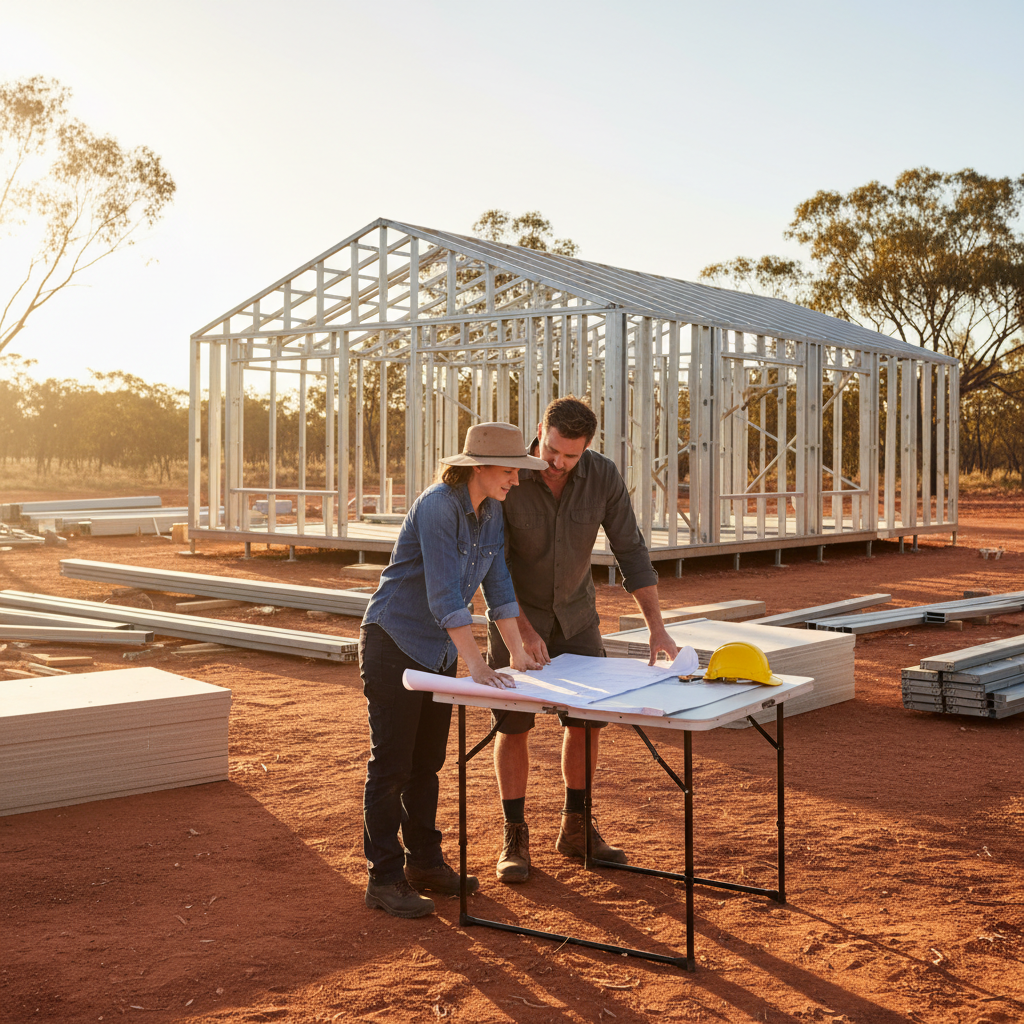
A kit home arrives on a truck. It usually has the steel frames, the roof sheets, the cladding, and your windows and doors. It is a massive win because it gets your house to the lock-up stage fast. But I have seen folks get caught out because they forgot about the stuff that happens before the truck arrives and after the frames are up. You still need a plumber. You still need an electrician. You definitely still need a plasterer and a tiler unless you are very handy with a notch trowel. And do not forget the site works. Excavation, the slab, and connecting your services (water, power, sewer) can sometimes cost as much as the kit itself if you have a steep block or you are a long way from the mains. You are the project manager. That means you are responsible for the 'gaps' between what we provide and what the finished house needs. If you do not have a list of local trades ready to go before the steel arrives, you'll be sitting on a pile of frames for months while you scramble to find a sparky who isn't booked out until next Christmas.
The reality of the owner-builder permit
In Australia, if you want to manage your own build, you need an owner-builder permit from your state authority, like the VBA in Victoria or Fair Trading in NSW. It is not just a piece of paper. It usually involves a short course. Do it early. Like, tomorrow. You cannot get insurance or certain council approvals without it. And while we are on it, lets talk about insurance. You need owner-builder construction and public liability insurance. If a contractor trips over a piece of BlueScope steel on your site and breaks his leg, you are the one they will look at. It is a business. Treat it like one. Get your paperwork sorted before you even choose your kitchen tap fittings.
Steel frames and the 'hidden' benefit
People choose steel frames because they do not warp and termites would rather eat a brick. That is all true. Using TRUECORE steel means every stud is dead straight, which makes hanging your plasterboard a heap easier. But there is a practical side people forget. Steel is lighter than timber. If you are doing a DIY build with a couple of mates, you can man-handle most of those wall frames into place without needing a massive crane. That saves you thousands in site costs. Plus, the holes for your wiring and plumbing are already punched out. Just make sure you use the plastic grommets provided so the wires do not rub against the edges of the steel. It is a small detail, but if the electrical inspector sees bare wires against steel, you'll be ripping walls open to fix it. Not fun.
The delivery day circus
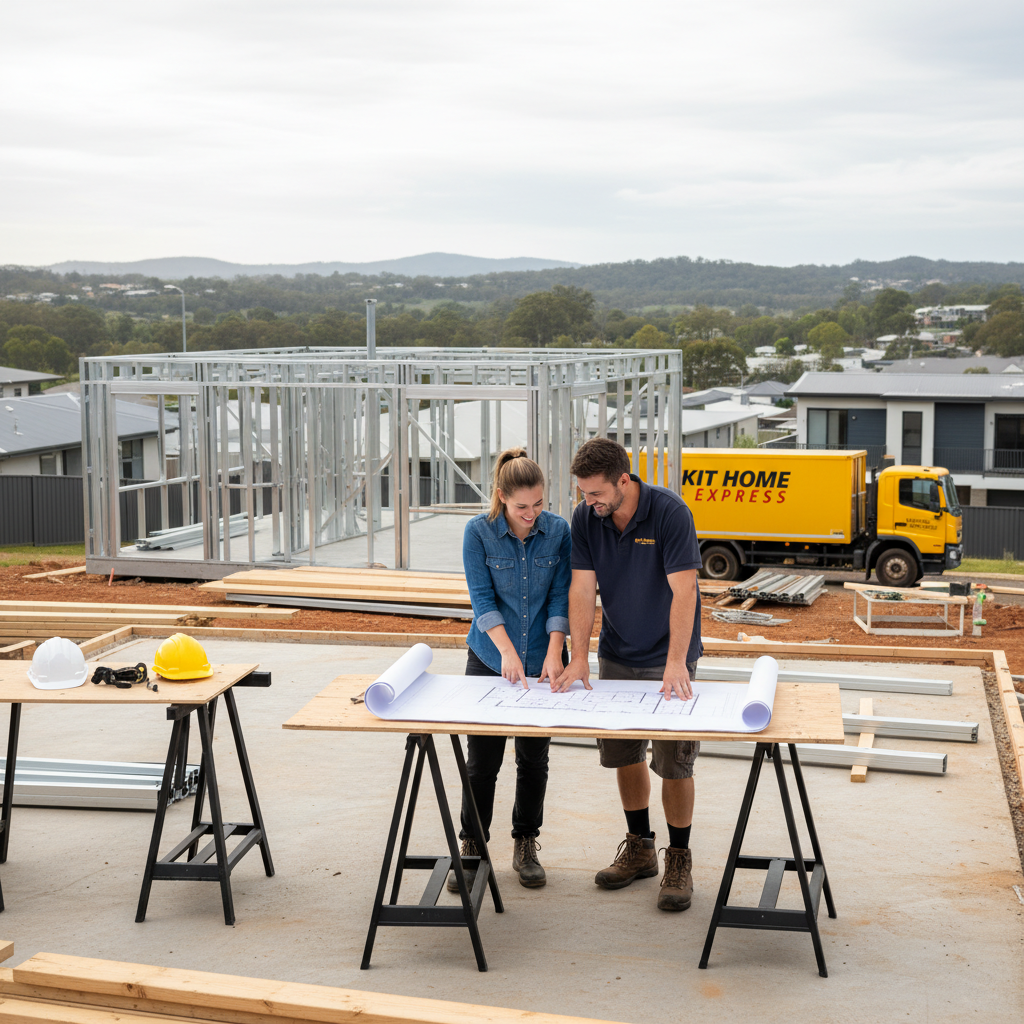
I have lost count of the number of times a delivery gets delayed because the site entrance wasn't ready. A semi-trailer or a heavy rigid truck needs a lot of room to swing. If you live down a narrow dirt track with overhanging trees, you need to clear them. If there is a soft patch of mud right where the truck needs to turn, it will get bogged. Now you are paying for an expensive tow truck and a frustrated driver. Keep a clear, flat space ready for the drop-off. Cover the kit with tarps if you aren't starting that day. Keep it off the ground on some sleepers. It sounds simple, but you'd be surprised how many people just point at a patch of long grass and say 'chuck it there'. Proper site prep is the difference between a smooth start and a three-day headache.
Don't ghost your building surveyor
Your building surveyor is your best friend, even if they feel like a total pain. They are there to make sure the house doesn't fall down or burn. Follow the staged inspections to the letter. Footings, slab, frame, and final. If you pour that slab before they inspect the steel placement, you might literally have to jackhammer it up. I have seen it happen. They don't care about your feelings, they care about AS 4100 and the NCC. Get them on site early, talk to them, and show them your plans. If they know you are an owner-builder who actually gives a toss about the rules, they'll usually be a lot more helpful when you have a technical question on a Friday afternoon.
Building your own place is a massive achievement. There is nothing like standing in a house you project-managed yourself, knowing every bolt and screw. Just don't let the excitement blind you to the boring stuff. Get your soil tested, suss out your BAL rating, and make sure that truck can actually get to your block. The rest is just nuts and bolts.