I saw a guy in a suburban street in Melbourne last month standing next to a pile of steel trusses that had been dropped right across his temporary driveway. He was staring at a delivery docket, looking like he wanted to cry, because the concrete truck was due in twenty minutes and there was nowhere for it to park. This is the stuff they don't show you in the glossy brochures. Being an owner builder is 10% swinging a hammer and 90% stopping things from going off the rails because you forgot to check a lead time or talk to your plumber.
The Staging Area is Your Best Friend
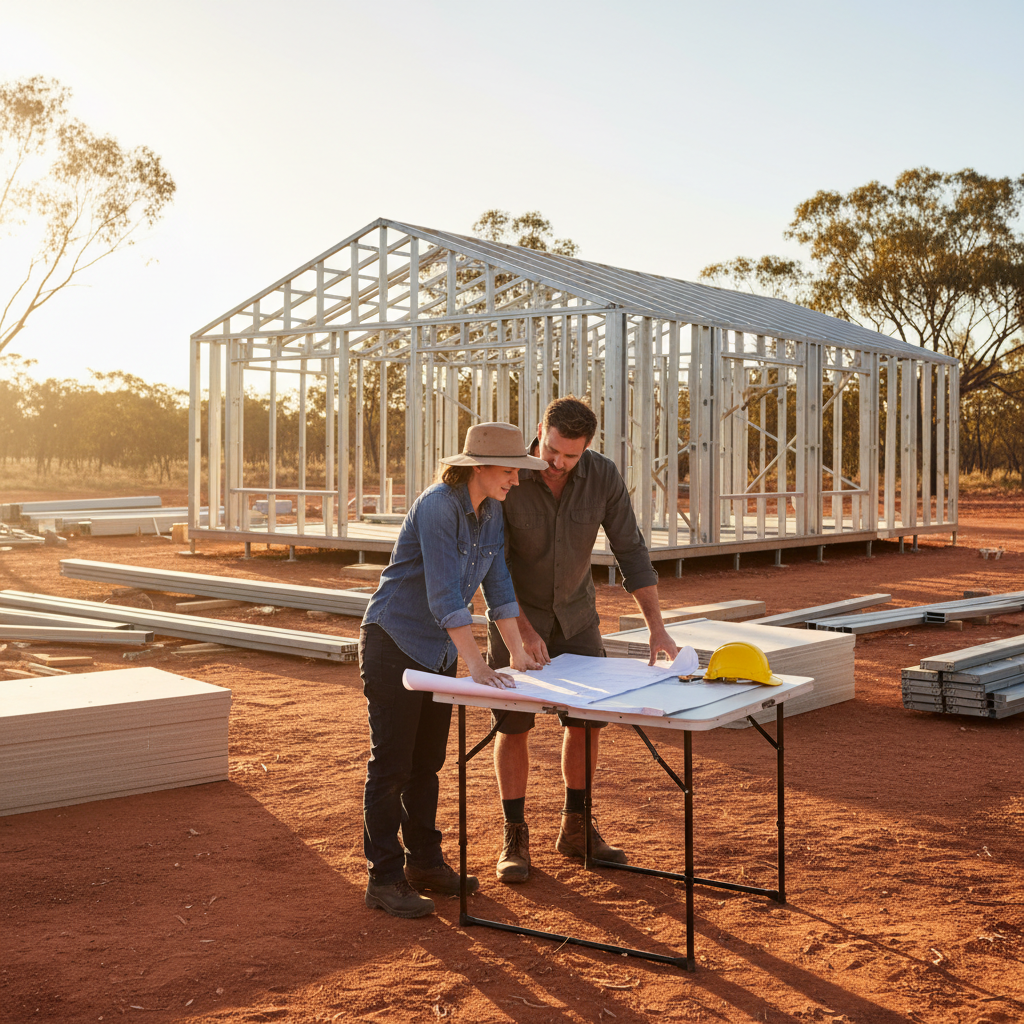
Before the first truck rolls up with your BlueScope steel frames, you need a plan for the dirt. It sounds basic. It is basic. But if you haven't designated a 'dry zone' for your roofing and a 'flat zone' for your wall frames, you're stuffed. TRUECORE steel is tough as nails and won't rot if it gets a bit of rain on it, but you still don't want it sitting in a foot of mud. It makes it heavy, slippery, and bloody annoying to work with. If you're building on a slope, get some pallets or sleepers ready. Level them out. You want your kit components organized so you aren't digging through a pile of cladding to find the one internal wall frame you need for the ensuite.
And let's talk about the windows. When those glass units arrive, they're usually the most fragile thing on site. Don't just lean them against a fence. Build a simple A-frame rack out of scrap timber. Put it somewhere out of the way of the main traffic flow. I've seen too many site subbies reverse a ute into a stack of sliding doors because they were tucked behind a pile of dirt where nobody could see them.
Tradie Relationships and the Art of the Phone Call
You aren't just the boss, you're the traffic controller. In Australia, good sparks and chippies are flat out. If you call them the day before you need them, they'll laugh at you. Or worse, they just won't show up. You need to be chatting to your plumber specifically about the slab and drainage requirements at least three weeks before the pour. Because kit homes come with precision-engineered steel frames, your plumbing penetrations have to be spot on. There's no 'she'll be right' when you're dealing with pre-punched holes in steel floor joists.
Write every agreement down. Sent a text? Screenshot it. Had a chat over the fence? Send an email after saying "Hey mate, just confirming we agreed on the stack work for Tuesday." It's not about being a jerk. It's about having a paper trail when the slab contractor claims he didn't know you wanted the thickened edge for the heavy cladding. Communication is what keeps the skip bins empty and the progress moving.
Why Steel Frames Change Your Workflow
Building with a steel kit is different to traditional stick-build timber. It's faster, sure, but it's more about assembly than carpentry. Your walls are going to arrive straight and stay straight. No bowing, no knots. But you've got to think about your services early. Steel frames come with pre-punched service holes for your electrical and plumbing. Tell your trades this. Some older blokes still get nervous about steel because they think they'll be there all day with a hole saw. Show them the TRUECORE stamp and explain the holes are already there. It saves them time, which should save you money. If they want to charge you extra for 'working with steel', find another trade. They're trying it on.
One trick I always tell people is to get your insulation and internal linings sorted early. Because steel doesn't hold moisture like timber, you don't have to wait for the frame to 'dry out' before you start your internal work. As soon as you're roofed and wrapped, you can get stuck in. Just remember to use the right screws. Don't use your standard wood screws on a steel frame kit. You'll strip the heads and end up threwing your drill across the yard in frustration. Use the self-tekkers designed for the job. Your kit supplier should have a list, but usually, it's a 10-16x16mm wafer head for the frames. Buy them in bulk. You'll use more than you think.
Managing the Paperwork Trail
The council doesn't care if your house looks pretty if your paperwork is a mess. As an owner builder, you're the one responsible for the certificates. Every time a trade finishes a stage, get their compliance certificate. Don't pay the final invoice until you have that piece of paper in your hand. Trying to chase a roof plumber for a certificate three months after he's been paid is like trying to catch a greased pig. It's not happening. Keep a dedicated folder. Physical or digital, doesn't matter, as long as it's organized. You'll need those certificates for the final occupation permit. No certificate, no moving in. Simple as that.
Also, keep an eye on your Bushfire Attack Level (BAL) requirements. If you're in a BAL-29 or BAL-40 zone, your kit home specs might need specific mesh or seals. Check your delivery against the order list as soon as it lands. If there's a window missing or a piece of flashing that looks wrong, call the supplier immediately. Don't wait until the day the installers are standing there waiting for it. That's how you lose a week of progress and a lot of sleep.
Tips for the Slab Day
Slab day is the most stressful day on any site. It's loud, it's messy, and it's permanent. If the slab is out by 20mm, your steel frame kit isn't going to sit right. Steel is unforgiving. It's precise to the millimeter, so your concrete needs to be too. Check your diagonals. Then check them again. Use a decent laser level. If your slab is wonky, you'll be spending days using packers and grinding concrete just to get the bottom plates level. It's a nightmare you don't want.
Make sure the termite protection is handled properly too. Most steel frame homes are termite resistant in the structure, but those little buggers will still eat your skirting boards, kitchen cabinets, and door frames if they can get in. Get the reticulation system or the physical barriers installed around the perimeter according to AS 3660.1. It's a small cost now that saves a massive headache later.
The Reality of the Finish Line
The kit gets you to lock-up fast. It's an awesome feeling seeing the roof go on and the windows in. But don't let the foot off the gas. The 'fit-out' phase—the tiling, the painting, the cabinetry—often takes twice as long as the actual shell of the house. This is where most owner builders burn out. They see the house standing there and think they're 90% done. They're actually about 50% done. Pace yourself. Take a weekend off occasionally. Go to the beach. If you spend every Saturday for six months breathing in plaster dust and drinking lukewarm coffee, you'll start making mistakes.
Keep your site clean. I can't stress this enough. A messy site is a dangerous site and it attracts lazy work. If there's offcuts of steel and empty cement bags everywhere, your subbies will treat the place like a tip. If it's tidy, they'll respect the build. Plus, it makes it much easier to find your tools at 4:30pm when you just want to go home and have a shower.
Building your own place is a massive undertaking. It's hard. But there's nothing quite like the feeling of standing under a roof you organized, on a slab you prepped, looking at walls you helped put up. Just keep the clip-board handy and keep the coffee hot. You've got this.