Thermal Efficiency in Modern Kit Home Construction
Building a kit home in Australia offers an incredible opportunity for owner-builders to create a high-quality, durable residence. However, the diverse Australian climate-ranging from the humid tropics of North Queensland to the alpine chills of the Snowy Mountains-presents unique challenges for thermal regulation. As the building industry shifts toward higher energy efficiency standards, understanding the technical nuances of insulation is no longer optional; it is fundamental to the structural integrity and comfort of your home.
In this guide, we dive deep into the building techniques required to insulate a steel-framed kit home effectively. By leveraging the precision of BlueScope TRUECORE® steel and modern insulation technologies, you can achieve a home that remains temperate year-round while significantly reducing your energy overheads.
The Steel Frame Advantage: A Stable Foundation for Insulation
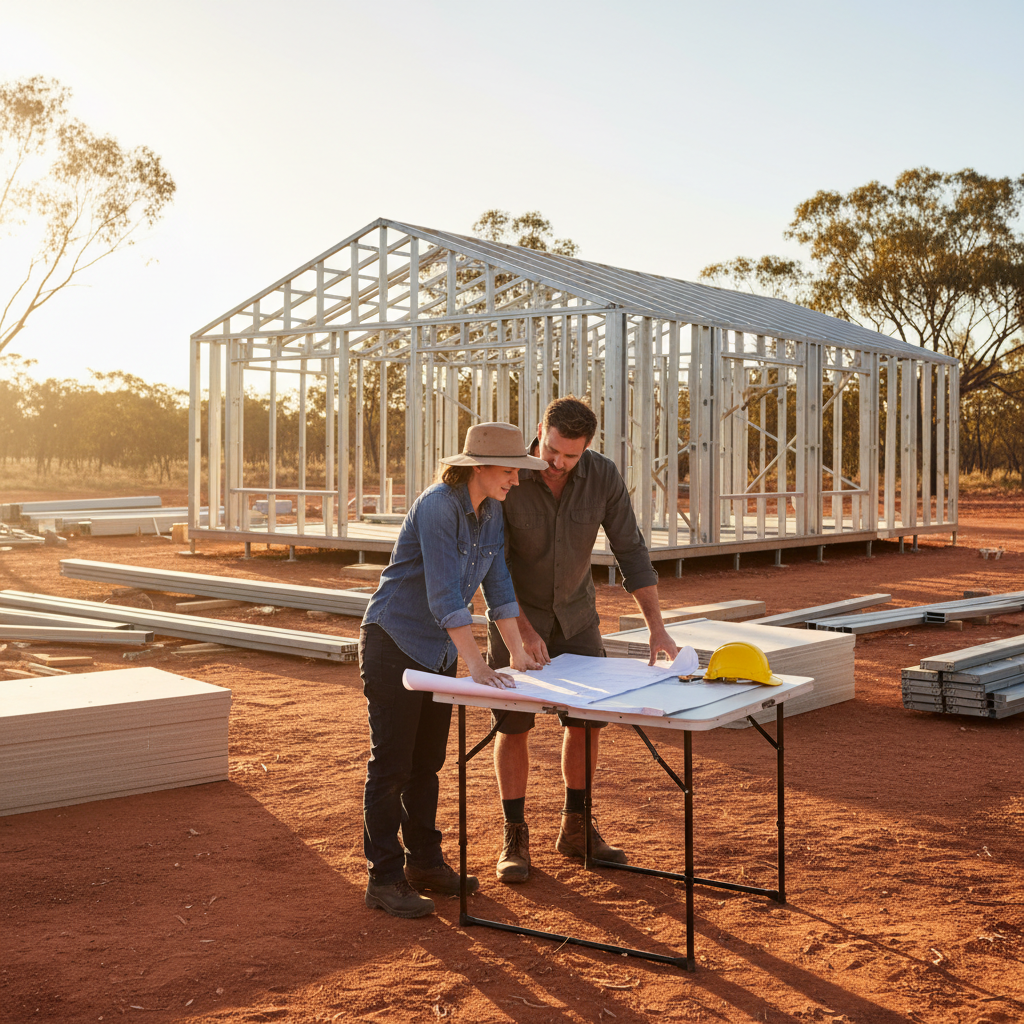
When discussing building techniques, the substrate is as important as the insulation itself. All our kit homes utilize prefabricated wall frames (2440mm high, 90mm thickness) and roof trusses manufactured exclusively from BlueScope TRUECORE® steel. Unlike timber, which can warp, shrink, or twist over time, steel is dimensionally stable.
From an insulation perspective, this stability is a game-changer. Timber studs can move as they dry or absorb moisture, creating small gaps in building wraps and plasterboard linings. These gaps lead to air leakage, which accounts for up to 25% of heat loss in winter. With the precision of BlueScope steel, your frame remains straight and true for the life of the structure (backed by a 50-year structural warranty), ensuring that your insulation batts and vapour barriers remain snug and airtight.
Understanding Australian Climate Zones and R-Values
To insulate effectively, you must first understand the National Construction Code (NCC) climate zones. Australia is divided into eight zones, and the building techniques you apply should reflect your specific location.
- Zones 1, 2, and 3 (Northern Australia): The goal is to keep heat out. Reflective insulation and high-performance ventilation are your best friends here.
- Zones 4, 5, and 6 (Temperate/Coastal): These areas require a balanced approach to manage both summer heatwaves and winter morning frosts.
- Zones 7 and 8 (Alpine/Cool Temperate): Managing heat retention is the priority. This is where bulk insulation and thermal break technologies are critical.
- Tip for Owner-Builders: Always check your engineering certification and local council requirements, as some regions may require upgrades to N3 wind ratings or C2 cyclonic ratings, which can influence how you seal your building envelope.
Technical Best Practices: The Kit Home Envelope
1. Roof and Ceiling: The First Line of Defence
The roof is the most vulnerable point for heat gain. Our standard kits include a 50mm Anti-Con roof blanket. This is a critical building component that combines a glasswool insulation blanket with a reflective foil facing.
Technically, the Anti-Con blanket serves two purposes: it provides a thermal barrier and prevents condensation from forming on the underside of your Colorbond corrugate roofing. For owner-builders, ensuring the foil side faces down and overlaps correctly at the joints is vital for maintaining the vapour barrier. Pair this with our 22mm ceiling battens to create a steady air gap that further enhances thermal resistance.
2. Wall Systems and Thermal Breaks
When building with 90mm prefabricated steel wall frames, you have a generous cavity to work with. Our kits come standard with double-sided foil wall insulation. This creates a reflective air space that is incredibly effective in Australian summers.
However, because steel is a conductor of heat, building techniques in cooler zones (7 and 8) often incorporate a 'thermal break'. This can be achieved by using specific building wraps or high-density foam strips between the steel frame and the exterior Hardiflex or Blue Board cladding. This prevents "thermal bridging," where heat travels through the steel studs and bypasses your internal insulation batts.
3. Window Placement and Glazing
Standard kits include aluminium sliding windows and doors with keylocks. For those in extreme climates, we highly recommend the double glazing upgrade. Windows are effectively "holes" in your insulation layer. High-quality glazing, combined with the structural accuracy of our BlueScope steel openings, ensures a tight seal against drafts.
The Importance of Air Sealing for Owner-Builders
Even the best insulation will fail if the home is "leaky." As an owner-builder, your attention to detail during the "lock-up" stage is paramount. Focus on these areas:
- Penetrations: Ensure that any holes drilled for plumbing or electrical services through the steel plates are sealed with expanding foam or fire-rated sealants.
- Slab Edges: If you are building on a concrete slab (arranged separately), consider slab edge insulation in colder climates to prevent the concrete from acting as a giant heat sink.
- Door Seals: Our kits include premium front entry doors (Corinthian PMAD104), but ensuring the weather strips are correctly installed during the final fit-out will prevent air infiltration.
Moisture Management and Condensation
A well-insulated home must also be a well-ventilated home. As we make kit homes more airtight to save energy, we must manage the moisture produced by breathing, cooking, and showering.
Using BlueScope TRUECORE® steel gives you an advantage here: unlike timber, steel does not absorb moisture, meaning it won't rot or support the growth of mould within the wall cavity. However, you should still ensure that your internal 10mm plasterboard is installed with a quality vapour-permeable building wrap behind the cladding to allow the building to "breathe" while remaining thermally efficient.
Future-Proofing Your Investment
By choosing a steel-framed kit home, you are already building for the future. Steel is 100% recyclable, termite-proof, and incredibly fire-resistant-an essential consideration for those building in Bushfire Attack Level (BAL) rated areas. Combined with the 50-year structural warranty from BlueScope, your focus on high-quality insulation techniques protects not just your comfort, but your long-term financial investment.
Kit Home Tip: Practical Insulation Checklist
- Orientation First: Before the slab is poured, ensure your kit home's living areas face North to maximize passive solar gain in winter.
- Insulate Pipes: While the walls are open and the steel frames are exposed, insulate your hot water pipes to reduce energy loss.
- Check Your Bats: If adding bulk insulation batts to the wall cavity, ensure they are not compressed. Compressed insulation loses its R-value.
- Gap Sealing: Use caulking around window frames and door jambs before the 90mm cove cornice and architraves are installed.
Conclusion
Achieving superior thermal performance in an Australian kit home is a matter of combining high-quality materials with smart building techniques. By starting with a BlueScope TRUECORE® steel frame, you provide a dimensionally stable skeleton that allows insulation layers to perform at their peak. Whether you are battling the tropical humidity or the southern frosts, a well-insulated steel kit home offers a sustainable, durable, and comfortable sanctuary for decades to come.
Are you ready to start your owner-builder journey? Focus on the envelope, respect the climate zone, and build with the strength of Australian steel.