The Owner Builder Advantage and the Reality Check
There is a unique sense of pride that comes with building your own home. In Australia, the owner builder path has become increasingly popular for those looking to take control of their housing destiny. Choosing a kit home is a brilliant way to kickstart this journey, providing a refined structural starting point. However, while the kit provides the components, you provide the management. The transition from dreamer to site manager is where the real work begins.
Successfully managing an Australian kit home project requires more than just a tool belt. It requires foresight, organization, and a healthy dose of patience. Many first-time builders dive in with enthusiasm but quickly find themselves bogged down by administrative hurdles or scheduling conflicts. This guide is designed to help you navigate those common owner builder pitfalls, ensuring your project moves from the delivery truck to the final inspection without unnecessary delays.
1. The Council and Compliance Hurdle
One of the biggest momentum killers for any owner builder is the paperwork. Before a single steel frame is bolted into place, you have to satisfy local council requirements. Many builders make the mistake of assuming the kit provider handles the council approvals. In reality, as an owner builder, you are the principal contractor. This means the responsibility for Development Application (DA) or Complying Development Certificate (CDC) approvals rests with you.
To avoid months of stagnation, start your council research early. Every Local Government Area (LGA) in Australia has different rules regarding setbacks, bushfire attack levels (BAL), and storm water management. If you wait until your kit is ready for delivery to look into these, you will be paying for storage while your site sits empty. Engaging a private certifier early can often speed up the process compared to going through the council directly, helping you identify potential roadblocks before they become expensive problems.
2. Site Preparation: More Than Just a Flat Surface
It is tempting to focus on the exciting parts, like choosing your cladding colors or floor plans, but the success of your kit home depends entirely on what happens below the floorboards. Site preparation is a common area where owner builders experience delays. Whether you are opting for a concrete slab or a raised floor system, the site must be perfectly level and correctly benched.
A common pitfall is failing to account for drainage and soil stability. If your site is not properly prepared for a heavy delivery truck, the kit components might not be able to reach your building pad, leading to double handling and extra labor costs. Ensure your site access is cleared and that your plumber has laid the necessary under-slab drainage exactly according to the engineering plans. A few centimeters of error in the plumbing stage can lead to weeks of corrective work once the steel frames arrive.
3. The Art of Trade Scheduling
As an owner builder, you are the conductor of an orchestra. Your tradespeople, electricians, plumbers, and carpenters, are your musicians. If one is out of tune or fails to show up, the whole performance suffers. A major delay factor in Australian residential construction is the lack of trade availability.
The trick to avoiding a bottleneck is to book your trades months in advance. Do not wait until the frames are up to start calling sparkies. You should have a clear sequence in mind:
- Earthworks and slab/flooring installation
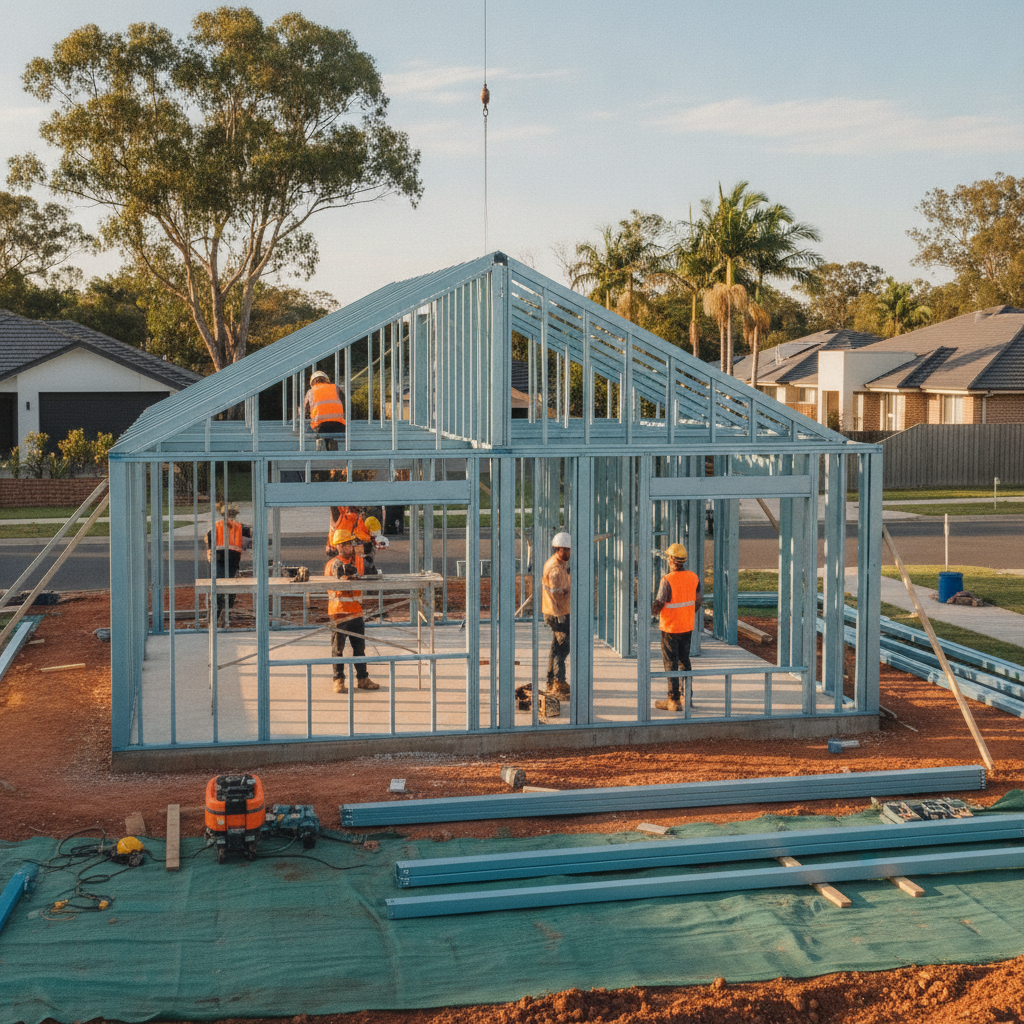
- Kit delivery and frame assembly
- Roofing and external cladding (getting the building 'dried-in')
- Internal plumbing and electrical rough-in
- Insulation and internal linings
- Fit-out and finishes
Communicate regularly with your trades. Give them a courtesy call two weeks before they are due on site, and another call two days before. This keeps your project at the top of their mind and allows you to adjust the schedule if weather or previous stages have caused a delay.
4. Managing the Delivery and Inventory
When your kit home arrives, it is a significant milestone. Our kits, which utilize high quality BlueScope TRUECORE steel, come as a comprehensive package including frames, roofing, and windows. However, receiving a house in a series of deliveries can be overwhelming if you aren't prepared.
A frequent pitfall is failing to check the inventory immediately. As soon as the components arrive, cross-reference the delivery dockets with the packing list. If a specific bracket or a box of fasteners is missing, you want to know then, not three weeks later when you are halfway up a ladder. Organized on-site storage is also vital. Keep your steel frames off the ground and ensure that windows and doors are stored upright and protected from wind and debris. A messy site is a slow site.
5. Respecting the Technical Nature of Steel Frames
Working with steel frames offers incredible precision and durability, which is why they are a favorite for Australian owner builders. Steel is straight, true, and resistant to termites. However, because the frames are engineered to narrow tolerances, there is less 'wiggle room' than with traditional timber. Some owner builders run into trouble by trying to take shortcuts during the assembly phase.
To avoid delays, follow the engineering plans to the letter. Ensure you have the right tools on hand, such as high quality cordless drills, impact drivers, and the specific fasteners provided in the kit. If you are hiring a carpenter to help with the assembly, make sure they are experienced with steel frames. Their familiarity with the material will significantly speed up the 'bones' of the house, allowing you to move on to the lock-up stage faster.
6. The 'While I'm at it' Trap
Scope creep is the silent killer of building schedules. It starts with a small thought: "While I'm at it, I might just move this wall ten centimeters," or "Actually, let's add an extra window here." In a kit home, the structural components are pre-engineered. Making changes on the fly can invalidate your engineering certifications and require you to go back to the drawing board for council amendments.
To keep your project moving, finalize your design during the planning phase and stick to it. The beauty of a kit home is the efficiency of the system. By following the predetermined plan, you ensure that every piece fits, the thermal performance remains as calculated, and the building remains compliant with Australian standards.
7. Weatherproofing and the Lock-up Sprint
In the Australian climate, the weather can be your best friend or your worst enemy. A common delay occurs when a project remains open to the elements for too long. Once your steel frames are erected, the 'sprint to lock-up' should be your priority. This involves getting the roofing, external cladding, and windows installed.
Once the building is weather-tight, you can work inside regardless of whether it is a scorching 40 degree day or a week of torrential rain. Many owner builders lose weeks of progress because they didn't prioritize the roof or the windows, leaving the internal structure exposed. Plan your window delivery and roofing installation to happen immediately after the frames are inspected and tightened.
Final Thoughts for Success
Being an owner builder is a marathon, not a sprint. While the challenges of managing trades, council requirements, and site logistics are real, they are entirely manageable with a proactive mindset. By preparing your site thoroughly, scheduling your trades early, and adhering strictly to your engineered plans, you can avoid the most common delays that plague DIY projects.
A kit home provides you with a robust, high quality framework, literally and figuratively. When you combine the strength of steel frames with a well-organized management plan, you aren't just building a house, you are crafting a home that reflects your dedication and hard work. Stay organized, keep the communication lines open with your trades, and remember that every small task completed is a step closer to turning those keys in the front door for the first time.