The Floor Plan Trap
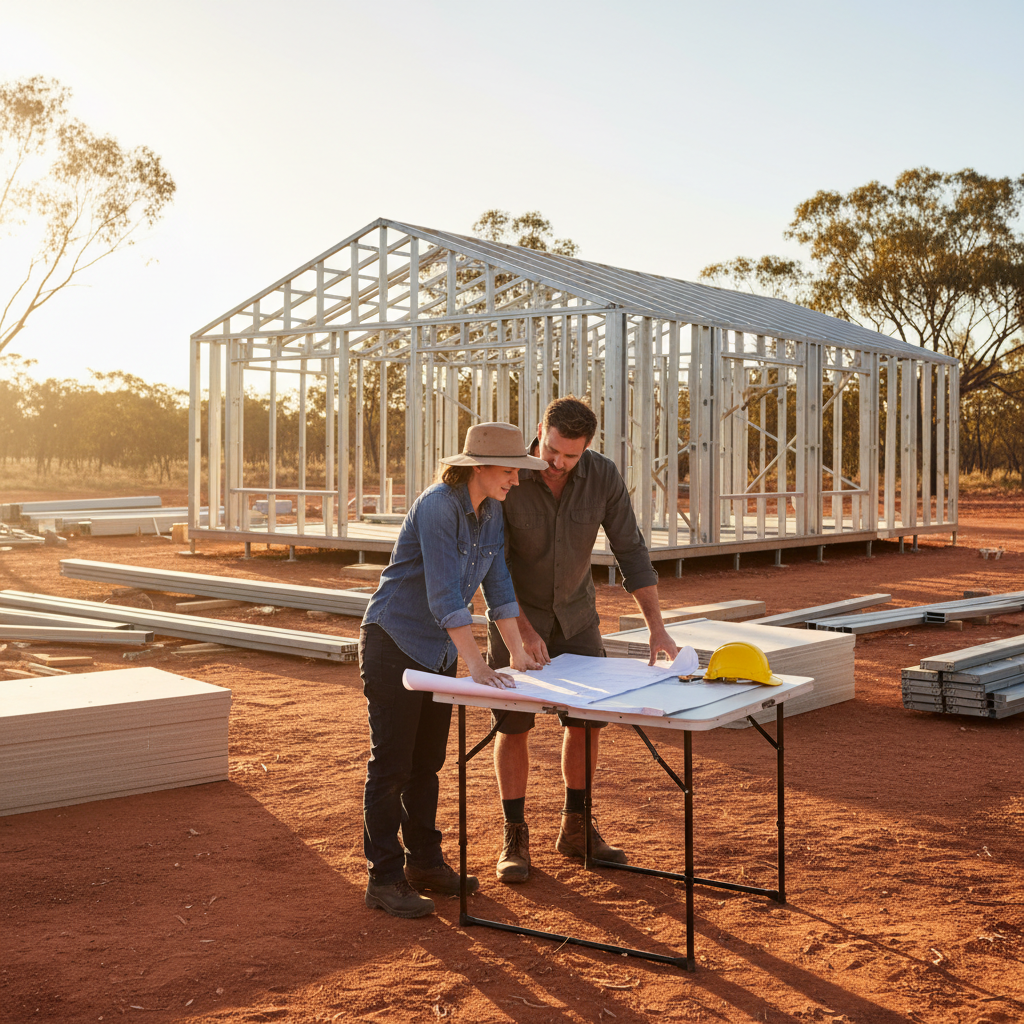
Most blokes and plenty of ladies start their home building journey the same way. You're sitting at the kitchen table with a stack of print-outs from three different companies, and by the second cup of tea, the lines start blurring. You see a 3x4 metre bedroom and think, yeah, that fits a queen bed. But you aren't looking at what lies behind the plasterboard. Most people treat a floor plan like a furniture map. That is a massive mistake. A kit home plan isn't a suggestion for where your couch goes, it's a technical document that dictates every single screw, bracket, and sheet of iron that'll show up on the back of a semi-trailer in six months time.
I have seen it happen a dozen times. Someone buys a kit because they like the 'vibe' of the verandah, but they didn't bother to check the roof pitch or the span of the bearers. They get halfway through the owner-builder process and realise they've got no room for the ducted aircon they wanted because they didn't account for the ceiling height in the specs. Reading these documents is a skill. It's not something you're born with, but if you're going to fork out your hard-earned, you better learn it fast.
Understanding the Architectural Lingo
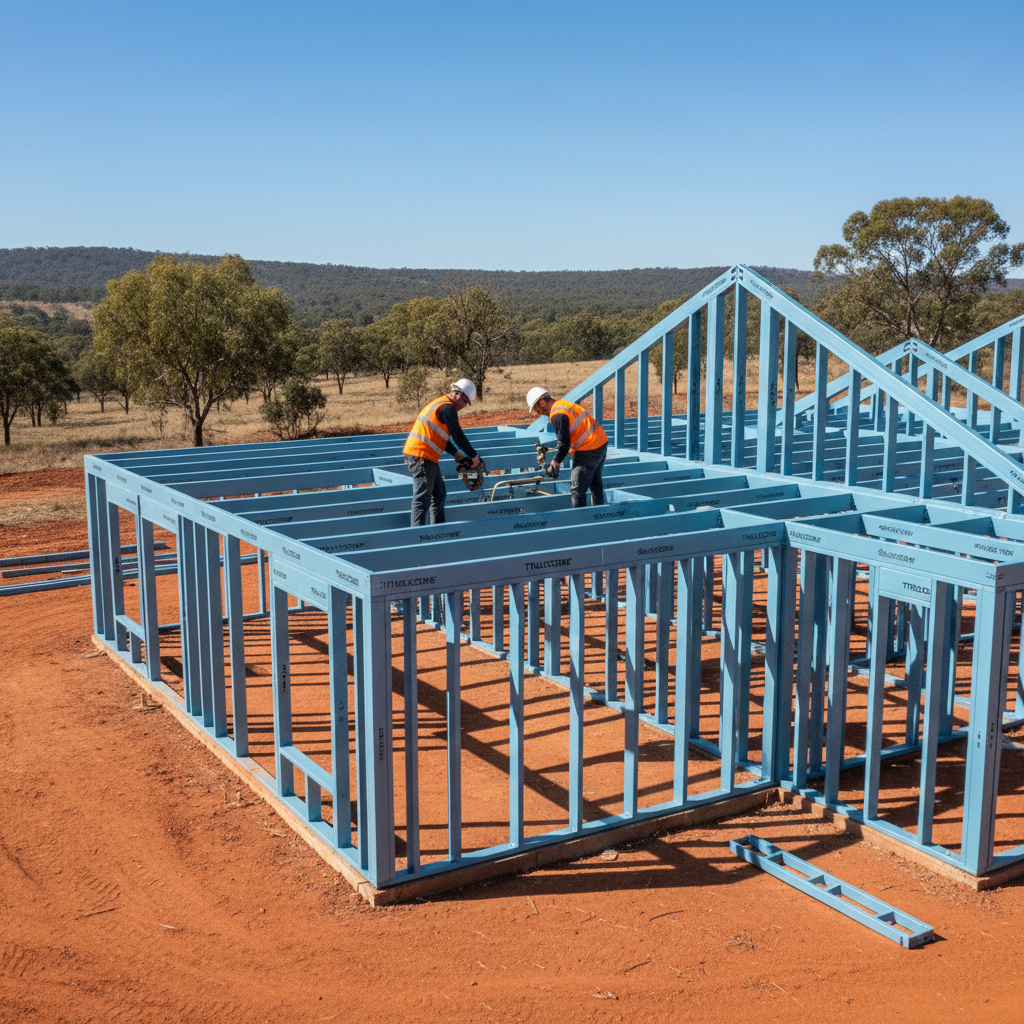
When you open up a set of plans, you'll see a 'Sectional View'. This is basically taking a massive chainsaw and cutting the house in half so you can see the inside of the walls. This is where the real gold is. If you see a note about TRUECORE steel, that's telling you about the guts of the house. These frames are precision-engineered. Unlike timber, they won't warp if they get a bit of rain on them during the build, which, let's face what our Aussie weather is like lately, is a huge win. But look closer. Check the wall thickness. Is it 75mm or 90mm? This matters because it changes your door jambs and your window reveals. If you buy off-the-shelf windows later on and they don't match your frame thickness, you're in for a world of hurt at the finish line.
Then you've got your 'Elevations'. These show you what the house looks like from the North, South, East, and West. Don't just look at the windows. Look at the ground line. Kit home suppliers usually provide a 'standard' plan, but your block of land isn't standard. It's got slopes, rocks, and maybe a stubborn gum tree. You need to understand how the slab or the flooring system interacts with that ground line. If the plan shows a flat site and you're building on a hill in the Adelaide Hills, you've got extra engineering to suss out before you even touch a shovel.
The Specification Sheet: What's In and What's Out
The spec sheet is the most important piece of paper in the pile. It's also the one people skim over because it looks like a boring shopping list. Don't do that. You need to know exactly what is being dropped at your gate. Most quality kits include the frames, the roof iron, and the cladding. But what about the insulation? What about the fasteners? If the spec sheet says 'Colorbond Roofing', does it include the gutters and downpipes? Or are you going to be making a frantic dash to the local plumbing supply shop on a Saturday morning because you've got a roof and no way to catch the rain?
We use BlueScope steel because it's built for our sun and our salt. If the specs mention a 'BMT' (Base Metal Thickness), that's the actual strength of your steel. A 0.42 BMT roof sheet is standard, but if you're in a high wind zone or near the coast, you might need something beefier. Check the BAL rating on the specs too. If you're building in a bushfire prone area, like parts of the Blue Mountains or rural Victoria, your kit needs to meet specific Bushfire Attack Level requirements. This changes things like the flyscreens on your windows and the type of seals on your doors. If it isn't in the specs, it isn't in the kiit. Simple as that.
Navigating the National Construction Code (NCC)
You don't need to be a lawyer, but you do need to know that your plans must comply with the NCC Volume 2. This is the 'bible' for residential building in Australia. Your kit provider should have already handled the engineering to meet these standards, but you're the one dealing with the council or the private certifier. If your plans show a certain energy rating, check how they achieved it. Is it through the wall insulation? Or does it rely on you installing specific double-glazed windows? Often, the kit provides the shells and the frames, but your choices during the fit-out can mess with the legal compliance if you aren't careful. For instance, if the engineering assumes a certain weight of roofing material and you decide to swap the steel out for heavy terracotta tiles, you've just turned your engineered plan into a useless piece of paper. The steel frames are designed for specific loads. Stick to the specs or get the engineer to re-sign the changes.
The Owner-Builder Reality Check
So, you've got the plans. You think you're ready. But have you looked at the plumbing layout? Most kit plans show where the toilet and the sink go, but they don't always show the 'stacks' or the waste lines under the floor. If you're building on a slab, those pipes have to be laid with millimetre precision before the concrete truck even arrives. This is where most owner-builders get caught out. They see the 2D floor plan and forget that houses are 3D objects with pipes and wires running through them. Talk to your plumber early. Show him the plans. He'll tell you if that fancy island bench in the kitchen is going to cost you an extra three grand in trenching through rock.
Also, look at the door swings. It sounds small. It is small. Until you're standing in your new laundry and realise the door hits the washing machine because you didn't check the clearance on the plan. We see this all the time. People get excited about the big stuff and ignore the ergonomics of daily life. Grab a tape measure, go into your current house, and mark out the dimensions on the floor. It'll give you a sense of scale that a piece of paper never can.
Site Access and the 'Hidden' Specs
One thing that's never on the floor plan but is always in the fine print is 'site access'. A kit home arrives on a big truck. If your block has a narrow driveway or a low-hanging power line, the driver isn't going to risk his rig. You need to plan for the delivery just as much as the build. This means checking the specs for the longest length of steel or roofing. If you've got 8-metre long sheets of trimdeck, you need space to offload them. Don't just assume they'll 'figure it out' when they arrive. That's a great way to end up with a pile of steel dumped on the nature strip and a council fine by lunch time.
Building your own home is an massive achievement. It's hard work, it's stressful, and it's rewarding as anything. But it all starts with those plans. Take the time to sit down, turn off the telly, and really look at what you're buying. Ask the 'dumb' questions. Any kit provider worth their salt will be happy to explain what a lintel is or why a certain span requires a heavier C-Section beam. It's your house. Your money. Your future. Don't leave it to guesswork. Get the specs right, and the rest of the build will follow suit.