The Blueprint Reality Check
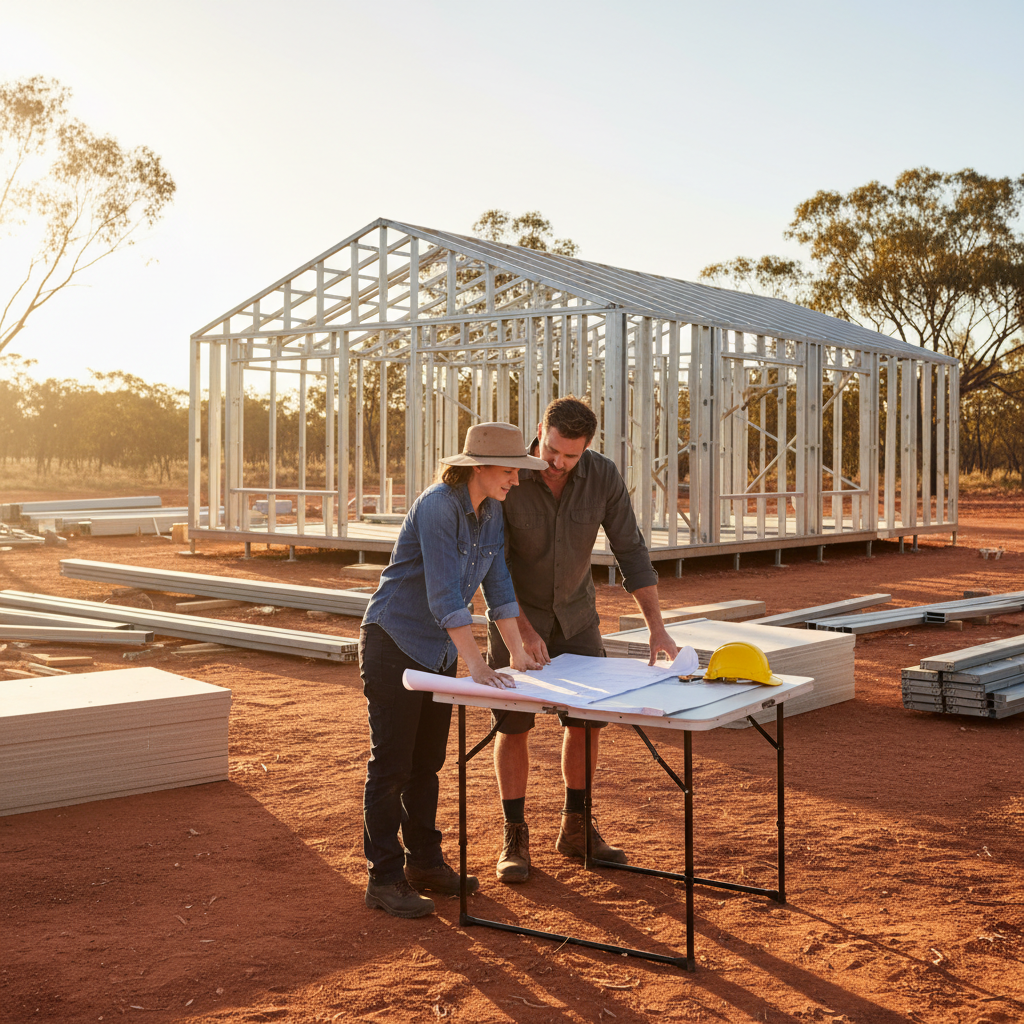
I’ve seen it a hundred times. A bloke sits down with a set of plans, nods along like he’s reading the morning paper, and then calls me three weeks into the build because he can't find where the flashing goes or he’s confused about the wind rating. Reading kit home plans isn’t just about looking at where the couch fits. It’s about understanding the guts of the thing. If you’re an owner-builder in Australia, the plans are your bible. If you misread them, you’re the one footed with the bill when the trades show up and things don't line up.
Most folks focus on the floor plan because it’s easy to look at. You see a kitchen, a lounge, and a deck. But the real meat is in the engineering drawings and the inclusions list. You need to know exactly what’s arriving on the back of the truck and, more importantly, what isn't. If you’re building with steel frames, like the TRUECORE stuff from BlueScope, your plans will look a bit different than traditional timber drawings. They’re precise. To the millimetre. And that means your slab has to be spot on too.
Decoding the Symbols and Scaled Mess
Ever looked at a site plan and felt like you were staring at a bowl of alphabet soup? Those abbreviations matter. RL stands for Relative Level. It tells you the height of the land. If you ignore those little numbers, you might find your front door is suddenly two steps higher than you reckoned. Then there’s the north point. Always check the true north, not just where the sun hit your face when you stood on the block at midday. It affects your energy rating and how the house holds heat in a Victorian winter or sheds it in a Queensland summer.
Scales can trip you up fast. Most plans are 1:100 or 1:50. Don't trust your eyes. Use a scale ruler. Better yet, look for the written dimensions. If there’s a conflict between a scaled measurement and a written number, the written number wins every single time. That’s a rule of thumb on any site from Hobart to Darwin. Because paper shrinks and printers lie, but a written dimension is a legal commitment.
The Engineering and the Steel Frame Factor
This is where it gets technical. Your kit will come with an engineering certification. This isn't just paperwork for the council file. It dictates how the steel frames are bolted down and how the roof trusses handle the load. Since we use BlueScope Steel, the frames are light but incredibly stiff. But you’ve got to check the tie-down details. In high wind areas or cyclone zones up north, the way that frame connects to your slab is the difference between a house and a pile of scrap metal after a big blow.
Look for the 'Schedule of Bracing'. It’ll show you where the heavy-duty walls are. You can't just decide to shift a door ten inches to the left on a whim if that's a braced wall. Well, you can, but then you’ve got to go back to the engineer, pay more fees, and wait for a new set of wet-stamped drawings. It's a pain. Get the layout right before the steel is cut at the factory. Once it’s roll-formed and punched, that’s it. No going back without a grinder and a bad attitude.
Know Your Inclusions: What’s in the Box?
I hear people complain that kit homes are 'incomplete'. That’s because they didn't read the inclusions list properly. Our kits usually covers the shell. We're talking the frames, the trusses, the Colorbond roofing, the cladding, and the windows. But the slab? That’s on you. The plumbing under the floor? You. The electrical fit-out? Also you.
When you’re looking at your specs, check the insulation R-values. Don't just settle for the bare minimum NCC Volume 2 requirements if you’re building somewhere like Cooma or the Blue Mountains. If the spec says R2.0 but you want it to feel like a thermos, talk about upgrading the batts before the kit ships. It’s way easier to chuck in higher-rated insulation while the walls are open than to try and retro-fit it when you’re shivering six months later. Plus, check the window specs. Are they double-glazed? What’s the frame finish? These details are usually tucked away in a legend on the side of the elevation drawings. Read it twice.
The Slab Layout and the 'Set Out'
The most important piece of paper you’ll hold is the slab layout. If your concreter is worth his salt, he’ll obsess over this. Steel frames don't have the 'give' that timber does. You can't just plane a bit off a steel stud if the slab is 20mm out of square. It just won't fit. You’ll be looking at the plan, looking at the concrete, and wondering why the anchor bolts don't line up. So, when the plans show the set-out dimensions, satisfy yourself that those corners are perfectly square. Check the diagonals. If A to B doesn't match C to D, don't let them pour the mix.
And then there's the plumbing drops. Your plans will show exactly where the stacks and waste pipes go. If they’re off by even a little bit, you’ll be jackhammering your brand new slab to move a toilet pipe. Nobody wants that on a Saturday morning. Make sure the plumber has the latest version of the architectural plans, not an early draft you printed out three months ago.
Bushfire Attack Levels (BAL)
In Australia, you can't talk plans without talking fires. Your specs will mention a BAL rating. Whether it's BAL-12.5 or BAL-40, it changes what your house is made of. It might mean toughened glass in the windows or specific sarking under the roof. If your plan says you need a certain type of seal on the garage door to keep embers out, don't ignore it. Council won't give you an occupancy certificate if you’ve skipped these bits. Steel is great here because it’s non-combustible, but the whole system has to work together to pass the sniff test with the building surveyor.
Final Advice for the Owner Builder
Don't be afraid to ask 'stupid' questions. If a line on a drawing doesn't make sense, call the kit provider. If you aren't sure if the guttering is included or just shown for 'illustrative purposes', find out. Most mistakes happen because of assumptions. People assume the stairs are included, or they assume the internal doors come with handles. Usually, they don't. A kit is a system, and like any system, you need to understand every cog. Grab a coffee, sit at the kitchen table, and trace every line on those plans with your finger until you can see the whole house in your head. That’s when you’re ready to build.