The Myth of the Weekend Warrior
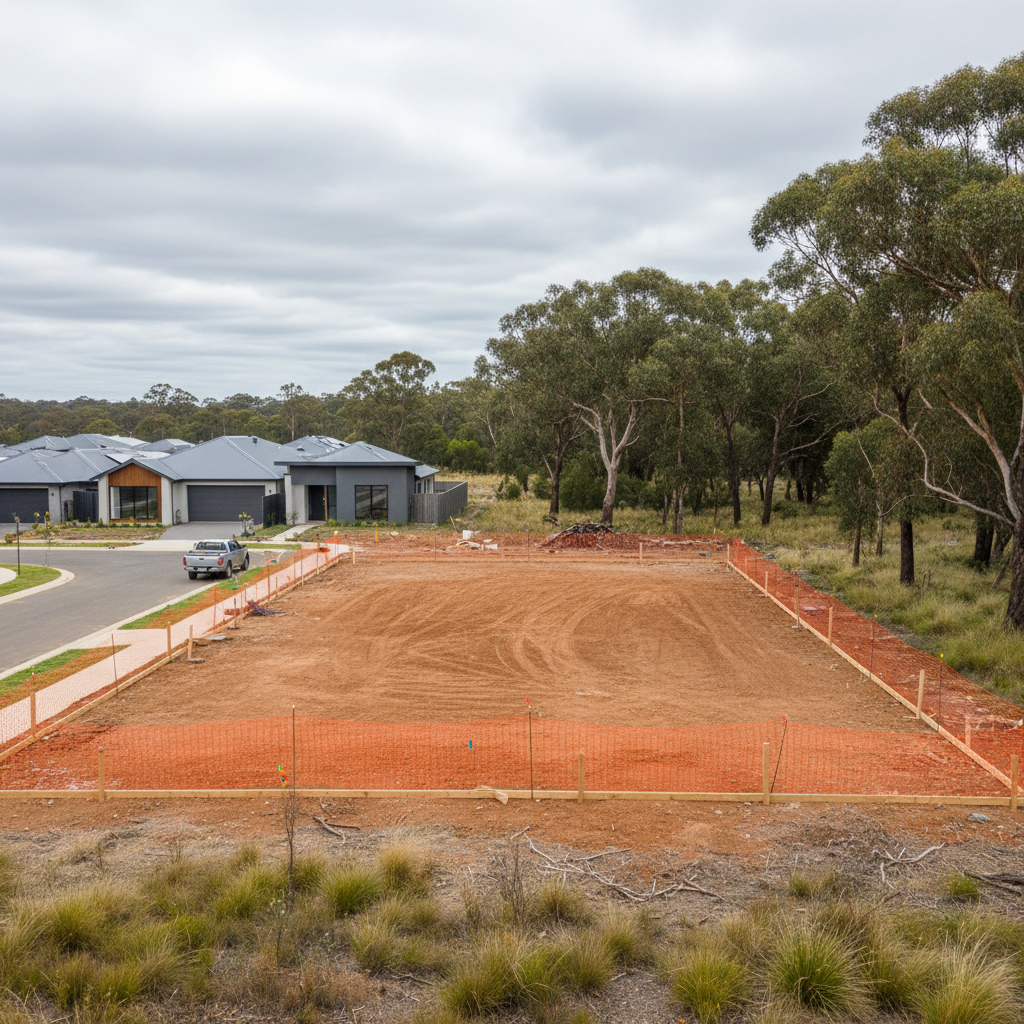
It’s Saturday morning at 6:30 AM. You’re standing on a concrete pad in Victoria or maybe out past Dubbo, coffee in a cracked mug, staring at a massive delivery of BlueScope steel. The truck driver just left. It’s quiet. This is the exact moment the reality of being an owner builder hits you right in the chest. Most people think being an owner builder means you have to swing the hammer on every single nail or tech screw. That’s a fast way to end up with a half-finished house and a divorce. Success in the kit home world isn’t about how much sweat you lose, it's about knowing when to put the tool belt on and when to pick up the phone to call a sparky.
Kit homes are brilliant because they give you a massive head start. You’re getting the TRUECORE steel frames, the cladding, the roof, and the windows all in one go. But don't let that fool you into thinking you’re a master builder overnight. You’ve got to be strategic. Because if you mess up the slab, nothing else fits. If you mess up the flashing, the house leaks. Because of the way Australian building codes work, especially NCC Volume 2, there are things you legally can't touch anyway. Let’s get into the weeds of what you should actually be doing yourself.
The No-Go Zones: Where Your DIY Dreams Die
First off, let’s talk about the stuff you shouldn't touch. In Australia, if it involves a pipe or a wire, you’re basically out of the game. Plumbing and electrical are protected by some of the strictest licencing laws in the world for a reason. You might reckon you can wire up a few LED downlights or connect a S-bend under the sink, but don't. You need those compliance certificates for your final occupancy permit. Without them, your insurance is worth less than a soggy meat pie. Same goes for waterproofing in bathrooms. I’ve seen guys try to save a grand by DIY-ing their own wet area membrane and three years later they're ripping out rotten floor joists and tiles because of a pinhole leak. Just pay the pro. It’s cheaper in the long run.
Gas fitting? Forget it. Unless you want to see your new steel kit home turn into a fireball from an improperly flared joint, stay away. These trades are your biggest expense outside of the kit itself, but they’re your safety net.
Standing the Frames: The DIY Gold Mine
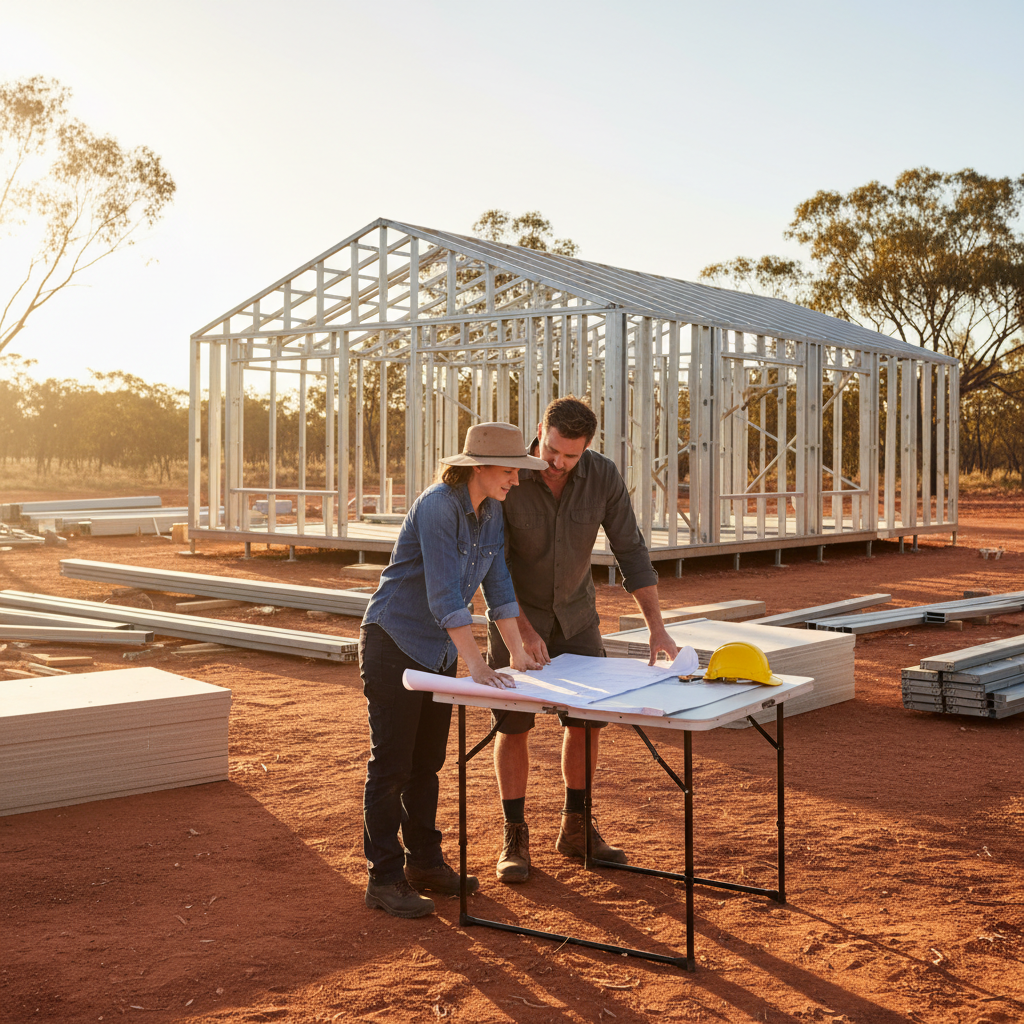
Now, here is where you actually save the big bucks. Standing the steel frames is where the fun starts. Steel frames are lighter than timber, they don't warp if they get rained on during the build, and they come pre-punched for your services. If you can read a set of assembly drawings and you know how to use a cordless impact driver, you can do this. Plus, steel won't twist on you like a piece of green pine from the local hardware store might.
I always suggest getting a few mates around for the frame stage. It’s a two or three-person job. One person holds the level, one holds the frame, and the other drives the fasteners. You’ll find that once the bottom plates are anchored to the slab correctly, the rest of the house goes up like a giant Meccano set. But watch your tolerances. If you’re out by 10mm at the start of a long wall, you’ll be out by 50mm by the time you reach the corner. Check for plumb. Then check again. Then check one more time before you move on to the roof trusses.
Tips for the Frame Stage:
- Invest in a high-quality laser level. Don't rely on a 600mm hand level you bought for five bucks.
- Magnetic drill bits are your best friend when working with steel.
- Wear gloves. Steel can be sharp, especially the off-cuts.
The Middle Ground: Cladding and Insulation
Cladding and roofing is where things get interesting. Most kit homes we see in Australia use some form of steel cladding or perhaps a fibre cement weatherboard. This is definitely DIY territory, but it’s physically demanding. Working on a roof in the Aussie sun isn't for everyone. If you’ve got a steep pitch, just hire a roof plumber. Falling off a ladder will ruin your build schedule real quick. But if it’s a simple skillion roof or a low-pitch hip, and you’re comfortable with heights, go for it.
Insulation is another great one for owner builders. It’s itchy, it’s hot, and it’s boring, which is why trades charge a premium to do it. You can knock out a whole house’s worth of wall batts in a weekend for the cost of a few pizzas and a carton of beer. Just make sure you aren't leaving gaps. Even a 5% gap in your insulation can lead to a 50% loss in thermal efficiency. In places like regional NSW or the Tassie highlands, you’ll feel those gaps every winter.
Internal Fit-out: Where You Win or Lose
This is where the DIY-er really shines. Once the house is locked up, the pressure is off the weather. You can take your time. Hanging plasterboard is a skill, sure, but it’s one you can learn through trial and error (and a lot of sanding). If you’re perfectionistic, you can get a better finish than a rushed contractor. Kitchen installation is another big one. If you can use a level and a drill, you can install a flat-pack kitchen into your kit home. Because the steel frames are dead straight, you won't be fighting wonky walls like you would in a 1950s reno.
Painting is the obvious DIY choice, but it’s the one everyone underestimates. It takes forever. Most people give up halfway through the second coat of the second bedroom. If you're going to do it, buy a proper airless sprayer. Don't try to roll a whole house unless you hate yourself. The same goes for flooring. Floating timber or hybrid floors are basically Legos for adults. Anyone can do them. Carpeting? Pay someone else. Stretching carpet is an art form and you need specialized tools you’ll never use again.
Landscaping and Final Touches
Never leave the landscaping for "later." We’ve all seen those kit homes that sit on a dirt patch for five years because the owner builder ran out of steam. Get stuck into the decks and the dirt work while you're waiting for the council to sign off on your stages. Building a timber deck off the side of a steel-framed home is one of the most satisfying things you can do. It connects the house to the land and actually makes the place feel like a home rather than a construction site. Plus, it’s a job where you can make mistakes and it doesn't usually cause a structural catastrophe.
Building your own place isn't about being a martyr. It’s about managing a project so you end up with a high-quality home without the massive builder's margin. Use the kit as your foundation, be smart about where you spend your energy, and don't be afraid to admit when a job is over your head. The best owner builders are the ones who know exactly when to put the hammer down and grab the phone. So, suss out your trades early, get your kit delivered, and start with the easy wins. You'll get there.