The Concrete Reality of Building Waste
Walk onto any residential build site in the suburbs of Melbourne or Brisbane on a Friday afternoon. You'll see it. A massive skip bin overflowing with offcuts, treated pine that can’t be burnt, smashed bricks, and soggy plasterboard. It’s a mess. Most people don't realize that construction and demolition waste makes up about 40 percent of what goes into Australian landfills. That's a staggering amount of junk just sitting there. If you're planning to be an owner-builder, you've got a chance to do things differently. It starts with the skeleton of the house.
Steel is different. It’s not just a bit better, it’s fundamentally a different beast. When we use TRUECORE steel from BlueScope, we're talking about a material that is 100 percent recyclable. Not 80 percent. Not 'mostly'. All of it. If someone knocks down a steel-framed kit home in eighty years, that steel isn't going to a hole in the ground in Werribee. It’s going back into a furnace to become a new beam, a car door, or a fridge. It’s a circular loop. That matters because the iron ore we dig out of the ground is a finite resource, even if Australia has heaps of it.
Precision Cutting Means Less Junk on Site
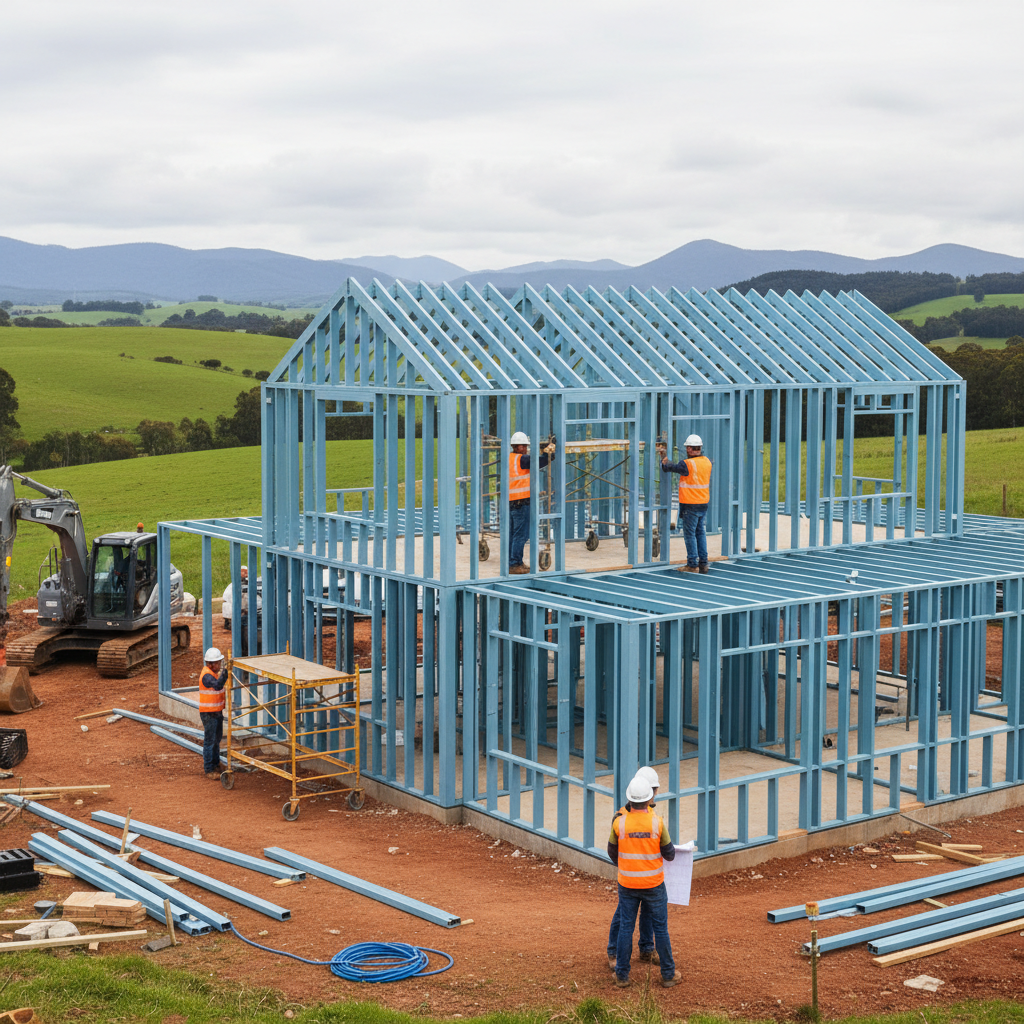
One of the biggest environmental wins with a kit home happens before the truck even rolls up to your block. Because these frames are engineered to the millimeter in a factory environment using CAD software, there is almost zero waste. Every stud, noggin, and plate is cut to the exact length required. If you were stick-building with timber, you'd be out there with a drop saw, hacking away and leaving a mountain of sawdust and offcuts in the dirt. But. With a steel kit, if the plan says a wall is 2400mm high, the steel arrives at exactly 2400mm. No trimming. No waste. No bin fees for stuff you paid for but didn't use.
I’ve worked on sites where the site cleanup alone took three days and cost thousands in tip fees. With steel, the only thing you’re usually picking up at the end of the frame stage is a few plastic straps and the odd screw that fell out of a pouch. It’s cleaner. It’s faster. And it doesn’t kill trees that took fifty years to grow just so they can hold up your bathroom tiles.
Termites, Chemicals, and Your Soil
Let’s talk about the stuff nobody likes to mention: poison. If you build with timber in most parts of Australia, especially up north in Queensland or through the humid parts of NSW, you are in a war against termites. To win that war, you often have to pump the soil around your slab with chemicals. Or you're using timber that has been pressure-treated with copper chrome arsenate (CCA) or other fungicides and insecticides. It’s nasty stuff. It keeps the bugs away, sure, but it’s not exactly something you want leaching into your garden beds where you’re growing your tomatoes.
Steel is naturally termite-proof. It’s as simple as that. The bugs can’t eat it. They don't even try. Because it’s inorganic, you don’t need those heavy-duty chemical barriers. You’re saving money on pest inspections and treatments over the life of the house, but you're also keeping those toxins out of your backyard. Plus, steel frames don't need the toxic glues or resins often found in engineered wood products. Your indoor air quality is better from day one. That’s a massive plus for families with kids or anyone with a bit of a sensitivity to chemical off-gassing.
The Myth of the Carbon Footprint
People love to point at the energy it takes to make steel. Yes, blast furnaces take a lot of juice. No point lying about that. But you have to look at the whole lifecycle, according to the NCC Volume 2 requirements and general building logic. A steel-framed house is lighter than a traditional brick and timber build. This means you can often use less concrete in your footings. Concrete is a massive carbon hog. If you can move to a light-gauge steel system on a stump and subfloor setup, your site impact is tiny. You aren't scraping the whole block flat and pouring a massive slab that'll never move. You're treading lightly.
Then there's the durability. A house that lasts 100 years is twice as sustainable as a house that needs a major structural overhaul after forty because the frame sagged or the damp got into the studs. BlueScope's TRUECORE steel is backed by a warranty that actually means something in the Australian climate. It stays straight. It stays true. It won't twist or warp as the seasons change from a scorching 40-degree January arvo to a freezing July morning. The windows won't stick because the frame hasn't moved a millimetre. That structural integrity keeps the envelope of the house tight, which helps with your 7-star energy rating because you don't end up with gaps where your expensive air conditioning can leak out.
Owner Builder Tip: Managing Your Site Waste
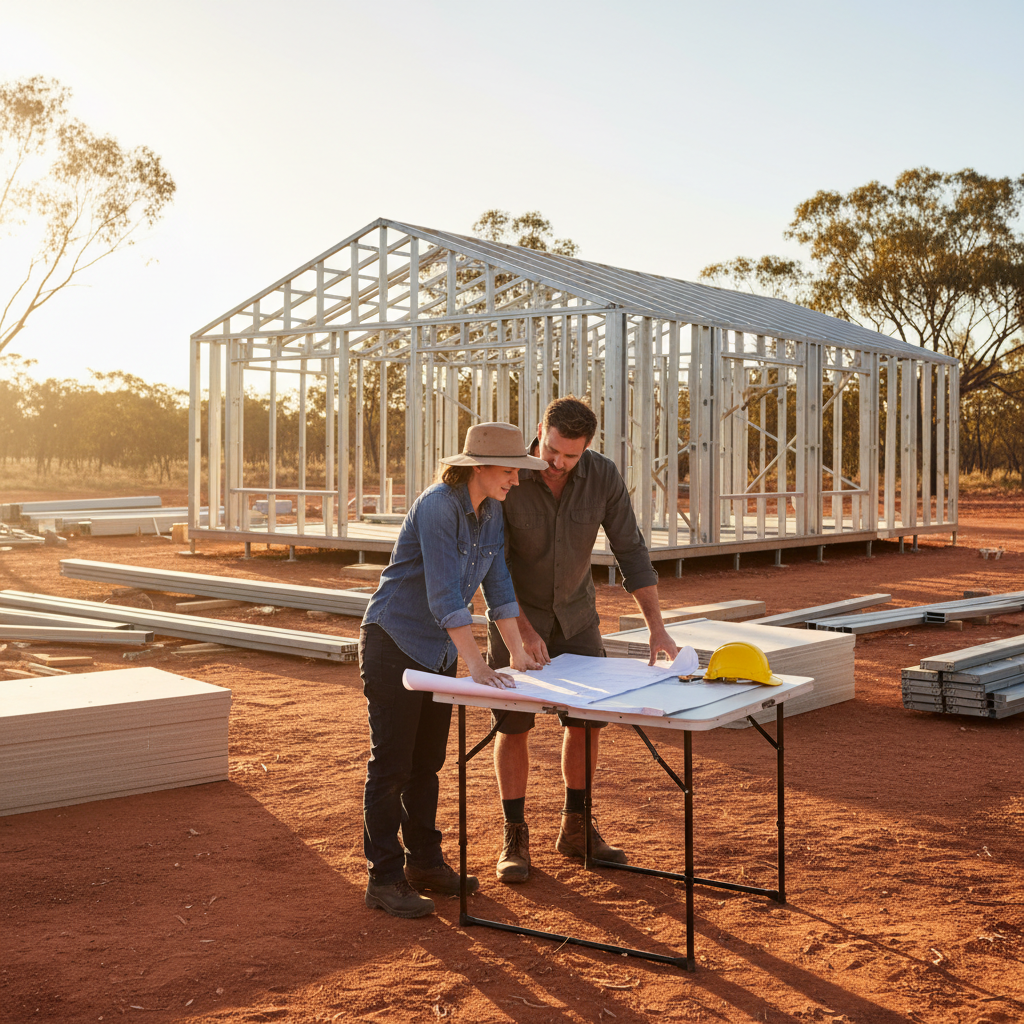
If you're taking on the owner-builder mantle, do yourself a favor. Set up a dedicated recycling area from day one. Since your kit arrives with the steel frames, roofing, and cladding all ready to go, you can actually separate your waste as you work. Put the scrap steel in one pile, the cardboard packaging in another, and the plastic wrap in a third. Local scrap metal yards will often pay you to take the steel off your hands, or at the very least, they’ll take it for free. You end up with a build that feels good because you aren't just contributing to the local dump.
Resilience in a Changing Climate
We’re seeing more extreme weather. Fact. Whether it’s bushfires in the hills or cyclonic winds on the coast, your choice of frame affects how well your house survives. Steel is non-combustible. In a bushfire scenario, having a steel frame can be the difference between a house that stands and one that collapses. It doesn't add fuel to the fire. When you're building in a BAL (Bushfire Attack Level) rated zone, steel isn't just a green choice, it’s a common-sense safety choice.
And because steel has a high strength-to-weight ratio, it performs exceptionally well in high wind loads. You can get wider spans without needing massive, heavy timber beams. This allows for better passive solar design. You can have those big, north-facing windows that let the sun in during winter to heat up your thermal mass, without worrying about the roof sagging over time. It’s about building smarter, not just heavier.
The Final Word on Going Green
Sustainability in the building industry usually feels like it’s just a bunch of checkboxes for a council permit. But building a kit home with a steel frame is a different way of thinking. It’s about choosing a material that was likely made with a percentage of recycled content and will definitely be recycled again one day. It’s about precision, less poison in the soil, and a house that stays straight long after the mortgage is paid off. Don't let anyone tell you that timber is the only way to be 'eco'. If you want a house that lasts and a site that stays clean, steel is the way to go. No dramas. No waste. Just a solid house that respects the ground it sits on.