The 100-Year Scrap Metal Plan
Most people look at a house and see a home. I look at a house and see a resource. When you're standing on a dusty block in Dubbo or a hilly patch in the Dandenongs, the last thing you're thinking about is what happens to your house in eighty years. But you should. Australia has a massive problem with construction waste. We're talking millions of tonnes of old timber, plasterboard, and treated rubbish heading into landfill because it's too hard to sort or too poisoned with chemicals to reuse. Steel changes that. It's the most recycled material on the planet. Not just once. Not just twice. Infinitely. You can melt down a 2024 house frame and turn it into a 2100 bridge without losing a single bit of structural integrity. That's not some hippie pipe dream. It's just metallurgy.
BlueScope, TRUECORE, and the Local Loop
I always tell guys to look for the BlueScope stamp. We use TRUECORE steel because it's made for our conditions, but from an environmental perspective, it's also about supporting a local circular economy. When you buy steel made in Port Kembla, you aren't just getting something that'll stand up to a Category 3 cyclone. You're buying into a system where old scrap gets fed back into the furnaces. Because steel is magnetic, it's dead easy to pull out of a demolition site. While a timber frame is usually destined for the tip once the termites or rot have had a go, a steel frame is basically just a bank account of raw material for the next generation. It's a pragmatic way to build. Plus, because every piece is precision cut in a factory before it arrives at your site, you aren't leaving a mountain of offcuts in the dirt for the wind to blow away.
Termite Chemicals Are A Biohazard
Let's talk about the stuff no one likes to mention. If you build with timber in most parts of Australia, you're either using arsenic-treated wood or you're pumping some pretty nasty stuff into the soil around your footings to keep the white ants away. Steel doesn't need it. It's not on the menu. This isn't just about saving money on pest inspections, though that's a nice bonus for an owner-builder. It's about what you're living on. Every litre of poison you don't spray is a win for your local groundwater and the worms in your garden. I've seen blokes spend thousands on organic veggie patches only to surround their house with a chemical barrier. It doesn't make sense. Steel is an inert material. It doesn't off-gas. It doesn't rot. It just sits there, doing its job, without needing a chemical cocktail to stay upright. Because it's 100% termite proof by nature, you're building a healthier site from day one.
The Precision Factor and Site Waste
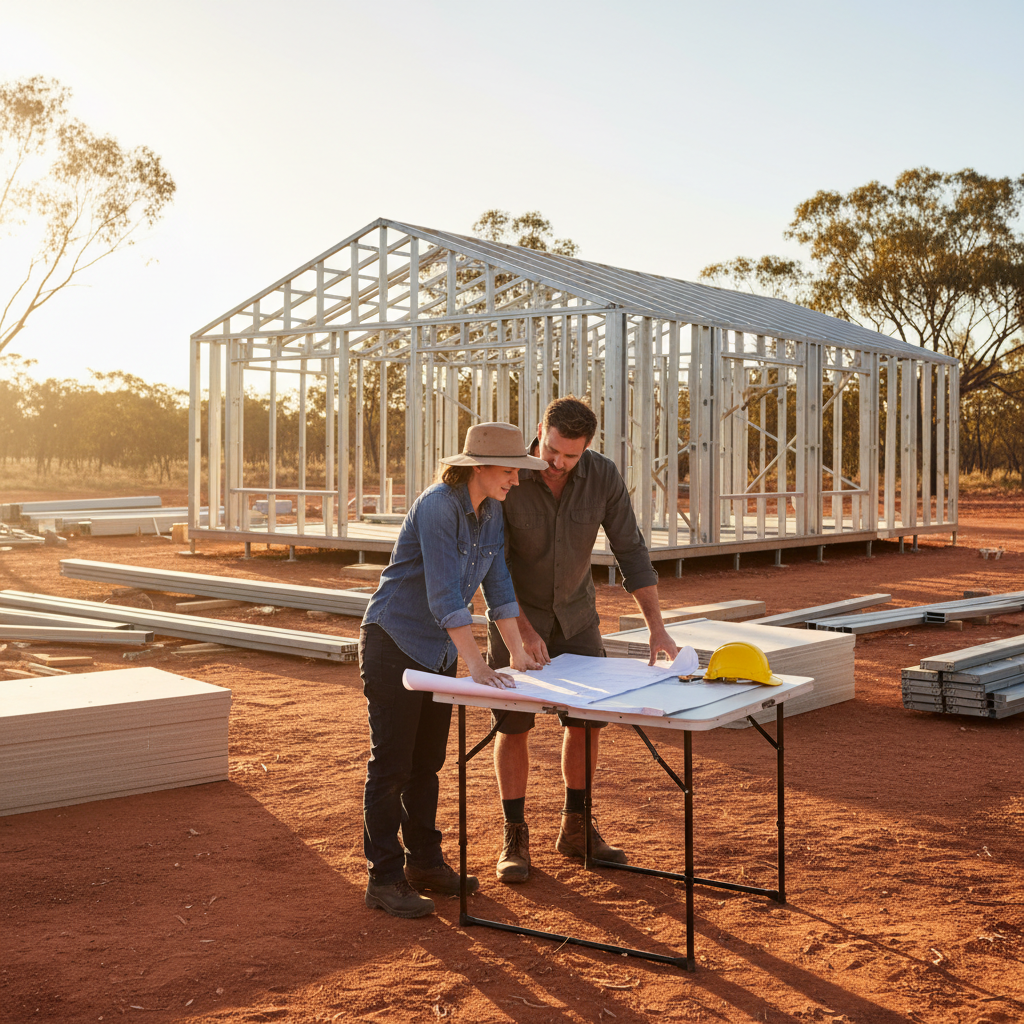
When you're an owner-builder, you're the one paying for the skip bins. Trust me, those things aren't cheap anymore. If you're stick-building a frame on-site, you'll be shocked at the amount of waste. Shavings, ends, warped studs that get tossed aside because they're as crooked as a dog's hind leg. It's a mess. Our kit homes are designed so the frame components arrive ready to bolt together. There is almost zero waste on site. Everything fits. If it doesn't fit, someone didn't read the plan right. Because we use computer-aided design to specify every single flange and hole, the efficiency is through the roof. You aren't just saving the planet by not cutting down trees. You're saving the planet by not filling up your local council's landfill with discarded building materials. It's cleaner. It's faster. And it's a hell of a lot more satisfying when you realize you only need a small bin for the entire framing phase.
Thermal Performance and the 7-Star Requirement
The rules are changing. The National Construction Code (NCC) is getting tighter, and for good reason. Living in a tin shed in the middle of a Queensland summer is a nightmare if it's not designed right. But here is the thing about steel frames and energy efficiency. Because they are so straight and stable, you don't get the gaps and cracks that develop over time with timber as it shrinks and moves. Air leakage is the enemy of a 7-star energy rating. With a steel-framed kit, you get a consistent substrate for your insulation. Add in a thermal break between your frame and your cladding, and you've got a high-performance envelope that keeps the heat out in summer and the warmth in during winter. It's about being smart with your layers. We include quality insulation in our kits because a green home isn't just about the frame. It's about how many times your air con has to kick in on a 40-degree afternoon in January.
Lightweight Design: Less Impact on the Ground
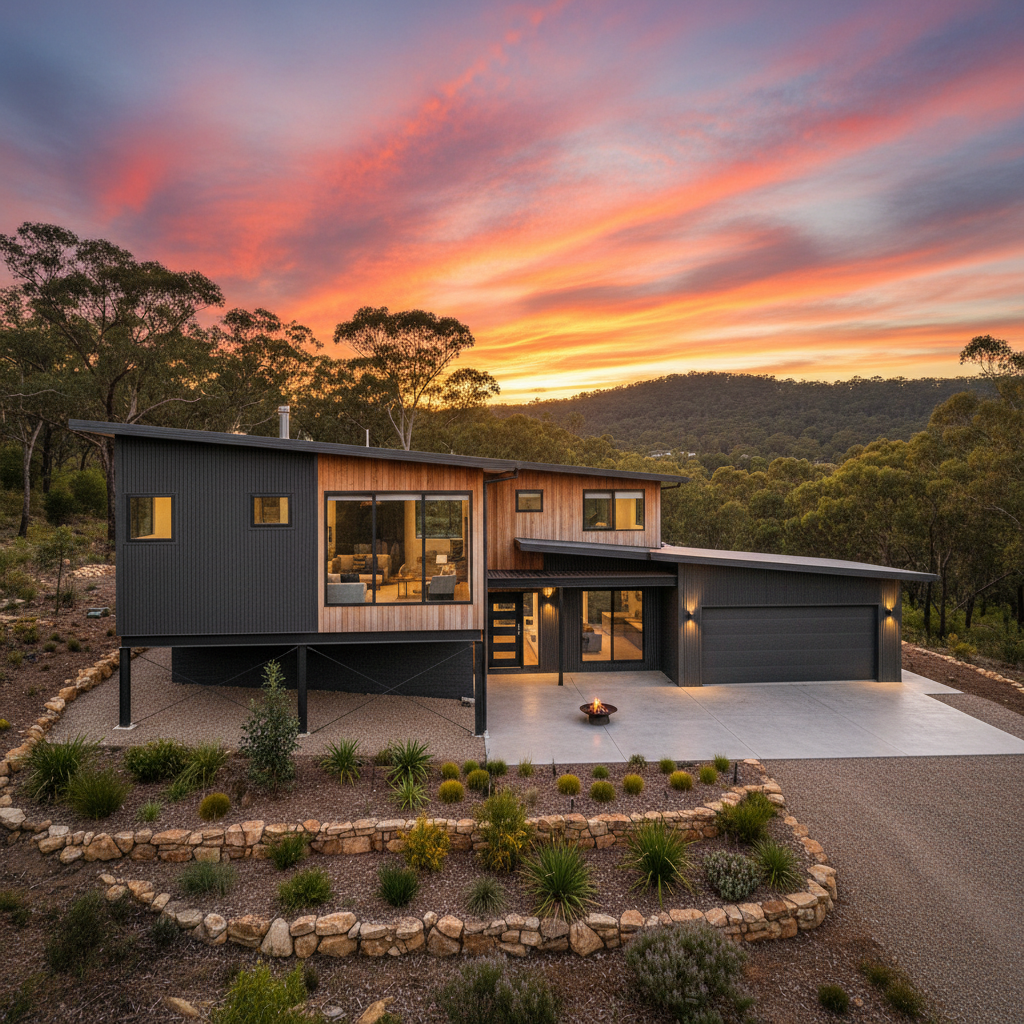
Have you ever looked at the footings required for a heavy masonry build? You're digging massive holes and pouring enough concrete to fill a swimming pool. Concrete has a huge carbon footprint. Steel's strength-to-weight ratio is its secret weapon. Because the frames are relatively light, you can often get away with less invasive footings. This is a massive deal if you're building on a block with beautiful old trees or sensitive soil. You don't have to bulldoze everything just to get the slab down. You can work with the land, not against it. I've seen great designs on piers that let the natural water runoff happen right under the house. It's a much lower-impact way to live. So, if you're building on a slope or in a bushfire-prone area, that lightweight strength gives you options that heavier materials just can't match.
The Longevity Argument
People ask me how long these things last. Well, TRUECORE has a lifespan that'll likely outlast me and you. In the sustainable building world, there is a concept called 'embodied energy'. That's the energy it took to make the material in the first place. Some people argue steel has high embodied energy. Sure. But you have to divide that energy by the years of service. If a house lasts 100 years instead of 40, its annual environmental cost is much lower. And because steel doesn't sag or warp, your windows keep opening and your roof stays straight. You aren't doing major structural renovations every two decades. Maintenance is one of the biggest hidden environmental costs of home ownership. Every time you have to replace a rotted deck or a warped wall, you're using more resources. Steel frames are the 'set and forget' of the building world. They don't move. They don't moan. They just hold the roof up.
Practical Tips for the Eco-Conscious Owner-Builder
If you're serious about the environmental side of things, don't stop at the frame. Here's what I reckon you should look at during your planning phase:
- Orientation is everything. Point your main glass north. If you're building a kit home in a cold climate like Tassie, use that winter sun to heat your slab.
- Don't skimp on the thermal break. It's a simple bit of kit that stops the heat transferring through the steel stud. It's mandatory now, but doing it right makes a world of difference.
- Look at your windows. We provide quality windows in our kits, but make sure you're picking the right glass for your specific climate zone.
- Think about your site's bushfire attack level (BAL). Steel is non-combustible. It won't be the fuel that burns your house down. In high-risk areas, this is a massive safety and environmental consideration.
At the end of the day, building a home is a big impact event. There is no way around that. But by choosing a kit that uses recyclable Australian steel, you're making a choice that looks 50 or 100 years down the line. You're building something that can be salvaged, reused, and reborn. Plus, you're getting a straight, true house that termites won't touch. It's a win for the planet, but let's be honest, it's a huge win for your peace of mind too. Building yourself is hard enough without worrying about the frames rotting out from under you in twenty years. Stick with the steel. It's common sense.