I was standing on a site up near Gympie last November, middle of a heatwave, watching a bloke rip into a section of wall that looked fine from the outside. Two minutes in, the crowbar goes straight through the stud like it was wet cardboard. Termites. White ants. Whatever you want to call them, they'd turned that timber frame into a hollow shell while the owner was busy worrying about the paint colors. This is the reality of building in Australia. If it's made of wood, something is eventually going to try and eat it.
The Termite Map is Everywhere
Most people think if they aren't living in the tropical north, they're safe. Wrong. Apart from Tasmania, almost every corner of this country is a buffet for subterranean termites. They don't care if you're in a leafy suburb in Melbourne or out past Dubbo. When you start planning your kit home, you've got a massive choice to make early on. You can go with traditional timber and spend the next thirty years praying your chemical barriers don't fail, or you can go with steel and actually sleep at night. We use BlueScope TRUECORE steel for our frames because it’s 100% termite proof. Not 'termite resistant'. Not 'treated'. They just won't touch it. It's not food to them.
Because steel is inherently inedible, you're removing the biggest threat to the structural integrity of your house before you've even poured the slab. It’s a bit of a no-brainer for owner-builders who want to do the job once and do it right. Plus, it saves you from that distinctive smell of termite poison that lingers around some new builds.
Physics over Chemicals
The Australian Standard AS 3660.1 covers termite management in new buildings. If you build with timber, you're usually looking at a combination of physical barriers and chemical sprays. These sprays have a shelf life. They degrade. You might get five or ten years out of them before you need to start worrying again. With a steel frame kit home, the frame itself is a physical barrier that never expires. But don't get lazy on the site prep. Even if your frame is steel, those little monsters can still crawl up and eat your skirting boards, your kitchen cabinets, or your gyprock paper if they find a way in. So, you still need your slab penetrations protected and your visual inspection zones clear. But the core of your house? The stuff holding up the roof? That’s safe forever.
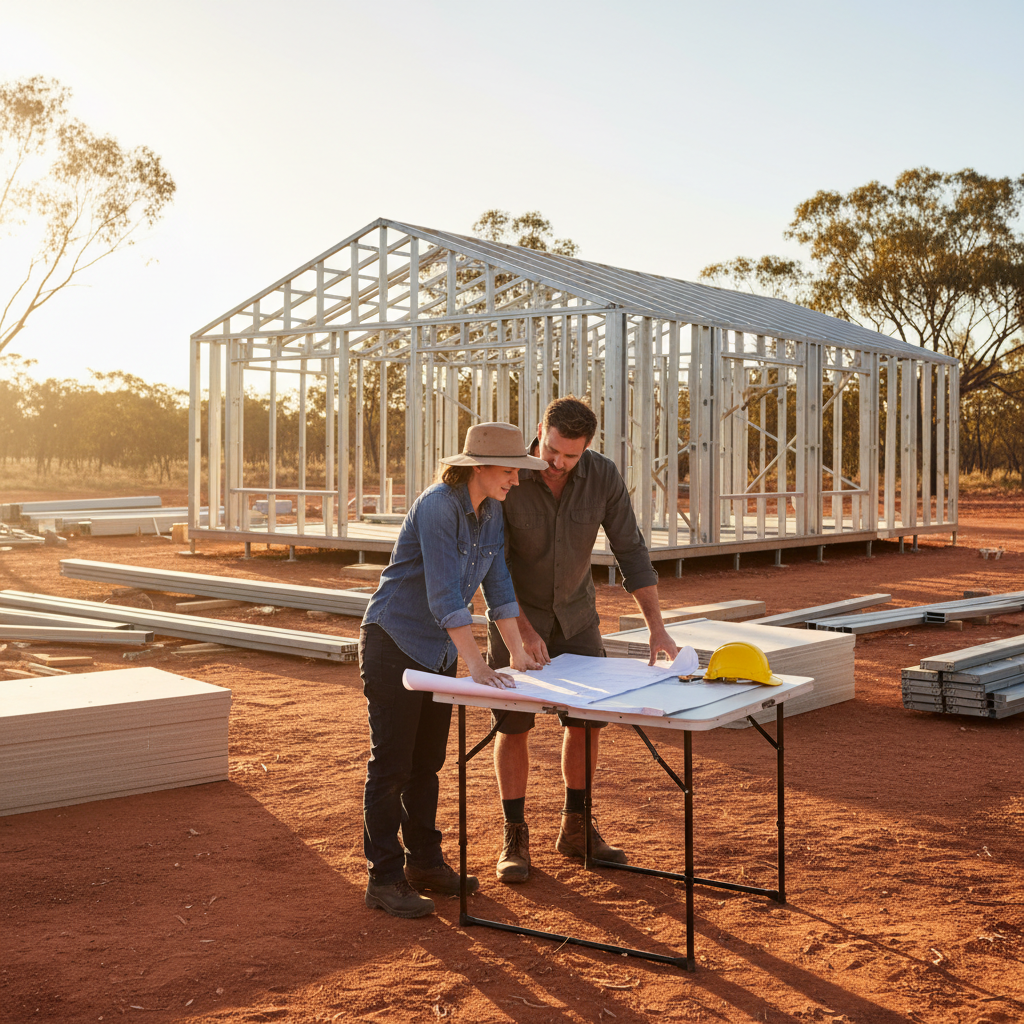
And let's talk about the precision. When we get the CAD designs ready for a TRUECORE frame, every piece is punched to the millimeter. When you're out there on the tools, putting the kit together, you'll notice how straight everything is. No warps. No bows. No knots. Timber is a natural product, and as it dries out on a dusty site in Queensland, it moves. Steel doesn't move. This means your windows won't jam and your cornices won't crack because a stud decided to do a twist three years after you moved in.
The Owner-Builder Advantage
If you're taking on the project yourself, steel frames make your life significantly easier. They're lighter than seasoned timber. You aren't going to blow your back out trying to stand a wall section up. Most of the time, two people can easily handle the assembly. Everything comes pre-drilled for your electrical and plumbing too. It makes the tradies you hire later on much happier, though they'll still find something to grumble about, I'm sure.
One thing I always tell people is to check their local council requirements for termite protection. Even with a steel frame, some councils want to see a specific management plan. Don't just assume because the frame is steel you can skip the paperwork. Sifting through council DA requirements is a pain, but it's better than a stop-work order when you're halfway through the build.
Fire, Rust, and Other Myths
I hear it all the time. "Won't a steel frame rust?" or "What about fire?" Let's set it straight. The TRUECORE steel we use has a galvanized coating that's designed for the Aussie climate. Unless you're building right on the beach where the salt spray is hitting the frame daily, rust isn't an issue. As for fire, steel is non-combustible. It won't add fuel to the fire if things go south. In high BAL (Bushfire Attack Level) areas, steel frames are almost a requirement because they don't contribute to the fuel load of the house. It won't save your curtains, but it might just keep the roof from caving in.
But it's not all rainbows. Steel can be a bit louder if you don't insulate properly. Thermal bridging is a real thing. Because steel conducts heat, you need to make sure you're using a proper thermal break between the frame and your external cladding. We include insulation and specific building wraps in our kits to handle this. If you skip the thermal break to save a few bucks, you'll feel it in your power bill when the AC is humming all summer long.
Practical Tips for the Build Site
- Check your delivery. When the truck arrives with your steel kit, have a clear, flat spot ready. You don't want your frames sitting in a gully if a storm rolls through.
- Get a decent impact driver. You'll be driving a lot of Tek screws. Don't buy the cheap knock-off brand from the bottom shelf. Your wrists will thank you.
- Keep an eye on your floor wastes. When the plumber is roughing in, make sure they haven't hacked out half a structural member. It’s easier to fix before the cladding goes on.
- Always wear gloves. Steel offcuts are sharp. I've seen more than one DIYer end their Saturday early with a trip for stitches because they weren't wearing protection.
Building a home is stressful enough without adding the fear of being eaten from the inside out. When you go with a steel frame kit, you're basically buying an insurance policy against the most destructive pest in Australia. It’s predictable. It’s straight. It’s tough. Whether you're building a small granny flat in the backyard or a four-bedroom family home out in the bush, starting with a material that pests hate is the smartest move you'll make. Just remember to keep your slab edges clear and keep an eye on things. A steel frame gives you the head start, but a good owner-builder stays vigilant.
It’s about choices. You can spend your weekends for the next thirty years looking for mud tunnels on your brickwork, or you can go fishing. I know which one I'd choose. Steel might cost a bit more upfront in some markets, but compared to the cost of a full structural rebuild after a termite infestation, it’s the cheapest investment you’ll ever make. Cheers to building something that actually lasts.