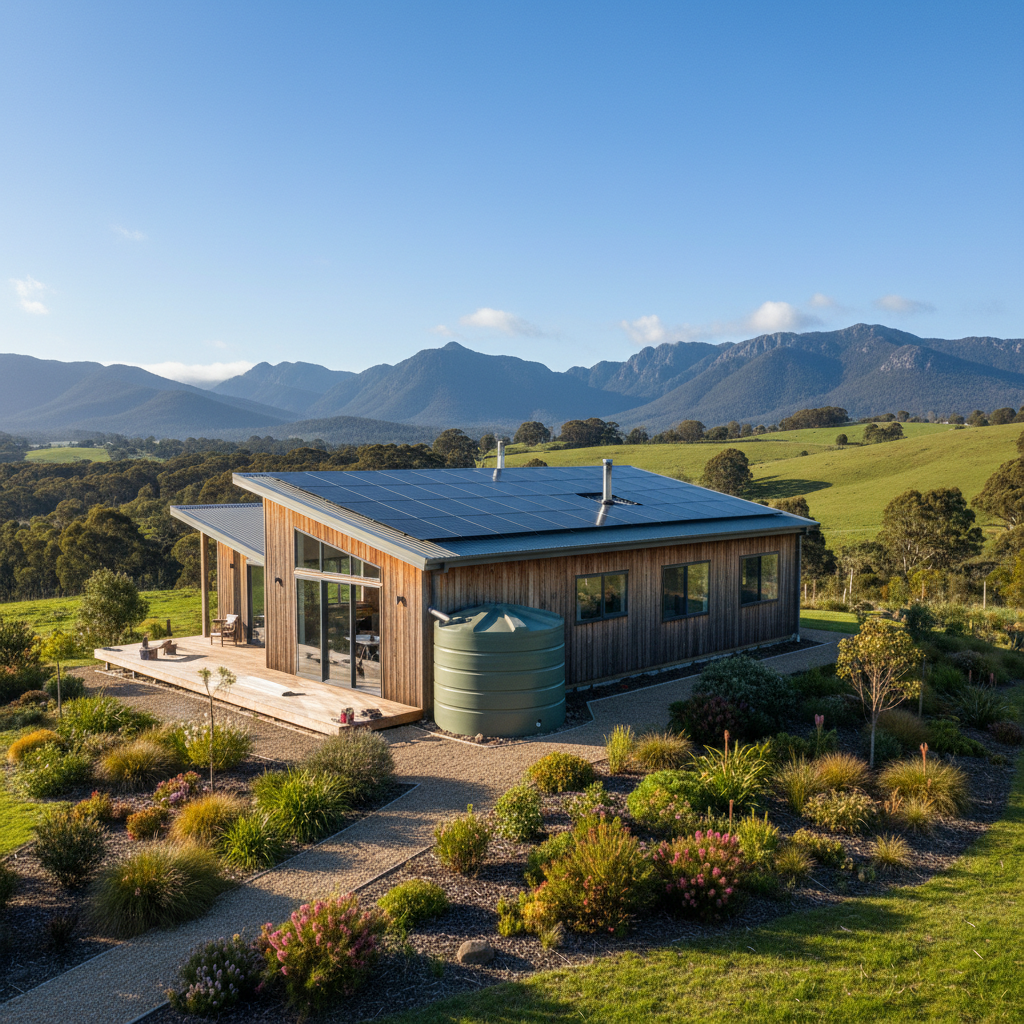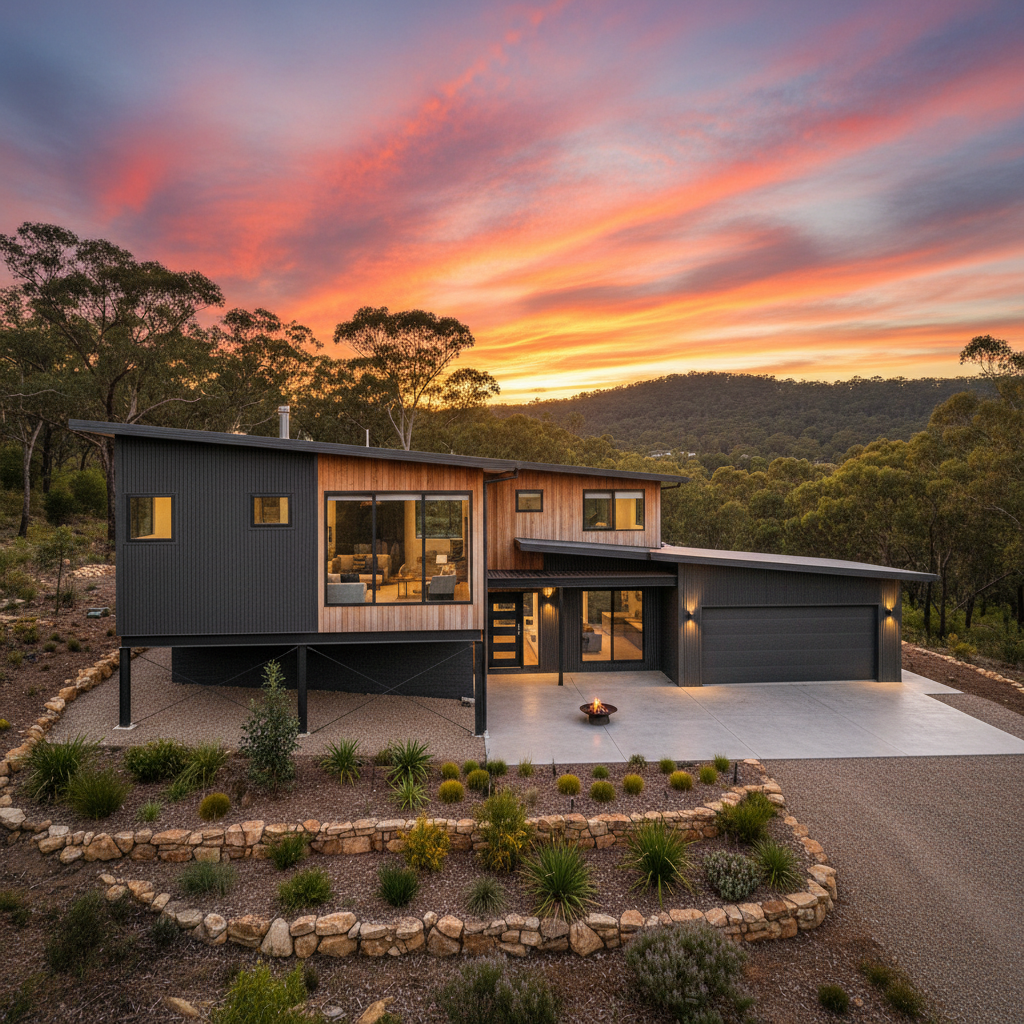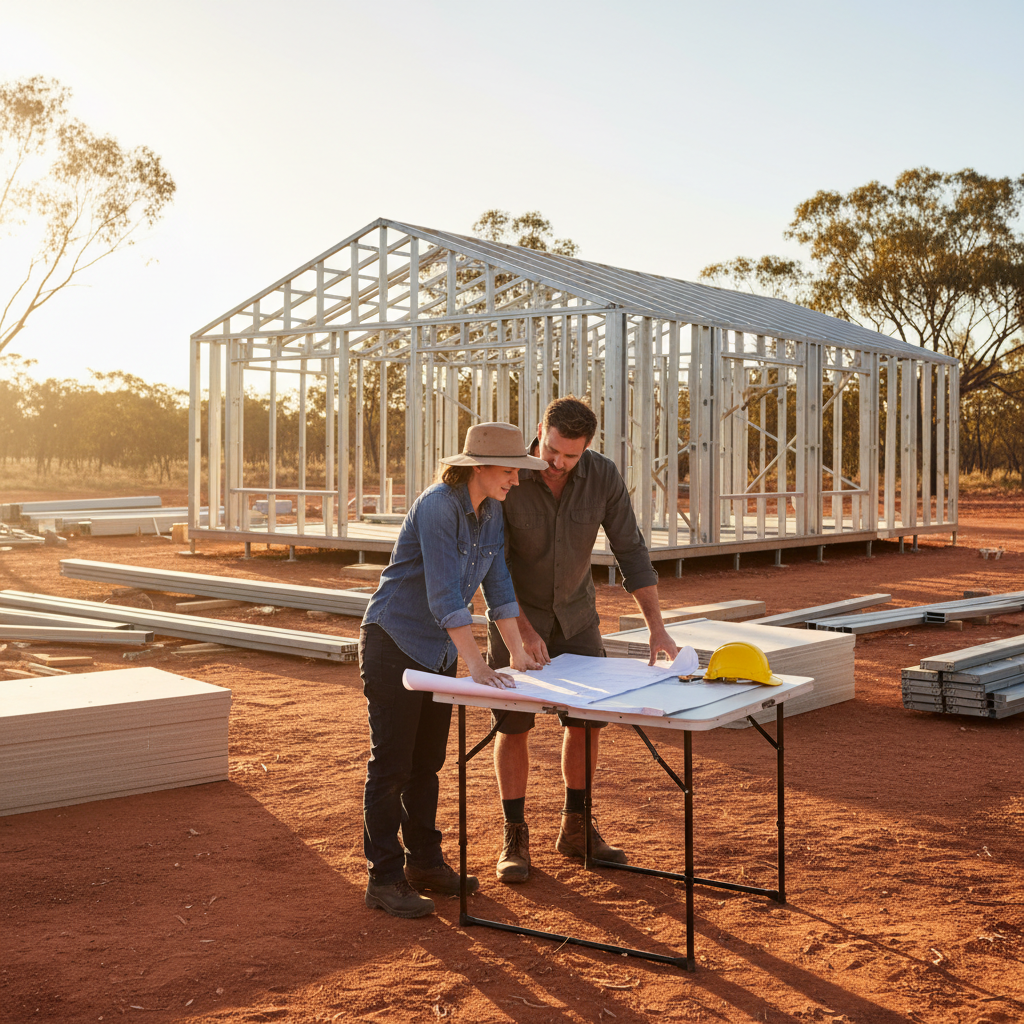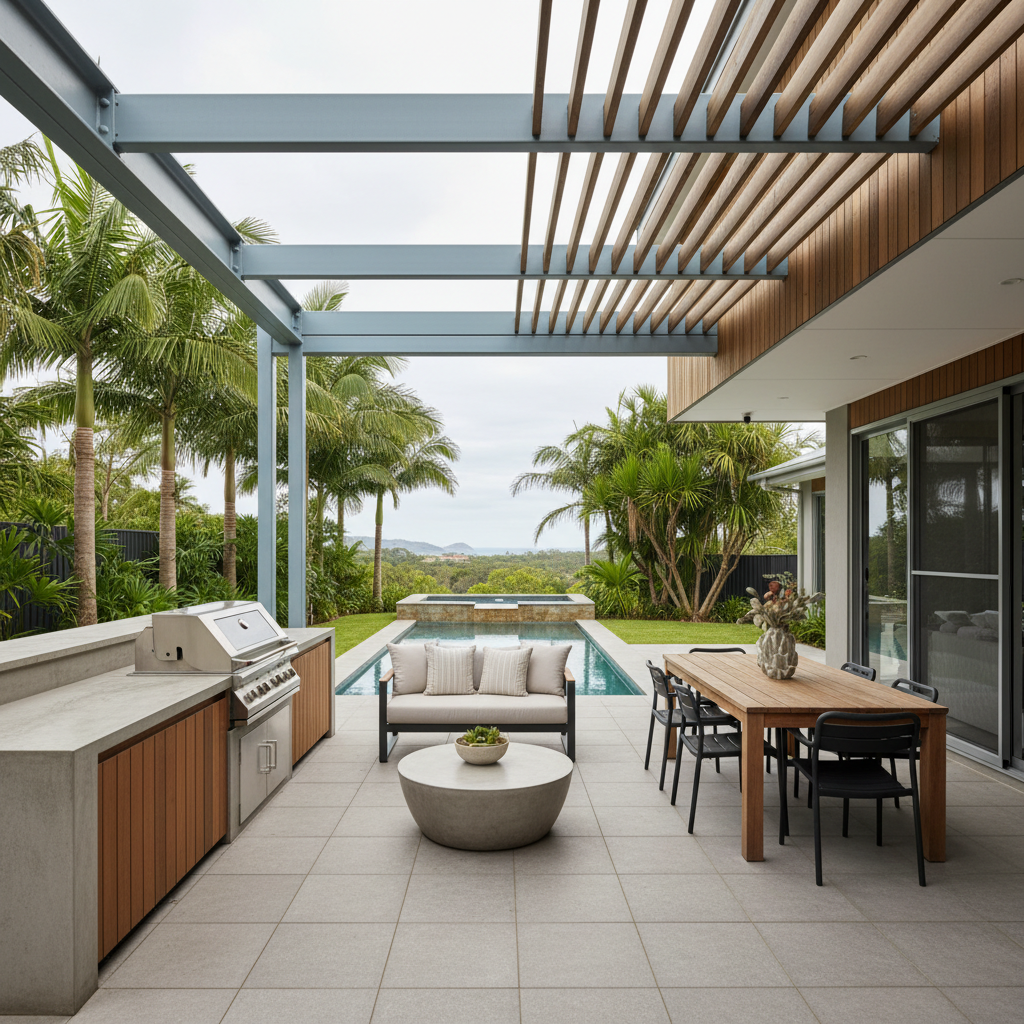
I remember standing on a ridge in the Blue Mountains back in 2019, looking at what was left of a timber-framed cottage. It wasn't much. Just a pile of white ash and a few twisted copper pipes. About fifty meters away, a shed with a steel skeleton was still standing. The cladding was warped and the windows had blown out from the heat, but the bones were straight. That's the thing about steel. It doesn't contribute fuel to the fire. It doesn't feed the beast when things go south.
The Reality of BAL Ratings and Your Kit Home
If you're looking at land anywhere near scrub, you're going to hear about Bushfire Attack Levels. BAL-12.5, BAL-29, all the way up to BAL-FZ (Flame Zone). The Council won't just let you chuck up any old shack. They want to know your place won't turn into a Roman candle the second a stray ember lands on the deck. When you build a kit home with a steel frame, especially using something like BlueScope TRUECORE steel, you're starting on the front foot. Steel is non-combustible. Simple as that. It won't ignite. It won't spread flames through the wall cavity where you can't reach them with a hose.
But don't get cocky. A steel frame isn't a magic shield. You still have to get your cladding, your glazing, and your seals right. But starting with a frame that stays rigid at temperatures where timber has already turned to charcoal? That gives you a massive advantage in meeting the requirements of AS 3959-2018. That's the Australian Standard for construction of buildings in bushfire-prone areas. It's a chunky bit of reading, but it's the bible for owner-builders in the sticks.
Precision Engineering vs. The Summer Swelter
Timber moves. It's an organic material, so it drinks up moisture when it's humid and shrinks when the sun beats down on it for three weeks straight. In a kit home, you want things to line up. You want the pre-punched holes for your electrical and plumbing to be exactly where the plan says they are. Because we use CAD software to design these frames, they come out of the factory millimetre-perfect. You aren't out there with a handsaw trying to trim a stud that warped because it sat in the rain for two days.
And let's talk about termites. If you're building in a bushfire zone, you're likely in a high-termite zone too. Those little pests love a bit of damp wood. They can't eat steel. You still need your physical barriers at the slab level, obviously, but you'll sleep better knowing the structural integrity of your roof isn't being chewed away silently over ten years. No chemical treatments needed for the frame itself. No nasties gassing off into your living room.
What's Inside Your Kit Matters
When we pack a kit, it's a system. It's not just a pile of metal. You get the TRUECORE frames, the Colorbond roofing, and the external cladding. In a bushfire scenario, that external skin is your first line of defence. Steel cladding doesn't catch fire. It reflects heat. Plus, we include insulation that's fire-rated. It's about building layers. Think of the steel frame as the skeleton and the cladding as the armour. If you're an owner-builder doing the grunt work yourself, you'll appreciate that steel stays straight. You won't be fighting wonky walls when it comes time to screw your plasterboard on. That's a win for your sanity and your spirit level.
The Technical Bits: AS 4100 and Beyond
Engineering matters. Your kit home needs to handle wind loads, particularly in open areas where bushfires are common. Steel has a high strength-to-weight ratio. This means we can achieve wider spans without needing massive, heavy columns. It makes for better open-plan living. For the nerds out there, steel structures in Australia usually fall under AS 4100 (Steel Structures) or AS/NZS 4600 (Cold-formed Steel Structures). Our designs do the heavy lifting here so you don't have to hire a private engineer to check if your roof will stay on in a gale.
One thing to watch out for is thermal bridging. Steel conducts heat faster than timber. If you're building out past Wagga or up in the Top End, you need to use thermal breaks. This breaks the path of heat moving from the hot outer cladding through the steel stud to your cool plasterboard inside. We factor this into our kit designs. We use specific insulation and spacers to make sure the house stays cool in summer and warm in winter. Don't skip this step. If you do, you'll see ghosting lines on your walls where the studs are drawing the heat in.
Practical Tips for Owner Builders Using Steel
If you've never worked with steel before, don't sweat it. It's actually easier in many ways than timber, provided you have the right tools. Here's a few things I've learned on site:
- Get a decent impact driver. You'll be driving thousands of tek screws. Don't go for the cheap $40 special from the bargain bin. Buy a trade-quality kit with a couple of 5Ah batteries.
- Magnetic bits are your best mate. Trying to hold a screw against a steel stud while you're up a ladder in the wind is a recipe for a bad afternoon.
- Wear gloves. Steel edges can be sharp, especially the offcuts. A pair of thin, grippy work gloves will save you from a dozen little nicks by lunchtime.
- Check your slab twice. Steel doesn't have much 'give'. If your slab is out of square or has a massive hump in it, the steel frame will show it up instantly. Timber can be shimmed and shaved. Steel is honest. Get that slab flat.
Another thing. Wiring. All the holes are pre-punched, which is a dream. But you must use the plastic grommets provided. If you run electrical wire directly through a steel hole, the vibration over the years can chafe the insulation and cause a short. It's a simple thing, but it's vital for safety. I've seen blokes try to skip them to save time. Don't be that bloke.
The Environmental Angle
Steel is 100% recyclable. If you have offcuts, you don't throw them in a skip for landfill. You take them to the scrap yard. In fact, most steel made today has a significant percentage of recycled content. And because it's lightweight, the trucks aren't burning as much diesel to get the kit to your site. If you're building on a sensitive site, like a hilly block in the Dandenongs or a patch of bush in Margaret River, the lighter footprint of steel frames means less heavy machinery tearing up your ground during the delivery phase.
So, is it the right choice for everyone? Probably not. If you want to carve intricate Victorian cornices into your structural members, you're looking at the wrong material. But if you want a house that won't warp, won't rot, won't get eaten by white ants, and stands a much better chance if a fire front rolls through? Steel is the only way to go. It's a modern solution for a country that's getting harsher by the year. And for an owner-builder, the certainty of knowing your frames are straight and true from day one is worth every cent. You aren't just building a house. You're building a fortress against the elements. Just make sure you get the flashing right. That's a story for another day, though.