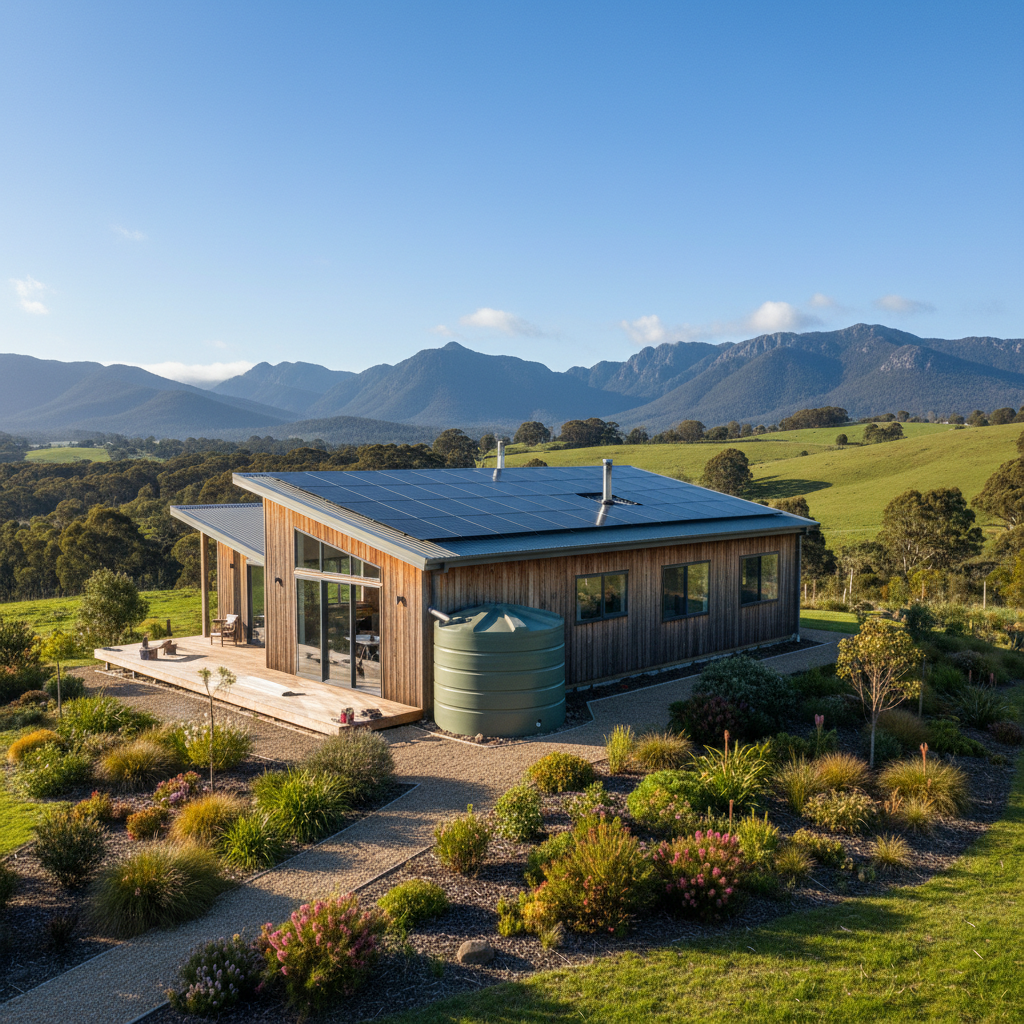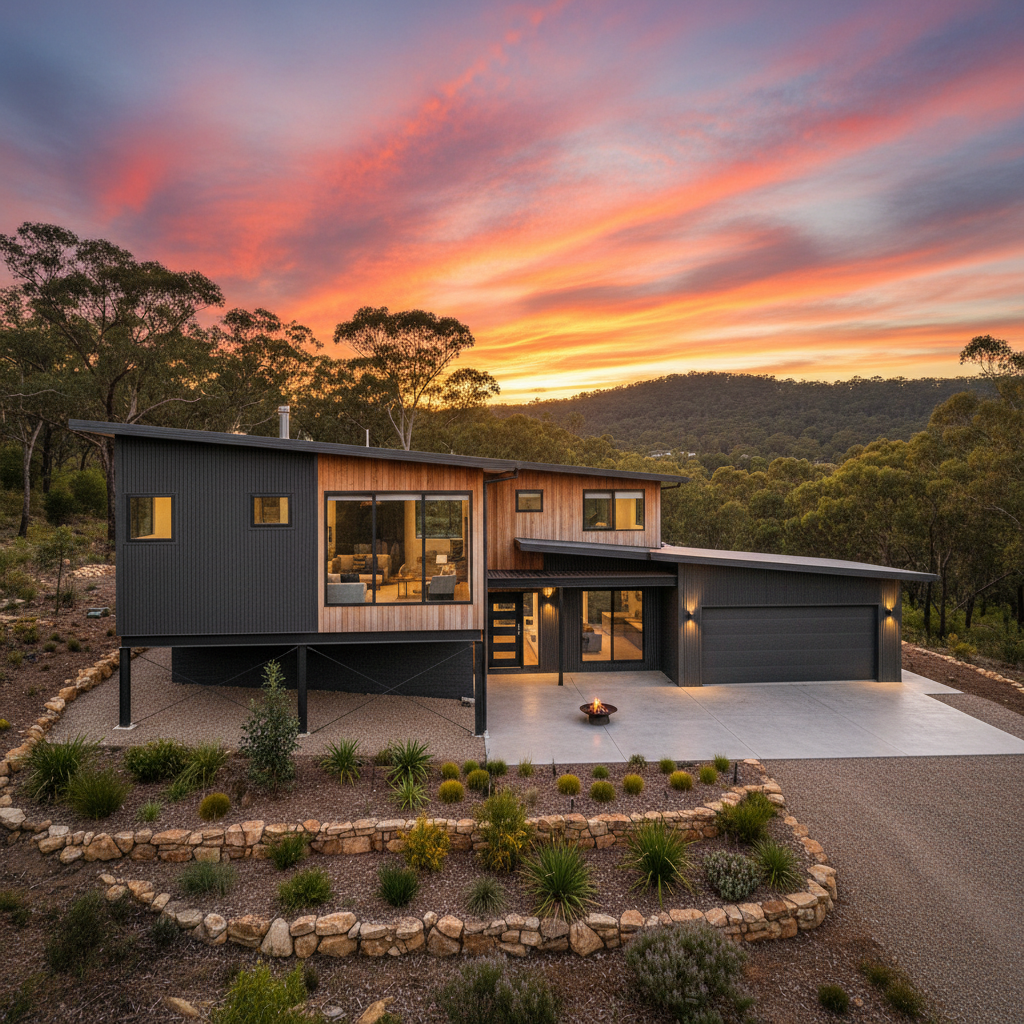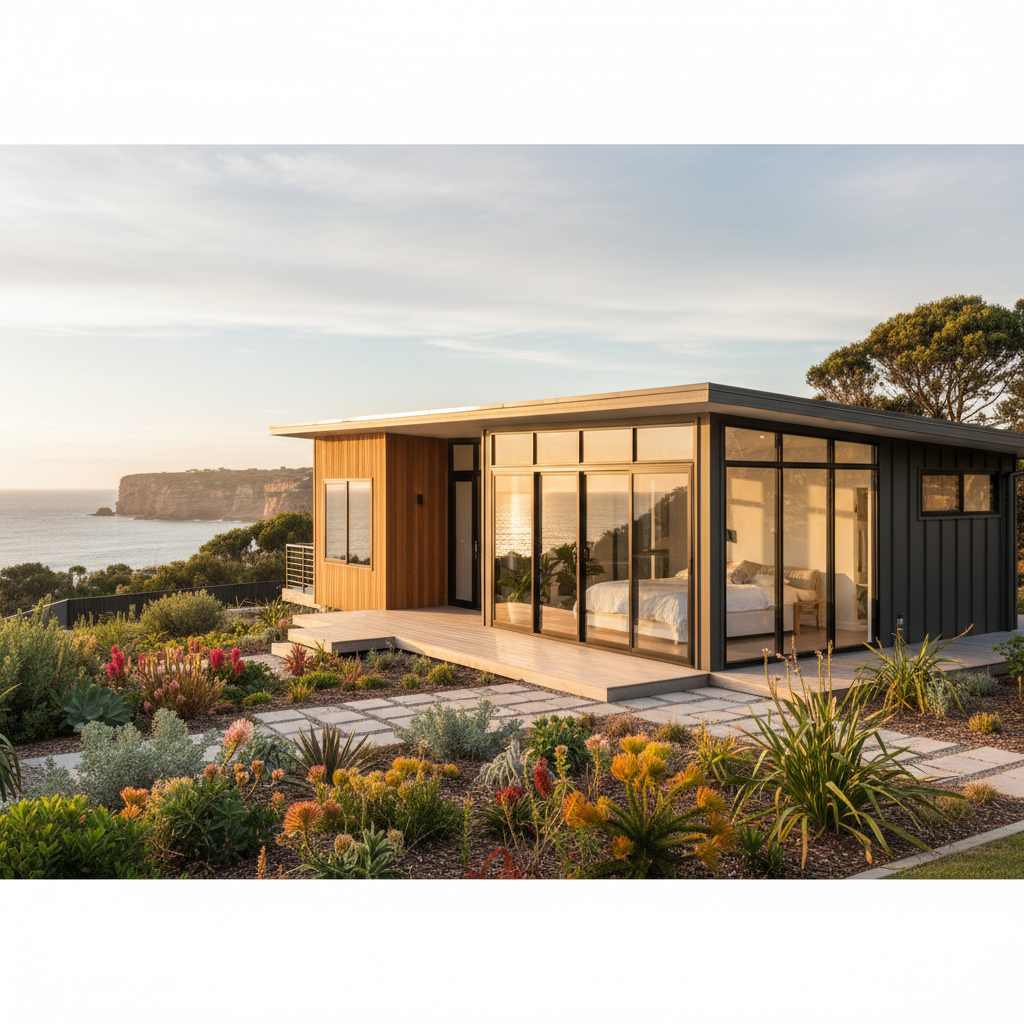
I stood on a site out near Mudgee last summer where an old shed was being pulled down. It had been there since the fifties. The guts of it were twisted, rusted, and looking pretty sorry for themselves. But as the excavator driver sorted the pile, every single scrap of that steel went into a bin headed straight for the recycler. It wasn't going to a landfill to rot or create methane. It was going back into the furnace to become something else. Maybe a new car, maybe another I-beam. That's the part of the environmental story people miss when they talk about kit homes. It isn't just about how it looks when you move in, it's about what happens sixty years later.
The Infinite Loop of BlueScope Steel
Most folks think sustainability means planting a tree. And look, trees are great. But in the Australian building industry, we have a massive waste problem. When you go with a steel frame kit home, specifically using something like TRUECORE steel, you're playing a long game. Steel is one of the few building materials that is truly 100 percent recyclable. You can melt it down and reuse it forever without it losing its lick of strength. Contrast that with treated timber. Once you soak a pine stud in copper chrome arsenic (CCA) to keep the termites from eating your loungeroom, that wood is basically toxic waste. You can't burn it safely and you certainly can't recycle it into a new house. It just sits in the ground.
Because steel is magnetic, it's dead easy to pull out of a demolition site. No manual sorting required. Just a big magnet. This makes it a darling of the circular economy. We're talking about a closed-loop system where the material stays in use basically indefinitely. If you're building a kit home today, the steel in your walls might have been a fridge in the eighties. That's not just some feel-good marketing fluff. It's a logistical reality of how BlueScope operates their Port Kembla plant. They use a mix of virgin iron ore and recycled scrap because it makes sense for the planet and the bottom line. Plus, it's Aussie-made, so you aren't burning thousands of litres of heavy fuel oil shipping it from the other side of the planet.
Precision Engineering Equals Zero Site Waste
Walk onto a traditional timber build site and it looks like a confetti factory. There are offcuts everywhere. Why? Because the chippie is out there with a drop saw, trimming every stud and plate to fit because wood bows, warps, and comes in slightly different thicknesses. It's a mess. And you, the owner-builder, usually end up paying for a four-cubic-metre skip just to haul those offcuts away. It's a waste of wood and a waste of your cash.
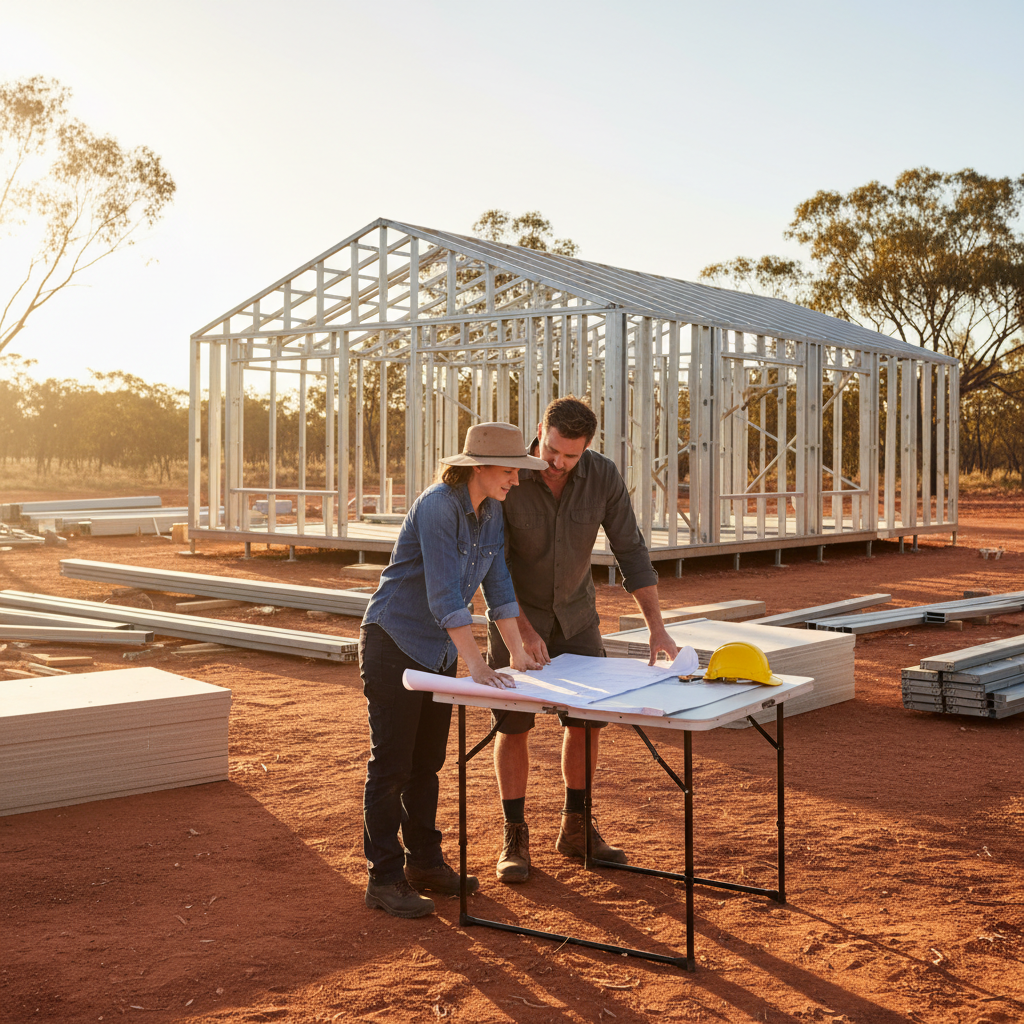
Kit homes work differently. We use computer-aided design (CAD) to calculate every single member. The steel is roll-formed to the exact millimetre. If a wall is 2400mm high, the stud is 2400mm. There's no trimming. No waste. When the pallet arrives on your site, there's basically zero rubbish. Maybe some plastic strapping and a bit of cardboard. That's it. For someone managing their own project, this is a godsend. It's cleaner, safer, and means you aren't spending your Saturday morning at the tip. It's built on the factory floor following the NCC Volume 2 requirements for residential structures, ensuring that every piece of light gauge steel is used efficiently. Every gram counts.
Termites and Toxic Chemicals
This is a big one for the environment that people usually ignore. If you build with timber in most parts of Australia, you're in a constant war with termites. To win that war, you often have to pump the soil around your slab full of chemicals. Or you use timber that's been pressure-treated with stuff you wouldn't want your kids teething on. Steel is naturally termite-proof. It's not a food source. You don't need those heavy-duty chemical barriers or ongoing poison top-ups every few years. You just put the frame up and forget about it. That keeps the local water table a bit cleaner and saves you a packet on pest inspections over the years. So, it's a win for the creek at the back of your block and a win for your wallet.
Energy Efficiency and the Thermal Bridge Myth
People love to tell me that steel frames make a house cold. They talk about thermal bridging like it's some kind of unsolvable curse. Wrong. In fact, if you're smart with your kit home design, a steel frame can be a high-performance machine. The trick is a thermal break. We include insulation and specific cladding layers that stop the heat from transferring through the steel. It's actually easier to get a tight, predictable seal with steel because it doesn't move. Timber shrinks and expands. It twists as it dries out. This creates gaps in your building envelope where air leaks out. A steel frame stays dead straight for its entire life. Because it's dimensionally stable, your windows don't stick and your seals stay tight. Less air leakage means your air con isn't working double time during a 40-degree January arvo. So your electricity bill stays down and your carbon footprint shrinks.
And let's chat about bushfires. If you're building in a BAL-rated zone, steel is a no-brainer. It doesn't add fuel to the fire. It gives you a much better shot at meeting those strict Australian Standards without having to spend a fortune on specialized timber treatments or chunky hardwoods that are getting harder to find anyway. We use steel for the roof, the cladding, and the frame. It's a non-combustible shield.
The Logistics of Light Weight
Here's something I reckoned with on a job up in the Sunshine Coast hinterland. The site was steep and the access was rubbish. If we'd been hauling massive hardwood beams in there, we would've needed a huge crane and multiple trucks, probably tearing up the driveway and knocking over half the wattles on the way in. Steel frames are incredibly light for their strength. You can often carry a whole wall section with two people. This means less fuel for transport and less heavy machinery footprint on your site. You aren't compacting the soil as much or clearing massive areas just to fit a crane in. It's a lighter touch on the land, which matters if you've bought a block because you actually like the trees on it.
Owner Builder Tips for the Green-Minded
- Orientation: Doesn't matter if your frame is made of gold; if your big windows face west, you'll bake. Get your kit oriented so you're catching the winter sun and shying away from the summer heat.
- Insulation: Don't skimp here. The kit includes the basics, but if you're in the Snowy Mountains or the Top End, talk to us about beefing it up. A well-insulated steel frame is an absolute fortress against the elements.
- Roofing: Choose a lighter Colorbond colour like Surfmist or Shale Grey. It reflects the sun and keeps your roof cavity significantly cooler than the darker shades.
- The Slab: Think about using waffle pods or recycled aggregate in your concrete to keep the eco-theme going from the ground up.
At the end of the day, building a home is a massive consumption of resources. There's no way around that. But choosing a steel frame means you're putting your money into a material that has a life beyond your residency. It's tough, it's straight, and it's part of a global recycling loop that actually works. Most of the blokes I know who've been on the tools for thirty years are switching to steel for their own places. They've seen the rot, they've seen the termite damage, and they've seen the waste on timber sites. They aren't doing it because they're tree-huggers. They're doing it because steel is the smarter, cleaner way to build a house that lasts. And if it happens to be better for the Aussie bush while they're at it? No dramas.