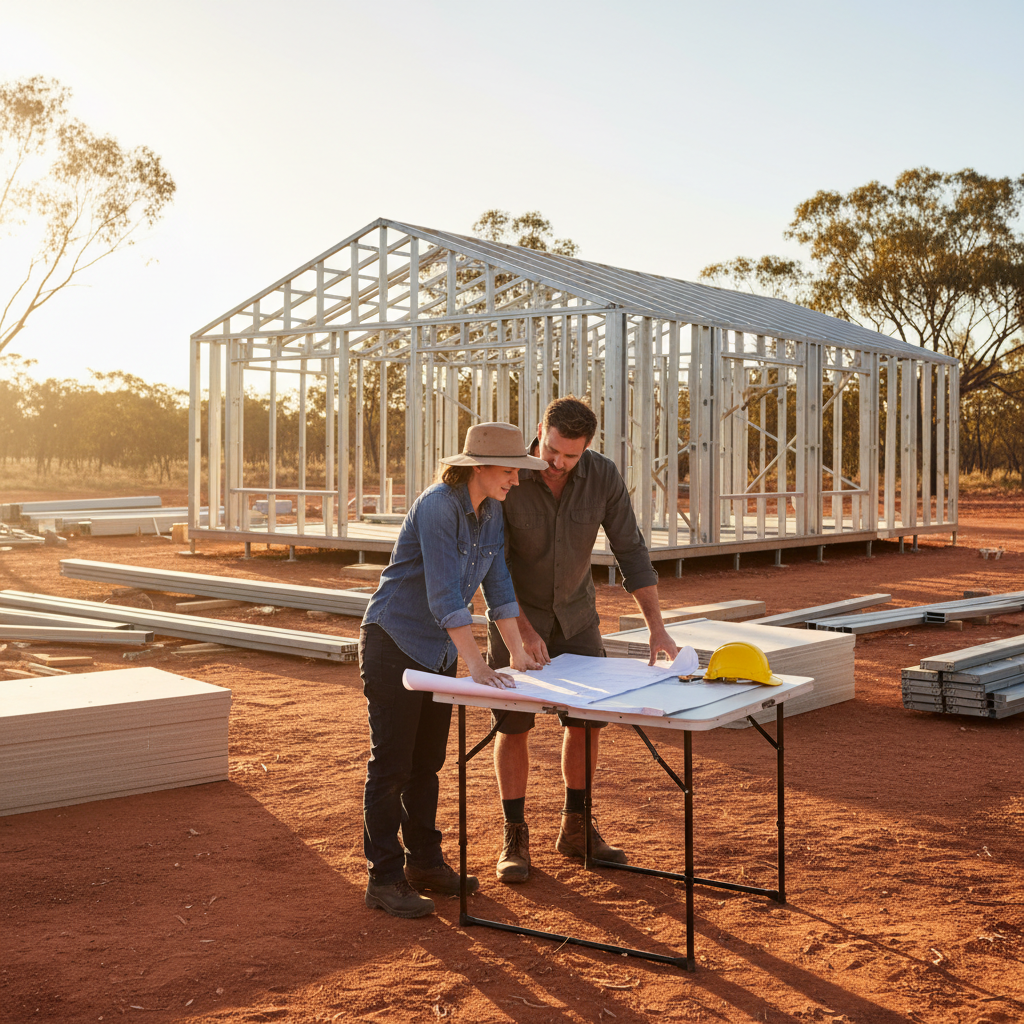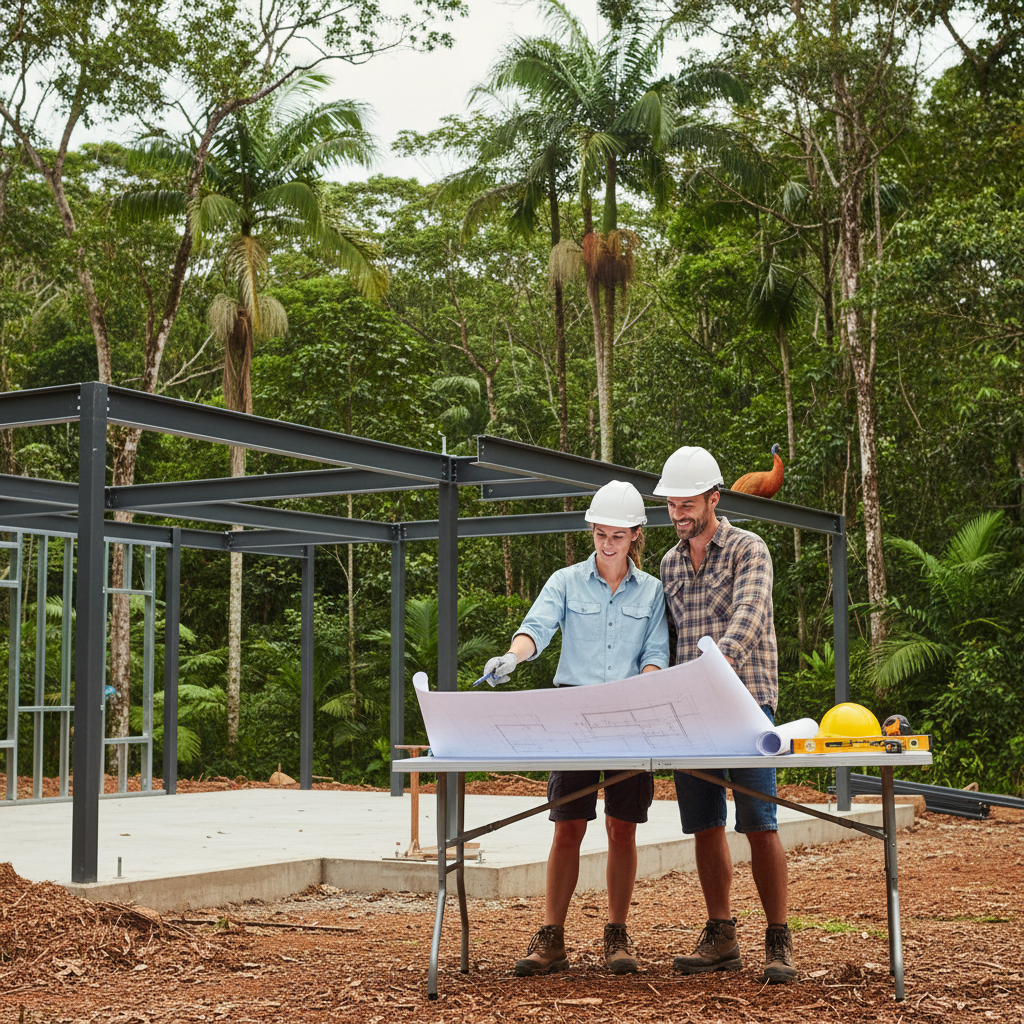
You're sitting at the kitchen table with a stack of A3 papers that smell like fresh toner and ambition. Most people look at a floor plan and start placing their couch in their head. They think about where the TV goes or if the fridge is too far from the sink. But if you're going down the owner builder path, looking at a kit home plan solely for the furniture layout is a recipe for a massive headache once the truck arrives on site. You need to look past the pretty rooms and see the skeletons, the tolerances, and the structural reality of what you're actually buying.
The Plan View is Only Half the Story
Most folks focus on the floor plan because it's easy to understand. It's 2D. It makes sense. But the real meat of a kit home is hidden in the sections and elevations. When we send out a set of plans for a house using TRUECORE steel, we aren't just showing you where the walls are. We're showing you the height of the ceiling joists, the pitch of the roof, and how that steel frame sits on your slab.
Take note of the slab edge details. This is where most first-timers trip up. A kit home is manufactured to the millimetre. If your concreter had too many meat pies and got sloppy with the formwork, your steel frames won't sit right. You'll be out there with a grinder or a jackhammer trying to fix a mistake that could've been avoided if you'd understood the slab layout drawing properly. Check the rebate details. Most kits require a specific drop for wet areas or sliding door tracks. If that's not in the concrete, your floor levels will be a mess. It's not just a drawing. It's a set of rules.
Understanding the Specification List
The spec list is your bible. It tells you exactly what's in the shipping container and, more importantly, what isn't. I've seen blokes get furious because there's no kitchen sink in the kit, even though the spec list clearly stated it was 'supply of frames, roof, cladding, and windows only'. Don't be that guy. Read every line.
In our kits, we specify Bluescope Steel. We use it because it's straight. It doesn't warp or twist like some of the cheap timber you get from the local yard these days. But you need to look at the coatings and the gauges. Is the cladding Colorbond? What's the thickness? If you're building near the coast, say within 500 metres of the breaking surf in places like Glenelg or the Gold Coast, you need to check if the specs meet the corrosion requirements for those salt-heavy winds. Standard Zincalume might not cut it. You might need Ultra grade. The plans will usually have a note about this, buried in the fine print. Find it.
The Engineering Behind the Steel
Every kit home plan should come with an engineering certificate, specifically tailored to your site's wind speed. This is usually expressed as an N-rating or a C-rating if you're in a cyclone zone. If you're up in Townsville, your plans are going to look a lot different than a shed-style home going up in the sheltered hills of the Yarra Valley. The engineering drawings will show you the tie-down points. Huge bolts. Chemical anchors. Bracing straps. This isn't optional stuff. The building inspector will crawl all over this, so you better know where every single strap is supposed to go before the cladding goes on. So many owner builders treat bracing as a suggestion. It's not. It's what keeps your roof from ending up in the neighbour's yard when a big southerly buster blows through.
A Note on Non-Kit Alternatives
People often get kit homes mixed up with other types of off-site construction. You'll hear people talking about those houses that arrive on the back of a wide-load truck in two or three big chunks. Those aren't what we do. A kit home is a logistics puzzle. It arrives as a pack of components. You, or your chippy, will be standing those walls up one by one. This gives you way more control. You aren't limited by what can fit under a highway overpass. But it means you need to be better at reading the assembly instructions. Each wall frame is numbered. Those numbers correspond to the layout plan. It's like a giant Meccano set for adults. If you misread the layout and put Wall Frame A12 where A21 should be, you're going to have a very bad Tuesday.
The Importance of BAL Ratings
Living in Australia means dealing with fire. Whether you're in the scrub in the Blue Mountains or just on a bushy block in the fringes of Perth, your plans will mention a Bushfire Attack Level (BAL). This dictates the specs of your windows and doors. If your plans say BAL-29 or BAL-40, your windows will likely be toughened glass with specific seals. You can't just swap them out for a cheap set you found on Facebook Marketplace. The kit is designed as a system. The steel frames are great for fire prone areas because, well, steel doesn't burn. But the gaps around the windows and the type of sarking used under the roof are just as vital. Check the 'Schedule of Finishes' on your plans. It'll list the fire resistance of the materials supplied. If it doesn't match your council's DA requirements, stop right there and get it sorted.
Windows, Doors, and Flashing
Look at the window schedule on your drawings. It won't just say 'Window'. It'll say '1815 A' or something similar. That’s 1800mm high by 1500mm wide, and 'A' usually stands for Awning. If you want a sliding window instead, you need to flag that before the frames are manufactured. Once the steel is punched and the headers are welded, changing a window size is a huge pain.
And let's talk about flashing. It's the most boring part of a kit home but the most important. It's what stops the rain from getting inside. Your plans should show details for barge capping, ridge capping, and corner moulds. If you don't understand how the cladding laps over the flashing, you're going to end up with a damp living room. We include these in the kit because we want the house to be watertight, but the actual installation is on you. If the drawing looks like a mess of lines, ask for a 3D isometric view. Most modern CAD software can churn one out, and it makes seeing the 'overlap' much easier for the DIY braver souls among us.
Practical Tips for the Site
- Keep your plans in a waterproof sleeve. A wet plan is a useless plan, and you'll be looking at it in the rain at some point.
- Use a high-vis highlighter to mark off every wall frame as you stand it. It gives you a sense of progress and stops you from doubling up on sections.
- Always verify the slab dimensions yourself before the truck arrives. Don't just trust the concreter. Get your 30m tape out and check the diagonals. If they aren't equal, your house isn't square.
- Check the 'Noggings' in your steel frames. If you know you're hanging a massive 85-inch TV or a heavy stone vanity, make sure there's extra steel in the wall at that point. You can't just screw into the plasterboard and hope for the best.
Building a home is arguably the most stressful thing you'll ever do. It's loud, it's dusty, and it's expensive. But there is a massive sense of pride in standing back and looking at a finished house that arrived in a pile of steel and cladding. Just make sure you've spent more time looking at the plans than you have looking at the paint swatches. The pretty stuff doesn't matter if the structure isn't sussed out from day one. Get the engineering right, follow the specs, and don't be afraid to pull the tape measure out one more time just to be sure.