Stop looking at the glossy brochures for a second.
Everything looks easy in a 3D render. But the reality of building your own kit home in Australia starts with mud on your boots and a stack of paperwork tucked under your arm that's thicker than a phone book used to be. You've got your steel frames on order, you've seen the Truecore logo, and you reckon you're ready to go. But before that delivery truck rolls up your driveway in Dubbo or the Dandenongs, there is a mountain of prep work that stops most people dead in their tracks.
Being an owner builder isn't just about swinging a hammer or telling a sparky where the power points go. It's about project management. If you can't coordinate a site toilet delivery, you've got no business trying to coordinate a roof install. Let's get into the weeds of what actually needs to happen to get your kit from a pile of steel and cladding into a place you can actually live in.
The Red Tape Minefield
Your first stop isn't Bunnings. It's your local council or a private certifier. Because if the paper isn't right, the build doesn't exist. You'll need an Owner Builder permit. In states like NSW or QLD, this usually involves a short course. Don't skip the fine print here. They'll teach you about site safety and your legal obligations. It's dry. It's boring. Do it anyway.
You need your Development Application (DA) or Complying Development Certificate (CDC) sorted. This is where most people lose their cool. Council might ask for a BAL (Bushfire Attack Level) rating if you're building near scrub. If you're in a BAL-40 or BAL-FZ zone, those standard windows in your kit might need an upgrade to toughened glass or shutters. Check this before you sign off on the kit manufacture. Changing window specs after the frames are cut is a nightmare you don't want.
Site Prep and the Slab
A kit home is only as good as the slab it sits on. Steel frames are precise. If your slab is out by 20mm, those pre-punched holes for your plumbing and electrical aren't going to line up. Get a decent Concreter. Not the cheapest bloke on Facebook, but someone who knows how to read a set of engineering plans for a raft slab or a waffle pod.
Plus, you need to think about access. A semi-trailer carrying your BlueScope steel frames needs a solid, flat place to offload. If your block is a boggy mess after a week of rain in Gippsland, that truck driver is going to look at your driveway, laugh, and drive away. You'll be left paying for a redelivery. Get your temporary gravel driveway in early. It saves your boots getting coated in clay and keeps the delivery drivers happy.
The Arrival: Inventory is Everything
When the kit arrives, it's Christmas morning for grown-ups. But instead of toys, you've got packs of wall frames, trusses, rolls of insulation, and stacks of Colorbond cladding. Do not just chuck it all in a pile. Stop. Get your manifest. Tick every single item off as it comes off the truck. If a box of screws or a flashing is missing, you want to know now, not three weeks later on a Saturday afternoon when you're mid-roof and the shops are shut.
Steel frames are light, which is great for your back, but they can catch the wind like a sail. If you're building on the coast or an exposed ridge, tie your packs down. Use heavy duty tarps. Keep your timber reveals and doors out of the weather. Steel doesn't warp, but the MDF liners on your windows sure will if they get a soaking.
The Frame Stage: Where the Shape Happens
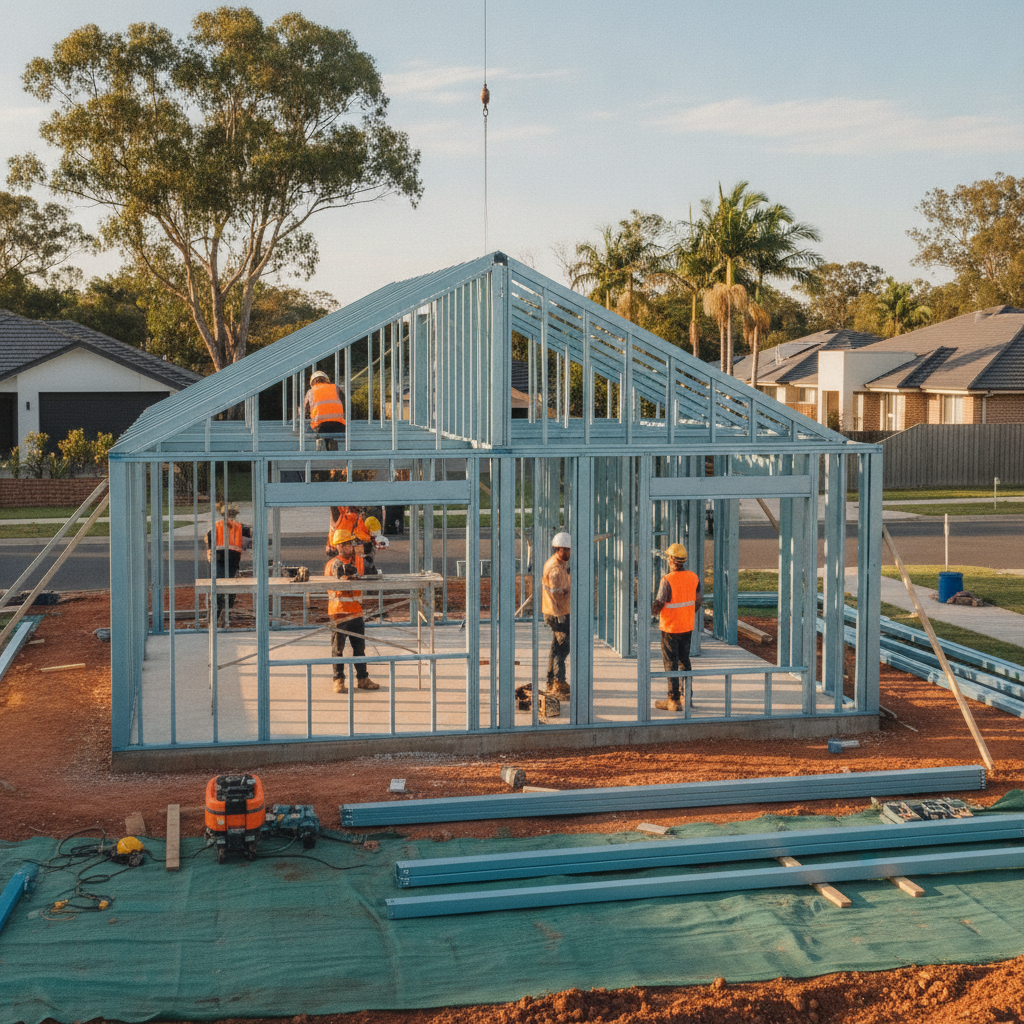
This is the fun bit. Following the layout plans is like the world's biggest Meccano set. Because we use TRUECORE steel, the frames come pre-punched and labelled. It's logical. But you still need a level. A good 1800mm spirit level and a laser level will be your best mates here. Stand your corner's first. Brace them. Then fill in the gaps.
One thing people forget? Noggins. If you're planning on hanging a massive 85-inch telly or a heavy vanity in the bathroom, talk to the designer about extra noggins in the frame before it hits the factory floor. Sure, you can tech-screw in some timber blocking later, but it's easier when the steel is being fabricated.
The 'Big Four' Trades
As an owner builder, you aren't doing the plumbing or the electrical unless you're licensed. It's illegal and it'll void your insurance. You need to find your 'Big Four':
1. The Plumber: Needs to do the 'rough-in' before the slab is poured and again before the walls are lined.
2. The Electrician: Needs to pull cables through those pre-punched holes in the steel frames before the insulation goes in.
3. The Carpenter: Even if you're doing the frames yourself, you might want a pro for the tricky bits of the roof or the internal fit-out.
4. The Plasterer: A bad plasterer will make even the straightest steel frame look like a dog's breakfast.
Pro tip: Pay your trades on time. If you get a reputation for being a slow payer, word gets around the local hardware store and suddenly no one is available to help you finish the job.
Lock-up and Lining
Once the roof is on and the windows are in, you're at 'lock-up'. This is a huge milestone. It's also when the work doubles. You've got to get your insulation batts in. Don't skimp here. Australian summers are brutal and steel conducts heat. Use the right R-value for your climate zone as per the BCA (Building Code of Australia) requirements.
When the plasterboards go up, the house finally feels like a home. But remember, once those walls are closed, they're closed. Take photos of every single wall before the plaster goes on. You'll thank me in five years when you need to find a stud to hang a picture or figure out where a water pipe runs.
The Finish Line
The last 5 percent of the build takes 50 percent of the patience. Skirtings, architraves, painting, tiled splashbacks. This is where the DIY fatigue sets in. You'll be tempted to leave the pantry without a door for six months. Don't do it. Push through.
Your final checklist includes getting your certificates of compliance from your plumber and sparky. You'll need these for the Occupation Certificate (OC). Without an OC, you can't technically live there, and your insurance might be worthless. It's the final hurdle. It feels like more red tape, but it's the piece of paper that turns your construction site into a legal residence.
Building a kit home is a massive undertaking. It's stressful, you'll get sore hands, and you'll probably have an argument or two with your partner over tile colours. But when you sit on that deck on a Friday arvo with a cold drink, looking at a house you actually put together, there's no better feeling in the world. Just keep your level handy and your paperwork organized.