Last Tuesday night at 11pm, there you were again. Pinching and zooming on floor plans while the kettle boiled for the third time, trying to figure out if a 1200mm wide hallway is actually enough space for two kids and a labrador to pass each other without an incident. It starts to feel like every plan looks the same after a while. You see a three-bedroom rectangle and think, yeah, that'll do. But it won't. Not if you haven't thought about how the Western Australian sun is going to hammer that master bedroom wall or where the hell you're going to put the vacuum cleaner.
The Trap of the 'Standard' Plan
Most people looking into kit homes Australia wide start with the base models. There's nothing wrong with a standard design, mind you. These plans exist because they're efficient to manufacture and they work for a lot of blocks. But your life isn't a standard template. If you're building a kit home, you're likely doing it because you want a bit of control over the process. So, why settle for a floor plan that forces you to walk through the lounge room every time you need to pee?
Think about the flow. I call it the 'Grocery Run' test. Imagine you've just pulled up in the driveway after a massive shop at Coles. It's raining. You've got three heavy bags in each hand. In your current plan, how many doors do you have to kick open and how many carpeted rooms do you have to trek through before you hit the kitchen bench? If the answer involves more than two turns and a narrow corridor, chuck that plan in the bin or move the kitchen closer to the garage entry. Simple as that.
Site Orientation Always Wins
I see this all the time with owner-builders. They fall in love with a specific layout in a catalogue, buy it, and then plonk it on their block without looking at where the sun actually sits. In Australia, we've got to be smarter than that. If you put your main living areas on the south side of the house, you're going to be living in a dark, freezing cave half the year. Because the sun stays north, you want those big windows and communal spaces facing that way.
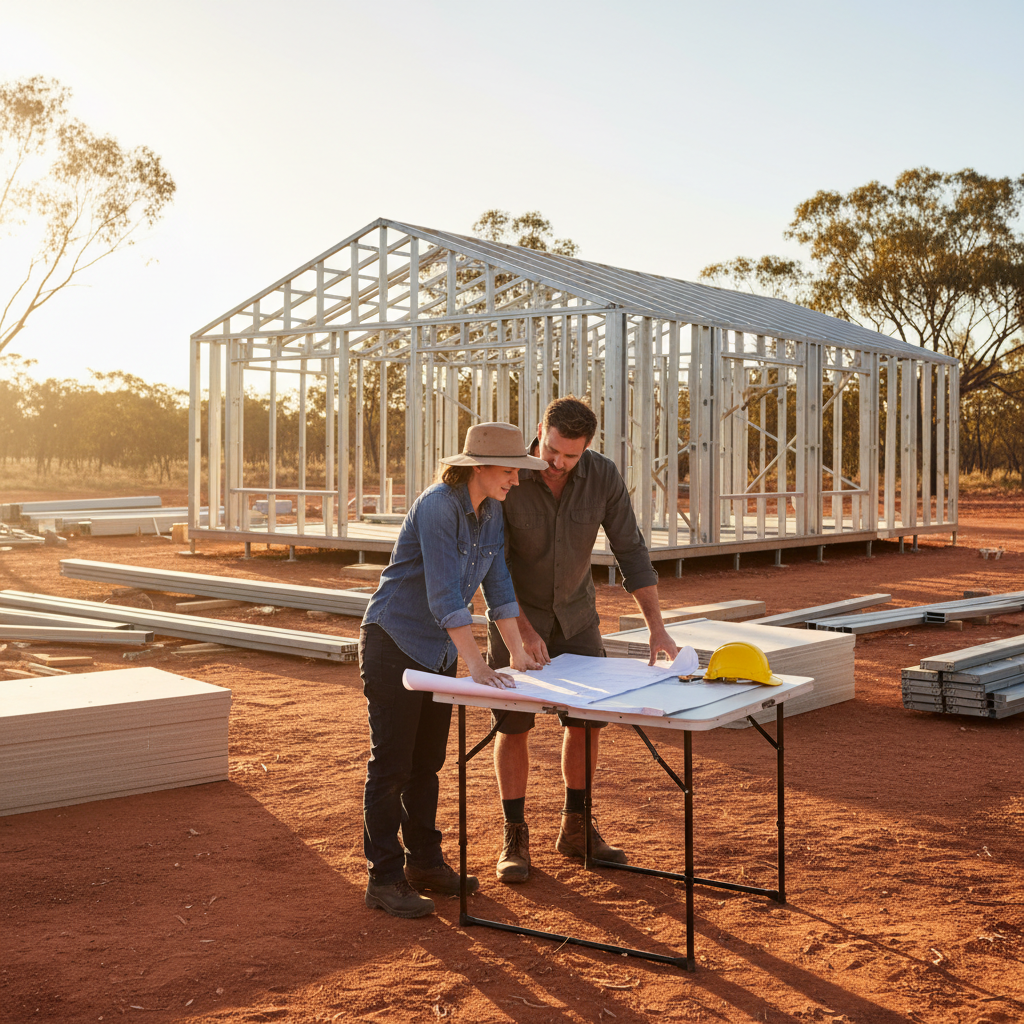
And don't get me started on the west. Western sun in a Queensland summer is a different beast. If you put your main bedroom on the western wall without massive eaves or a deep veranda, you'll be trying to sleep in an oven until 10pm every night. When you're looking at kit home designs, check if the supplier can mirror the plan. Sometimes just flipping the layout makes a bad plan perfect for your specific dirt. We use BlueScope steel frames, specifically the TRUECORE brand, which gives us heaps of flexibility with spans. This means you can often have those big, open living areas without needing internal load-bearing walls exactly where you don't want them.
The Mudroom: An Underrated Hero
If you're building on a rural block or even just a dusty new estate in the suburbs, you need a mudroom. Or at least a laundry with external access that isn't tucked away in a dark corner. You don't want the kids dragging red dirt or grass clippings through the main living area. A good kit home plan should allow for a 'dirty entry'. A place where boots stay, coats hang, and the dog can dry off. It sounds like a luxury, but when you're the one cleaning the floors every Saturday, you'll reckon it's the best decision you ever made.
Zoning for Sanity
Open plan living is great for Friday night drinks, but it sucks when one person wants to watch the footy and another is trying to finish some paperwork or, heaven forbid, sleep. This is where 'zoning' comes in. Try to find a plan that separates the master bedroom from the kids' or guest bedrooms. The 'Parental Retreat' isn't just a fancy marketing term; it's a survival strategy. Putting the kitchen and living area as a buffer between the two sleeping zones is the way to go.
Also, look at the placement of the bathroom. If the only way for guests to get to the toilet is by walking past your messy bedroom, you're going to hate it. Small details like the swing direction of a door can change the whole feel of a room. Make sure the bathroom door doesn't open directly onto the dining table. Nobody wants to hear the toilet flush while they're eating their steak.
Tech Specs and Reality Checks
Since we're talking about steel frame kits, keep in mind how you're going to fit it out later. Steel is brilliant for termites and it stays dead straight, which your plasterer will love. But, if you're planning on hanging a massive 85-inch telly or heavy floating shelves, you need to know where your noggins are. When you're looking at floor plans, think about furniture placement early. Where does the couch go? Is there a power point there? If you've got a massive window taking up the whole wall, where does the TV sit? Plan for the furniture you actually own, not some minimalist stuff you saw in a magazine.
The Owner Builder Mindset
When you're choosing a plan for a kit home, you've got to remember that you're the one managing the trades. A plan with 50 different corners and complex roof lines is going to cost you a fortune in labor and materials. Every extra corner is another stump, another join in the roofing, and more flashing. If you keep the footprint relatively simple, you'll save heaps on your slab and framing costs without sacrificing the internal feel.
Go for a design that uses standard glass sizes where possible too. Custom windows are a quick way to blow a hole in your savings. Most kit suppliers include standard windows and doors in the package, so stick to those unless you've got a really good reason to deviate. The beauty of these kits is that the frames, roofing, and cladding all arrive ready to go. You want the assembly to be as straightforward as possible so you can get to lock-up stage without losing your mind.
Storage Isn't an Afterthought
Most kit home plans are chronically short on storage. They'll give you a tiny linen cupboard and call it a day. Don't fall for it. You need a place for the Christmas tree, the camping gear, the spare blankets, and the ten years' worth of tax receipts you're too scared to throw out. If the plan you like is a bit tight, see if you can steal 600mm from a large bedroom to create a reach-in wardrobe or a walk-in pantry. A walk-in pantry is a game-changer for keeping the kitchen looking clean. Plus, it's a great spot to hide the toaster and the kettle so they aren't cluttering up your benches.
Final Walkthrough (In Your Head)
Before you sign off on a kit, take the plan and a pack of highlighters. Trace your path from the bed to the coffee machine. Trace the path from the shower to the wardrobe. If you're constantly crossing paths or bumping into imaginary furniture, the layout isn't right. Builders and designers can get caught up in the aesthetics, but you're the one who has to live there.
Check the NCC Volume 2 requirements for room heights and ventilation if you're making big changes yourself, but usually, the kit provider has sussed out the basics. Just make sure the plan fits your life. If you're keen on the DIY route, choose a plan that feels manageable. There's no shame in a simple, well-built three-bedroom home that actually works over a complex four-bedroom mess that's a nightmare to finish. Get the bones right, and the rest will fall into place.