Why your frame shouldn't be a guessing game
I've spent fifteen years on sites and in factory bays, and if there's one thing that'll make a grown chippy cry, it's a frame that shows up looking like a dog's breakfast. Usually, it's wood that's sat in the rain for three weeks at a depot, warped into a shape that resembles a banana more than a wall stud. You can't build a straight house with crooked sticks. That's the cold, hard truth of it. When you're an owner-builder taking on the massive task of putting together your own home, you don't have time to be a magician. You need the gear to sit square the first time. That's where the engineering behind steel frames comes in. We aren't just talking about bits of metal. We're talking about BlueScope TRUECORE steel that's been run through a CNC machine with millimetre accuracy. It makes a difference you'll feel every time you close a door for the next thirty years.
The gear behind the kit
Most people don't think about the software that talks to the roll-foaming machines. They just see a pile of steel on a truck. But that CAD software is the brain of the whole operation. It calculates every punch, every service hole for your sparky, and every screw point before the steel even leaves the coil. Because it's engineered to such tight tolerances, the frame is dead straight. It stays straight too. Unlike timber, which has a nasty habit of shrinking or twisting as it dries out over that first year, steel stays exactly where you put it. This isn't just about being a perfectionist. It's about practicalities. If your frame moves, your plasterboard cracks. If your frame moves, your kitchen cabinets won't sit flush against the wall. Plus, you won't be dealing with those annoying creaks in the middle of a windy night in the Blue Mountains or wherever you're building.
And let's talk about the weight. Steel has a high strength-to-weight ratio. This is a massive win for the DIYer. You aren't lugging heavy, wet treated pine around the site, breaking your back before morning tea. You're handling light, rigid sections that click together. It's almost like a giant Meccano set for adults. But better. Because you get to live in this one when you're done.
Termites, Fire, and the Aussie Elements
We live in a country that wants to eat, burn, or blow our houses down. It's just the Australian way. If you're building in a high BAL (Bushfire Attack Level) zone, steel is a bit of a no-brainer. It's non-combustible. It won't add fuel to the fire if things go south. Then you've got the termites. Those little white ants can turn a standard house frame into a shell of its former self before you even realize they've moved in. They can't eat steel. Simple as that. No toxic chemical sprays needed every few years, no stress. It's one less thing to worry about when you're trying to manage three different trades and a council inspector at the same time.
Tips for the Owner Builder on Site
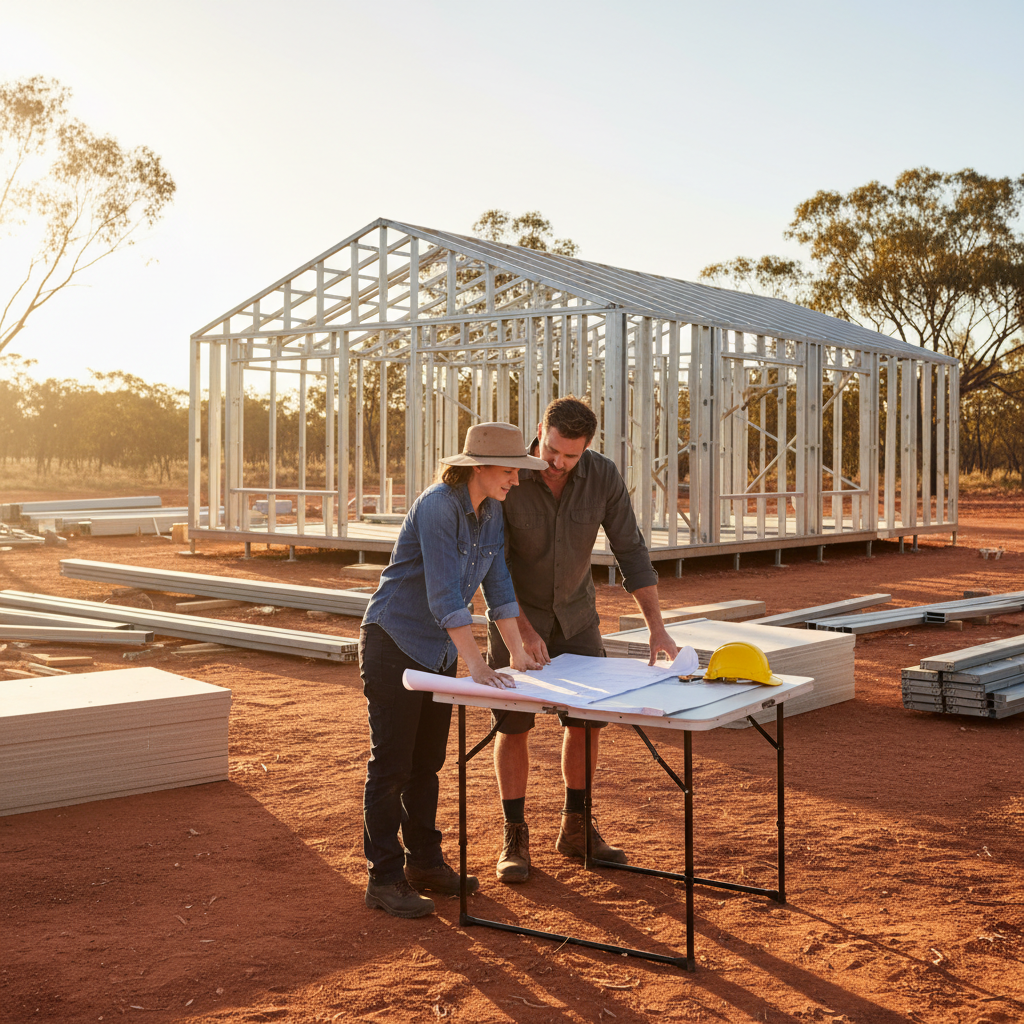
If you're jumping into the deep end and managing your own kit home build, here are a few things I've picked up over the years. Pay attention, because these will save you a headache later.
- Check your slab twice. Steel frames don't hide mistakes. If your concrete is out by 20mm, the steel won't just bend to fit like timber might. The steel is right, which means your slab is wrong. Get that level out and be certain before the truck arrives.
- Invest in a decent impact driver. You'll be driving a lot of Tek screws. Don't go for the cheapest DIY brand at the hardware store. Get something with some grunt and a couple of spare batteries. Your wrists will thank me.
- Magnetic levels are your best friend. Since you're working with steel, magnetic levels will stick to the studs, leaving your hands free to fix your bracing. It's a small thing, but it's a massive help when you're working solo.
- Mind the burrs. Even though the kits come pre-cut, you might need to trim a bit of flashing here or there. Tin snips leave sharp edges. Wear your gloves. I've seen too many blokes end up in the ER getting stitches because they got lazy with their PPE.
Why Australian Standards Matter
There's a reason we use AS 4100 as our bible for steel structures. It's about safety, obviously, but it's also about longevity. When you buy a kit home that's been properly engineered, you're getting a structure designed to handle the wind loads specific to your site. A house in a sheltered valley in Melbourne has different needs than one sitting on a ridge in North Queensland. The engineering software accounts for all that. It tells us where the extra bracing needs to go and what thickness the steel needs to be. It's not guesswork. It's science. And when you're the one signing off on the build, you want that peace of mind. You want to know that when the wind starts howling at 2 am, those trusses aren't going anywhere.
The Reality of the Build
Don't get me wrong, being an owner-builder is hard work. You'll be on the phone to plumbers, chasing up deliveries, and probably eating far too many service station meat pies. But there's something about standing back and looking at a frame you put up yourself. When those lines are sharp and those corners are perfectly 90 degrees, it makes the rest of the fit-out so much easier. Your window installers won't be swearing under their breath because the openings are wonky. Your tiler won't be charging you extra for screed because the floor is all over the shop. Precision at the start pays dividends at the end. That's the real benefit of a steel frame kit. It sets the standard for the whole house. It's the skeleton that holds everything together, and you want that skeleton to be as close to perfect as humans can make it. So, do your homework, get your site sorted, and don't be afraid to ask questions. We've all been the new guy on site once.