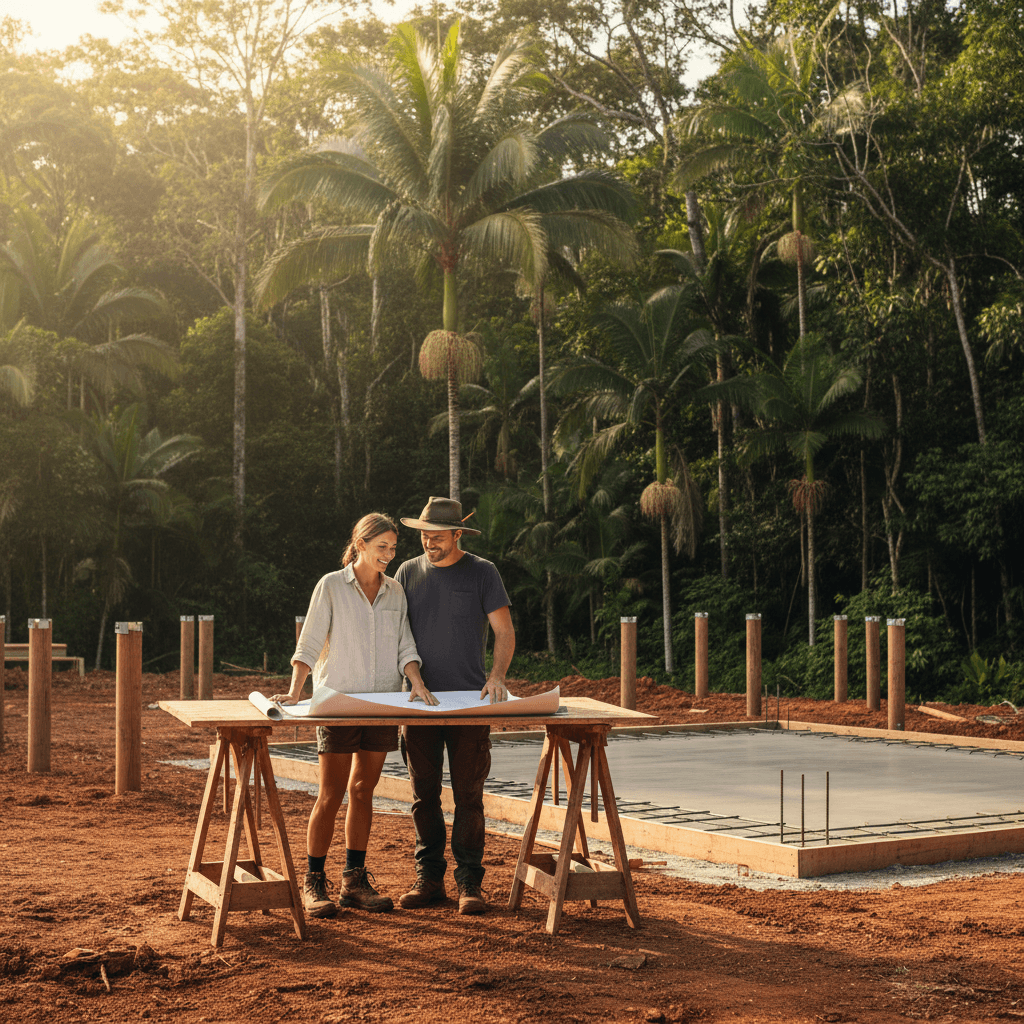
I spent twenty minutes on the phone this morning with a bloke from near Coffs Harbour who was dead set on a slab for his new kit build. His block has a four-metre fall from back to front and he already spent five grand on a bobcat operator just to 'clear some scrub'. By the time he finishes the retaining walls needed to hold that slab in place, he’ll have spent his entire kitchen budget on concrete and dirt. It’s a classic trap. People see a flat, concrete floor in a display home and think that's the default. But in the kit home world, especially across our rugged Aussie landscape, your dirt should dictate your floor, not the other way around.
The Slab Setup: Solid, Simple, and Thermal
Single storey kit homes built on a concrete slab are the bread and butter of the Australian suburbs. It's easy to see why. You walk in at ground level, there’s no bounce in the floors, and if you’re using BlueScope TRUECORE steel frames, the whole structure feels like a fortress once it’s bolted down. Because the thermal mass of the concrete helps regulate indoor temperatures, you'll find these homes stay've much cooler in a dry Victorian summer. But here's the kicker. Slabs hate slope. If your block isn't as flat as a pancake, you're looking at significant site works. You’ve got to cut into the hill, fill the low side, and deal with the drainage nightmare that follows. Most owner-builders underestimate the cost of a bored pier or a deep edge beam when the soil isn't behaving. Plus, once those pipes are in the concrete, they’re there for life. You want to move a toilet three inches during the fit-out? Good luck with the jackhammer.
Elevated Living: Keeping Above the Fray
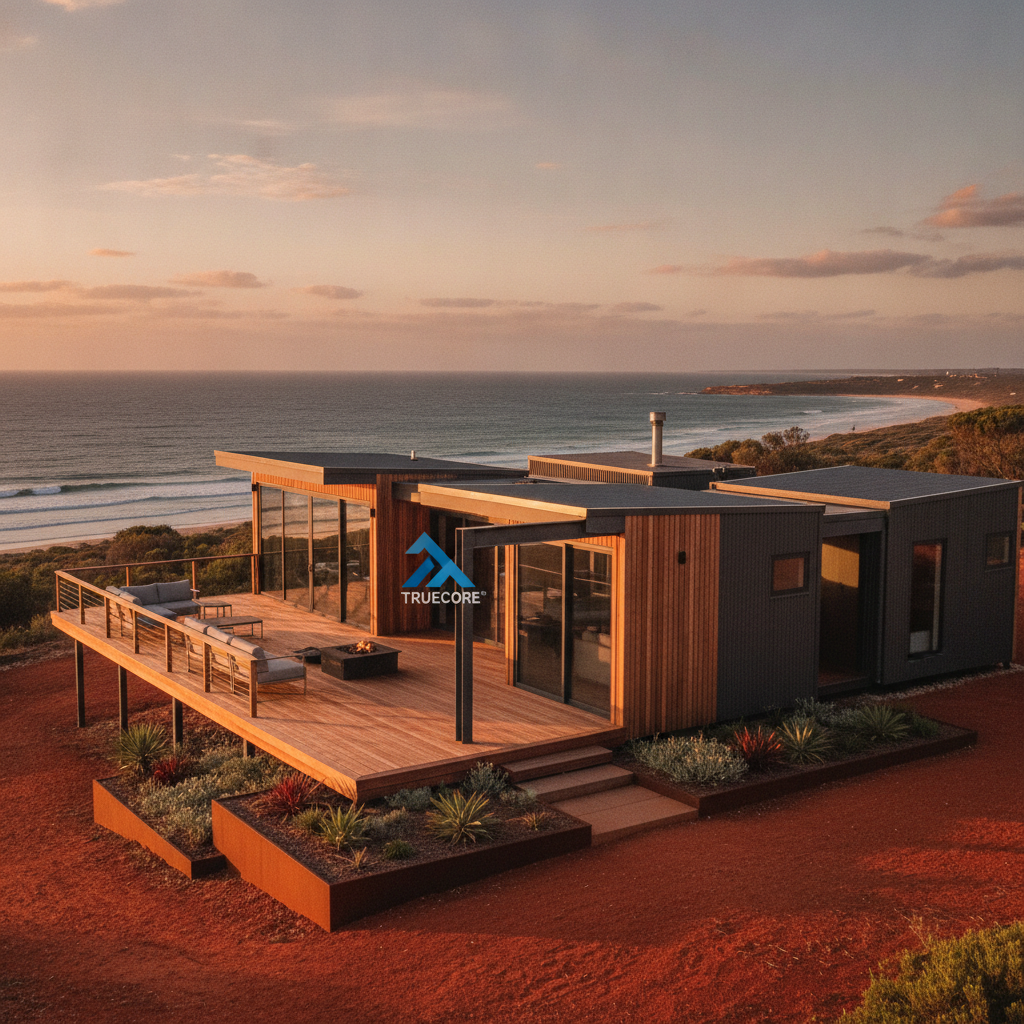
Now, look at elevated kit homes. Or 'stumpies' as some of the old tradies still call them. These are literal lifesavers on the coast or in the hinterlands. By using a steel floor system, you’re basically hovering over the problems. Termites? You can see the little blighters before they get anywhere near your timber or steel. Sloping block? Just use longer posts. It’s often cheaper to buy more steel than it is to move a thousand tonnes of earth. And if you’re building in a high BAL (Bushfire Attack Level) zone, an elevated home with the right skritng can be a smarter play for airflow. Air circulates under the house. That keeps things dry. It stops the damp from rising through the floor, which is a massive win in humid spots like Mackay or the Sunshine Coast.
The Under-Floor Advantage for Owner-Builders
I always tell our owner-builders to think about the 'second stage' of the build. That's the messy part where the sparky and the plumber come in. If you're on a slab, every single pipe has to be perfectly positioned before the concrete truck arrives. If the plumber is off by 100mm, your bathroom is a mess. But with an elevated home? You’ve got a crawl space. Your plumber can run the waste pipes on a Tuesday arvo without breaking a sweat, and if you decide later on that you want an extra power point in the middle of the lounge for a lamp, it’s a simple job to fish the wire up through the floor. It gives you some breathing room. Some margin for error. And as a DIYer, you’ll want all the margin you can get.
Soil Classification and Your Bank Account
Before you even pick a floor plan, get a soil test. Not a guess, an actual AS 2870 soil report. If you’ve got 'Highly Reactive' clay (Class H1 or H2), a slab can be a nightmare. The ground moves, the slab wants to crack, and you end up spending a fortune on extra steel reinforcement. Steel frame kit homes are great here because they’ve got a bit of flex, unlike masonry, but the foundation still needs to be right. On M or H class soil, an elevated floor with concrete pads and steel posts often works out cheaper because you aren't trying to fight the entire mass of the earth moving under a single sheet of concrete. You're just pinning a few points. It’s surgical.
When to Choose Single Storey on Slab
Stick to a slab if your block is flat and you want that seamless 'indoor-outdoor' flow to a patio. It’s also the way to go if you have accessibility needs. Ramps are a pain to build and take up heaps of space. A slab-on-ground home means no stairs, ever. If you're building in a cold climate like the Blue Mountains or the Snowy region, the thermal mass of a slab is hard to beat once the sun hits it through a north-facing window. Just make sure you’ve got your drainage sorted. Don't be the person who builds a beautiful home only to have the first big storm wash silt through the garage because the slab was too low.
The 'Look' and the Lifestyle
There's an aesthetic choice here too. Elevated homes have that classic Queenslander or 'country cottage' vibe. They look like they belong in the bush. You get a better view too. Sometimes lifting the house just 600mm off the ground is the difference between looking at the back of your neighbour's fence or seeing the horizon. Plus, you can use the space under the house for storage. Lawnmowers, kayaks, that project car you've been meaning to fix for five years - chuck it under the house.
Steel Frames: The Quiet Hero
Whichever way you go, the frame sits on top. We use TRUECORE steel because it doesn't give a toss about termites and it stays dead straight. On an elevated floor, this is vital. Timber joists can bow or twist over time, leading to those annoying squeaks when you walk to the kitchen at midnight. Steel joists and frames don't do that. They stay as true as the day you bolted them together. It makes the rest of the build - the cladding, the windows, the plasterboard - go on so much faster. No shimmying things to make them level.
Key Takeaways for Your Site Visit
- Check the fall of the land with a laser level. Don't trust your eyes.
- Ask the local council about the water table and drainage requirements.
- Identify where the services (sewer, water) are located before you decide on a floor style.
- Consider the 'clutter factor' - if you need extra storage, go elevated.
Building a kit home is a massive undertaking, but it’s the best way to get a house that actually fits your life. Don't just follow the crowd and pour a slab because that's what the big builders do. Look at your dirt. Listen to what the block is telling you. If you’re standing on a hill looking at a view, get that home up on posts and enjoy the breeze. Your back, and your budget, will probably thank you for it later.