The Myth of the Straight Timber Stud
Walk onto any suburban building site around 7:00 am and you'll see it. A chippy standing there, squinting down the length of a 90mm pine stud, shaking his head because the thing looks like a banana. It’s frustrating. In the kit home world, timber has been the default for a long time, but it’s a massive gamble for an owner-builder. You order a load of stick-frame timber, it sits on your block in Dubbo or Gympie for two weeks while you wait for the slab to cure, and the sun beats down on it. By the time you go to stand those walls, the moisture has sucked out of the wood and half your frames have twisted like a wet towel. It's a mess. Because wood is organic, it moves. It breathes. It shrinks. And for someone trying to put a house together on the weekends, that movement is your worst enemy.
Steel is different. We use BlueScope TRUECORE steel for a reason. It’s cold-rolled, precision-engineered, and fundamentally dead. That’s a good thing. It doesn't have a cellular structure that reacts to a humid afternoon in Queensland or a dry spell in South Australia. When you bolt a steel wall frame to your slab, it stays exactly where you put it. Ten years later, it’s still in the same spot. No sagging roof lines. No jars in the hallway. Just a straight, true house.
Dimensional Stability is Not Just a Fancy Term
People throw the term 'dimensional stability' around like it’s just marketing fluff. It isn't. To an owner-builder, it’s the difference between a kitchen install that takes four hours and one that takes four days. If your wall studs have bowed by even 5mm, your beautiful flat-pack cabinets won't sit flush. You'll be there with a plane and a heap of shims, swearing under your breath as you try to level out a mess you didn't create. Steel frames are manufactured to millimetre accuracy. Because the steel doesn't shrink or warp, your corners stay square. That’s a massive win when you’re doing the fit-out yourself.
Think about your windows and doors. We've all been in an old timber house during a wet summer where the front door sticks so bad you have to kick it open. That’s the timber frame swelling. Then winter hits, the wood dries out, and suddenly there’s a drafty gap because the frame has shrunk back. Steel doesn't do that. It’s got a consistent thermal expansion rate that's predictable. Plus, the strength-to-weight ratio means you can have wider spans without bulky, heavy lintels. You want a big stacker door opening out onto a deck? Steel makes that easy without the worry of the header beam sagging over time and jamming the tracks.
Termites Don't Eat Steel
I shouldn't even have to mention this, but look at the stats. One in four Australian homes will deal with termite damage at some point. It’s a nightmare. You can pump as many chemicals into the soil as you want, but those little buggers are persistent. When you build with a steel kit, you’re removing the food source. Simple. It’s peace of mind that you can't really put a price on. You aren't just protecting the structure, you're protecting your sanity. I knew a bloke near Coffs Harbour who built a timber extension and within three years, the king parrots were chewing the decorative cladding and the white ants were into the frame. He switched to steel for his next project and hasn't looked back.
The Reality of On-Site Assembly
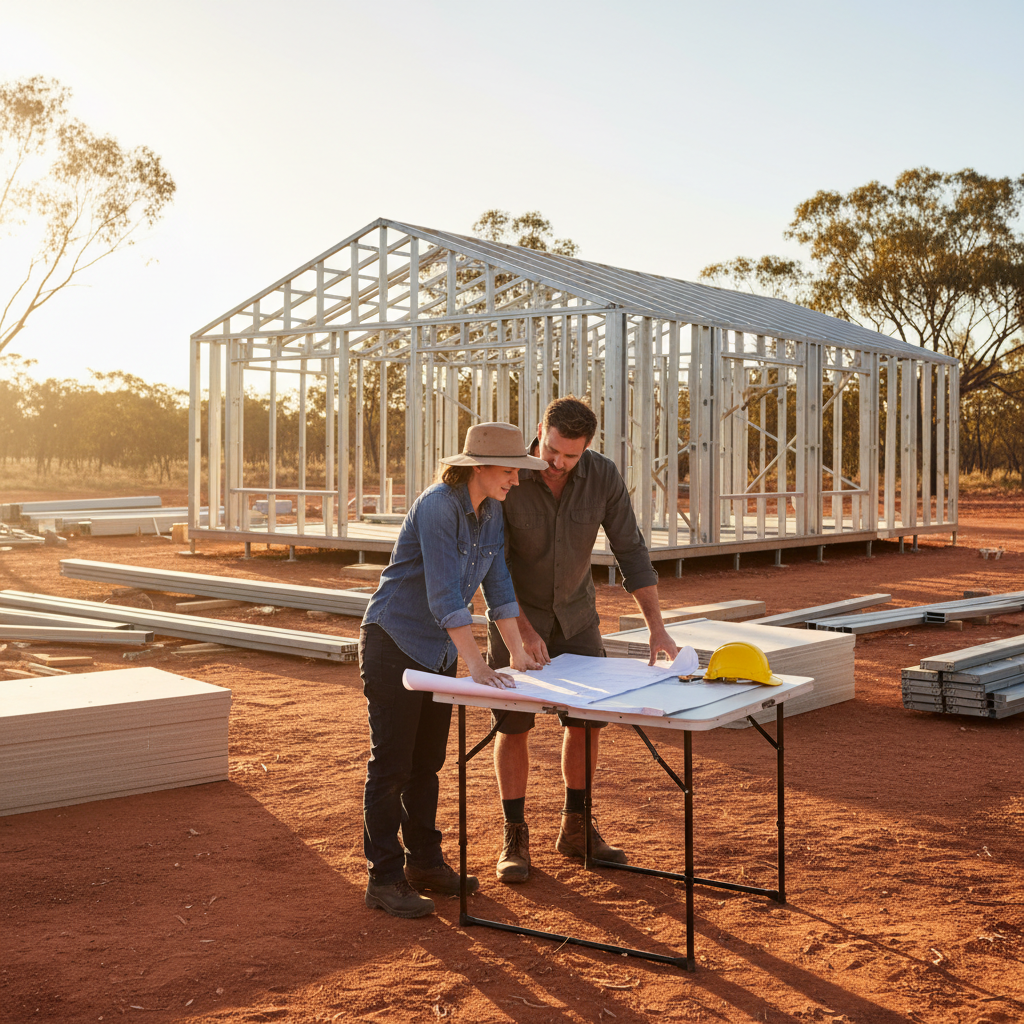
One of the biggest hurdles for DIY builders is the technicality of the build. Timber involves a lot of 'measure twice, cut once, then go back to the shop because you stuffed it up anyway' moments. Kit homes using steel frames arrive on-site like a giant Meccano set. Everything is pre-punched. The service holes for your sparks and plumbers are already there, flared and ready. You aren't standing there with a spade bit, drilling through studs and weakening the structure just to run a bit of grey water pipe. It’s all calculated.
And let's talk about the weight. Most people assume steel is heavier than timber. It’s actually the opposite. A high-tensile steel frame is significantly lighter than a green or even kiln-dried timber frame. This matters when it’s just you and a mate trying to stand a six-metre wall section on a Saturday morning. You don't need a massive crew. You just need a cordless impact driver and a bit of common sense. The frames are stiff, too. They don't flop around while you're trying to brace them up, which makes the whole process a lot safer for a novice.
Maintenance and Long-Term Performance
I’ve seen plenty of houses where the drywall starts cracking above the doors after two years. Usually, the builder gets blamed, but nine times out of ten, it's the timber frame 'settling'. As the wood dries out in the Australian heat, it pulls away from the plasterboard. You get Essas, pops in the nails, and cracks in the cornice. It looks rubbish. Because steel is dimensionally stable, those call-backs don't happen. The house stays 'tight'.
Steel is also non-combustible. If you're building in a Bushfire Attack Level (BAL) rated zone, which is pretty much everywhere these days, steel is a massive leg up. It won't contribute fuel to a fire. While the rest of the kit (cladding, windows, insulation) needs to meet specific BAL regs, having that steel skeleton is a solid foundation for a fire-resistant home. Plus, it's 100% recyclable. If the house ever gets knocked down in a hundred years, that steel can be melted down and turned into something else. Try doing that with chemically treated H2 pine.
Noggins and Hanging Stuff
Now, I’ll be honest. A lot of old-school guys complain that you can't screw into steel as easily as wood. They reckon hanging a TV or a heavy mirror is a pain. That’s a load of rubbish. You just need the right fasteners. Use a proper self-drilling screw and it’ll hold better than wood ever would. If you know where your heavy items are going, like kitchen overheads or a massive vanity, you just chuck in some extra noggins during the frame stage. It takes two minutes. You just have to plan a bit. That's the secret to being a good owner-builder anyway. Planning.
The Australian climate is brutal. We have some of the highest UV levels in the world and weather that swings from drought to flooring rains in a week. Your house frame is the spine of your investment. Why would you pick a material that moves and warps? Steel gives you a level of precision that makes every other trade's job easier. The tiler will thank you because the walls are flat. The glazier will thank you because the openings are square. And you'll thank yourself because you won't be fixing cracks and sticking doors for the next twenty years.
It comes down to this. If you want a house that stays straight, resists the elements, and doesn't get eaten by local wildlife, steel is the only way to go. It’s the smart play for any Aussie owner-builder who wants to do the job once and do it right.